Economic Observer Follow
2026-11-01 12:16

Economic Observer reporter Zheng Chenye
Recently, in the market environment of declining technology stocks, technology stocks in the physical AI direction have shown relatively strong performance.
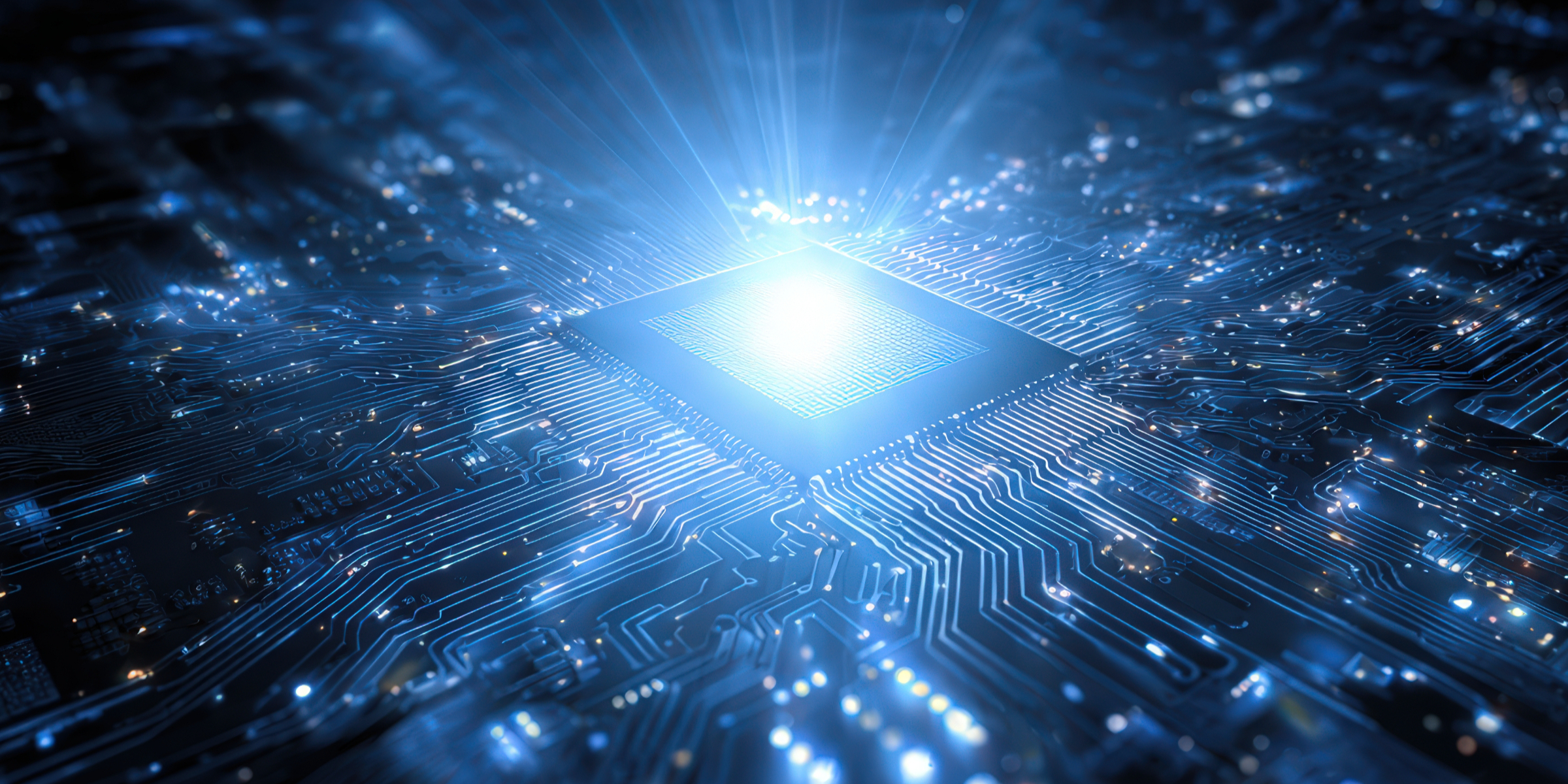
The so-called physical AI refers to the entity AI that drives robots, cars, and other physical devices to complete perception, reasoning, decision-making, and action in real environments. Physical AI has high latency requirements, and critical calculations need to be performed locally on the device. The main control chips responsible for this work are end side SoCs (System on Chip).
Recently, end side SoC companies in the A-share market have successively released their third quarter reports, with representative companies showing impressive performance: visual AI SoC manufacturer Xingchen Technology (301536. SZ) had a net profit attributable to its parent company of 701 million yuan in the third quarter of 2026, a year-on-year increase of 752.76%; End side AIoT (Artificial Intelligence Internet of Things) chip manufacturer Rui Xin Wei (603893. SH) had a net profit attributable to the parent company of 473 million yuan during the same period, a year-on-year increase of 90.5%.
Both companies' previous performance forecasts mentioned that product lines such as robots are growing rapidly.
Device Brain
End side SoC is the main control chip in the device, equivalent to the "brain" of the device. A main control chip integrates a CPU, GPU, NPU (neural network processor), as well as modules for image processing, video encoding and decoding, and most of the calculations and controls required by the device are completed by it.
In the past, these types of chips were mainly used in consumer electronics and IoT devices such as security cameras, TV set-top boxes, tablets, headphones, and watches. They mostly undertook video encoding and decoding, image processing, and simple recognition tasks. In recent years, they have extended to emerging fields such as automotive cockpits and robots.
The end side SoC companies in the A-share market focus on different market directions. Xingchen Technology's chips are mainly used in visual devices such as security cameras; Ruixin Microelectronics' chips cover multiple fields such as automotive electronics, machine vision, industrial applications, and robotics; The chips of Jingchen Corporation (688099. SH) are widely used in televisions and set-top boxes; Hengxuan Technology (688608. SH) mainly provides main control chips for Bluetooth earphones, smartwatches, and smart glasses.
In the past, these terminal devices were cost sensitive and did not require high computing power. End side SoCs rarely used the most advanced processes (the level of precision in chip manufacturing). But what physical AI has changed is first and foremost the workload borne by the end side SoC, and in this regard, cars are leading the way.
A technical expert from a chip company in Shenzhen told the Economic Observer that many car company customers thought a few years ago that they could not use up the computing power of tens of TOPS (AI chip computing power unit, referring to trillions of calculations per second) for car control chips. However, after mass production and installation, they have reported that the computing power is not enough. Nowadays, the computing power of car control chips has reached thousands of TOPS.
In addition, the workload taken over by the main control chip is also increasing. Some domestic car companies have proposed to remove the built-in processor in the radar module and directly hand over the raw data to the main control chip for processing, in order to reduce costs and power consumption, while also making algorithm development more flexible.
The technology expert said that chips used in cars have already been integrated into robots, as the chips used in both are basically the same, with the only difference being the upper level software and solutions: cars need to solve autonomous driving on the road, while robots need to solve problems such as how to coordinate their hands and walk.
In the opinion of the technical expert, if computing power needs to increase, the manufacturing process must also move forward accordingly. Due to the sensitivity of end devices to power consumption, heat generation, and volume, the more advanced the process, the more transistors can be placed in a chip of the same size, and the lower the power consumption. To put more computing power into the limited power consumption, it largely relies on more advanced processes.
At present, some domestic end side SoC companies are advancing their new generation products towards advanced processes.
According to public information, the new generation of edge AI chips A123X and C305X2 from Jingchen Technology adopt TSMC's 6-nanometer process and are mainly targeted at equipment such as machine vision, floor cleaning robots, access control, and battery powered cameras. They will be mass-produced in the fourth quarter of 2026. Xingchen Technology also mentioned in its performance forecast for the first three quarters of 2026 that it is steadily developing large computing chips for specific intelligent devices such as robots, using advanced 4/6 nanometer processes.
In terms of improving AI computing power, Ruixin Micro is taking another path: in addition to the main control chip, it has launched a dedicated co processor RK182X to run AI models. Ruixin Micro announced in its performance forecast for the first three quarters of 2026 that multiple product lines of RK182X have entered the release and mass production stages, and will increase volume in the fourth quarter of 2026.
However, the production capacity of advanced processes is not easy to obtain. Most of the end side SoC companies in the A-share market are only responsible for chip design, and production is entrusted to wafer foundries. This part of the production capacity is mainly concentrated in a few wafer fabs such as TSMC. TSMC Chairman and President Wei Zhe Jia stated at the performance briefing on October 15th that the demand for AI related products is still far higher than TSMC's current supply capacity, and TSMC is making every effort to narrow the supply-demand gap.
At present, the OEM production capacity of advanced processes is still tight, and the delivery time of high computing power SoCs has been significantly extended. Downstream solution providers (enterprises that design complete machines for terminal brands) are starting to place orders one quarter ahead of schedule. Low end models with mature processes are supplied normally.
The head of a chip distributor in Shenzhen told reporters that SoCs in traditional fields such as television and set-top boxes have low unit prices and large shipment volumes. In the first half of 2026, as the cost of storage and other components increases, the overall price of SoC will rise by about 10% -15%. The chips used in high threshold fields such as automobiles and industry, as well as AI related chips that are in high demand and difficult to replace, will have a relatively smooth price increase; The price increase of chips used in highly competitive IoT devices such as home appliances and smart speakers is not significant.
Xingchen Technology also said in the aforementioned performance forecast that its end-to-end AISoC business lines covering intelligent robots, edge computing and other fields continued to increase in shipments and revenue, presenting a pattern of both volume and price.
From the demand side, the requirements of robots for chip specifications will continue to increase. In a research report released by Guohai Securities on October 25, 2026, it was stated that in the long run, robots will need to perform inference from perception to action locally, which will significantly increase the computing power and bandwidth (the speed at which the chip reads and writes data) specifications of the end side main control chip.
In a public conversation in mid October, Wang Xingxing, founder of Yushu Technology (688836. SH), also said, "The computing power that can be deployed on robots is relatively limited. If it can be placed in the cloud, it should be placed in the cloud as much as possible." In his opinion, motion control requires high real-time performance and needs to be run on the end side. Decision making tasks and large-scale generalization scenarios still rely on the cloud.
In high-end robots, domestic chips are still catching up. The head of the aforementioned chip distributor mentioned that domestic SoCs mainly undertake relatively simple functions in humanoid robots, such as controlling arm lifting, rotating waist and head, and high-performance robots that need to complete complex movements such as dancing and flipping heels. The core processor still mainly relies on overseas products.
The head of the chip distributor mentioned above believes that the current advantage of domestic chips is mainly cost-effectiveness. Taking the intelligent cockpit as an example, the experience of using domestic chips is at a "sufficient" level, not as smooth as overseas solutions. The chip performance is about 80% of that of overseas competitors, but the price is about half of that. Some car companies have replaced the original overseas solutions with domestic solutions.
However, in terms of shipment volume, humanoid robots are still in the early stages of development. According to data from International Data Corporation (IDC), in the first half of 2026, the global shipment of humanoid robots reached nearly 25000 units, a year-on-year increase of 432.1%. Scenarios such as scientific research and education, performance exhibitions, and government funded data collection centers for collecting training data still accounted for 69% of the shipment volume.
IDC China Research Manager Li Junlan believes that humanoid robots are expected to enter the stage of accelerated development of large-scale applications around 2030, and IDC expects global shipments to exceed 750000 units by then.
Currently, the changes brought by physical AI are more reflected in the specifications, processes, and pricing of AI related products on the end side SoC. The amplification of shipments brought by humanoid robots may take some time.
Memory Constraint
After the increase in chip specifications, end side SoCs are increasingly constrained by memory.
Guojin Securities stated in a recent research report that when large models run locally on devices, they need to accommodate model parameters, context, and other data, which will increase the requirements for memory capacity and bandwidth. The performance evaluation of end-to-end AI is no longer solely based on peak computing power, but is now simultaneously examining the ability of model loading, continuous data handling, and long-term inference.
The technical experts of the aforementioned chip companies also stated that the TOPS of a chip does not represent its actual performance. Some algorithms are limited by memory bandwidth, and for every word output by a large model, the model parameters must be read from memory. In the past two years, memory costs have been high. They have helped customers save memory in various aspects from underlying software to algorithms, such as using lower precision data formats, reducing model parameters from 16 bits to 4 bits, and reducing the memory and bandwidth requirements of the model to only about a quarter of the original. They have also specially developed large model running software that occupies less memory.
The technical expert said that previously, the computing hardware responsible for assisting driving in customers' cars was generally equipped with 32GB of memory. On the premise that driving functions were not affected, some customers have reduced the hardware to 16GB. Based on an estimated cost of nearly $20 per GB of memory, a set of hardware can save about $300.
At the same time, memory prices are still rising. According to a report released by market research firm Jibang Consulting on September 30th, it is expected that the contract price of general DRAM (ordinary memory chips) will increase by 10% to 15% month on month in the fourth quarter of 2026. Attracted by strong demand for AI and higher profits, storage manufacturers such as Samsung Electronics, SK Hynix, and Micron continue to shift their production capacity to areas such as servers. Products with lower profits such as televisions, set-top boxes, and wearable devices are finding it more difficult to bear the price increase of storage chips.
Multiple interviewees told reporters that the proportion of material costs in end side devices is increasing rapidly.
The head of a large storage enterprise in Shenzhen said that the memory configuration of products such as robots and intelligent cockpits is getting larger and larger. Many end side SoCs are shipped together with memory, and some directly package the memory into chips. Chip manufacturers have to purchase memory themselves, and many top chip manufacturers have locked in their sources in advance. In this round of price increases, they are obviously more relaxed.
Public data shows that as of the end of September 2026, Xingchen Technology's inventory value was 3.182 billion yuan, approximately 3.4 times the 930 million yuan at the beginning of the year. Xingchen Technology stated in its third quarter report that this batch of stocking is to stabilize upstream supply and support it to smoothly weather the tight storage and supply cycle.
Jingchen Corporation has adjusted its product prices. According to its performance forecast for the first three quarters of 2026, in the face of external factors such as fluctuations in storage and core raw material prices, it has ensured a reasonable and healthy gross profit margin by adjusting product prices reasonably and improving operational efficiency. In the third quarter of 2026, Jingchen Group's net profit attributable to its parent company was 683 million yuan, a year-on-year increase of 239.35%.
The price increase is not only for memory.
Ruixin Micro mentioned in its performance forecast for the first three quarters of 2026 that the prices of production materials such as storage, resistors, and capacitors will continue to rise in the first half of 2026, and the related impact will be transmitted from the supply chain to the terminal sales market in the third quarter of 2026, where the terminal market will adjust and digest. The delayed delivery of PCB (printed circuit board) has also affected the production of end products in the current quarter, resulting in delayed chip orders. It is expected to recover in the fourth quarter of 2026.
In addition, Guohai Securities mentioned in the aforementioned research report that component manufacturers such as Murata, Samsung Electric, Sunac, and Kyocera are all tilting their expansion plans towards AI servers. Samsung Electric will also increase the average price of consumer grade MLCC (multi-layer ceramic capacitors) for end manufacturers by 25% to 30% to suppress customer orders and free up production capacity to expand high-end production lines. The research report believes that the increase in storage prices has caused varying degrees of suppression of demand on the consumer electronics side.
For example, Hengxuan Technology, which mainly produces chips for headphones and watches, saw a year-on-year decrease of 20.03% in revenue and 77.42% in net profit attributable to shareholders in the third quarter of 2026. Hengxuan Technology stated in its third quarter report that its performance was mainly affected by factors such as weak demand in the consumer electronics market and rising prices of upstream storage chips.
An electronics industry analyst from a large securities firm in southern China said that it is expected that a batch of new AI products on the end side may emerge around the first quarter of 2027, with the first to increase volume being products with low memory usage, as well as new product categories that have not appeared in the past, whose users are less sensitive to prices.
The head of the aforementioned storage enterprise believes that the timing of the decline in storage prices will directly affect the memory configuration of this batch of new hardware next year, as well as the speed of improving the specifications of end side chips.
That is to say, before the prices of storage and other materials fall, the demand for end-to-end SoCs brought by physical AI may flow more to chip manufacturers who have already locked in memory sources, have sufficient computing power, and can achieve the same effect with less memory.



 Subscribe