2026-10-31 13:17


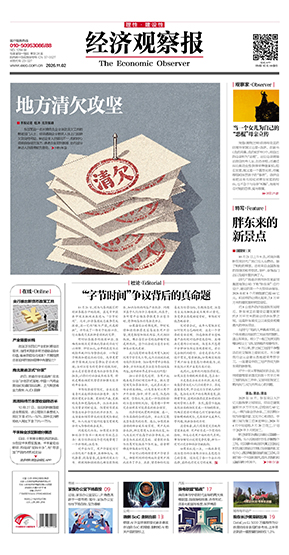
A finance department official in a county in the east who has long been responsible for clearing corporate debts often encounters visits from relevant personnel to report issues with debt repayment. The situation of visiting enterprise personnel varies, some patiently explain their own business pressure and talk about difficulties in capital turnover; Some visitors were also quite emotional.
Mid Autumn Festival, Spring Festival and other periods are when contradictions are concentrated and highlighted. It is difficult for the local financial resources to fully repay the outstanding debts at once. During the holiday period, some funds will be arranged to alleviate the situation and avoid further escalation of the conflict. During periods of immense financial pressure and inability to secure funds, the individual may sometimes choose not to answer phone calls temporarily.
He has been taking over the debt collection work for two years. In his view, policies are increasingly promoting local governments to clear their debts, and the system is becoming more perfect, with some debts already cleared. However, the outstanding debts still remain at a certain scale, and the local debt collection is entering a critical stage.
The debt collection is continuously intensifying.
In 2023, the decision-making level proposed the establishment of a normalized mechanism for preventing and clearing overdue accounts, followed by the deployment of a special action to clear overdue corporate accounts; In 2024, the "Opinions on Resolving the Issue of Arrears to Enterprises" will make systematic arrangements for government investment project fund supervision, engineering price settlement, government procurement payment, complaint supervision, dishonesty punishment, and audit supervision; In 2025, the government work report further clarifies that digesting local government arrears of corporate accounts will be listed as one of the key uses of local government special bonds, and some provinces will subsequently list the amount of debt clearance in budget adjustments.
Yuan Haixia, Executive Director of China Chengxin International Research Institute, told Economic Observer that according to her team's calculations, the scale of government related accounts receivable among the "top five accounts receivable" of listed companies in 2025 has decreased compared to 2024, indicating that the debt clearance work has achieved certain results.
However, compared to the large overall scale, the scope of this calculation only covers the part directly related to the government and has bond issuance report data, with a narrow caliber. Therefore, overall, the settled debt clearing funds are only a marginal improvement for the existing debt, "said Yuan Haixia.
Since 2026, policies have focused on "clearing debts" at a very high density. Some researchers believe that the government's debt collection is entering a critical stage.
The Politburo meeting of the Central Committee of the Communist Party of China held in July this year clearly stated the need to "normalize the resolution of overdue corporate payments". The State Council executive meeting held on August 21st pointed out that it is necessary to implement the action of accelerating and strengthening the clearance of overdue corporate accounts, consolidate the main responsibility, supervise and guide local governments to make good use of special bonds, special re loans and other policies, open up the "chain of clearance", effectively improve the quality of debt clearance, and strictly prevent new arrears. In September, the General Office of the State Council issued the "Notice on Strengthening the Governance of Difficulties in Payment Collection for Small and Medium sized Enterprises" (hereinafter referred to as the "Notice").
In the "What are the Plans for Local Debt in 2026? Analysis Based on Local Budget Reports" (hereinafter referred to as the "Report") released by Yuekai Securities' Luo Zhiheng, Fang Kun, and Niu Qin in April 2026, the changes in clearing overdue corporate accounts were summarized as shifting from "centralized clearing" to "long-term governance", and it was judged that 2026 would enter the stage of debt clearance.
The report found that 26 provinces have requested to accelerate the clearance of overdue debts in their government work reports. Some provinces and regions have clarified their work task schedules, and Guangxi has proposed to "do a good job in the three-year repayment work plan and accelerate the clearance of overdue enterprise accounts"; Hunan has set a clear timetable for clearing overdue accounts: by 2026, 80% of overdue accounts in the accounts will be resolved, and by 2027, the accounts in the accounts will be cleared to zero.
Find out the bottom line
The first task faced by the finance department personnel in the above-mentioned areas after taking over the debt clearance work is to find out how much money the local government owes.
In 2023, the State Council approved the "Special Action Plan for Clearing Arrears of Enterprise Accounts" and launched a new round of special actions to clear outstanding enterprise accounts; In 2024, the two offices issued the "Opinions on Resolving the Issue of Arrears to Enterprises", which includes the supervision of government investment project funds, settlement of engineering prices, government procurement payments, complaint supervision, and audit supervision in the system deployment, proposes to track the disbursement of funds, and establish a nationwide unified registration (complaint) platform for default and arrears of payments to small and medium-sized enterprises.
Identifying outstanding debts and establishing channels for companies to report issues have become ongoing efforts.
The local financial officials mentioned above said that around 2024, the Ministry of Industry and Information Technology will organize a special investigation into overdue payments to small and medium-sized enterprises.
At the beginning, the scale of local sorting and reporting was somewhat reserved. Later, after learning about the possible supporting policies for the subsequent resolution, the local authorities further sorted out the outstanding accounts in accordance with the requirements of conducting investigations based on facts and reporting as much as possible, and the reported amount also increased accordingly.
But later on, the person received a notice specifying that such debts would be included in implicit debts, and that arrears from the government, self financing institutions, and urban investment companies would all need to be included. "This may add a very large amount of implicit debts". Local implicit debt is an important component of local debt. If implicit debt grows too quickly, it will have an impact on the performance evaluation and subsequent financing of local governments.
In the face of the new situation brought about by the adjustment of statistical caliber, we carefully coordinate the investigation and reporting work, and on the premise of holding the bottom line of risks and meeting the requirements of debt control, we try to truthfully reflect the stock of accounts as much as possible. "The above-mentioned financial person said that compared with other regions, the county has taken a relatively comprehensive and proactive approach in the investigation, but he also noticed that there is still a gap between the reported scale and the actual stock in some areas, and some even reported less than 10 million yuan of overdue enterprise accounts.
In addition, there is also a batch of payments outside the statistical scope that have not been included in the overdue accounts but are indeed owed by local governments or urban investment state-owned enterprises. The finance department official stated that the debt collection mainly covers project payments, but the actual arrears also include the rights and interests of employees of bankrupt enterprises, special funds, and some projects that were not initially reported but later withdrawn. He took land consolidation projects as an example, which may not be included in the debt, but the enterprise did provide services to the government or urban investment.
The financial source mentioned that during the special investigation stage, many grassroots financial departments are looking forward to systematic policy implementation to fully understand the situation and create conditions for subsequent debt clearance; In the process of advancing work, governments at all levels have made different judgments on the pace and scale of reporting based on multiple considerations such as debt risk prevention and control, financial carrying capacity, etc. This is also a normal situation that occurs in the overall promotion of debt clearance and risk control.
For grassroots, after understanding the situation, they still need to face the question of 'where does the funding come from'. The above-mentioned officials from the finance department said that there is a great pressure on the balance of local fiscal revenue and expenditure, and the proportion of outstanding debts that can be covered by the clearing funds is a difficult problem that cannot be avoided in the work.
How To Repay
There has been a change in the support for clearing outstanding funds in 2025. In the 2025 government work report, it is explicitly stated that the digestion of local government arrears to enterprises will be included in the special debt purpose. Subsequently, some provinces separately listed the amount of outstanding debts in budget adjustments. The report on the implementation of fiscal policies in the first half of 2026, released by the Ministry of Finance, will continue to prioritize the digestion of government arrears as a key support direction for new special bonds.
For the grassroots level, this enables debt clearance to proceed from investigation and coordination, and further into the funding arrangement and project payment process.
According to incomplete statistics from the China Chengxin International Research Institute, in 2025, eight provinces (regions) including Yunnan, Henan, Xinjiang, Hunan, Heilongjiang, Inner Mongolia, Shaanxi, and Qinghai will publicly disclose targeted debt collection quotas through provincial budget adjustment plans, totaling over 150 billion yuan. Large scale special debt investment provides stable financial support for provincial-level coordinated resolution of outstanding debts.
The arrival of special bond funds provides support for local governments to transfer and clear outstanding funds. The observation of Yuan Haixia's team is that by 2025, many regions have achieved phased results in resolving outstanding debts through special debt disbursement, activation of idle assets, and installment agreement payments.
In addition to fiscal funds, financial support is also being promoted. In August 2026, the executive meeting of the State Council proposed to make good use of policies such as special bonds and special re loans; In September, the State Council issued a notice further proposing to guide commercial banks to support large enterprises in exchanging accounts payable through loans and bond financing under the premise of controllable risks, and to timely pay cash to upstream and downstream small and medium-sized enterprises. The channels for clearing debts are expanding, and whether the funds can be transmitted to the enterprise along the project and procurement chain is therefore even more crucial.
After the money is allocated, how to repay it is still a problem.
The above-mentioned financial department personnel introduced that this round of debt clearance mainly targets small and medium-sized enterprises, especially small and medium-sized private enterprises. The debtors include government agencies, townships, and public institutions, as well as local state-owned enterprises and urban investment companies. Among them, self financing institutions are mainly hospitals.
The distribution ratio revealed by the above-mentioned financial department personnel is roughly as follows: the amount of special bonds issued is about 50% of the actual amount of overdue accounts; Of these 50%, about two-thirds may be returned to local finance after being allocated to the enterprise, and the actual proportion that the enterprise can retain is about one-third.
He also mentioned a method of operation: funds are first deposited into the company's account, so that the regulatory authorities can see that the accounts have been repaid, and then some of the funds are returned to the fiscal account.
According to investment and financing personnel from a provincial government in central China, different types of enterprises have vastly different reactions when their province offers discounted debt repayment. Accounts receivable of state-owned enterprises belong to state-owned assets, and once discounted, no one can bear the responsibility for the loss of state-owned assets. But private enterprises have a higher acceptance rate, often able to accept repayment ratios of 25% or lower discounts.
The person explained that in specific operations, local governments will require private enterprises to sign commitment letters. For example, if the debt is 200 yuan, the government will first repay 75% of the first 100 yuan, which is 75 yuan, and the enterprise will then "return" 25 yuan to the finance department. The returned funds will be uniformly included in local financial resources and used for fiscal expenditures. If private enterprises do not comply with the commitment letter to return the remaining 100 yuan afterwards, they will no longer repay it.
He observed that under this mechanism, many companies, even if they receive partial debts, are basically in a state of business shutdown and dare not expand or undertake new projects.
On the other hand, some ongoing special bond projects have also presented similar payment methods. The funds are nominally disbursed to the construction unit, and as long as the expenditure progress meets the standard, a closed loop is completed for the provincial finance department and audit department. However, in reality, a portion of the funds will be returned to local finance to supplement financial resources.
The policy has increased regulatory efforts for this kind of discounted "repayment" and discounted payment behavior.
In September 2026, the General Office of the State Council issued a notice on strengthening the governance of the problem of difficult payment for small and medium-sized enterprises, which further refined the payment requirements: government procurement projects will be fully paid in cash, and government investment projects will strengthen the supervision of the entire process from the bottom to the payment, promoting the general contracting unit to timely pay no less than the same proportion of cash to the subcontracting unit.
Enterprise Path
A company that has been undertaking local government projects for a long time has been partially overdue for more than two years. The person in charge of the company said that the local government that owes the debt has gone through multiple rounds of personnel adjustments, and there is significant resistance to the progress of payment collection. To promote problem-solving, enterprises have reflected their demands through various channels such as registration on the industrial and information technology platform and departmental coordination, and have even begun to try to recover their debts through disciplinary inspection, judicial and other means.
The above-mentioned enterprise has been providing planning and architectural design services to local governments for a long time. The person in charge of the enterprise told reporters that the company has been cooperating with local governments for more than 20 years and has completed many district planning and architectural design projects, with a large number of projects already completed. But in the past decade, with the increase of urban investment platforms, the problem of delayed design fees has gradually worsened. The owners of urban area control planning, rural planning and other businesses are mostly government departments with long project cycles, and some have almost no payments, with accumulated arrears of more than 10 million yuan. Its architectural design business, especially the engineering design under the EPC model, also has a large amount of payments that have been overdue for a long time, and the final payment is particularly difficult to collect.
According to him, the situation of delaying payments under audit reasons is quite prominent, involving more than 20 million yuan in funds. The project has been completed, but the company still needs to wait for settlement and payment.
With the improvement of the system, there are more specific regulations regarding the reasons for delayed payments. The revised Regulations on Ensuring Payment for Small and Medium sized Enterprises, which will be implemented in June 2025, stipulate that government agencies and public institutions shall make payments to small and medium-sized enterprises within 30 days from the date of delivery, and the longest period stipulated in the contract shall not exceed 60 days; For those involving inspection, acceptance, and progress settlement, the starting time shall be determined according to the corresponding rules.
The above regulations also stipulate that government agencies, public institutions, and large state-owned enterprises shall not forcibly use the audit results of audit agencies as the basis for settlement, except as otherwise provided by laws and administrative regulations; Government agencies, public institutions, and large enterprises shall not refuse or delay payment to small and medium-sized enterprises on the grounds of changes in responsible persons or internal payment processes. For accounts that are disputed but do not affect the performance of other parts, the undisputed portion should be paid in a timely manner.
The Law on the Promotion of Private Economy, which came into effect in the same year, also requires government agencies, public institutions, and state-owned enterprises to timely pay the accounts of private economic organizations. They are not allowed to refuse or delay payment on the grounds of personnel changes, internal payment processes, or waiting for completion acceptance approval, final accounting audits, etc. in the absence of contractual provisions. It also restricts the mandatory use of audit results as the basis for settlement. The protected objects are not exactly the same as the payment regulations for small and medium-sized enterprises. Enterprises can search for applicable basis based on their own nature, debt subject, and transaction situation.
With the increasing emphasis on debt collection in policies, the ways in which companies recover their debts are also diversifying.
Xue Qitang, a partner at Huicheng Law Firm, has been helping companies recover through legal means. He said that in the past, companies dared not sue, "offending the city investment is offending the local government, and the government will not have any more projects for the companies.
Xue Qitang gave an example: a construction company in Xinjiang, in order to undertake a government urban investment project, borrowed 200 million yuan in advance at the request of the urban investment company due to a lack of project demolition funds. The urban investment company promises to repay the loan within six months and will provide the enterprise with a 1 billion yuan EPC (Engineering General Contracting) project after the demolition is completed. However, after lending 200 million yuan, the construction company has not repaid the loan for more than 3 years, and only 500 million yuan of the 1 billion yuan project promised by Chengtou has been implemented. The construction company is suffering greatly, but Chengtou cannot afford to repay and dare not sue because there are other government projects in the area that need to be participated in.
But in recent years, the situation has changed. "If we don't sue, it's difficult for urban investment to voluntarily repay a portion." According to him, more than half of the cases he represents are settled through mediation, and those that cannot be resolved are subject to litigation preservation and freezing of urban investment accounts.
The above notice also proposes that for those who have completed the project but have not yet settled the payment, the financial settlement for completion should be completed as soon as possible and the project payment should be made, in order to promote the general contracting unit to pay the subcontracting unit as soon as possible.
Clearing debts and tackling difficulties
In 2025, a report jointly released by the National Development and Strategy Research Institute of Renmin University of China, the School of Economics of Renmin University of China, and the China Chengxin International Research Institute pointed out that government arrears in corporate accounts receivable exceeded 10 trillion yuan, accounting for about 8% of GDP. Among them, the scale of overdue accounts formed was about 4.5 trillion yuan, accounting for more than 3% of GDP.
Despite the continuous efforts to clear government debts, due to the large scale of government debts and the increasing pressure on fiscal revenue and expenditure in recent years, there is still significant pressure to clear debts.
According to previous policy requirements, administrative agencies in various regions have formed a stock arrears ledger based on June 30, 2024, and collectively referred to it as the "6:30 Ledger" in subsequent performance promotion.
For example, in August 2026, the website of the Yantai Municipal Government issued "Reply No. 1806241: Suggestions on Further Measures to Properly Resolve the Issue of Local Government Arrears to Enterprises", which stated that the current round of national action to clean up arrears of enterprise accounts will begin in April 2025, and the city will settle the arrears listed in the "June 30" ledger (as of June 30, 2024, for goods, engineering, and service accounts owed to enterprises by government agencies, public institutions, state-owned enterprises, and financing platforms, referred to as the "June 30" ledger), and complete substantial settlement by November 2025.
The 2026 government work report proposes to make greater efforts to solve the problem of overdue corporate accounts. The report on the implementation of fiscal policies in the first half of 2026 released by the Ministry of Finance lists the digestion of government arrears as one of the key support directions for the addition of special bonds. The executive meeting of the State Council held in January called for the establishment of a "long-term mechanism for clearing debts" by 2026, to avoid the "simultaneous clearing and increasing" of debts, and to continuously and effectively improve corporate cash flow and promote economic circulation.
Yuan Haixia believes that clearing debts is directly related to the income of enterprises and residents, and also affects the virtuous cycle of local economy. In the current macro pattern of "strong supply and weak demand", this is an issue that should be vigorously promoted.
Yuan Haixia said that although the current round of debt clearance work has achieved phased results, it still faces multiple obstacles due to prominent contradictions in local fiscal revenue and expenditure, complex historical legacy account structures, and non-standard policy implementation. Some project accounts are difficult to confirm and responsibilities are unclear; The large scale of stock arrears and limited channels for fundraising in some weak regions have led to slow progress in repayment; In some places, there are behaviors such as clearing while owing, offering discounts for repayment, and refusing to execute judgments. At the same time, the source control mechanism to prevent new arrears still needs to be further strengthened, and the pressure of the transmission of arrears in the industrial chain chain has not yet dissipated.
Yuan Haixia suggested that it is necessary to comprehensively utilize various measures such as fiscal, financial, asset revitalization, and institutional reform to promote the resolution of stock and prevention and control at the source, and consolidate the achievements of debt clearance.
Specifically, the next step is to classify and pay based on a thorough investigation and confirmation of ownership. Determine the repayment order for undisputed accounts, taking into account the scale of outstanding debts, aging, business operations, as well as the transmission effects of industrial chain and financial risks; At the same time, we will continue to make good use of fiscal resources, strive for bond quota support, study appropriate increases in financial support, and activate local state-owned assets. In the long run, it is necessary to alleviate local financial pressure through reforms such as the fiscal and taxation system.
Xue Qitang suggested that it is necessary to further strengthen the responsibility constraints in debt clearance, and promote relevant responsible personnel and supervisory departments to actively solve problems. Although the government has introduced policies requiring urban investment to repay corporate debts, there is still room for further strengthening the accountability system. If the accountability is not strong enough, the effectiveness of implementation will be compromised


 Subscribe