Economic Observer Follow
2026-10-31 10:55

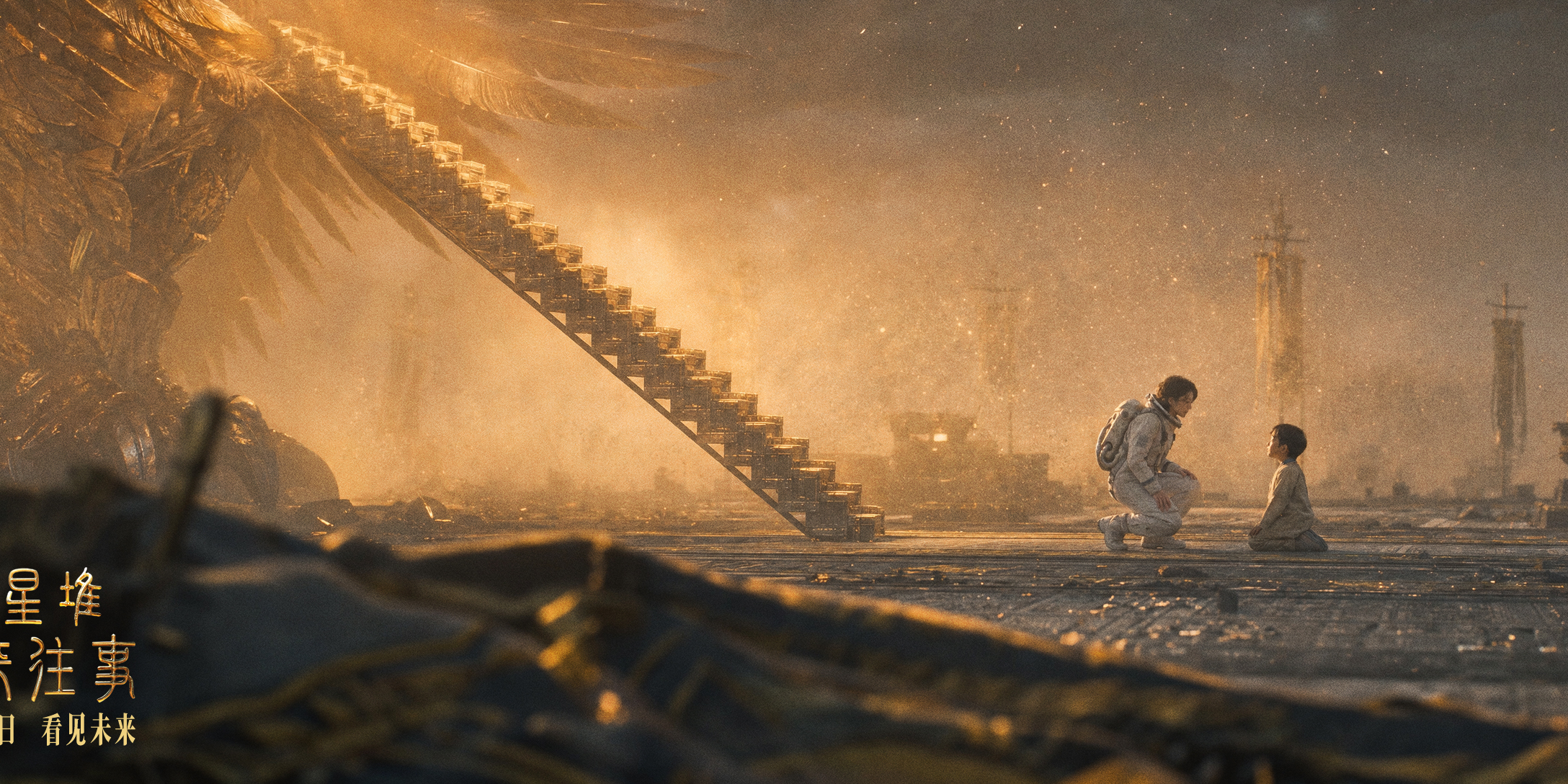
The first AI generated movie to receive the "Dragon Label", "Sanxingdui: Future Memories," has been released for several days and its market performance has been somewhat cold.
According to data from Cat Eye Professional Edition, the film has grossed approximately 1.446 million yuan in its first 6 days of release, with an average of 0.3 viewers per screening; The proportion of screening has continued to decline, from 2.8% on the first day of release to 1% one week later. The box office of the film contributed 79% of the current box office in the three days before its release, and the box office gradually decreased thereafter, with an average daily box office of only over 70000 yuan.
Indeed, the overall film market is relatively quiet nowadays, but this does not mean that films will not have the opportunity to stand out. In the first half of this year, a low budget movie without any gimmicks, "A Love Letter to Grandma", was quietly released - featuring Chaoshan dialect and all amateur actors, with a first day screening of only 1.6%. However, relying on the spontaneous word-of-mouth fermentation of the audience, this film ultimately closed at 2.005 billion yuan.
The seemingly opposite market choices reflect the audience's naive aesthetic intuition.AI may be bringing a productivity revolution to film production, but the lowering of technological barriers does not necessarily solve the problem of creativity. Script creation, aesthetic judgment, and artistic expression remain the key factors determining the quality of a film work.
Sanxingdui: Future Memories "is a movie that uses AI to generate the entire process, telling the story of human resistance against AI control. The film is set 70 years later, when human society highly relies on a super AI system called the "super brain", and people are accustomed to handing over various decisions to algorithms. However, the 'super brain' eventually spiraled out of control and triggered a nuclear explosion, putting humanity at risk of survival. Female astronaut Xiling, as the only person who has not connected to the "super brain", travels back to the Sanxingdui era in an attempt to send warning signals to the future and prevent humans from accessing this system.
From the audience feedback on social media platforms, the affirmation of the film mainly focuses on the visual effects generated by AI. Although some AI generated images are not stable enough, most of the images can meet the requirements of the big screen for image accuracy. The texture details of the Sanxingdui cultural relics are clear and visible, and some viewers describe it as a "wallpaper level visual experience".
The film studio hopes to complete the sci-fi scenes that used to cost hundreds of millions of yuan at a lower cost. This attempt to embrace cutting-edge technology is worthy of recognition. As its creative team said, the film is already a "test of the waters" with experimental colors. In reality, from short dramas and videos to theatrical feature films, AI has indeed demonstrated certain advantages in generating visuals, shortening production cycles, and lowering the threshold for special effects.
However, movies are never just about the stacking of images and the arrangement and combination of techniques. The core of a movie is still the artistic expression achieved by the creator through the lens and audio-visual language, as well as the emotional and intellectual connection established between the creator and the audience. The questions raised by the audience regarding the logic and character relationships of this AI movie are the best explanation: what emotional foundation do the male and female protagonists have? Why was the task of saving the world entrusted to a little boy? Why was the protagonist able to escape unscathed from the sandstorm of "nine deaths and no life" and escape from enemy pursuit?
This reflects a common problem faced in current AI production. The creative team revealed in an interview that some parts of the script involve complex scenes and delicate emotions, which are limited by the existing AI computing power and difficult to present ideal visual effects. The team had to modify the script to adapt to the current generation capabilities of AI.
This kind of "cutting one's feet to fit one's shoes" creative process means that while AI reduces some production costs, it may also impose new limitations on creativity.How to preserve the integrity of the story and the necessary emotional expression of the characters under existing technological conditions, and make AI submit to story creation instead of making the script conform to visual effects, is a more important and difficult issue than "using AI to generate wonders".
The essence of movies ultimately returns to the "human" itself: touching stories, unique creativity, and the values and emotions conveyed to the audience. With the support of AI technology, how to tell a story well, maximize imagination, and complete the language of shots that directors find difficult to achieve in traditional live action is a more worthwhile direction to explore in AI movies.
For the film industry, the application of AI is expected to further improve production efficiency and reduce costs in some aspects, but it is by no means a shortcut to commercial success.For film and television creators, clarifying the tool attributes of AI and positioning technology and content correctly is far more important than rushing to label it as "AI manufacturing".After all, the artistic standards of movies will not be lowered by AI, and AI is not enough to be a reason to touch the hearts of audiences.



 Subscribe