Economic Observer Follow
2026-10-31 12:41

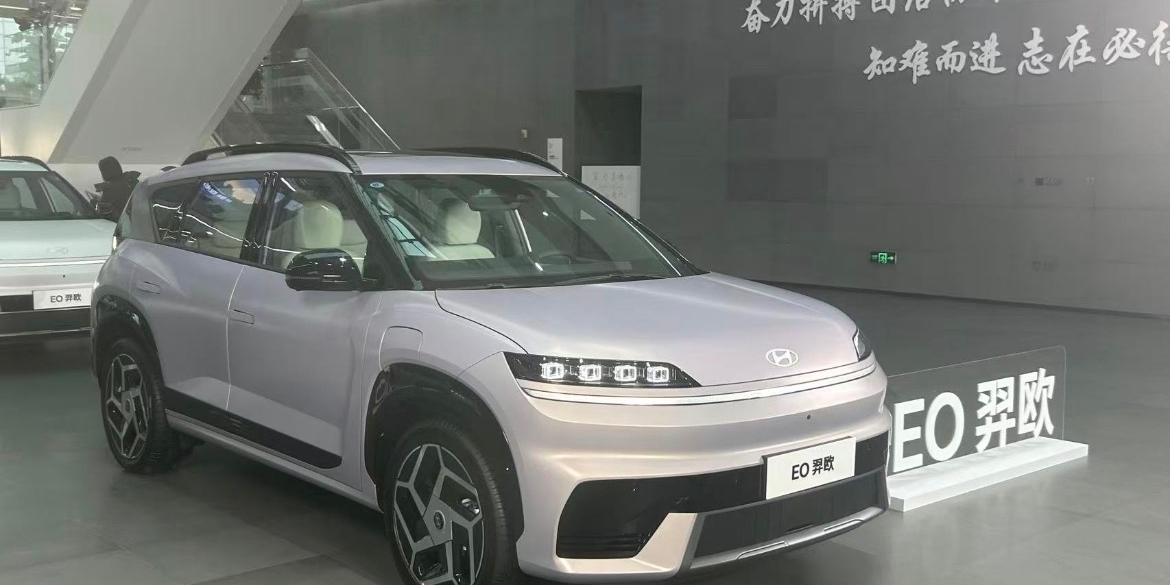
On October 30th, insiders from Beijing Hyundai confirmed that Li Fenggang, the first Chinese general manager of Beijing Hyundai, has resigned due to "personal reasons". At this time, less than a year has passed since he officially took office in November 2025, and the employment contract he signed with Beijing Hyundai is for a period of 3 years.
Li Fenggang's departure has attracted attention from the industry. This is not only because he is the first Chinese executive to serve as the general manager of Beijing Hyundai in the more than 20 years since its establishment, but also because he was expected to promote the company's reform and transformation. However, the long-standing differences and games between the Chinese and Korean shareholders and management of this joint venture are no longer a secret in the industry. With the departure of Li Fenggang, the transformation path of this old joint venture car company has added another layer of uncertainty.
Li Feng has just been employed for a year, but his achievements have been meager
Li Fenggang was born in 1981 and graduated from Tsinghua University with a major in Mechanical Design and Automation. He joined FAW Volkswagen in 2003 and became the Executive Vice General Manager of FAW Audi Sales Company in October 2023. In September 2025, he was transferred to FAW Fuhua Ecological Co., Ltd., a wholly-owned subsidiary of FAW Group, as the Party Secretary and General Manager. Two months later, he transferred to Beijing Hyundai.
When he took office, Beijing Hyundai's new energy vehicle models were almost blank, sales were largely supported by exports, and channel confidence was shaken. Sales and dealer numbers were only one-fifth of their peak period. Beijing Hyundai is looking forward to a comeback. At the end of October 2025, Beijing Hyundai released the "Smart Start 2030 Plan" with the goal of achieving annual sales of 500000 vehicles within 5 years.
Faced with business difficulties and new goals, Li Fenggang proposed to build a system capability that adapts to the requirements of "new energy, intelligence, and fierce competition" in early 2026. Among them, marketing, channels, and products have become the core of breakthroughs.
For marketing and channels, Li Fenggang stated that a "integrated direct sales" model will be adopted, allowing customers to place orders online, with unified and more transparent prices nationwide. At the Beijing Auto Show in April this year, Beijing Hyundai unveiled the "Star Plan", which aims to add 181 new dealers and expand its network to 484 by 2030.
In terms of products, in addition to the already launched IONIQ V, Beijing Hyundai plans to launch another pure electric SUV model in the first half of 2027. In the next 3-5 years, a total of 6 products will be launched, and 20 new cars will be launched within the next five years, entering the era of "Hyundai brand+IONIQ" dual brand operation.
In terms of product strategy, Li Fenggang proposed to "integrate fuel, electricity, and intelligence", but in reality, in his first year in office, several of Beijing Hyundai's main fuel powered models have been delayed in their facelifts, and their intelligence capabilities have not improved.
In the battle of organization and cost, the outside world can see that Li Fenggang's achievements are limited. Due to the fact that the Yantai Technology Center is directly managed by Hyundai Motor and runs parallel to the Hyundai Shanghai R&D Center in terms of organizational structure, it is also quite difficult for the former to support the work of Beijing Hyundai. Li Fenggang once admitted that a considerable part of his energy is spent on "inviting the South Korean R&D team to dinner".
Failure of governance mechanism misses the window of transformation
The shareholder disputes and internal games between China and South Korea in Beijing Hyundai have a long history.
Li Fenggang has been appointed as the General Manager of Beijing Hyundai, ostensibly ending the traditional structure of "Korean General Manager+Chinese Vice General Manager", and comprehensively coordinating the three core businesses of production, sales, and planning. However, according to insiders, in the past year, Chinese and Korean shareholders have been unable to reach a consensus on whether to maintain sales or profits. China hopes to set higher sales targets, while South Korea hopes to focus on profits. The differences in business routes between the two sides are difficult to reconcile, and major business decisions have been delayed, resulting in the board of directors being unable to conduct substantive discussions.
By July of this year, due to the delay in finalizing annual targets, Beijing Hyundai was unable to issue promotional policies to distributors and temporarily suspended payments to suppliers. It was not until September that the shareholders reached a consensus again: they basically gave up the sales target set at the beginning of the year and set the annual sales target at about 160000 vehicles, with a loss scale controlled at around 1.9 billion yuan. Not long after this consensus was finalized, Li Fenggang resigned.
In addition, Beijing Hyundai's existing fuel vehicles are deeply bound to the Korean R&D and procurement system, and suppliers rely on the Korean system. The Chinese side hopes to significantly reduce costs and introduce local supply chains, but the South Korean side tends to protect the existing system.
During Li Fenggang's tenure, Beijing Hyundai and Ningde Times Momenta、 Local suppliers such as Dajiang, Horizon, Baidu and ByteDance have cooperated to try to use local supply chains to complement the short board of intelligence and reduce costs. But these actions are more of a 'remedial' configuration, rather than a true reshaping of the cost structure.
In recent years, Beijing Hyundai has been shouting the slogan of transformation, and Hyundai Motor Group has also been increasing its stance on the Chinese market. In 2021, it was proposed to "make another leap and be more Chinese", upgraded to "in China, for the world" in 2024, and adjusted to "in China, for China, for the world" in 2025. From a literal perspective, the positioning of modern headquarters towards the Chinese market is getting higher and higher, and strategic commitments are becoming increasingly specific.
But the transformation of modern cars has not moved from verbal statements to practical implementation. Compared with Volkswagen and Toyota's deep integration into China's local supply chain through capital and joint development, Hyundai Motor has hardly engaged in the same level of deep cooperation with Chinese local technology companies during the critical window period from 2020 to 2023.
The dilemma of Beijing Hyundai cannot be solved by changing the general manager. The core lies in thoroughly reforming the governance structure to truly achieve deep collaboration between shareholders.


 Subscribe