Economic Observer Follow
2025-05-14 09:55


In our traditional impression, the Ming and Qing dynasties were a period of isolationism and blind exclusion. The most obvious representative event was the strict maritime ban policy implemented by Zheng He after his voyages to the West, which continued until the Qing Dynasty. It was precisely because of this that China gradually fell behind the pace of world development in modern times and also foreshadowed the fate of being passively beaten. This view has some truth, but if we believe that our country has little economic contact and connection with other countries and regions, we will be trapped in a situation where we only see trees but not forests. Historian Jonathan Spence argues in the preface of his book "In Search of Modern China" that "since 1600, China's fate as a country has been intertwined with other countries, and it has had to search for rare resources, exchange goods, and expand knowledge together with other countries." Economic historian Andre Gunder Frank pointed out in his book "Silver Capital" that before the early 19th century, China was the world's largest trading nation, and all countries came to do business with China. China had a large trade surplus, so other countries had to use the hard currency of international trade - silver - to pay. This also led to about half of the world's silver production flowing into China from the 16th to the 18th century. In our country. Historian Timothy Brook argues in his book "Price Crash: The Climate Crisis and the End of the Ming Dynasty" that the increase in China's participation in international trade during the mid to late Ming Dynasty led to an increase in silver inflows, while the late Ming Dynasty, which was in the late Little Ice Age, was plagued by droughts and famines for years, which greatly increased the price level and ultimately had a very important impact on the downfall of the Ming Dynasty. From this perspective, we need to examine the economic connections between China and other countries and regions during the Ming and Qing dynasties, as well as its position in the global economy, from a broader perspective.
Li Bozhong, a lecture professor at the Hong Kong University of Science and Technology, professor at Tsinghua University, and renowned economic historian, explores the status and role of China and East Asia in the wave of economic globalization from the late 15th century to the 17th century in his book "Guns and Books: China and the East Asian World in the Early Age of Globalization". Firearms represent a new type of violence caused by the military revolution, while accounting books signify a positive pursuit of commercial interests. The Age of Discovery, which emerged in the 15th century, marked the beginning of economic globalization. The original economic order of the world was disrupted, and economies around the globe began to be more closely interconnected. During the Ming and Qing dynasties, although China generally adopted a closed policy, it was unable to avoid being swept into the tide of economic globalization. At the same time, the early process of economic globalization was accompanied by conquest, colonization, and military confrontation, and economic and military changes went hand in hand. Therefore, the combination of firearms and accounting books is a true reflection of early economic globalization. For our country, the trade interaction with foreign countries reached a turning point in the Opium War, which represented a significant change in the relationship between China and the West: the era when foreigners came to China as trade seekers came to an end, and the era when they came to China as military conquerors began.
The Timeliness of Historical Research
Historical events are objective facts that cannot be argued or tampered with, but historical research based on writing is definitely not a fixed conclusion. Due to the different analytical perspectives of researchers, differences in research emphasis, varying degrees of mastery of historical materials, and subjective biases, many historical studies can only be considered as one-sided opinions, and may even be intentional distortions of objective history. Therefore, some people have attacked historical research, believing that 'novelists fabricate lies to state facts, historians fabricate facts to lie'. Of course, this statement may seem biased, but historical research is not static but objective facts. The famous historian Leften Stavros Stavrianos pointed out, "We need to rewrite history in every generation, because every era will generate new questions and explore new answers." Historian Christopher Hill also believes that "every generation needs to rewrite history, because the events that happened in the past did not change themselves, but now they have changed, and each generation will raise new questions about the past." That is to say, all history is contemporary history, peering into distant history through the lens of the present. Since that's the case, our understanding of history will inevitably change with the changes of the "contemporary" era.
Mr. Li Bozhong believes that from the perspective of "contemporary" times, among the many changes that have occurred in the world recently, there are two most important changes: the first major change is the rapid development of economic globalization (the first edition of the book was released in January 2017, when Trump had not yet implemented anti globalization policies such as tariffs), and the second major change is the rise of China. From the perspective of economic globalization, this is a long-term historical process, but the late 20th century witnessed the rapid development of economic globalization, which is also known as the era of super globalization. From the perspective of China's rise, with reform and opening up as the boundary, our country has experienced long-term and rapid growth over the past 40 years, and has undergone earth shaking changes in economy, military, comprehensive national strength, and other aspects. If we consider each province of our country as an independent economy, from 1978 to 1995, the top 20 fastest-growing economies in the world were all in China. Economist Thomas Moore once said: After 1979, China's economic development made all developing countries jealous.
The two major changes mentioned above are not independent of each other, and China's rapid rise is intertwined with economic globalization. Globalization has a richer meaning due to China's accession, and China has achieved leapfrog development by taking advantage of the wind of globalization. If we trace back, the intersection between China and economic globalization is not a recent phenomenon. Even in the early stages of economic globalization from the 15th to the 17th century, China was an important participant in economic globalization, which is also the issue that Mr. Li Bozhong wants to discuss in his book "Guns and Bookbooks".
Global factors of modernization in the world
From a research perspective, historical research can be simply divided into national history and global history. The history of a country, based on the country as a unit, mainly studies the past evolution path of a country (or ethnic group), and has been the mainstream of historical research for a long period of time. After World War II, European historians felt disgusted with the nationalist historiography that prevailed before World War II, believing that nationalist historiography was one of the ideological roots that triggered World War II. In this atmosphere, global history emerged. Global history values comparative research and establishes it on the basis of mutual influence. Mutual influence is the recognition of the bidirectional nature of actions, rather than exaggerating the influence of one party on the other, or even completely ignoring the role of one party.
From the perspective of traditional Sino Western relations, history has the following characteristics: firstly, the research objects are mainly China and the West, with the West mainly referring to some regions of Western Europe; The second is the emphasis on one-way relationships in research, which started from China to the West in the early days and from the West to China in the 16th century. From the perspective of global history, there will be significant differences in the relationship between China and the West: firstly, both China and the West are part of the world, and there are many regions between them that also play important roles in Sino Western exchanges, and may even change the content and form of Sino Western exchanges. Secondly, the interaction between China and the West is mostly two-way rather than one-way; There are both indirect and direct.
Previously, there was a view that the modernization of the world was the modernization of the West and its global expansion, with other regions being passive followers of modernization. Some people even develop a pathological sense of superiority in their consciousness due to being too obsessed with this viewpoint. But recently, more and more scholars believe that world modernization is a global historical process, and although the West played a key role in it, the role played by other regions cannot be underestimated, let alone ignored. The new consensus is that the global development caused by the rise and expansion of the West is an important reason for modernization, and the regions influenced and conquered by the West also have a significant impact on Western modernization. Without the participation of these regions, the West could not have achieved modernization. Kenneth Pomeranz believed that without the resources of the Americas, Asia, and Africa, the West would not have accumulated so much wealth and achieved economic modernization.
From the perspective of technological history, many experts believe that whether the industrial revolution in Europe could have occurred without the introduction of technology from China, India, and Islamic regions is still a question. For example, the Aklai spinning machine, which has always been regarded as a symbol of the Industrial Revolution, is likely to have some connection with our country. Mr. Li Bozhong believed in a previous analysis article (see "Chu Talent Promotes Talent"? - Water Spinning Wheel in Yuan Dynasty China and Aklai Hydraulic Spinning Machine in mid-18th century England) that there is a high probability that the water spinning wheel in Yuan Dynasty China was the prototype of Aklai spinning machine. Although the inventor of Aklai spinning wheel, Richard Arkwright, may not have personally seen what the water spinning wheel looked like, he could see the design of the large spinning wheel from missionaries and the important components of the water spinning wheel that were transmitted to England through various channels. For example, in the 18th century, Jesuits in China conducted extensive investigations into China's textile technology, drew a large number of loom diagrams, and sent them back to Europe. Li Bozhong believes that the British Industrial Revolution, which began in the mid-18th century, relied not on Britain's own inventions, but on the convergence of technological achievements from many regions in Europe and Asia before. Furthermore, according to Joseph Needham's viewpoint, prior to the 16th century, China was the most technologically advanced country in the world. With communication and exchange becoming more convenient after the Age of Discovery, it seems unreasonable to say that the West was completely unaffected by China's technology.
Economic globalization from the 15th to the 17th century
Economic globalization is a process in which countries and regions fully utilize their comparative advantages and exchange goods, and it is also a process of forming a unified market worldwide. The main manifestation of this process in the initial stage is to connect major regions of the world through trade means, forming a global market network. The global factors that promote economic globalization have long existed, but unfortunately, due to transportation factors, economic globalization can only develop sporadically and slowly. It was not until the great geographical discoveries of the 15th century completely cleared the transportation barriers of globalization that economic globalization became an unstoppable historical trend.
In terms of shipbuilding technology, China had already made significant progress in the Song Dynasty, with the use of compasses on ships and the invention of watertight compartments. This enabled ships to not quickly sink when hit by rocks, and the personnel and cargo on board could be basically preserved. In the Yuan Dynasty, the famous Chinese navigator Wang Dayuan set sail from Quanzhou in the first year of Zhishun (1330), traveling through Malacca, Java, Sumatra, Egypt and other places, and sailing as far as Somalia and Mozambique, lasting for 5 years. In the early Ming Dynasty, Zheng He made seven long-distance voyages, reaching as far as the southern tip of Africa. During the Song and Yuan dynasties, Arab, Persian, Indian and other regions also engaged in regional maritime trade, but due to the lack of large-scale, long-distance, safe and inexpensive transportation capabilities, global trade presented a regional and fragmented state. It was not until the late 15th century when Columbus discovered the Americas and da Gama discovered a route from Western Europe to Asia, bypassing the Cape of Good Hope at the southern end of Africa, that the basic conditions for connecting various regions of the world became relatively easy. In his book "1492: The Beginning of the World," Felipe Fernandez Armesto believes that Columbus' voyage was of great significance: "In 1492, not only did the Christian kingdom undergo a transformation, but the entire world also underwent a complete overhaul... The vast majority of the modern world we live in began in 1492." As Fernandez Armesto said, by the end of the 15th century, the curtain on the globalization of the world economy had slowly begun.
In the early days of economic globalization, the traditional view was that China was basically a self isolated observer from the world, until the Opium War in 1840 when it was forced to open its doors to the outside world. However, in recent years, this viewpoint has been questioned and challenged. The author points out in the book that before the Age of Discovery, China had already played a very important role in the economic circles of eastern Asia and the eastern Indian Ocean; In the 16th century, after Europeans arrived in China by sea, the eastern region of Asia centered around China and the rest of the world centered around Europe and America began to be closely linked economically, thus triggering a true wave of economic globalization. The presence of our country in early economic globalization can be observed from the following aspects.
From the perspective of traded goods, China is the main producer and exporter of some international trade commodities. An important feature of international trade in the 16th and 17th centuries was that the types of trade were mainly concentrated in non competitive goods, especially those local specialties that could only be produced in certain regions, such as silk and silk fabrics, spices, cotton fabrics, tea, and sugar produced in some parts of Asia and China, which constituted the main body of international trade at that time. The main production areas of the above-mentioned products are China, Southeast Asia, and South Asia, with buyers including Japan, Spain, Portugal, the Netherlands, and the United Kingdom. Stephen Platt wrote in his book "Twilight of the Empire: The Opium War and the End of China's Last Prosperity" that starting from 1717, the East India Company began to send ships on a large scale to China, purchasing not only red copper, porcelain, and raw silk, but also a large amount of tea. By 1725, the East India Company imported 250000 pounds of tea from Guangzhou to England every year, becoming the main commodity of trade with China. The only place where the British could obtain a large amount of tea was in China. In 1784, the British Parliament even passed a law requiring the East India Company to have sufficient tea strategic stock for Britain's annual needs at all times.
From the perspective of trade participants, Chinese, Japanese, Portuguese, Spanish, and Dutch are active at various commercial ports east of Malacca, with Chinese playing the most important role and becoming the most active group of merchants in East Asian international trade. It should be noted that before the 16th century, in maritime trade in the Indian Ocean and East Asian waters, there were not only no trade rules that everyone followed, no security and arbitration mechanisms, and even no common commercial language. The arrival of Portuguese, Spanish, and Dutch successively in the Indian Ocean and East Asia regions greatly changed the above situation. They connected the Indian Ocean, East Asia, and the Atlantic, establishing a global trade network and thus initiating a true process of globalization. In the highly acclaimed fictional literary work "The Great Ming Dynasty 1566", one can also see the shadow of the Ming Dynasty's participation in international trade, with chapters one and two extensively discussing the specific content of Ming Dynasty's participation in international trade. In the first chapter, when discussing the budget deficit for the 39th year of the Jiajing reign, three million taels of silver were used to build thirty warships for the Ministry of War to allocate, but the Ministry of War did not receive these warships. As a result, ten of them were used to transport wood for repairing the imperial palace, and the other twenty were used by the Market Import Department (an organization responsible for managing foreign trade) to export silk, tea, and porcelain to Persia, India, and other places. The main content of Chapter 2 is to convert rice into mulberry, with the aim of producing more silk for export in exchange for silver to make up for the national treasury deficit. Although literary works contain elements of fictional interpretation, there is a clear record in the "History of Ming Dynasty" about the "mulberry dispute over rice fields".
From the perspective of trading media, due to China's sustained trade surplus, silver flowed into the country on a large scale in the early stages of economic globalization. In our trade with Western Europe and Japan, there is a huge demand for our silk, tea, porcelain and other products, but there are not many products that can be sold in our market, resulting in a huge trade deficit. If this problem is not solved, trade cannot continue in the long run. Since the 16th century, silver production in Japan, the Americas, and other regions has significantly increased, fundamentally solving the trade deficit problem and providing strong support for trade between Japan, Western Europe, and China, greatly promoting the early process of economic globalization. Ming historian Wan Ming estimated that approximately 7620 tons of silver were imported into China through Manila from 1570 to 1644. Rihcard Von Glahn believed that approximately 2304 tons of silver entered China through the Philippines between 1550-1650. Ming and Qing historian Liang Fangzhong estimated in his article "International Trade and the Export and Import of Silver in the Ming Dynasty" that from 1573 to 1644, Portugal, Spain, and Japan imported at least 100 million taels of silver from China.
From any perspective, it can be seen that China was an important player on the early stage of economic globalization. In the eleventh year of the reign of Emperor Tongzhi of the Qing Dynasty (1872), the important minister Li Hongzhang wrote in a memorial: "Only the European countries, from India to Southeast Asia, from Southeast Asia to China, have invaded the border and hinterland for a hundred years. Everything that has not been recorded in history and has never been communicated in ancient times, without payment or exchange, seeks mutual trade. Our emperor, like heaven, has made a treaty and trade with us, and has imprisoned us. With the distance of ninety thousand miles from the east, west, and south of the earth, we have gathered in China. This' great change 'has become a consensus in Chinese history research and the tone of modern Chinese history research. But upon closer examination, the 'great change' that Li Hongzhang referred to actually began earlier.
Military globalization from the 15th to the 17th century
In the early process of economic globalization, there were not only literary plays such as singing and dancing with birds and swallows, and equal transactions, but also martial arts plays such as swords and firecrackers. It can be said that the history of early economic globalization was also a history of conquest, plunder, exploitation, and colonization, full of struggle and confrontation, with military being the direct carrier and manifestation of struggle and confrontation. Military wars not only occur between Western countries and the conquered, but also within Western countries for the sake of competing interests. For example, in the early 17th century, Spain launched multiple attacks on the Dutch controlled Spice Islands; In 1624, Spain and Portugal joined forces to resist the Dutch invasion of Taiwan. Military is an organized violent confrontation, with the main goal of defeating opponents, and the combat capability of the military largely depends on the weapons used by soldiers.
Before the 13th century, the armies of almost all countries and regions in the world used cold weapons such as knives, guns, swords, halberds, axes, axes, hooks, and forks. In the era of cold weapons, the forms of military confrontation and the decisive factors for victory remained largely unchanged for a long time. During the Song Dynasty in China, firearms were invented, leading to revolutionary changes in military technology. The main firearm of the Song Dynasty was the burst fire gun, which involved breaking through bamboo, filling it with gunpowder and crushed stones, and then detonating the gunpowder to shoot the stones out. In the late Ming Dynasty, scientist Xu Guangqi once said, "Ancient weapons were nothing more than bows and arrows. Since the Five Dynasties, they have become stone cannons, and after Shengguo (referring to the Yuan Dynasty), they have become firearms. With each change becoming more violent, firearms are the current situation." Before the 16th century, the main way for the dissemination of firearms technology was through battlefield contact, so the global spread of firearms technology was greatly limited. It took several centuries for firearms technology to spread from China to Western Europe. Since the 16th century, with the development of economic globalization, there have been significant changes in the dissemination of firearm technology, mainly reflected in the following aspects:
One reason is that in the early era of economic globalization, the connections between countries and regions have been greatly strengthened, and conflicts of interest between them have also increased. The probability of military confrontation has also greatly increased, which has forced countries and regions to seek advanced military technology. Secondly, economic globalization has created a global network through which various knowledge and technologies can be disseminated. The temporal and spatial limitations of technology dissemination are constantly narrowing, making it easier for advanced military technology to spread. Thirdly, the main participants in economic globalization are businessmen. If useful knowledge and technology can bring better returns, businessmen will sell their technology to customers who can offer the highest price, including military technology. For example, in 1511, after Portugal captured Malacca, the commander of the Portuguese fleet befriended Chinese ship owners who were trading in Malacca. Through contact with the Portuguese, the Chinese merchants obtained the firearms they brought. Fourthly, during the early period of economic globalization, there were revolutionary advances in military technology in some regions of the world. This revolution has led to continuous innovation in military technology, forcing countries and regions in conflict to relentlessly pursue new military technologies and improve and innovate them. As a result, updated and more advanced military technologies can be disseminated faster and more widely, forming a global interaction.
The author believes in the book that the spread of firearms in the world can be roughly divided into two stages: the first stage is from the 12th to the 15th century, and the direction of spread is from east to west, that is, from China through the Silk Road, and finally to Western Europe. At this time, firearms from our country first spread to West Asia, and then to Europe through the hands of Arabs. The second stage was in the 16th and 17th centuries, with a direction from west to east, spreading from Western Europe to various parts of the world. In the mid to late Ming Dynasty, China actively introduced Western military technology, including the Folang machine, bird gun, and Hongyi cannon that we often see in historical works. Moreover, the Ming Dynasty also improved the introduced military technology to make it more powerful. Why was the Ming Dynasty very active in introducing advanced weapons, but the Qing Dynasty was not interested? Li Bozhong believes that demand still plays a role. The Ming Dynasty was active because of military needs. Since its establishment, the borders of the Ming Dynasty have been unstable. First, the remnants of Mongolian forces need to be cleared, then Japanese pirates continue to cause chaos, and finally, the attacks of the Manchu people pose a great threat. On the other hand, during the early to middle period of the Qing Dynasty, the society was generally stable and there were basically no strong opponents or major threats, so there was not much enthusiasm for introducing advanced military technology. Another possible reason is that the rulers of the Qing Dynasty were afraid that the transfer of firearms technology to the Han people would lead to an anti Manchu uprising. By the time of the Opium War, the firearms of the Qing Dynasty had seriously fallen behind those of Britain. Mao Haijian elaborated on this in his book "The Collapse of the Celestial Empire: A Further Study of the Opium War".
The unresolved question now is why early economic globalization and military confrontation went hand in hand? Li Bozhong believes that in the early era of economic globalization, seeking profits through business became the main theme of the times. However, due to the unprecedented expansion of international trade space and the lack of established common game rules, the greedy nature of businessmen is even more exposed and unquestionable in this vast and lawless world. In order to maximize their interests, they do everything they can, including using war means to make the other party submit. Therefore, we can see that in the early period of economic globalization, military technological revolution and military confrontation also became an important phenomenon.
If history is a little girl who can be dressed up, then first we need to discover this little girl before we can possibly groom and dress her up. If the existing historical narrative is allowed to obscure the view, it is likely that this little girl will not be discovered. Constrained by traditional historical narratives, we generally believe that China was isolated from the world during the Ming and Qing dynasties, closed our eyes to the tide of historical development, and gradually fell behind in the rapid progress of the world, ultimately leading to passive defeat. Of course, this statement has some truth, but it only provides a summary of history. There are richer contents behind the summary, which are equally important. As Mr. Li Bozhong analyzed in his book "Guns and Bookbooks", in the early era of economic globalization from the 15th to the 17th century, China was an important participant and even had a great possibility of making positive contributions to the industrial revolution in Europe in terms of technology. Some historical narratives are prone to falling into the trap of using dots to represent surfaces and making generalizations, which requires historical researchers to fully explore more historical facts beyond the "dots" and "biases", in order to make the face of history clearer.
ST Qingyue fined 172 million yuan for suspected fraudulent issuance and illegal letter disclosure
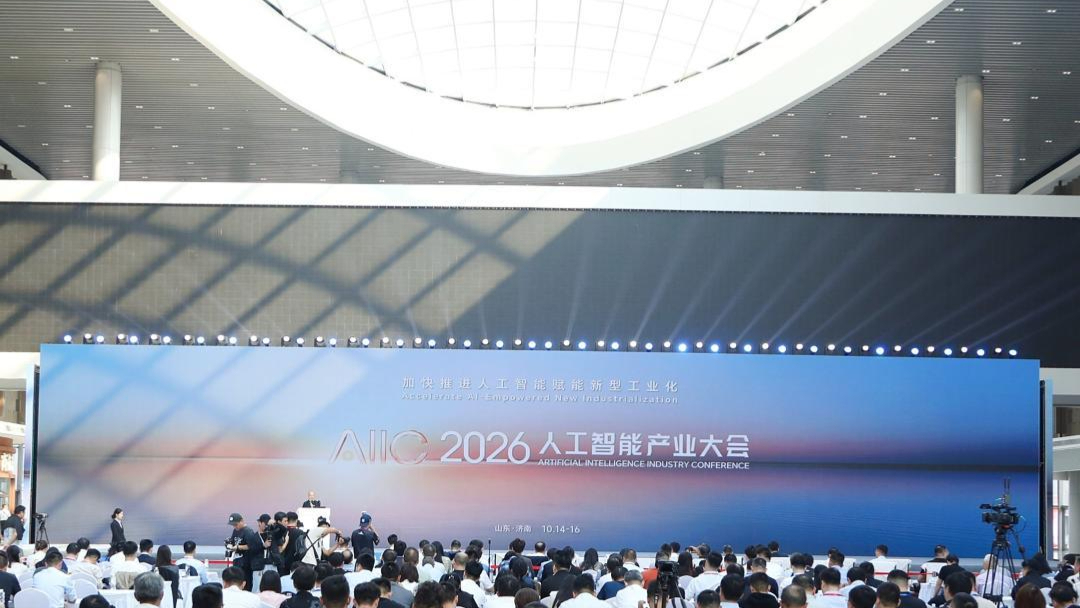
Focusing on "Artificial Intelligence Empowering New Industrialization", the 2026 Artificial Intelligence Industry Conference opens in Jinan

Can Traveler 7 take care of both commuting on weekdays and mountain trips on weekends? This time, the all-new Jetour Traveler 7 will focus on its "Keyo" # Smart Beauty Travel Champion Box # Kecheng Keyo Keyo Travel # 7 Series Square Box New Benchmark # New Traveler 7 Renewal Surprise Price Starting from 125900 yuan