Economic Observer Follow
2026-03-15 07:55


Economic Observer reporter Zheng Mingzhu trainee reporter Xu Bixin
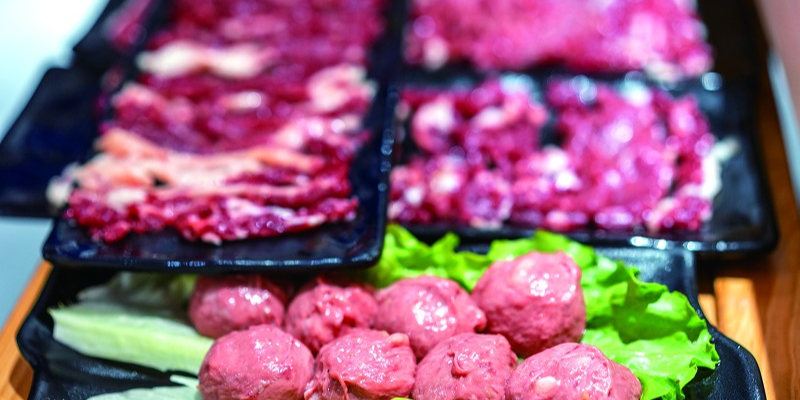
"The national standard is to add 8% beef to the beef balls, and what is the remaining 92%?" This is the confusion of Yang Hua (a pseudonym), a beef ball industry practitioner.
Yang Hua is the head of a beef ball whole industry chain enterprise in southern Henan that integrates breeding and processing. He has always hoped that his own products can enter the supermarket channel. Last year, he negotiated cooperation with a supermarket, but the agent and the supermarket would draw a total of 45% of the profits, which led to the terminal price of his beef balls to be 60 or 70 yuan/jin. Compared to similar products in supermarkets that cost over ten yuan per kilogram, the price competitiveness is clearly insufficient, and the final cooperation could not be reached.
Yang Hua is not reconciled to the fact that the beef content of his beef balls is high, and he believes that they are better both in quality and taste. But there are many beef ball products on the market, which not only do not mark the specific content of beef, but also add chicken, pork and other meat. And these products have more advantages in channel layout due to their low prices. Yang Hua said that from the perspective of meeting the standards, these products are undoubtedly qualified, but in actual consumption, consumers did not enjoy higher quality beef balls, so the industry fell into a vicious circle of "bad money drives good money".
Unknown beef content in beef balls
The problem reflected by Yang Hua is very common in the market.
The reporter of the Economic Observer newspaper saw in an offline supermarket in Chaoyang District, Beijing that beef ranked first in the ingredients list of its self operated brand "Value beef balls", followed by chicken and pork. This product is only labeled as' Main ingredients (beef, chicken, pork) ? 91% '.
The missing food "Golden Chaoshan Beef Balls" sold in a supermarket in Fengtai District, Beijing, is marked with "meat content ? 88%" on the front of the package. The ingredient list shows that it is made of beef, pork and chicken.
Chaoting "Preferred Beef Ball" sold on an online platform contains pork and chicken in addition to beef in the ingredient list. The customer service said, "The total meat content of beef, pork, and chicken is 90%. The ingredient list shows more beef than pork and chicken, but there is currently no specific ratio
According to the General Rules for Pre packaged Food Labeling of National Food Safety Standards, various ingredients should be arranged one by one in descending order of the amount added during the manufacturing or processing of food; Ingredients with an addition amount not exceeding 2% may not be arranged in descending order.
According to the regulation, beef is the first raw material in the beef balls mentioned above, but the specific content of beef is unknown.
In contrast, there are many beef balls marked with beef content on the market, but the beef balls are the same product, and the beef content ranges from 35% to 90%.
In the ingredient list of "Chaoshan flavor beef balls" of Anjing Food, beef ranks first, followed by chicken and beef fat. The product is marked with "beef+chicken+beef fat ? 80%, of which beef ? 35%"; The ingredient list of Baheli Beef Ball shows that the meat only contains beef, and beef ? 90% is directly marked in the ingredients; Haidilao "Chaoshan Beef Balls" marked that the total meat content was "beef+chicken ? 90%", and the ingredient list showed that the beef content was ? 52%, and the chicken content was ? 38%.
In the same store, the merchants also classified beef ball products according to the different beef content. In the flagship store of Chaoting brand, a product named "Chaoshan Beef Balls" has pork in addition to beef in the ingredient list. The customer service said: "The beef content is 80%, plus 10% pork." The product with beef content ? 90% is called "Chunxiang Beef Balls".
The reporter found through inquiry that all the products mentioned above comply with the same standard - "Frozen Modified Food" (SB/T10379).
The standard stipulates that the amount of beef should be no less than 8%
SB/T10379 "Frozen Modified Food" is an industry standard released by the Ministry of Commerce in December 2012. The definition of meat mince products is: pre packaged products made mainly from livestock and poultry meat and their products, aquatic products and their products, etc., ground and mixed with seasoning and other auxiliary materials (including food additives), stirred, emulsified (or not emulsified), formed, heated or not heated, cooled or not cooled, frozen and other processes. According to the standard, the main ingredient in minced meat products is beef or mutton, and the content of beef or mutton must be ? 8%.
For this standard, Yang Hua believes that "with 8% beef content, there is no real beef ball". He said that beef balls must have a sufficient proportion of beef to form. If only a small amount of beef is used, it is necessary to add pork and chicken, and then rely on additives for seasoning. "But under the current standard, beef meatballs with pork and chicken are also up to standard, and we can only ask ourselves to be different from others," said Yang Hua.
In fact, in addition to SB/T10379, beef ball products can also comply with other relevant standards, but the requirements of different standards on raw materials and content are significantly different.
Among them, GB19295-2021 "Frozen Noodles, Rice and Prepared Foods" is a mandatory national standard, which defines frozen prepared foods as foods made from one or more raw materials such as grains, beans, potatoes, livestock and poultry meat, eggs, raw milk, aquatic products, fruits and vegetables, edible fungi, etc., or mixed with filling/auxiliary materials, through preparation, processing, molding, etc., and frozen. But there is no content regulation for a single raw material.
In contrast, the industry standards put forward more specific requirements on the meat content of Rice-meat dumplings. The industry recommended standard SB/T10610-2011 Rice-meat dumplings was issued by the Ministry of Commerce in July 2011, in which Rice-meat dumplings for livestock and poultry were defined as Rice-meat dumplings with the highest content of livestock and poultry meat among the components of Rice-meat dumplings. According to the meat content, it is divided into: special grade (meat content not less than 65%), excellent grade (meat content not less than 55%), and ordinary grade (meat content not less than 45%).
At the local level, the standard of Shantou beef balls is more strict. The local standard DBS44/005-2024 Shantou Beef Ball was issued by Guangdong Provincial Health Commission in August 2024. According to its regulations, Shantou beef (tendon) balls refer to non ready to eat meat products with unique local characteristics made from fresh or frozen segmented beef (with or without tendon) as raw materials (beef content greater than 90%, or the sum of beef and tendon content greater than 90%), excluding edible by-products of cattle (viscera, fat, blood, bones, skin, head, hooves, tail, etc.), added with appropriate amounts of water, edible salt, starch and other auxiliary materials, and homogenized by traditional Shantou hammering or mechanical methods to form pellets, solidified and shaped.
Although industry recommended standards and local standards have higher requirements for beef content and raw material sources, as these standards are not mandatory, companies can voluntarily choose to use them. A survey by the Economic Observer found that more companies choose to implement the more relaxed standard of SB/T10379 "Frozen Modified Food".
Significant Cost Differences
Yang Hua's company also follows the SB/T10379 standard, but the beef content indicated on its product packaging is ? 93%. He revealed that the cost of beef alone is about 36 yuan per kilogram.
Lingling (a pseudonym), the Chaoshan beef ball manufacturer, also said that the price of beef is basically 40 to 55 yuan per kilogram. In addition to ingredients, labor, packaging, water and electricity consumption, the cost determines that the market price of beef balls is 20 yuan, 30 yuan, 40 yuan per kilogram. It is impossible to have a high proportion of beef.
Yang Hua said that the actual production cost of the beef balls sold on the market was only a few yuan after deducting the profit share of agents and supermarkets. Such products often use ground beef, frozen beef with a unit price of more than 10 yuan, or even chicken breast and pork with lower prices. They must rely on thickening agents, essence and other additives to form and flavor. Even if we want to take the high-end route, channel profit requirements make pricing difficult, "Yang Hua said frankly. Agents and supermarkets usually charge a total profit of about 45%, resulting in the terminal selling price of their products reaching 60-70 yuan per kilogram, which has no price advantage compared to similar products sold in supermarkets.
Lingling also mentioned that this phenomenon is more prominent online. On online supermarkets and e-commerce platforms, we can often see beef balls worth 10 to 20 yuan per kilogram. Many products labeled "pure beef balls" contain less than 10% of beef, and the taste is supported by additives. "Bad money drives out good money, which is particularly obvious in the field of beef balls," Lingling said.
Yang Hua shared the identification method for purchasing high-quality beef balls. Consumers can judge from three aspects: from the ingredients list, high-quality beef balls are simple in ingredients, without too many additives. It is necessary to distinguish the total meat content from the beef content. If there are many additives, the quality is low; Taste the taste. The beef balls with high beef content are crispy and elastic, with natural milk flavor. The inferior products are easy to be greasy and have no beef flavor; Looking at the boiled soup, high-quality products have a clear and non discolored soup, with a natural red color inside. Poor quality products tend to have a bitter and dark color inside the soup.

The State Administration for Market Regulation has taken action to crack down on "eye-catching big characters and exempt small characters from liability" advertisements
Honda incurs its first annual loss since going public: a strategic impairment of 2.5 trillion yen on electric vehicles, equivalent to the total profits of the past three years
The first L4 level intelligent agent air conditioner in the AWE industry has been launched. At what level has your air conditioner evolved?


 WeChat registration or login

 Subscribe