Economic Observer Follow
2026-03-14 14:14



Economic Observer reporter Gao Ruoying
Why were exogenous water and syrup found through isotope testing when the ingredient list was labeled as "100% coconut water"?
Chicken and pork appear in the ingredients of beef balls. Why is "beef" not the only leading role?
Why was the mandatory national standard "Hygiene Requirements for Disposable Sanitary Products" revised for the first time after 22 years in 2025?
Why has the debate over Xibei pre made dishes continued to cause a huge public opinion storm, and the heat remains undiminished to this day?
Why did Sam's' 499 yuan basic down jacket 'become a phenomenal item in early 2026?
These seemingly unrelated issues from different fields and dimensions all point to the same root cause: standards.
As a consensus basis, standards play different roles in different events: "coconut water" and "beef ball" reveal that the whole industry lacks basic national standards or industry standards, or even unified detection methods; The revised new national standard after 22 years was due to the exposure of the black production of discarded diapers during the "315" evening party, which also exposed the reality that the national standard seriously lags behind the development of the industry; The delayed arrival of the national standard for pre packaged dishes highlights the real contradiction between the industry and society, which is difficult to reach a consensus on; The reason why high cost-effective down jackets have become popular is not simply driven by low prices, but more based on the offline channels' control and indication of hard parameter standards such as filling volume and fluffiness, and consumers' rational choices made by "voting with their feet".
The standards surrounding people's daily consumption of food, clothing, housing, and transportation have never received as much attention as they do today, which comprehensively define our lives and deeply affect economic operations.
Especially in today's unprecedentedly low threshold for online sales, when some companies exploit loopholes in the current recommended standard framework to "legally produce inferior products", what do we rely on to safeguard the bottom line of product quality?
This is not only a confusion for consumers, but also a key question that lies on the road to high-quality development of China's manufacturing industry.
Microscopic Samples
Readers familiar with the Economic Observer may not be unfamiliar with Huang Ping.
In November 2024, he was the protagonist of the report 'Platform Confusion of a Manufacturing Boss'. As a practitioner in the field of home cleaning (hereinafter referred to as "Jiaqing") for more than 20 years and the chairman of Guangdong Youkai Technology Co., Ltd., Huang Ping once bluntly stated that it is impossible for enterprises to sustainably balance low prices and high quality products.
Over a longer period of time, Huang Ping has been contemplating a small matter: why do white clothes always fail to clean properly and tend to turn yellow?
In the eyes of most people, being intolerant to dirt and prone to yellowing are the unique challenges of wearing white clothes. But Huang Ping said that this is not the case. The fundamental reason is that the quality of household detergents (such as laundry detergent, laundry powder, etc.) is not good enough. Unclean stains accumulate in the fibers for a long time and only become apparent after oxidation. This phenomenon is not only present in white clothing, but other colors of clothing are not easily noticeable.
A few white cloths in the laboratory of Yukai Dongguan (Foshan) factory provide a more intuitive answer to this question: white cloths cleaned with high-quality detergents only show shallow marks after being left for more than a year; The white cloth cleaned with inferior detergent quickly developed yellow stains.
As a traditional industry closely related to daily life, facing a large consumer group, it is understandable that products have different levels of quality and quality. But in the past decade, after struggling in e-commerce live streaming rooms, Huang Ping found that these channels not only failed to open up new growth curves, but also led to a downward spiral in product quality and price development.
Under questioning, Huang Ping discovered a fatal problem that hindered the upward development of the Jiaqing industry and even more industries - the loopholes in the Standardization Law of the People's Republic of China (hereinafter referred to as the "Standardization Law").
In layman's terms, standards are the basis for measuring product quality and market supervision; From the perspective of institutional norms, standards can be further divided into national standards, industry standards, enterprise standards, group standards, and local standards.
The current Standardization Law was revised in November 2017. The revised Standardization Law proposes to divide national standards into mandatory standards and recommended standards, and "encourage" enterprises to develop enterprise standards that are not lower than recommended national standards or industry standards.
Since it is an 'encouragement', companies can choose not to implement it, "Huang Ping said. Companies can develop their own standards that are lower than the recommended standards and set their own testing methods, so as to" act as both a player and a referee "and legally produce inferior products.
For example, according to national recommended standards, the active ingredient content of laundry detergent should not be less than 15%. The Economic Observer also found in its survey that the active ingredient content of some low-priced products in the market can reach 6%, which is nearly half lower than the industry standard. It's like using a bottle of water as laundry detergent to deceive consumers. Is anyone paying attention to it? There's no way to check. These products reflect corporate standards, so they're legal, "Huang Ping said.
The coconut water mentioned earlier is another example. The price of a one liter pack of "100% coconut water" can be as low as 9.9 yuan. However, industry insiders point out that the raw material cost of extracting a liter of water from pure Thai perfume coconut may exceed 20 yuan. Behind the huge price difference is the industry's unwritten rule of diluting with water and adding syrup. Due to the lack of national standards and specialized testing methods, "problematic" products can still be marketed and sold.
In early 2026, the Shanghai Consumer Protection Commission released the "Consumer Survey and Research Report on Establishing Standards to Help Improve Consumer Quality and Upgrade", which showed that the standard setting cycle is long (usually 2-3 years), and new formats such as live streaming e-commerce can complete a round of popularization and upgrading in 6-12 months, resulting in a large number of emerging fields being "without standards to follow" for a long time; 55.46% of respondents pointed out that "lack of standards has become an excuse for unscrupulous merchants to evade responsibility".
In Huang Ping's view, the "internal competition" and chaos in various industries are related to the loopholes in the current standard and regulatory system: when industry competition is not about pursuing quality upwards, it can only compete on price downwards. With the help of e-commerce live streaming, the wave of "traffic only" and "low price competition" is sweeping across the industry, and it is not surprising that "bad money drives out good money" has emerged.
System Malfunction
How do standards affect industry development? A significant case occurred in the aviation service industry.
At the beginning of 2026, the game of locking seats in the aviation industry had just come to an end. For a long time, when passengers choose seats online, they often encounter situations where seats located in the front or aisle are heavily locked, making it impossible to choose or requiring points redemption.
The original intention of airline seat locking was for safety considerations such as load balancing, but with increasing competition, especially the pressure of losses after the pandemic, seat locking has gradually evolved into a commercial means of competing for high-end customers and increasing ancillary revenue. In September 2025, a survey report by the Jiangsu Provincial Consumer Protection Commission showed that the proportion of locked seats on the surveyed routes ranged from 19.9% to 62.1%, with an average of 38.7%. When there is no group standard, you say I have locked it, how can you supervise me to lock how much? If I don't lock, how can I know if others have locked it? "Said Qi Qi, an associate professor at Guangzhou Civil Aviation Vocational and Technical College. Airline A locks more to compete for customers, while airline B follows up and locks more. In the end, the consumer experience is getting worse and the airlines cannot stop.
It can be seen that a scientific and fair standard ruler is crucial for the healthy and orderly development of the industry.
At the beginning of 2026, the China Air Transport Association publicly solicited opinions on the "Rules for Reserved Seats on Public Air Transport Enterprise Flights (Draft for Comments)", which specifies that the proportion of free economy class seats available for domestic flights shall not be less than 70%. The introduction of the group logo is aimed at curbing the "internal competition" caused by the lack of standards, and allowing competition to return to service and experience itself.
But developing a professional scientific ruler is not an easy task.
In Huang Ping's view, the formulation, modification, and implementation of standards in the detergent industry are not simply technical issues, but more like a complex game of multiple interests.
Firstly, there are outdated standards and stagnant updates. At present, the industry standards for laundry detergent were established and implemented in 2012, while the standards for laundry detergent and dishwashing detergent were revised in 2023 and 2024, respectively.
During the process of participating in the revision of industry standards, Huang Ping found that some large enterprises do not even want to significantly improve the quality of standards to avoid increasing costs. In fact, large enterprises generally abide by industry rules; But if the standards are further raised, some small and medium-sized brands or non-standard enterprises will not implement them, which will actually cause cost losses for large enterprises that follow the rules.
Secondly, there is the issue of objectivity and fairness in the standard setting system. The Secretariat of the Standardization Committee, which dominates the standards of the daily chemical industry, is located at China National Institute of Daily Chemical Research Co., Ltd. However, the organization operates as a self financing enterprise and also sells testing consumables (such as waste cloth), chemical raw materials, etc. It has direct business dealings with industry enterprises and can be regarded as another representative of both players and referees.
One of the direct impacts on industry standards is the bias in scientific and professional aspects.
Huang Ping took the detection method of concentrated laundry detergent as an example: the standard stipulates that concentrated laundry detergent with an active ingredient of ? 25% can be tested for cleaning power with half of the industry standard laundry detergent dosage. However, the regulation that "even if the active ingredient is ? 53%, it should be tested at half of the industry standard laundry detergent dosage" ignores the functional differences of different formulas, such as the different formula structures for washing protein stains and fruit juice stains, which even logically makes no sense.
Thirdly, the commercialization tendency in the process of standard setting. Huang Ping stated that the standard setting work, which should have adhered to the principles of professionalism, science, fairness, and impartiality, is becoming a business: whoever pays more is more likely to become the leading drafting unit or rank higher in the standard setting process, thereby gaining greater voice in the standard setting process.
Huang Ping was fully involved in the development of industry standards for laundry beads, and he found that the focus of controversy among participating companies was not on technical parameters, but on the specifications of the beads. In the European and American markets, the weight of a single mainstream laundry gel bead is usually not less than 20 grams, mainly to prevent children from swallowing. However, when formulating standards domestically, some leading companies are pushing to set the standard at "10 milliliters" instead of "10 grams".
What is the difference between "milliliters" and "grams"? Huang Ping explained that cat fat appeared in the "detection method", which involves immersing beads in alcohol and measuring the volume of liquid displaced (in milliliters) to confirm product specifications. But if there are bubbles inside a bead, even if the actual detergent content is only 8 grams, the overall volume may reach 10 milliliters, thus "meeting" the standard.
The introduction of standards is more like the result of blending, "Huang Ping said. Sometimes standards do not reflect their professionalism for the benefit of consumers, but are the product of balancing the interests of major players in the industry.
Even internationally, the debate over standards runs through the history of industrial development, with the entire process intertwined with complex interactions between technology, markets, and countries. As early as the end of the 19th century, frequent steam boiler explosion accidents forced the earliest mandatory safety standards, which were rules exchanged at the cost of life.
Lin Xueping once wrote in the preface of her book "Manufacturing Rules": Although the goal formed by standards is often industrialization of production, the process of formulating standards has a workshop style characteristic - a few people control the connotation and subtle semantics of a new concept, becoming invisible rule leaders. The pressure of economic integration and the complexity of society will be reflected in the standards.
Where To Go
Whether it is the history of the industry or the current difficulties, standard construction has risen from an industry call to a key lever for top-level national design.
The 2026 Government Work Report mentions standards multiple times. The report clearly proposes to comprehensively utilize measures such as capacity regulation, standard guidance, price enforcement, and quality supervision to thoroughly rectify 'internal competition'. This marks that "standard guidance" has become one of the core policy tools for the country to govern market chaos and promote high-quality development. The report also deployed "accelerating the upgrading of standards, strengthening quality supervision and brand building", and emphasized the need to "formulate and revise mandatory national standards for environmental protection, safety, etc.
During the 2026 Guangdong Provincial Two Sessions, Huang Ping once again elaborated on the crux of the current economic difficulties in his view during the group discussion. However, the feedback he received left him with mixed feelings.
Different people have different reactions, "even the counselor who participated in the formulation of standards and regulations told Huang Ping. Their perspective on problem-solving is different from his, and they hope that society can have more innovation and be more diverse.
Zhang Lin has been engaged in enterprise standard consulting services in Shenzhen for nearly 20 years, and he deeply feels the concept of "a hundred flowers blooming" mentioned by the aforementioned counselor. In his view, the construction of China's standard system has undergone a leapfrog development after the revision of the Standardization Law in 2017. Before 2016, the export of many Chinese products was restricted by international standardization organizations such as ISO and IEC. After the revision of the Standardization Law, there are now nearly three to four thousand international standards from China.
The formulation and revision of standards are essentially aimed at activating the market and encouraging diversified development, "Zhang Lin said. National standards and industry standards are actually the minimum technical requirements in the domestic system, aimed at providing a basic space for the survival and growth of a large number of small and medium-sized enterprises. This is the background and foundation for understanding the" diverse development "theory mentioned above.
But in the process of participating in the formulation of enterprise standards, Zhang Lin also saw problems. For industries with rapid updates and iterations such as fast-moving consumer goods and electronic components, the emergence of new products often precedes the establishment of national and industry standards. Enterprises quickly push their products to the market by developing and filing their own enterprise standards. From a positive perspective, this is a reflection of market vitality.
However, there are no corresponding industry standards for maintenance products such as insecticides and flower nutrient solutions that have been popular on e-commerce platforms. But through testing of the production process, research and development materials, and equipment, the final enterprise standards can also be filed. "Zhang Lin said that many of these products, which were popular at the time, were also low-priced and quickly disappeared after the marketing trend, and the enterprise standards are difficult to say how high their value is.
In Huang Ping's view, innovation should be of higher quality, rather than "downward innovation" without a quality bottom line. What the law needs to do is to limit boundaries and set bottom lines; Standards are the yardstick for measuring product quality and the basis for market supervision. If the bottom line of maintaining fair competition in the market is lost, the so-called "blooming flowers" will only evolve into low-level vicious competition overgrown with weeds.
Therefore, Huang Ping also put forward specific suggestions at this year's Guangdong Two Sessions: to modify the clause in the Standardization Law that "encourages enterprise standards not to be lower than the recommended standards" to "enterprise standards must be higher than the recommended standards".
Huang Ping emphasized that once "must" becomes the legal bottom line, enterprises can only "roll up" product quality and R&D innovation in order to differentiate competition, thus forming a quality gradient and price gradient of products, guiding the market to form a virtuous cycle of competition.
While promoting the long-term goal of legal revision, Huang Ping also proposed a more practical intermediate plan: drawing on the successful experience of household appliance energy consumption labeling and hotel star rating, and mandating the implementation of simple and easy to understand quality grading labeling on product labels.
Consumers who can understand it will purchase products of the corresponding level based on their purchasing power, and will not be deceived or fooled. Huang Ping believes that this is conducive to the formation of a pyramid shaped product structure in the industry, allowing high-quality and low-priced products to gain market recognition.
Standards are the beacon that leads the healthy and high-quality development of industries - Huang Ping's call is not only to plead for an industry, but also to explore a breakthrough path for all manufacturing enterprises and social economies struggling in the "internal competition".
This road is destined to be long, but the problems have already been raised and exploration must begin.
(At the request of the interviewee, Zhang Lin is a pseudonym)

The State Administration for Market Regulation has taken action to crack down on "eye-catching big characters and exempt small characters from liability" advertisements
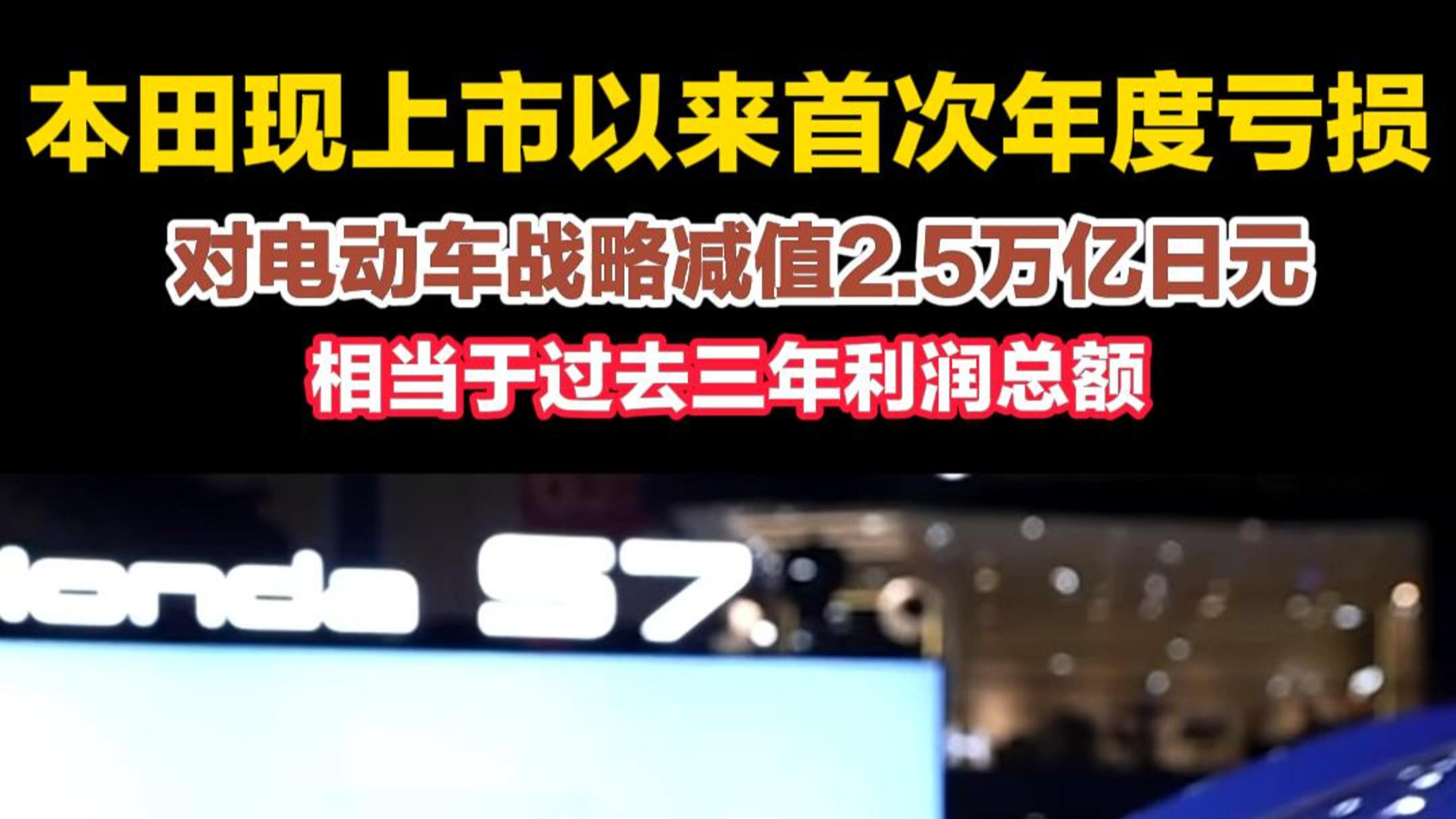
Honda incurs its first annual loss since going public: a strategic impairment of 2.5 trillion yen on electric vehicles, equivalent to the total profits of the past three years
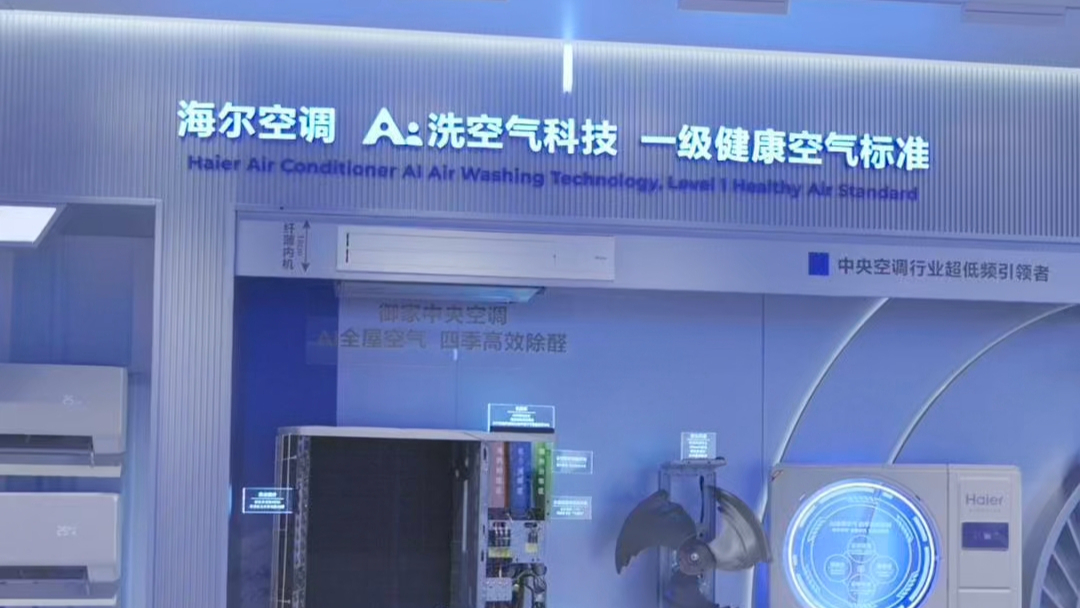
The first L4 level intelligent agent air conditioner in the AWE industry has been launched. At what level has your air conditioner evolved?


 WeChat registration or login

 Subscribe