Economic Observer Follow
2026-03-13 19:14



The current interest rates for fixed deposits are so low, but I don't know what to buy besides regular deposits. I don't trade stocks, gold, or insurance. Since March, many depositors like Ms. Xin have been searching for deposit products with interest rates above 2% on social media.
Ms. Xin found that small and medium-sized banks that used to attract depositors with high interest deposits have recently lowered their deposit interest rates, and common high interest products in the market are almost nowhere to be found.
On the evening of March 11th, Hubei Three Gorges Rural Commercial Bank announced a reduction in interest rates for multiple deposit products. The bank stated that this adjustment was made in accordance with relevant regulations on interest rate management and based on the actual operational situation of the bank.
The president of a rural commercial bank in the western region told Economic Observer reporters that the deposit interest rates of his bank have all dropped below 2% by early 2026.
Difficult to find deposits with interest rates above 2%
After searching for local high interest deposit products, Ms. Xin finally deposited 100000 yuan of idle funds into a branch of Nanjing Bank in Shanghai on March 5th, and processed a 3-year fixed deposit with an interest rate of 1.90%. She is expected to receive an interest of 5700 yuan upon maturity.
The continuous decline in deposit interest rates has not only changed depositors' choices, but also prompted small and medium-sized bank customer managers to change their customer acquisition models.
A customer manager from Weihai Bank Tianjin Branch said that it has become harder to find deposit customers recently. Previously, when deposit interest rates were relatively high, small and medium-sized banks like them had obvious advantages, mostly relying on customers to contact them proactively. However, now many account managers are recruiting customers for deposits on social media.
After the Spring Festival, several small and medium-sized banks lowered their deposit interest rates, covering regions such as Hubei, Yunnan, Xinjiang, Jiangsu, etc., with a reduction range of 5 to 35 basis points.
On the evening of March 11th, Hubei Three Gorges Rural Commercial Bank announced a reduction in interest rates for multiple fixed deposit products. Taking its fixed deposit product "Fumanying" as an example, the annual interest rates for 1-year, 2-year, and 3-year terms have been adjusted to 1.15%, 1.25%, and 1.55%, respectively, a decrease of 25 basis points, 25 basis points, and 30 basis points from before.
Hami Commercial Bank will adjust deposit interest rates starting from March 10th. Compared with the adjustment on May 30th, 2025, the 1-year, 2-year, and 3-year deposit interest rates will all be reduced by 20 basis points, and the 5-year deposit interest rate will be reduced by 25 basis points. Xinjiang Bank also lowered deposit interest rates on March 10th. This adjustment involves all term fixed deposit and withdrawal products, with the largest decrease of 15 basis points for the 5-year term.
It is worth noting that some small and medium-sized banks have experienced an "inverted" phenomenon in the interest rates of their adjusted fixed deposit products. For example, Heilongjiang Friendship Agricultural and Commercial Bank will adjust its deposit interest rates from March 1, 2026. After the adjustment, the bank's 3-year and 5-year deposit interest rates will be 1.75% and 1.60%, respectively.
Jiang Han, a senior researcher at Pangu Think Tank, told the Economic Observer that the macro monetary policy orientation is the fundamental driving force. In order to support the recovery of the real economy, the central bank has continued to implement the policy of reducing reserve requirement ratios and interest rates. The policy interest rate has been lowered multiple times, guiding the market to have reasonable and sufficient liquidity. As the end of the interest rate transmission mechanism, the deposit interest rate of small and medium-sized banks will inevitably follow the downward trend of policy interest rates to reduce the comprehensive financing cost of society. In addition, the narrowing of bank net interest margins to historical lows has forced debt side reforms. Against the backdrop of continuously declining asset yields, small and medium-sized banks can only maintain basic profit margins and risk offsetting capabilities by significantly reducing the cost of deposits, the main liability.
Jiang Han stated that the trend towards fixed deposits has intensified cost pressures. In recent years, residents' willingness for precautionary savings has increased, and the proportion of long-term high interest deposits has risen, leading to a rigid increase in the cost of bank liabilities. Small and medium-sized banks aim to optimize the deposit term structure, curb irrational competition of "high interest collection of deposits", and actively adapt to the new normal of asset liability management in the era of low interest rates by lowering long-term interest rates and even causing interest rate inversion.
How does the interest rate spread go
The president of the above-mentioned rural commercial bank stated that the bank mainly targets local farmers, herdsmen, and county residents, and the deposit volume is already not large. The reduction of deposit interest rates will not have a significant impact on overall deposits. But for the bank, a severe test is that it is located in areas with Agricultural Bank of China, China Construction Bank, Postal Savings Bank of China, and local city commercial banks, with fierce competition among peers.
The president of the rural commercial bank admitted that it will be difficult for the bank's interest margin to stabilize in 2026, and reducing costs and increasing efficiency will still be the core work direction for the whole year, mainly reflected in strict budget management, reducing the cost to income ratio, and increasing revenue channels.
The operating logic of small and medium-sized banks is undergoing a change, from single point interest rate cuts to industry wide control of debt costs, and from passive interest concessions to active transformation. As the debt side continues to adjust, when the industry's net interest margin will bottom out and how it will break through in the future have become the focus of market attention.
The "Report on the Development of Small and Medium sized Banks (2025)" released by the Shanghai Finance and Development Laboratory (hereinafter referred to as the "Report") shows that the interest rate of deposits in listed banks will enter a downward trend from mid-2024, showing a trend of first slowing down and then accelerating. Small and medium-sized banks have stronger cost control measures on the debt side, with an average decrease of 25.7 basis points in interest rates for city commercial banks and 24.4 basis points for rural commercial banks.
This is mainly driven by two factors: price and structure: the reduction of execution interest rates and listing interest rates, the strengthening of self-discipline mechanisms, and the convergence of manual interest payments, which promote the overall downward movement of various deposit interest rates; The adjustment of the term structure of fixed deposits from long to short and the repricing of some medium - and long-term fixed deposits after maturity have further lowered the comprehensive interest payment cost.
In terms of operating cost control, the report shows that the cost to income ratio of small and medium-sized banks has turned negative year-on-year, reflecting the strategic adjustment of actively controlling fees, optimizing channels and processes. Rural commercial banks have been consistently negative year-on-year since the first quarter of 2024, and will remain at -0.38% in the third quarter of 2025; City commercial banks also turned negative from the first quarter of 2024, and the downward trend will further expand in 2025. This change indicates that under the pressure of revenue growth, small and medium-sized banks have effectively controlled operating costs through branch optimization, personnel streamlining, digital transformation, and other methods.
Jiang Han stated that the narrowing of the interest margin is due to the faster decline in asset side returns than the cost drop on the liability side. Although the deposit interest rate has dropped to the beginning of the letter "1", the repricing of existing mortgage interest rates, the continuous reduction of loan market quoted interest rates, and the insufficient demand for effective credit have led to a greater decline in loan yields. In addition, facing a huge wave of fixed deposit maturities in 2026, banks have a lag and rigidity in reducing actual interest payment costs in order to retain customers, resulting in slow repair of interest spreads.
Jiang Han believes that there is still room for further narrowing of interest rate differentials among small and medium-sized banks in the future, but the decline will slow down. With the deepening of interest rate marketization and the continuation of policies supporting the real economy, the loan interest rate is difficult to bottom out; Meanwhile, the global low interest rate environment has constrained the downward bottom line of deposit interest rates. He expects the industry's net interest margin to hover at a low level until a new equilibrium is formed.
He mentioned that small and medium-sized banks need to shift from "scale driven" to "characteristic and lightweight" development. One is to deeply cultivate local differentiation positioning, focus on sub sectors such as inclusive small and micro enterprises and green finance, and enhance risk pricing ability to obtain higher asset returns. The second is to vigorously develop non interest income, expand intermediary businesses such as wealth management and investment banking consulting, and reduce dependence on interest rate spreads. The third is to strengthen digital operations, reduce operating costs through technological means, and use refined management to hedge the profit pressure caused by the narrowing of interest margins.

The State Administration for Market Regulation has taken action to crack down on "eye-catching big characters and exempt small characters from liability" advertisements
Honda incurs its first annual loss since going public: a strategic impairment of 2.5 trillion yen on electric vehicles, equivalent to the total profits of the past three years
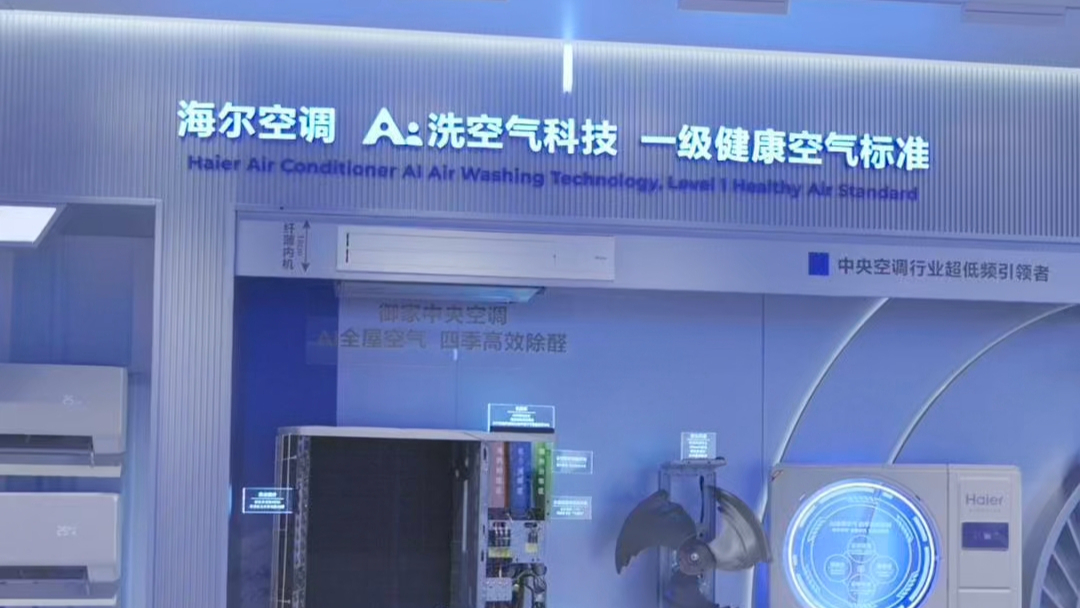
The first L4 level intelligent agent air conditioner in the AWE industry has been launched. At what level has your air conditioner evolved?


 WeChat registration or login

 Subscribe