2026-03-13 17:00


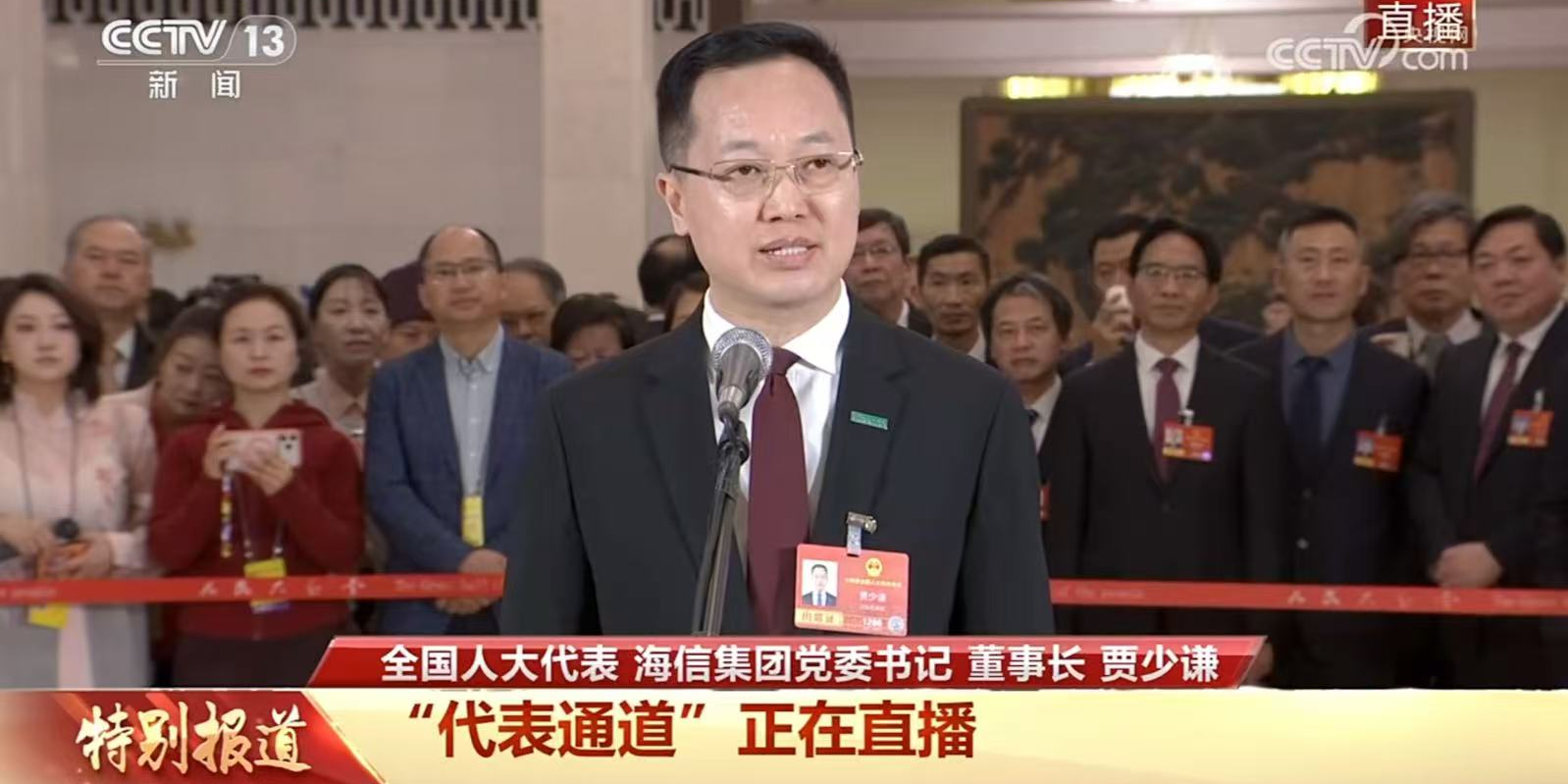
In January 2025, in Las Vegas, USA, Hisense unveiled its RGB 3D color controlled LCD display technology at CES (International Consumer Electronics Show), also known as the "Tech Spring Festival Gala".
After the release, foreign experts stopped in front of Hisense's TV screen for more than ten minutes, repeatedly testing technical indicators with various instruments, and even took out calipers to measure the gap between the frames.
Wang Yedong, General Manager of the Pre Research and Technology Management Center of Hisense Display Division, watched this scene with great emotion. She had been in the industry for 13 years and had seen her competitors studying Hisense's products so seriously for the first time at an exhibition.
This scene was unimaginable ten years ago.
At that time, Chinese home appliance brands were not yet the protagonists at CES, and the discourse power of high-end display technology was firmly held in the hands of Japanese and Korean companies.
On March 12, 2026, Jia Shaoqian, a National People's Congress representative, Secretary of the Party Committee of Hisense Group, and Chairman, walked onto the third "representative channel" of the Fourth Session of the 14th National People's Congress.
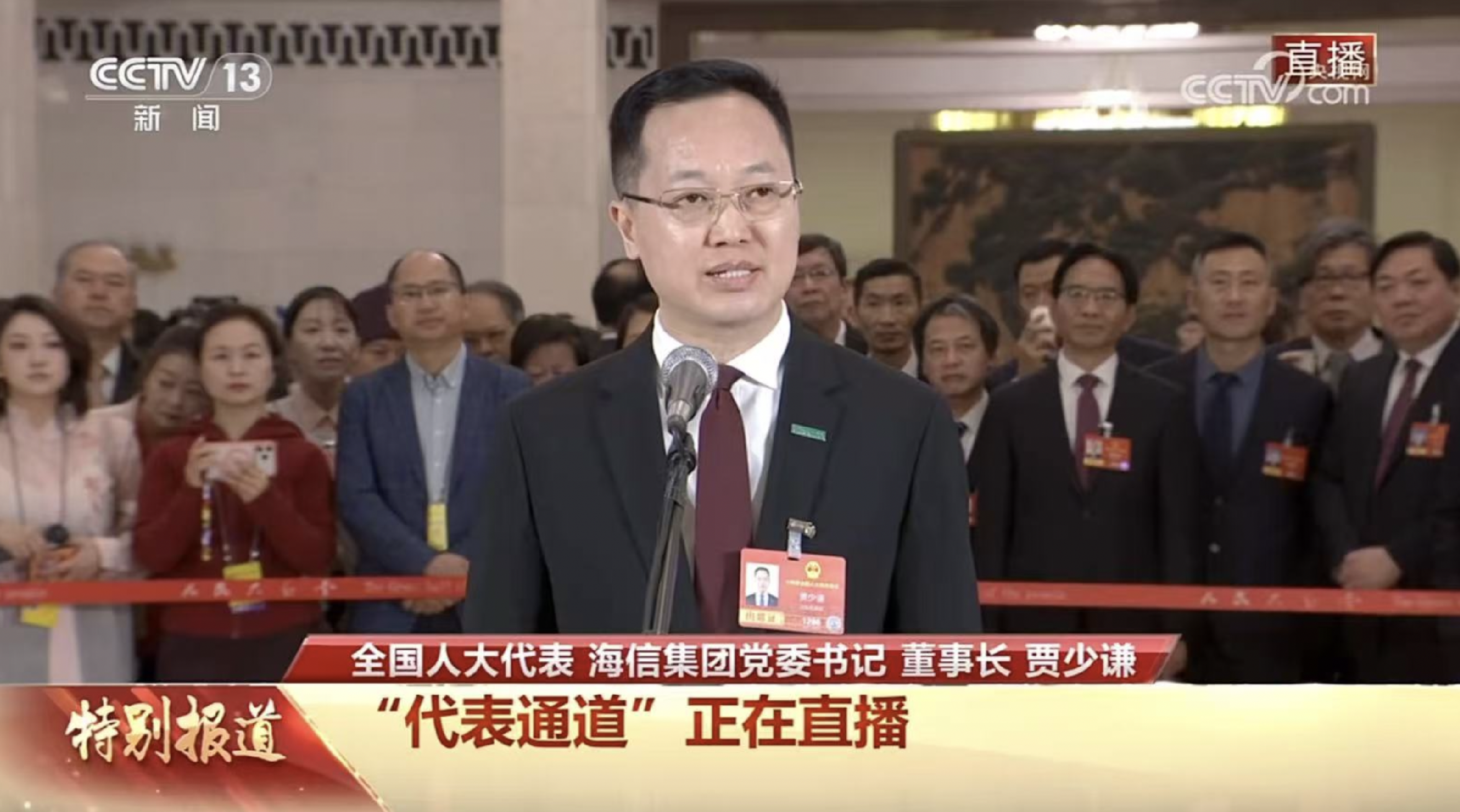
Jia Shaoqian joined Hisense in 1997 and started working at the grassroots level.
He said on the representative channel that he has "witnessed the historical leap of Chinese manufacturing from long-term following and running, to today's leading in certain fields".
Having worked in the manufacturing industry for many years, his deepest feeling is that everything cannot be separated from the word innovation.
He mentioned several things on the representative channel. Hisense has been researching and developing chips in the display field for 26 years. The world's first two display chips have solved the long-standing problem of color and light control in the industry, and are more than a year ahead of foreign countries in mass production; The central air conditioning lighthouse factory and television lighthouse factory have transformed their production lines with AI; The proportion of overseas revenue has reached 50%.
More and more global firsts have taken Chinese manufacturing to a new level and allowed us to taste the sweetness of climbing up the value chain, "said Jia Shaoqian.
2026 is the 57th year of Hisense's establishment. From the development of the first independent chip to standing on the "representative channel", this company's journey has demonstrated a facet of innovation in China's manufacturing industry.
Twenty six years, from one chip to two lighthouse factories
In 2000, Hisense established a chip design center in Shanghai.
At that time, China produced about 70 million televisions annually, and none of the chips were domestically produced. Hisense spent five years and by 2005, launched the first digital video processing chip in China's television industry with independent intellectual property rights and industrialization, named "Xinxin".
After this chip was made, the price of imported chips decreased by 50%.
Jia Shaoqian mentioned this history on the representative channel: "Our chip research and development in the display field has condensed 26 years of ups and downs, while also giving us the ability to define our own products
Over the past 26 years, Hisense's R&D investment has consistently remained at nearly 5% of its revenue, with pre research investment accounting for over 30% of the R&D investment. So far, Hisense has applied for over 70000 patents, participated in 78 international standards, and won 7 national level science and technology awards.
However, what truly sets the industry's sights on is the two chips of 2025.
This starts with a 20-year stalemate.
As early as 2004, Sony demonstrated a prototype of RGB LED backlight technology, using red, green, and blue LEDs directly as the backlight source for LCD TVs. Theoretically, the picture effect is much better than traditional white backlight. But the problems are also very obvious: low luminous efficiency, poor color purity, and short lifespan.
Sony was unable to turn this technology into a mass-produced product, and thereafter, the global display industry fell silent on the RGB backlight path for 20 years.
In 2025, Hisense captured two chips.
The first one is the world's first RGB color and light synchronization image quality chip, which solves the industry problem of light and color synchronization control and brings RGB displays from the laboratory to the production line. The second one is an efficient RGB LED chip, which solves the industrialization barriers of three color LEDs in terms of luminous efficiency, service life, color shift, and color gamut purity.
Behind the two chips, there is an interesting story about industry chain collaboration.
In January 2023, Hisense Video announced that it had invested a total of 1.605 billion yuan in Qianzhao Optoelectronics (300102. SZ), holding 22.88% of the shares and becoming the largest shareholder. Qianzhao Optoelectronics is the company with the highest market share in the field of RGB display LED chips in China.
The changes brought to both companies after investing are very obvious.
Qianzhao Optoelectronics has experienced consecutive years of losses. In 2023, Mini LED backlight chip revenue increased by 178% year-on-year, and the net profit turned positive that year.
Hisense has developed RGB 3D color control technology into a product that can be sold on the market, leading mass production by more than a year compared to foreign countries. The product has been sold to over 20 countries and regions.
Ding Wenhua, an academician of the CAE Member, commented on this technology: "Hisense overcame the technical problem of RGB 3D color control and launched RGB Mini LED TV products, which not only achieved better color performance than QD-OLED, significantly saved energy, but also opened a new imagination for the technological revolution of the global display industry. ?
The market's response is equally direct.
After Hisense released the RGB Mini LED TV, Sony announced that the next generation flagship will adopt RGB Mini LED technology and is expected to be launched in 2026. Samsung and LG have also announced follow-up. During the Double 11 period in 2025, the sales of RGB Mini LED TVs in the 85 inch offline high-end large screen market with a price of over 20000 yuan will account for 48.7%, and one out of every two high-end large screen TVs will be RGB Mini LED.
Hisense's sales in this track account for over 95%, with sales accounting for over 93%.
Ovrievo predicts that global RGB Mini LED shipments will reach 500000 units by 2026.
Jia Shaoqian's original words on the representative channel were: "It is the increasing number of 'global firsts' and' global firsts' that have taken Chinese manufacturing to new heights and tasted the sweetness of climbing up the value chain
So far, Hisense has obtained 1495 core patents in the RGB Mini LED field, and its products have won over 40 awards worldwide since their launch one year ago. In the first quarter of 2025, Hisense's share of high-end TV shipments increased from 14% to 20%.
On March 5, 2026, Hisense released the second generation RGB Mini LED TV. On the basis of the three primary colors of red, green, and blue, the new product has added a sky blue light-emitting chip, which reduces the proportion of harmful blue light by 40% and energy consumption by 30%.
From chips to products, Hisense has taken the path of technology to commodities, but Jia Shaoqian's speech on the representative channel is more about the changes in the manufacturing process itself.
He said, "In the past, manufacturing was known as the 'industry that earns hard-earned money' and was at the bottom of the smile curve, but now, manufacturing has become one of the fastest stages for connecting with new technologies
Jia Shaoqian gave an example on the representative channel.
Hisense Hitachi Huangdao Factory is the world's first multi split "lighthouse factory".
There is a pipe threading process in the factory, where workers need to accurately thread dozens of copper pipes into hundreds of aluminum foil holes at the same time. The precision requirement is finer than a human hair, and a slight deviation can cause material damage.
Hisense has independently developed automatic pipe threading equipment, with 17 sets of high-precision visual cameras acting as eyes, AI algorithms for real-time calculation, and 11 robots operating at high speed. This long-standing problem that has plagued the industry has been solved.
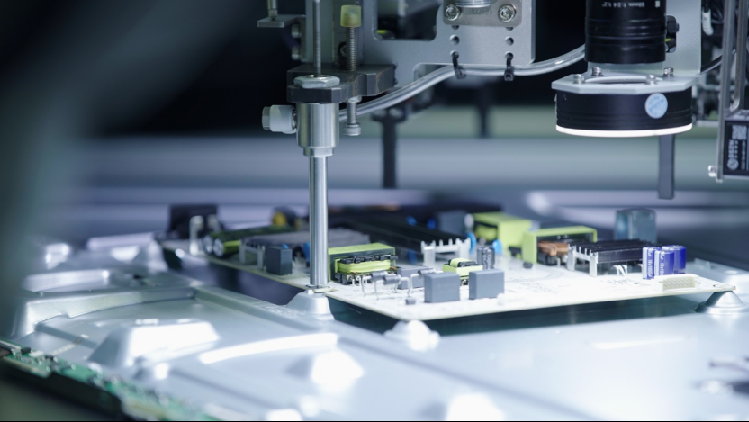
Jia Shaoqian gave the report card of this factory on the representative channel: product development speed increased by 37%, production efficiency increased by 49%, production costs decreased by 35%, and unit energy consumption decreased by 13%.
Similar cases have also occurred with dry photonics.
The detection of surface defects on wafer chips is a long-standing challenge. There are hundreds of thousands of grains on a single wafer, with a single chip area of less than 1 square millimeter. In the past, workers had to visually inspect each grain under a microscope, which took about 10 minutes per wafer.
After the launch of Hisense's self-developed AI visual quality inspection system, the detection time for a single chip was compressed to less than 0.2 milliseconds, and the defect detection rate was increased by 10 times.
On January 15, 2026, Hisense Video Qingdao Factory was selected as a "Lighthouse Factory" by the World Economic Forum, becoming the only enterprise in the global television industry to receive this recognition. This factory covers an area of 310000 square meters and produces an average of one 85 inch TV every 20 seconds.
Jia Shaoqian also mentioned it on the representative channel: "AI can not only make production faster, but the key is to be able to respond quickly to market changes, meet user needs, and write customer requirements into the production line. This is the new transformation period from traditional Chinese manufacturing to Chinese intelligent manufacturing, which brings us infinite possibilities. ?
More than 40 AI use cases have been deployed in the factory, including 25 Hisense self-developed first set of automation equipment, of which 11 are industry firsts. The data provided by the judges of the World Economic Forum is: a 34% reduction in research and development cycles, an 18% decrease in material costs, and a 60% reduction in training time for new employees.
The starting point of this TV lighthouse factory was in 2015.
Yuan Haidong, General Manager of Hisense Video Intelligent Manufacturing Department, said, "The key to building a lighthouse factory is to sharpen a sword every ten years. First of all, you need to withstand 10 years of continuous research and development and investment
Combined with the previously awarded central air conditioning lighthouse factory, Hisense currently has three lighthouse factories.
The overseas market has been gradually established
Jia Shaoqian likes to use the phrase 'a little bit' to tell Hisense's story of going out to sea.
Channels are gradually established, brands are gradually developed, and overseas markets are gradually established
The starting point of Hisense's overseas story is not very bright.
Around 2004, CES was the world's most important electronics exhibition, and Hisense couldn't even get a booth. Without money, money cannot buy it. Hisense staff can only rent a conference room in a hotel near the exhibition, move in the TV, intercept customers at the exhibition, and bring them to the hotel room to watch the products.
At that time, the mainstream channels in Europe and America, Costco? Best Buy and other stores do not allow Chinese brands to enter the market. In the eyes of distributors, Chinese brands are equated with low-end low prices.
Hisense conducted a test by placing Hisense products together with products from Japan, South Korea, Europe, and America, removing the brand logo and labeling them with different prices for blind selection by distributors.
As a result, Hisense products were selected due to their high cost-effectiveness.
At the beginning, we tried to put 30 or 50 Hisense products into the channel, only in one corner, "Jia Shaoqian recalled. The channel discovered that it could sell and make money, and then slowly increased its volume. From a television in its twenties, it gradually extends to its forties, fifties, and sixties. From the small corners at the edges, gradually arch towards the center.
In 2006, "Big Head Overseas" was upgraded to Hisense's official internationalization strategy.
The breakthrough point of the brand is sports marketing. In 2008, Hisense sponsored the naming of the Australian Open and tasted the sweetness for the first time. In 2016, we secured sponsorship for the French European Championship, and subsequently sponsored the 2018 World Cup, 2020 European Championship, 2022 World Cup, and 2024 European Championship consecutively. We also became the first global official partner for the 2025 Club World Cup.
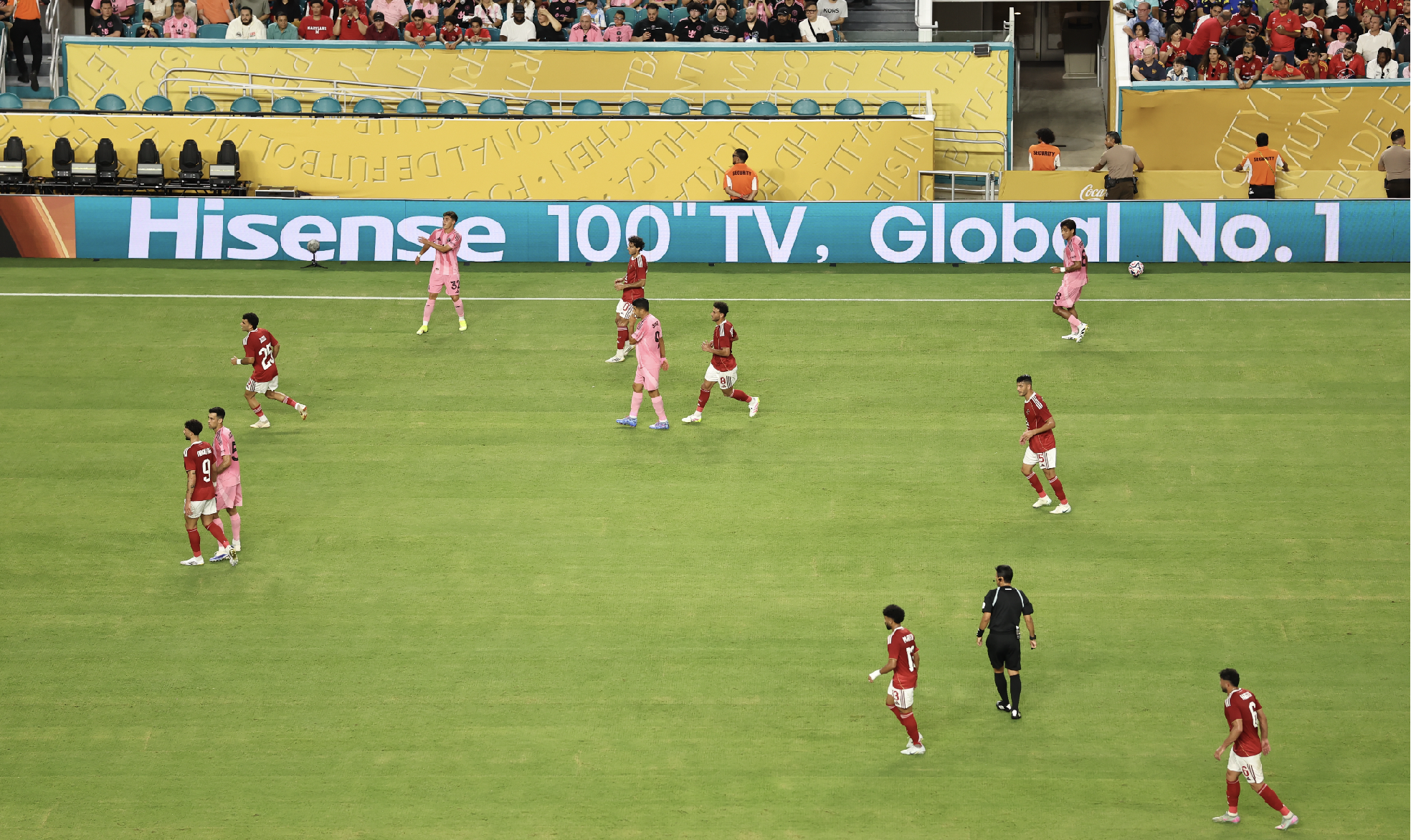
Football works because it is a globally recognized language, watched by both developed and developing countries. When a brand is associated with football, it is liked by channels, consumers, and local governments. Previously inaccessible channels are now actively sending out invitations.
Hisense's global brand awareness has increased from 28% in 2017 to 56% in 2024. Selected as one of the top 10 global brands in China for 9 consecutive years.
In 2006, Hisense's overseas independent brand revenue accounted for less than 10%. By 2025, this number will be 87%.
In 2025, Hisense's overseas revenue will be 110.7 billion yuan, a year-on-year increase of 11%, accounting for 49.3% of the overall revenue. Jia Shaoqian said on the representative channel, "The proportion of international revenue has been increasing year by year, and it has now reached 50%. We are also actively driving and helping small and medium-sized enterprises in the industrial chain to go global together
From zero to billions, Hisense took nearly 20 years, and there was an accelerator in between, which was mergers and acquisitions.
In 2015, Hisense acquired Sharp's factory in Mexico. In 2018, it successively acquired Toshiba Television in Japan and Gorenje in Europe. In 2021, it acquired Japan's Three Electric Holdings.
Toshiba Television and Gorenje turned losses into profits after being acquired by Hisense 15 and 18 months respectively. Japan's three power companies will turn losses into profits in 2024. In the Japanese market, Hisense TV's sales share has steadily risen from 12.2% when it acquired Toshiba TV to over 25%, ranking first.
When Gorenje was acquired, it was already on the brink of survival.
Nowadays, the minimum monthly income for Gorenje employees has increased from around 700 euros during the acquisition to around 1250 euros. Gorenje is now Hisense's manufacturing base and operational center in Europe.
Jia Shaoqian's view on mergers and acquisitions is: "Mergers and acquisitions are not about killing the other party. Every time Hisense acquires a company, it will make every effort to invest in talent, management, technology, and real money to make the acquired company bigger and stronger, and continue to increase brand and research and development investment, promoting the healthy and sustainable development of the enterprise from a long-term perspective
What gave him more confidence in speaking was his early experience of acquiring Kelon.
At that time, Hisense's own scale was only over 20 billion yuan, while Kelon's debt was as high as 7 billion yuan. Almost every day, I thought it was over and about to fail, "Jia Shaoqian recalled. Integration took 3 to 4 years. Now Kelon's annual income is more than 85 billion yuan, 10 times that of the acquisition.
In terms of driving the industrial chain, data shows that Hisense has driven more than 40 supplier companies in the display industry chain to go global, covering optical modules, backlight modules, structural components, and packaging materials. In 2024, drive 25 industrial chain enterprises to invest or expand production in Qingdao.
A new materials company that supplies packaging materials to Hisense followed Hisense to Mexico. The factory is located in the local industrial park of Hisense. Hisense provides orders, waives some factory rent, and helps coordinate daily management and recruitment. In 7 years, the Mexican factory of this company has expanded from a dozen people to over 200 people, and the order volume has more than doubled. Later on, it not only supplied to Hisense, but also expanded to Foxconn, Google, and Microsoft, with a domestic and international business volume of 50-50.
At present, Hisense has 36 industrial parks and production bases, 30 research and development institutions, and 64 overseas companies and offices worldwide. By 2025, the sales of high-end TVs and refrigerators priced at over $1000 from Hisense will increase by over 30% year-on-year overseas.
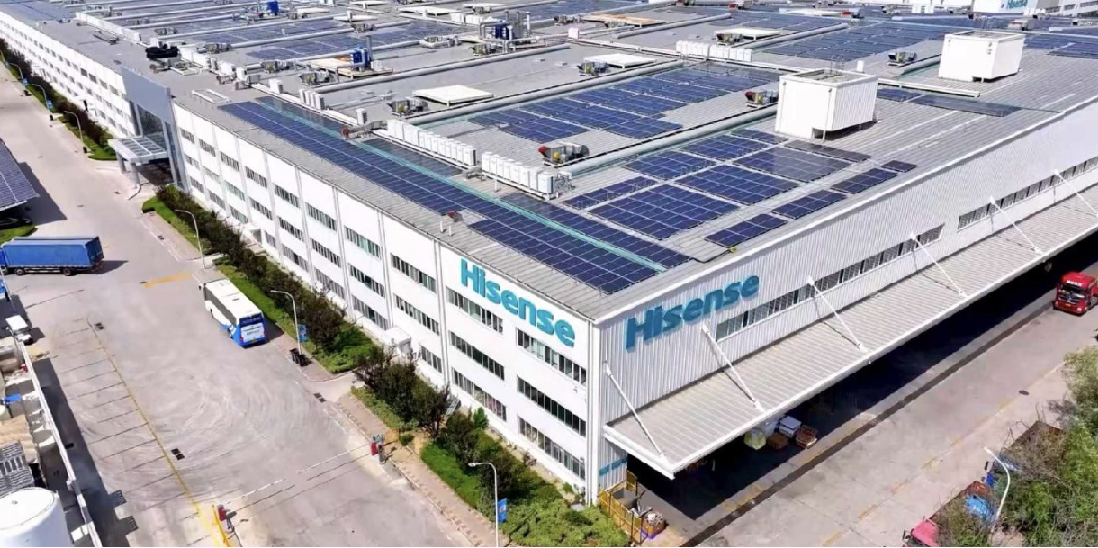
Beyond home appliances, Hisense's industrial landscape is also expanding. In the semiconductor sector, its subsidiary Nazhen Technology specializes in optical communication, providing optical modules and chips for AI computing power networks; Xinxin Microelectronics produces display chips and TCON chips are leading in the international market; The LED display chip of Qianzhao Optoelectronics has a domestic market share of over 30% and ranks first in the RGB display field.
In the automotive electronics sector, the automotive air conditioning compressor business of its subsidiary Three Electric Company is the second largest in the world, serving customers such as Mercedes Benz, BMW, Volkswagen, Volvo, etc. It is also a supplier to domestic car companies such as GAC Aion, Geely, Chery, and Leapmotor. The smart energy sector covers more than 20 countries around the world, including Thailand, Vietnam, Brazil, Nigeria, and more.
As a representative of the National People's Congress, Jia Shaoqian has been paying attention to the issue of transforming scientific and technological achievements in recent years.
Hisense has established long-term cooperation with more than 70 domestic universities and built over 50 joint laboratories with suppliers. He suggested last year to 'bring more technological achievements out of the laboratory and onto the production line', and this year he continues to suggest effectively combining AI applications with manufacturing innovation.
Jia Shaoqian once said in public that it may be appropriate to end here: "In the field of home appliances, in an industry that others have strategically abandoned, even if we achieve the first place in China or even the world, it cannot be considered great. We need to prepare for the next 20 to 30 years. Traditional advantageous industries cannot fall behind, and emerging industries should gradually form market influence and value contribution. The two parts should empower each other, which should be the strategic mainline for the next three to five years
The State Administration for Market Regulation has taken action to crack down on "eye-catching big characters and exempt small characters from liability" advertisements
Honda incurs its first annual loss since going public: a strategic impairment of 2.5 trillion yen on electric vehicles, equivalent to the total profits of the past three years
The first L4 level intelligent agent air conditioner in the AWE industry has been launched. At what level has your air conditioner evolved?


 WeChat registration or login