Economic Observer Follow
2026-03-14 11:40


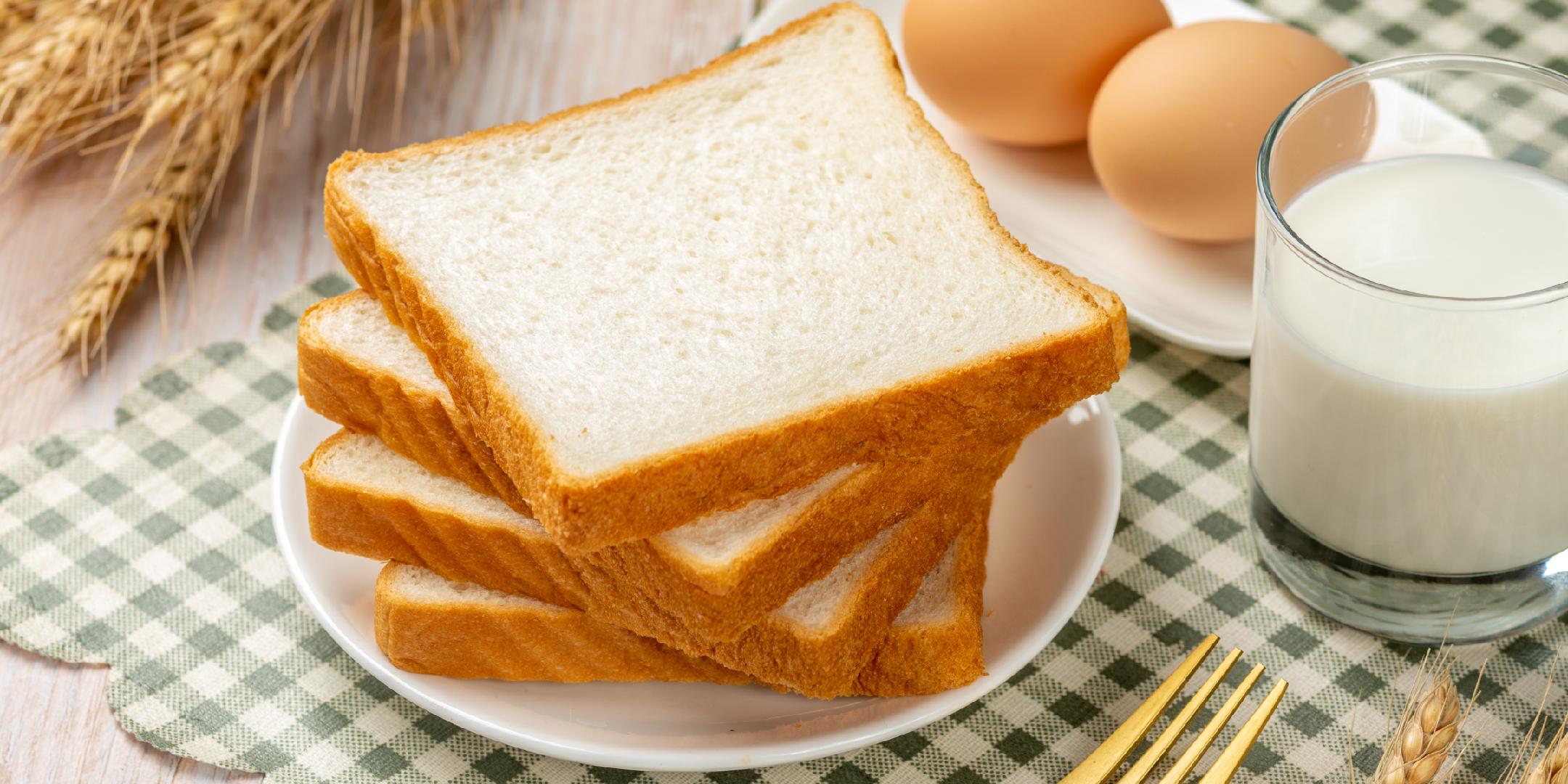
Whole wheat bread is a popular health food nowadays, mainly aimed at people who pay attention to dietary management and sugar and weight control. However, when consumers pick up a pack of "whole wheat bread" from the shelf with expectations for health, there may not be much whole wheat flour inside.
Recently, reporters visited multiple supermarkets and bakeries in Beijing and found that bread marketed as "whole wheat" has varying levels of whole wheat flour content. From less than one-fifth to nearly half, the price difference ranges from a few yuan to over ten yuan. Many products labeled as "whole wheat bread" have wheat flour as the first ingredient on their ingredient list, or do not clearly indicate the content of whole wheat flour.
On social media, many netizens have raised questions about whether buying whole wheat bread for weight loss with wheat flour as the first ingredient on the ingredient list is considered whole wheat bread?
As of March 12th, there were 569 complaints related to "whole wheat bread" on the Black Cat Complaints Platform. Several complaints pointed to issues with product ingredients, with pregnant women reporting abnormal blood sugar levels after consuming the "sugar free whole wheat bread" they purchased, questioning whether it was truly whole wheat; Another high sugar group complained that the ingredient list of the purchased whole wheat bread actually added wheat flour, which did not match the product promotion.
What is the content of whole wheat?
At a Yuanmai Mountain store outside the North Fifth Ring Road in Beijing, the reporter purchased a "whole wheat toast (bread)". The ingredient list shows that the first item is wheat flour, the second item is water, and the third item is whole wheat flour, but the specific content of whole wheat flour is not indicated on the packaging.
A offline supermarket's own brand "Whole Wheat Toast Bread" product, the top three ingredients on the ingredient list are water, wheat flour, and whole wheat flour, in addition to starch and white sugar. The nominal "Whole Wheat Flour Addition in Product Ingredients ? 24%" is below the ingredient list. On the same shelf, there is another "organic whole wheat toast" with the top three ingredients being organic whole wheat flour, water, and organic gluten flour. The specific content of whole wheat flour is not indicated on the packaging.
Another online supermarket brand, Beiyuan Longhu Tianjie, sells its own brand "Whole Wheat Toast Bread" (5-piece set, 205 grams). The ingredient list states that the bread is made of wheat flour (wheat, calcium stearoyl lactate, ascorbic acid), water, and whole wheat flour (18.3%), with a price of 5.8 yuan. The ingredient list for the "Organic Whole Wheat Toast" (200g) sold in the store indicates: organic whole wheat flour (? 48%), water, organic gluten flour (? 4%), and organic rye flour (? 4%).
There are many whole wheat bread products sold on online platforms with wheat flour as the top ingredient on the ingredient list. For example, the flagship store of Thousand Baking House sells a "coarse grain whole wheat toast bread", with the top five ingredients being wheat flour, whole wheat flour (? 15%), water, eggs, and edible glucose.
According to the General Rules for Pre packaged Food Labeling of National Food Safety Standards, various ingredients should be arranged one by one in descending order of the amount added during the manufacturing or processing of food; Ingredients with an addition amount not exceeding 2% may not be arranged in descending order.
The bread with wheat flour or whole wheat flour ranked first in the ingredient list is called "whole wheat bread", and some indicate the content of whole wheat flour, while others do not.
What kind of "whole wheat bread" do consumers usually understand? To answer this question, the first step is to clarify the difference between whole wheat flour and wheat flour.
A complete grain of wheat is composed of three parts: bran, endosperm, and embryo. During the production process of ordinary wheat flour, the endosperm is separated from the cortex and embryo by mechanical force, and only the endosperm is ground into flour. Although some nutrients were lost, they were exchanged for a delicate taste and good fermentation performance.
True whole wheat flour retains the bran, endosperm, and germ, therefore it contains more dietary fiber, vitamins, and minerals compared to refined wheat flour. Bread made with it has a stronger sense of satiety, and if used as a substitute for refined carbohydrates in daily diet, it can help slow down the rate of blood sugar rise.
The LS/T3244-2015 "Whole Wheat Flour" (industry standard) issued by the National Grain Administration stipulates that whole wheat flour is made from whole grains of wheat through milling technology, and the relative ratio of wheat endosperm, germ, and bran is basically the same as that of natural intact grains.
But what is the required amount of whole wheat flour in bread to be called whole wheat bread? There is currently no industry standard.
Among the bread sampled by the reporter, Thousand Baked House Bread, Hema Organic Whole Wheat Toast Bread, Seven Fresh Whole Wheat Toast Bread, and Seven Fresh Organic Whole Wheat Toast Bread all comply with GB/T20981 "General Principles for Bread Quality", while Original Wheat Hill Whole Wheat Bread and Hema Whole Wheat Toast Bread comply with GB7099 "National Food Safety Standard for Pastry and Bread". Neither of these standards mentions standards related to whole wheat bread.
There are significant differences in recommended standards
According to the reporter's inquiry, there is currently no mandatory national standard for whole wheat bread in China, and there is a lack of unified mandatory regulations for the naming and ingredients of related products in the market. However, there are already relevant group standards in the industry.
The China Baking and Confectionery Industry Association and other units issued the group standard T/CABCI002-2018 "Whole Grain Baked Food" in December 2018, which stipulated that the proportion of whole wheat flour in whole wheat bread should be ? 27%.
In 2020, the Chinese Nutrition Society publicly solicited the group standard "General Specification for Definition and Labeling of Whole Grains and Whole Grain Foods", which stated that whole grains in whole grain foods should not be less than 51% of the total food mass (on a dry basis).
In April 2025, the Chinese Society for Food Science and Technology released the "General Principles for Whole Grain Foods" group standard, which sets the minimum content of whole grain foods at 25% and requires the specific content to be prominently displayed on product packaging (with integers retained).
These standards are recommended group standards, not mandatory national standards. This means that merchants can voluntarily adopt this standard, and even if they adopt group standards, they can freely choose reference objects within the range of 25% to 51% due to differences between group standards.
In fact, the threshold for defining whole grain foods varies among countries. According to publicly available information, the US Food and Drug Administration (FDA) requires bread with a whole grain content of at least 51% to be considered whole grain bread; The Whole Grain Council of the United States stipulates that only when the content of whole wheat flour accounts for more than 64%, can it be called a true whole wheat food; The European Union requires a whole grain content of ? 30%; Germany requires whole grain composition>;
Taste, Cost, and Right to Know
Zhang Li (pseudonym), who has 5 years of experience in the bread industry, admitted to reporters that "the fermentation difficulty of 100% whole wheat bread is very high because yeast is fed with many nutrients, poor stability, and high failure rate." She believes that under the high technological threshold, businesses have reduced the content of whole wheat flour in whole wheat bread. In addition, cost is also one of the considerations. Zhang Li introduced that the cost of whole wheat flour of the same quality is one-third higher than that of ordinary wheat flour.
On social media platforms, topics such as "Whole Wheat Bread Evaluation" and "Whole Wheat Bread Calories Complete Collection" remain highly popular. Consumers are enthusiastic about discussing which whole wheat bread is authentic and which is not, and the evaluation items include whole wheat content, taste, etc.
Many industry practitioners have expressed that consumers' taste preferences are also factors that businesses have to consider. For ordinary consumers, bread with 100% whole wheat flour content has poor palatability because the raw materials have not removed the bran. For example, it may have a sour taste and a rough texture, and its acceptance is not high.
Zhang Li said, "Many people cannot get used to German sourdough bread (rye whole wheat bread). Therefore, many businesses are not solely concerned about cost, but are also trying to find a balance between nutrition and taste.
However, when businesses choose between taste and cost, consumers are often kept in the dark and cannot obtain accurate information about the product based solely on the four words' whole wheat bread '.
Faced with this information asymmetry, some industry practitioners have proposed solutions.
For how to solve naming chaos, some industry insiders suggest following the practices of other food industries and distinguishing purity through name grading. Zhang Li said, "You can impose name constraints. For example, only bread produced with 100% whole wheat flour can be called 'whole wheat bread', while others can be called 'whole wheat flavored bread'. You can refer to the naming conventions for dairy products, such as distinguishing between 'fresh milk' and 'seasoned milk'


The State Administration for Market Regulation has taken action to crack down on "eye-catching big characters and exempt small characters from liability" advertisements

Honda incurs its first annual loss since going public: a strategic impairment of 2.5 trillion yen on electric vehicles, equivalent to the total profits of the past three years

The first L4 level intelligent agent air conditioner in the AWE industry has been launched. At what level has your air conditioner evolved?


 WeChat registration or login

 Subscribe