2026-03-13 19:00


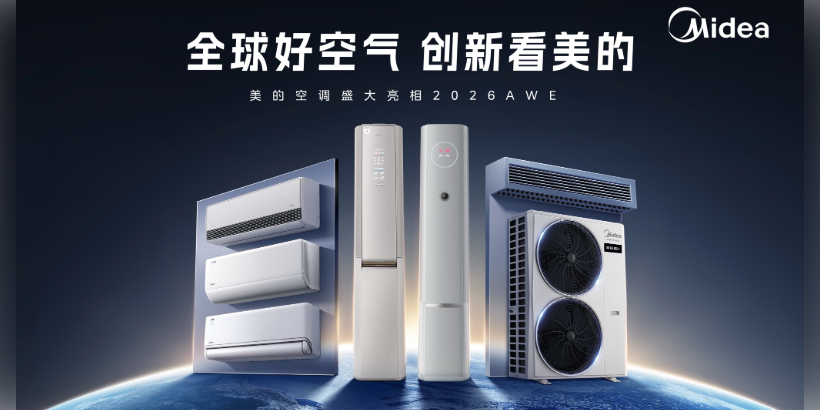
On March 12, 2026, AWE opened at the Shanghai New International Expo Center.
As one of the three major home appliance and consumer electronics exhibitions in the world, AWE is the annual benchmark for China's home appliance industry every year.
This year's theme is "AI Technology ? Enjoying the Future", with over a thousand companies participating in the exhibition. The entire venue, a thousand square meters exhibition area, and the world's first new products are densely landing. From AI appliances to humanoid robots, from intelligent cars to cleaning appliances, each leading enterprise has brought their most important products and technologies of the year to the exhibition site.
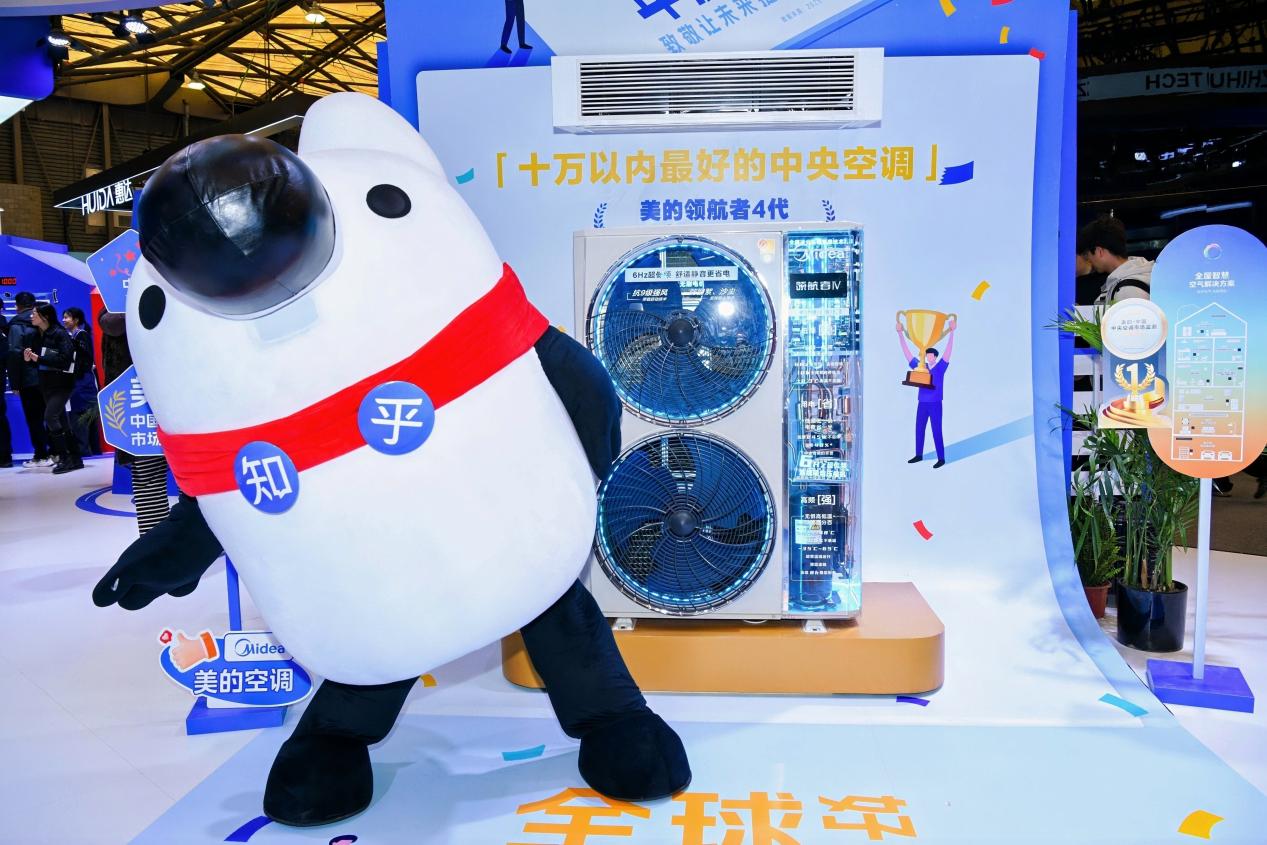
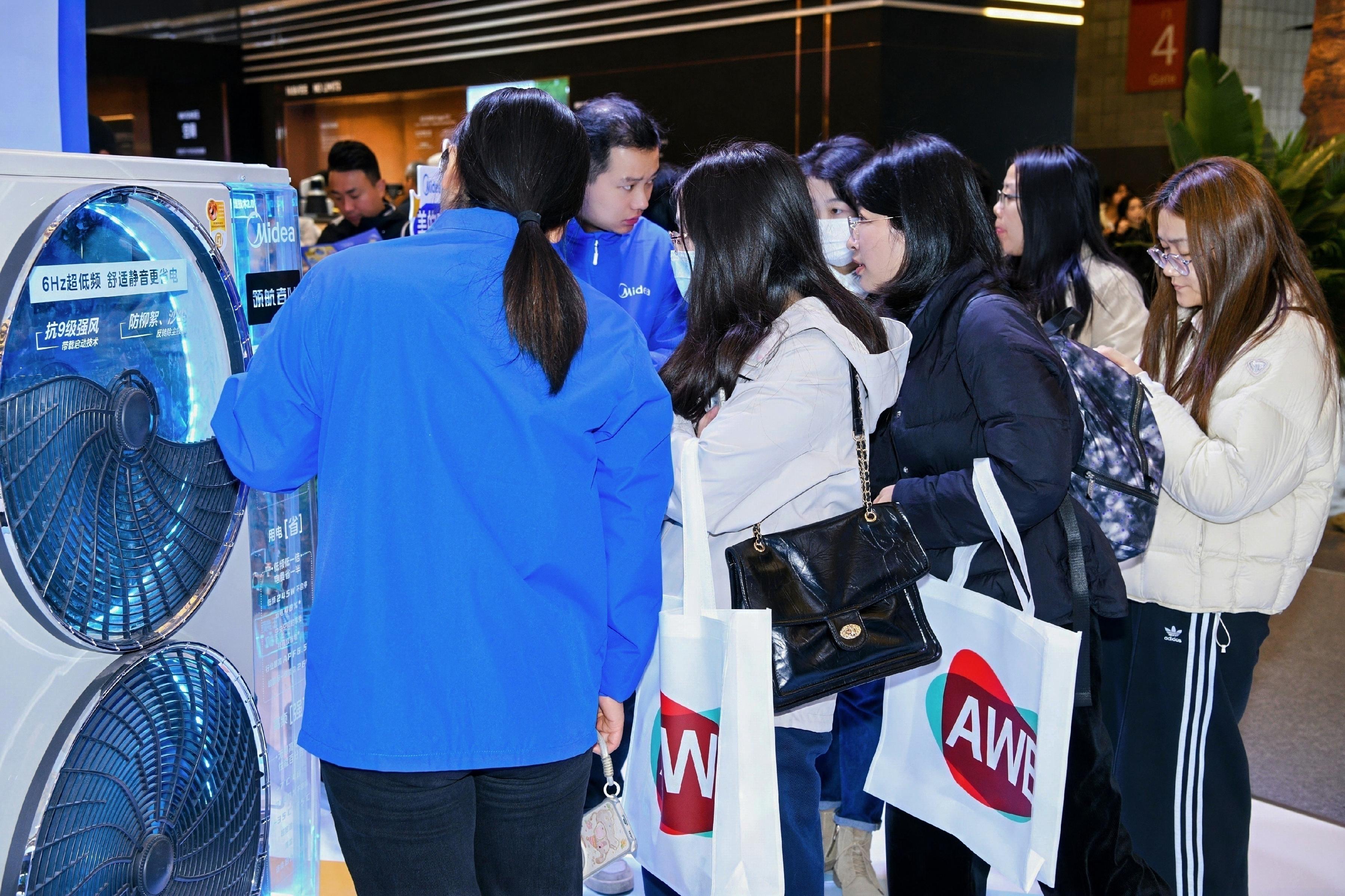
At such an exhibition, a product appeared in four exhibition areas at the same time, which was the most frequently seen single product during the entire AWE period - the Midea Navigator 4th generation central air conditioning.
The first appearance of the large flat premium version is a representative product of Midea's positioning to impact the high-end central air conditioning market.
Why can a central air conditioner gain such high exposure at an exhibition dominated by AI, robots, and smart cars?
This is related to the changes happening in the market it is in.
The high-end market for central air conditioning has long formed a recognized pattern, with high-end equivalent to Japanese brands.
In the home decoration market of the past thirty years, Japanese brands have almost been synonymous with the words "central air conditioning" themselves. Many consumers default to Japanese brands when decorating, which is due to the inertia of brand recognition and the historical reasons why Japanese brands have indeed led in technologies such as frequency conversion and noise reduction in earlier years.
But this pattern is being rewritten.
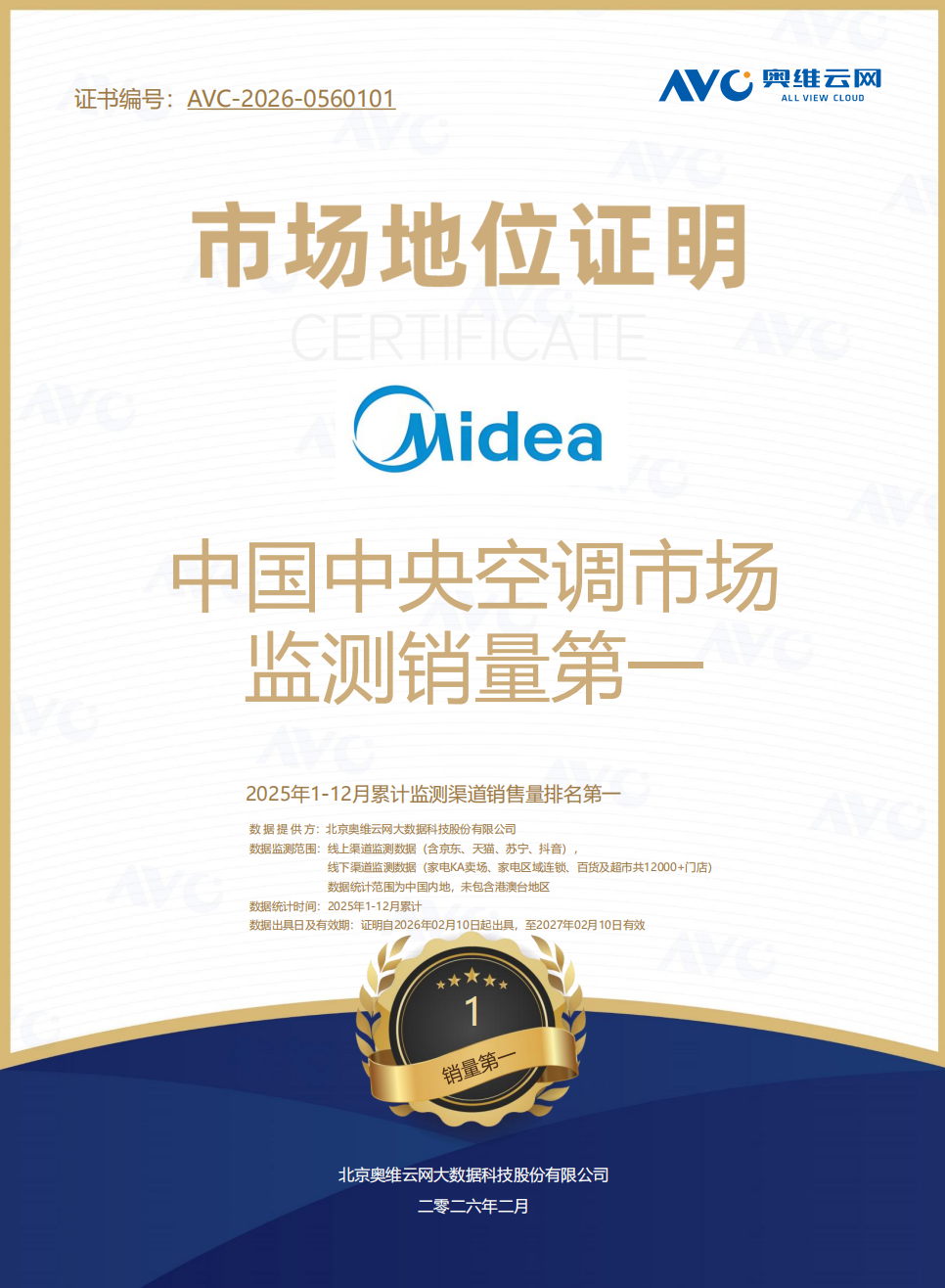
According to the monitoring data from OviCloud Network,Midea air conditioning has become the top monitored sales volume in the Chinese central air conditioning marketAccording to Euromonitor International data,Midea air conditioners have been ranked first in global sales for two consecutive yearsIn 2024, the global market share is 27.5%, which is equivalent to 1 out of every 4 air conditioners in the world being Midea.
The change in sales ranking is only a result.
This stems from a more pressing industry issue that has persisted for many years - the parameters of central air conditioning are constantly increasing year by year, including the minimum operating frequency, maximum cooling capacity, and maximum energy efficiency ratio. The numbers are getting better year by year, but the most common complaints from consumers after installing central air conditioning are the sudden changes in temperature, loud noise, cold feet and hot heads in winter, and expensive electricity bills. This was the case ten years ago and still remains the case today.
The parameters are increasing, but the pain points have not changed. What is the problem?
For this question, the answer given by the fourth generation of Midea Navigator is called the "Comfort Golden Triangle". Its logic is that the comfort of central air conditioning does not rely solely on one parameter to achieve industry first, but requires three things to simultaneously achieve industry leadership.
Comfort is not something that can be solved by a single parameter
Let's talk about a phenomenon first.
In the past few years, competition in the central air conditioning industry has mainly focused on one parameter, which is the minimum operating frequency of the compressor.
If you label it as 13 Hz, I label it as 8 Hz, and some even label it as 4 Hz.
The lower the frequency, the more power the compressor can operate at, theoretically more energy-efficient and quieter. This is a parameter competition and a focus of market promotion for various brands.
But one issue has been overlooked: being able to run at low frequencies and being able to run steadily at low frequencies are two different things.
The lower the frequency, the lower the operating power of the compressor, but at the same time, the difficulty of maintaining stable operation of the system is also rapidly increasing.
There is another layer, the lowest frequency and the most comfortable frequency, are also two different things.
It's not just about hardware achieving low frequency, but also requires software control systems to fully utilize the hardware's limits. Through massive data verification, Midea has found the most suitable solution for Chinese households, the ACE low-frequency steady-state system.
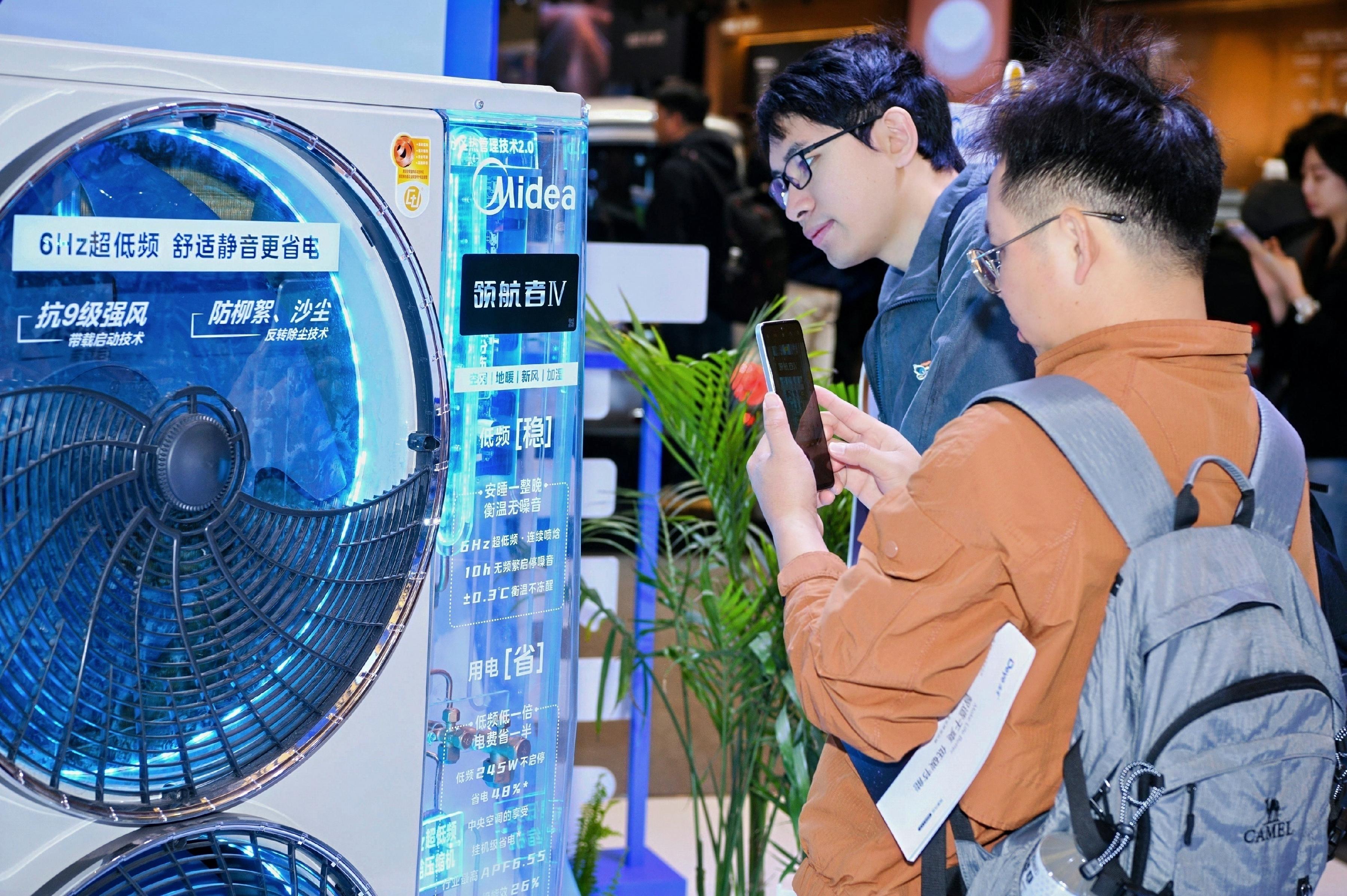
The reason is that after repeated testing, 6 Hz is the frequency range where the compressor achieves a comprehensive better stability, noise reduction effect, and energy efficiency experience when operating at low power. In other words, Midea's central air conditioning is not that it cannot be lowered, but rather that it judges that lower does not mean better.
Many brands in the industry are still competing for smaller numbers, but what truly affects the user experience is not how low the compressor can run, but whether it can stabilize at that frequency.
The working mode of traditional central air conditioning is as follows: the compressor runs at full capacity to lower the room temperature to the set value, and then stops; When the room temperature returns to a certain level, the compressor will start again.
This process is called 'start stop'.
Every start stop is accompanied by the noise of the compressor restarting, as well as the fluctuation of room temperature between shutdown and start-up, heating up a little first, then cooling down a little, and repeating the cycle.
The people living inside feel like they are suddenly cold and hot, waking up in the middle of the night either cold or hot.
If the compressor can operate stably for a long time at low frequencies without the need for repeated starting and stopping, the above problems will no longer exist. The room temperature will always be stable, and the compressor will operate quietly at low power, saving electricity and providing comfort.
The difficulty of achieving this lies in the fact that when the compressor operates at low frequencies, the system's oil circuit, refrigerant circulation, and electrical control logic are all in a low load state, making stability control more difficult than when operating at full power at high frequencies.
Many brands can make the compressor run at a frequency of 6 Hz or even lower, but if the frequency is too low, it will affect refrigeration and dehumidification. In addition, the compressor cannot run stably due to frequency drift and noise, so it may automatically exit the low-frequency mode and restart.
Midea air conditioning is equipped on the fourth generation of the NavigatorUltra low frequency steady-state technologyThe solution is this problem.
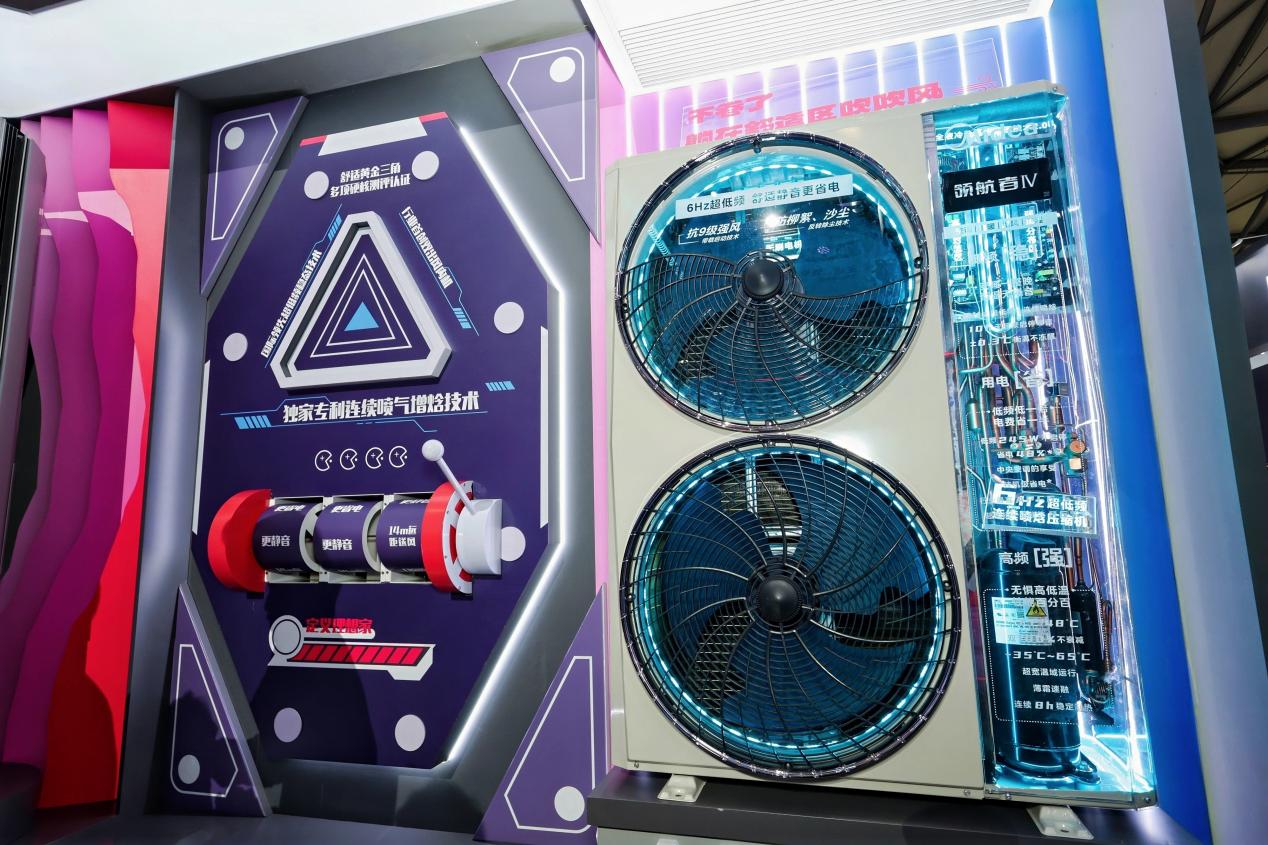
According to publicly available information, ultra-low frequency steady-state technology enables the compressor to operate continuously and stably at low frequencies without starting or stopping, with temperature fluctuations controlled within ? 0.3 ?, and no start stop noise during operation. The lower frequency also allows Midea to use black technology in the fourth generation of the Navigator, with an APF energy efficiency value of 6.55, exceeding the first level energy efficiency standard, and a power saving rate of up to 48%. Moreover, the ultra-low frequency steady-state technology has been recognized as an "internationally leading technology" - this recognition itself means that in the sub field of ultra-low frequency steady-state operation, Midea's air conditioning technology level has already stood at the forefront of the world,Truly mastered the core technology of air conditioning.
In this technology field where domestic brands have long looked up to Japanese brands, China's low-frequency technology for central air conditioning, represented by Midea, has already caught up with and surpassed the traditional pattern.
Low frequency stability is the first thing.
The second thing is that central air conditioning should also work well under high and low temperature conditions.
The climate in China varies greatly, with outdoor temperatures often exceeding 40 ? in the south during summer and minus ten degrees Celsius in the north during winter being the norm. Under such temperature conditions, the cooling or heating capacity of traditional central air conditioning will significantly decrease, which is called "attenuation" in the industry.
The consumer's feeling is that the air conditioning is not cool enough during the hottest time, and not warm enough during the coldest time - precisely these two periods are when air conditioning is most needed.
The fourth generation of the Midea Navigator is equipped withExclusive Patent - Continuous Jet Enthalpy Enhancement TechnologyThe solution is this problem.
The core approach of this technology is to keep the jet port of the compressor continuously open, continuously replenishing refrigerant to the compressor. In traditional schemes, the jet nozzle is intermittently opened and closed, and the air supply is discontinuous. The advantage of continuous jet is that the air supply is larger and more uniform, the pressure and temperature inside the compressor are more stable, and the operational reliability is higher.
In conjunction with the application of a fully liquid cooled partitioned thermal management system and silicon carbide high-temperature resistant materials, under the condition of 100% cooling capacity ratio between indoor and outdoor units - that is, the sum of indoor unit cooling capacity is equal to the nominal cooling capacity of the outdoor unit - the fourth generation of the leader has 100% cooling capacity output in a 48 ? high-temperature environment,
At -7 ? low temperature environment, the heating capacity is 100% output without attenuation. The operating temperature range of the entire system covers -35 ? to 65 ?.
The compressor's low frequency stability and ability to withstand high and low temperatures solve system level problems. But the ultimate link between central air conditioning and people is the wind.
The indoor unit of traditional central air conditioning only has one air outlet, which is installed in the ceiling and blows downwards.
During summer cooling, cold air pours down from the top of the head. The area near the air outlet is cool, while the remote area is hot. The temperature difference in a living room can vary by several degrees. During winter heating, the density of hot air is low and naturally rises, making it difficult for the hot air coming out from the top to sink to the ground. As a result, the head is hot and the feet are cold.
Leader 4 did something that no one in the industry had done before,Industry first - Dual outlet internal fanTwo air outlets on top and bottom of an internal unit, equipped with dual wing variable track air control technology, supporting three air outlet modes.
When cooling, both the upper and lower air outlets can supply air simultaneously, and the airflow spreads in a Y-shaped bidirectional manner. After reaching the temperature, the temperature difference between the far and near areas of the whole house is controlled within 1 ?. It is also possible to use the upper air outlet separately, with dual air guide wings converging to form a pressurized air duct. Combined with the Kanda effect, the farthest air supply distance can reach 14 meters, and one indoor unit covers the entire dining room. When heating, switch to the bottom air outlet mode, and the hot air is sent out at a 45 degree angle to the ground, uniformly heating up from bottom to top, with the temperature difference between the head and foot controlled within 1 ?.
The above three things, namely ultra-low frequency steady-state technology, continuous jet enthalpy increasing technology, and dual outlet fan, are known as the "golden triangle of central air conditioning comfort" in the industry.
Why is a 'triangle' indispensable?
Due to the interdependent logical relationship between these three technologies, ultra-low frequency steady-state technology solves the problems of quietness, constant temperature, and power saving in daily use; The continuous jet enthalpy increasing technology ensures that the system does not trip under extreme heat and cold conditions; The dual outlet fan solves the final step of how to deliver wind to people. Without ultra-low frequency steady-state technology, the air conditioning switches between cold and hot on and off; Lack of continuous jet enthalpy increasing technology results in insufficient capacity during the hottest or coldest periods; Without dual exhaust fans, the problem of cold feet and hot heads still exists in winter.
Upon closer inspection, each of the three technologies is being developed by a brand.
But so far, only the fourth generation of the Navigator has achieved all three, while other brands, such as Japanese brands, have weaker steady-state ability in low-frequency operation and do not have benchmark products for dual outlet fans; Although some domestic brands have followed up with low-frequency technology, they lack one of the options of continuous spray enthalpy or dual outlet air.
A white paper released by Zhihu Research Institute provides a set of user data, with 73.2% of users considering "silent operation without interference" as the primary comfort standard, 57.9% focusing on temperature control accuracy, and 54.8% emphasizing energy-saving performance.
These three requirements correspond exactly to three technical directions: ultra-low frequency steady-state operation, dual outlet precise air supply, and high energy efficiency.
So, what users want is never to achieve the highest industry standard for a certain parameter, but a product that does all of these things well at the same time.
From the top seller to the technical definer
Midea air conditioning positions the Navigator 4 as the "best central air conditioning within 100000 yuan". According to public data, the number of installations for this new product has exceeded 10000 since its launch.
The high-frequency appearance on AWE site is consistent with its market performance since its launch.
But the competitiveness of a product cannot appear out of thin air. The fourth generation of the Navigator can integrate three technologies into one system at the same time, relying on Midea's years of research and development accumulation in the air conditioning field.
According to publicly available data, Midea Air Conditioning has invested over 18 billion yuan in research and development in the past five years, holds 25000 authorized patents, and has obtained 80 "internationally leading" technology appraisals.
Midea Air Conditioning has mastered the core technology of central air conditioning - ACE ultra-low frequency steady-state system. From compressor to variable frequency control and then to system integration, it is not just an isolated technology, but a systematic solution. Through Midea's self-developed ultra-low frequency compressor, steady-state driving algorithm, and intelligent algorithm integrated ultra-low frequency technology architecture, it achieves precise air control of living spaces and meets users' pursuit of comfort, energy saving, and quietness.
In the compressor sector, Midea Group's Meizhi compressors have the highest global market share. In terms of production, Midea air conditioners have 12 production bases and 38 research and development centers worldwide, distributed in multiple countries and regions.
The significance of these numbers lies in the fact that the core technology of central air conditioning has shifted from 'can it be done' to 'who can do it better'.
Midea's continuous investment in these areas for many years has enabled it to simultaneously equip three functions that require different technological reserves on the same product, rather than being the industry leader in one of them and making do with the rest.
From a technological timeline perspective, these capabilities on the fourth generation of the Navigator did not emerge overnight.
In 2004, Midea Air Conditioning launched its first 180 degree sine wave DC variable frequency air conditioner, making it one of the earliest enterprises in China to master the core technology of variable frequency.
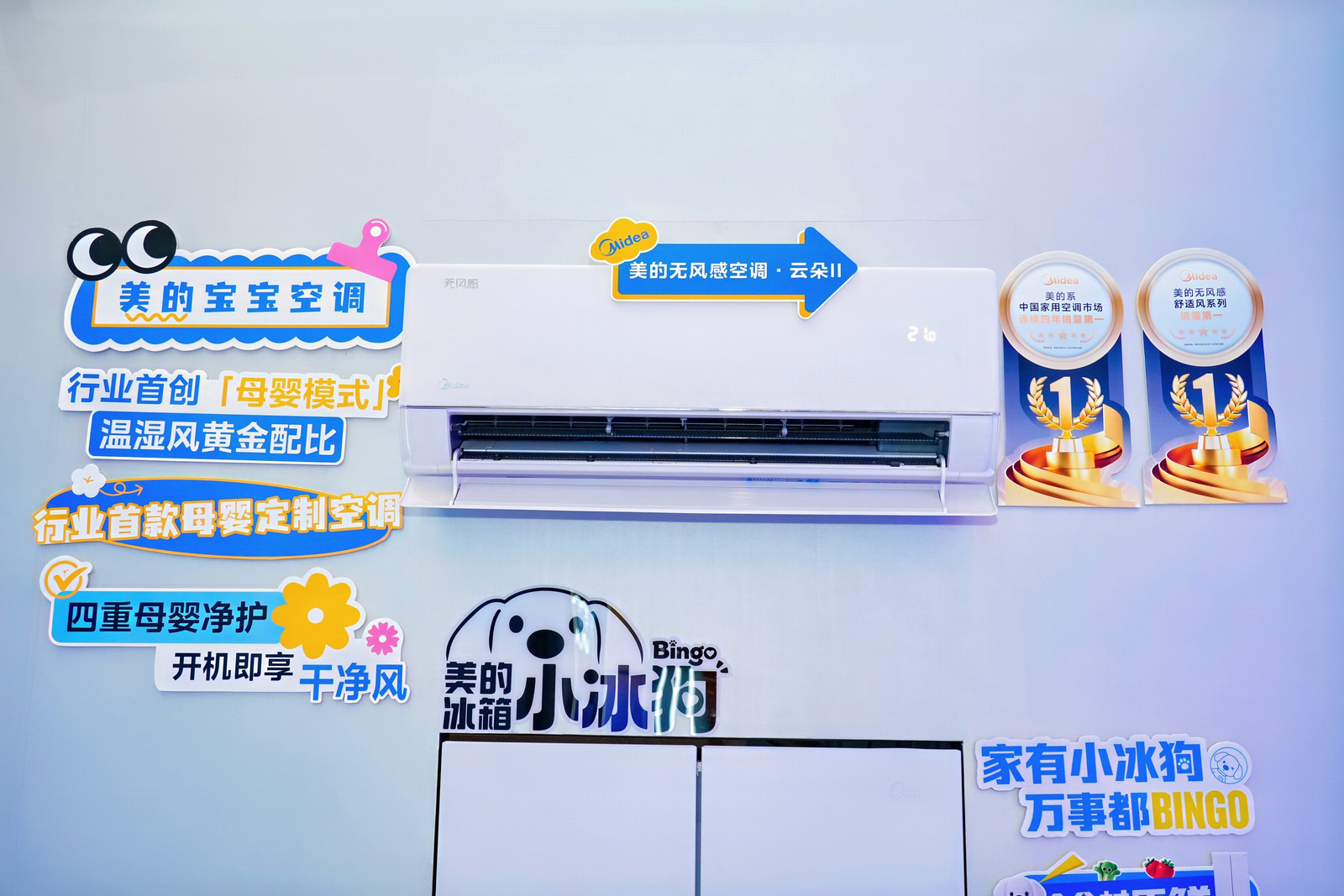
In 2015, Midea air conditioning was the first in the industry to launch the "windless" technology, which has been continuously iterated for more than ten years, with 343 related patents and cumulative sales exceeding 10 million units.
Another noteworthy change is the industry landscape itself.
Japanese brands used to dominate the high-end central air conditioning market in China for a long time, but in recent years, this pattern has been accelerating its changes.
On the one hand, there is a change in brand ownership.
Over the past decade, several Japanese central air conditioning brands in the Chinese market have changed their actual operators to domestic enterprises. Consumers still see the names of Japanese brands in their stores, but the research and development, supply chain, and manufacturing systems behind them are different from ten years ago.
On the other hand, there is a difference in the pace of technological iteration. The product update speed of Japanese brands in the Chinese market has been significantly slower than that of top domestic brands in recent years.
The dual outlet fan is an example, which is the first product form of Midea air conditioning in the industry. Currently, there are no corresponding products launched by Japanese brands.
In terms of ultra-low frequency steady-state technology, Midea air conditioning has obtained the "international leading" technology appraisal, which is also a landmark achievement of Chinese enterprises in the core technology field of central air conditioning.
There is also the price aspect. Japanese brands have maintained a high brand premium for a long time.
In an era when Japanese technology was indeed leading, consumers were willing to pay for this premium. But when domestic brands catch up or even surpass in comfort performance and energy efficiency, while offering more competitive prices, consumers' tolerance for Japanese premium is decreasing.
The speed of this change may be faster than many people anticipate.
In 2024, Midea will already have the highest sales volume in the Chinese central air conditioning market. By 2025, Midea air conditioning will have won the global sales top spot for two consecutive years! The high-end central air conditioning market has changed its leader for the first time in thirty years.
From a longer-term perspective, the category of central air conditioning is undergoing a shift in selection criteria.
In the past thirty years, consumers have paid a premium for Japanese brands when decorating, and this consumption habit has its own rationality. At that time, Japanese brands were indeed leading in core technology.
But the technological landscape is not static. When domestic brands catch up with each other in core areas such as compressors, variable frequency control, and system integration, and begin to lead in product innovation such as dual outlet air, consumers' choice criteria return from brand inertia to the product itself.
Midea Central Air Conditioning combines three technologies and names it the "Comfort Golden Triangle". The fourth generation of the Navigator, equipped with this technology, is positioned as the "best central air conditioner within 100000 yuan", and does more than just selling one product.
It is redefining the evaluation method of central air conditioning - no longer just looking at single numbers such as minimum frequency or maximum cooling capacity, but whether a system can do several things well at the same time.
As for whether this standard can be accepted by the market, the simultaneous appearance of the fourth generation of the Navigator in four exhibition areas on AWE has already given users some answers.

The State Administration for Market Regulation has taken action to crack down on "eye-catching big characters and exempt small characters from liability" advertisements
Honda incurs its first annual loss since going public: a strategic impairment of 2.5 trillion yen on electric vehicles, equivalent to the total profits of the past three years
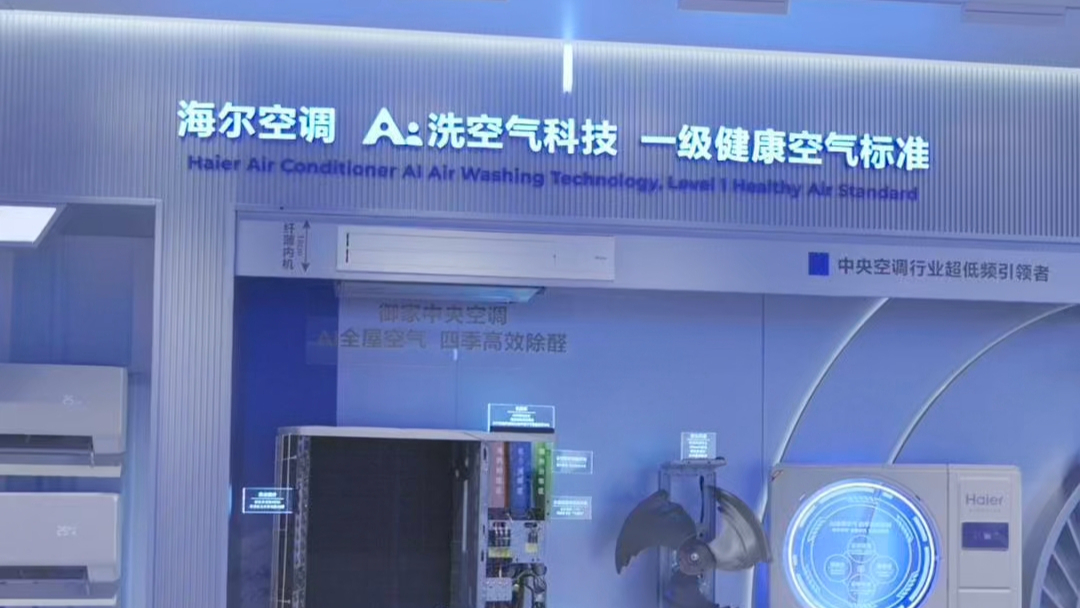
The first L4 level intelligent agent air conditioner in the AWE industry has been launched. At what level has your air conditioner evolved?


 WeChat registration or login

 Subscribe