Economic Observer Follow
2026-03-14 23:21


Economic Observer reporter Zheng Chenye
The China Home Appliance and Consumer Electronics Expo (2026AWE) will be held in Shanghai from March 12th to 15th. AWE, along with IFA in Germany and CES in the United States, is one of the three major home appliance and consumer electronics exhibitions in the world.
This year's AWE exhibition covers a total area of 170000 square meters, with over 1200 participating companies. For the first time, the "one exhibition, two zones" model has been implemented, with the addition of the Oriental Hub International Business Cooperation Zone in addition to the 13 exhibition halls at the Pudong New International Expo Center.
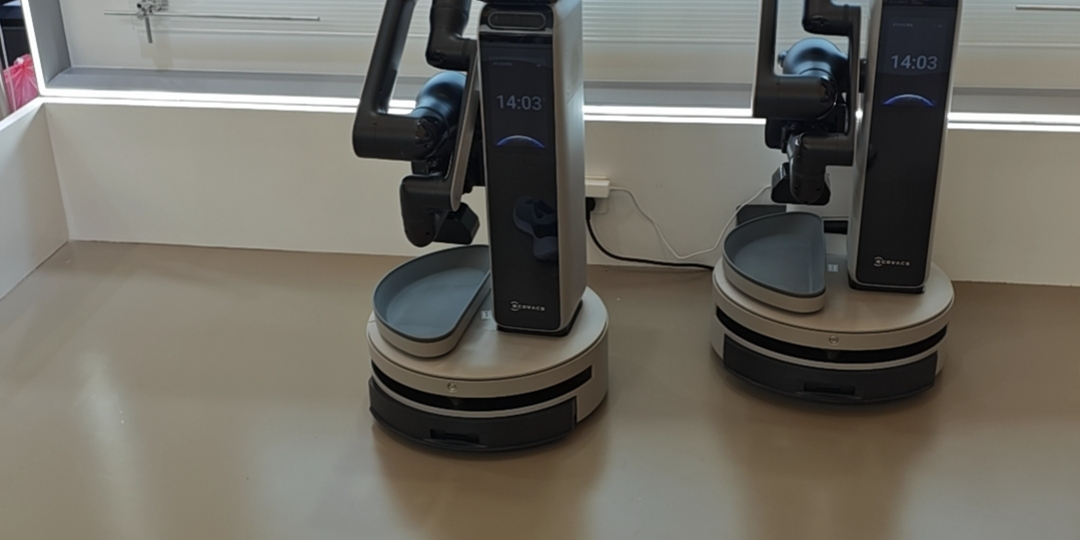
The biggest difference between this AWE and previous years is the robots. Haier, Ecovacs, Hisense, Fotile, Zhumi, Stone Technology, almost all leading home appliance companies have brought robot products.
At the same time, companies with backgrounds in robotics such as Yushu Technology, Zhiyuan Robotics, Magic Atom, and Tashi Zhihang have also flooded in. Surprisingly, JD.com has assembled over 60 robots at its booth. In addition, the robot rental platform "Qingtian Rent" also made its debut on AWE.
Besides robots, AI is also changing the logic of traditional household appliances such as televisions, air conditioners, and kitchen appliances. For example, TCL's flagship TV uses a large model to automatically adjust the picture quality, and the air conditioner has also started to use millimeter wave radar to detect users' sleep status. The boss even made a pair of AR glasses that can recognize ingredients and control the stove's firepower.
During the exhibition, a smart home interconnection standard led by seven units including Haier, Midea, and Huawei was officially released, attempting to establish a unified interconnection standard between devices of different brands.
The Economic Observer reporter wandered around the exhibition site for two days, trying to figure out a question: why did robots and AI become the most popular things at a well-known home appliance exhibition?
Cross border with each other
Ecovacs' "Eight Realms" is a representative product of this year's AWE, which is related to OpenClaw.
OpenClaw, which went viral globally at the beginning of this year and is referred to as "Lobster" by Chinese netizens, is an open-source AI intelligent agent framework. Unlike conversational tools like ChatGPT, the core capability of OpenClaw is "working" - users can use natural language to give a command, and it can autonomously break down tasks into multiple steps and gradually execute them, including operating computers, calling various tools, and controlling devices.
Ecovacs has integrated OpenClaw into the "Eight Realms", giving this butler robot the ability to plan tasks. When a user says "tidy up the living room", the robot can autonomously determine which things need to be put back in place, in what order to do them, and what actions to use to complete them, no longer limited to a few preset fixed scenarios.
However, the relevant staff of Ecovacs also told reporters that the "Eight Realms" is still a prototype and belongs to Ecovacs' exploration product in the field of embodied intelligence. There is currently no specific plan for mass production and launch.
Meanwhile, another product exhibited by Ecovacs, "Maotuan Er," has officially gone on sale at a price of 3999 yuan. This is an AI inspired companion robot, shaped like a Maltese dog, covered in simulated white fur throughout its body. It has 5 personality backgrounds and 7 types of emotions. It is equipped with a high-definition wide-angle camera on the nose and a 3-micron circular array on the ears. Touch sensors are distributed on the head, ears, and back, and can trigger feedback such as wagging the tail and blinking the eyes with just a touch.
It's not uncommon for Ecovacs to make robots, as it started with sweeping robots. But at this AWE, a group of home appliance companies that used to have little to do with robots have also started showcasing their robot products.
For example, Haier Smart Home has released the "Haiwa" series of home service robots, which are divided into three types: cleaning robots, companion robots, and household robots. Among them, the companion robot can remind the elderly to take medicine, monitor falls, and automatically sound an alarm; Household robots can cooperate with household appliances to complete operations such as food handling, sorting and storing, and tableware sorting. In the demonstration at the exhibition site, after the ingredients are automatically sorted into the refrigerator by the robot, the refrigerator will activate the exclusive preservation program according to the category.
Fotile has released the world's first robot kitchen. This system consists of a robotic arm and a humanoid robot. The robotic arm is responsible for cup positioning and dishwasher utensil placement, while the humanoid robot is responsible for pouring oil, stir frying, and serving dishes.
Fotile also released a White Paper on the Innovation and Development of Global Smart Kitchens, which categorizes the capabilities of smart kitchens into five levels from L1 to L5, on par with autonomous driving.
Stone Technology has released a wheeled floor sweeping robot called G-Rover. This product adopts a dual legged structure, with each leg capable of independent extension and lifting, and can move and synchronously clean on stairs and slopes. According to the staff at the Stone Technology booth, this is the world's first cleaning robot that can independently clean stairs.
Hisense also showcased three robots: the commercial humanoid robot Harley is responsible for guiding the exhibition hall and product explanations, the butler robot Savvy can coordinate with all household appliances and complete laundry and meal preparation, and the companion robot Moii is aimed at children's companionship and elderly care.
Li Wei, President of Hisense Video Technology, stated during the exhibition that home companion robots will soon be able to enter consumer use scenarios.
While working on robots in home appliance companies, robot companies also attended home appliance exhibitions.
For example, the Expedition A2 humanoid robot of Zhiyuan Robot held a pen to write and performed a fast-paced board at the AWE site. This robot has been certified in China, the United States, and Europe.
The A1 robot independently developed by Shi Zhihang won a Guinness World Record before the exhibition - completing 105 sub millimeter level wire harness assemblies in one hour. Wiring harnesses are soft, easily deformed, and have extremely small interface gaps, which previously relied on manual labor for a long time.
The "Little Bumi" brought by Songyan Power is the world's first 10000 yuan consumer humanoid robot, with a height of 98 centimeters, a weight of 17 kilograms, and 21 degrees of freedom throughout the body. According to the relevant staff, this product has already started delivery. Jiang Zheyuan, founder of Songyan Power, stated that the core goal for 2026 is to achieve a scale delivery of 10000 units.
There are also new actions at the industrial level.
During the same period as AWE, the Household Service Robot Special Committee of the China Household Electrical Appliances Association was officially established, with the first batch of 50 members covering the entire industry chain of home appliances, robots, AI chips, visual modules, etc.
During the exhibition, Zhang Chonghe, President of the China Light Industry Federation, revealed a set of data: China is the production base for 55% of global robot products, and the production of service robots will reach 18.58 million sets by 2025, a year-on-year increase of 16.1%.
The concentrated appearance of robots on AWE is a direct reflection of the above numbers. But the reporter also noticed that AI's broader changes to the home appliance industry are actually happening in products that may not seem so "new", such as televisions, air conditioners, and washing machines.
During an interview with the Economic Observer during AWE, Lu Chunshui, President of TCL Industries China, stated that last year was the first year of AI empowering home appliances.
His judgment is that in the past, smart home appliances were more about "intelligence for intelligence", adding a voice conversation, adding a voice control switch, etc., just to give consumers a sense of novelty. In his opinion, the direction of intelligence has changed, and AI should focus on the core pain points of consumers to create products.
For example, TCL's flagship TV X11L is equipped with an AI large model and self-developed image quality chip, which can intelligently recognize the content and viewing environment of the screen, automatically match the optimal algorithm, and users do not need to manually adjust parameters. In addition, TCL's air conditioner is also equipped with millimeter wave radar, which can detect subtle changes during sleep such as turning over or kicking the blanket, and automatically adjust the temperature and wind speed.
Boss Electric has released a pair of AI cooking glasses that can recognize ingredients when worn. The glasses display salt reminders or flipping instructions on the AR interface and synchronously control the stove's firepower.
These products have one thing in common: AI is no longer a function that requires users to actively point and speak, but has retreated to the background, perceiving, judging, and executing on their own.
Smart glasses are another popular category of AWE this year.
For example, Alibaba's Qianwen AI glasses G1 made its debut in China, featuring a built-in Qianwen large model that can take photos, translate, and make phone calls; Thunderbird Innovation, in collaboration with Amap, released an application called "Thunderbird Smart Life" during the AWE period. Users wearing Thunderbird X3 Pro AR glasses walk on the street, and information such as merchant ratings, average order value, and unique tags from Amap's "Street Sweeping List" will be directly overlaid in their field of vision.
Interconnection And Interoperability
Shanghai Hisilicon COO Zhi Hao said at a smart home forum held at the same time as AWE: "The biggest pain point for home appliance manufacturers is not intelligence, but connecting to the internet and distribution network?
This statement is about a very practical issue.
At present, Haier, Midea, Huawei, and Xiaomi each have their own apps and ecosystems. There is no problem with the interconnection of devices within the same brand, but consumers usually do not only buy products from one brand at home. The refrigerator may be Haier's, the air conditioner may be Midea's, and the router may be Huawei's.
These devices are currently unable to cross brand linkage.
Regarding this, Li Hongwei, Secretary General of the Smart Home Working Committee of the GIIC Alliance, stated in an interview with the Economic Observer that the interconnection between different brands and ecosystems is the biggest problem facing the entire smart home industry now.
The full name of GIIC Alliance is Global Smart IoT Alliance, and its Smart Home Working Committee was established in October 2025. Its members include industry leaders such as Haier, Midea, Huawei, China Mobile, and HiSilicon.
On March 13th, the second day of the AWE exhibition, the GIIC Alliance Smart Home Working Committee released the "Smart Home Unified Interconnection Series Standards", also known as OneConnect Smart Home Standards, in Shanghai. This set of standards consists of four items, namely: access and control interface, physical model, security requirements, and testing methods.
Simply put, "access and control interface" defines how devices are discovered, connected, and communicate; The "object model" defines the language of communication between devices - telling the system what device I am, what I can do, and how to make me work; The safety requirements and testing methods ensure the safety and reliability of the entire process from distribution network to control, and there is a unified ruler to measure whether the product meets the standards.
This standard covers nearly 200 categories including air conditioners, refrigerators, washing machines, smart door locks, robotic vacuum cleaners, range hoods, water heaters, and more.
Led by 7 units: China Household Appliances Research Institute, Haier Smart Home, Midea Group, China Mobile, Huawei, HiSilicon, and OPPO Lighting. The participating units also include China Academy of Information and Communications Technology, JD.com, Hisense TCL? Changhong, China Telecom, China Unicom, etc.
During the exhibition, a reporter from the Economic Observer asked Li Hongwei a question: How are big companies like Haier, Huawei, and Midea, which are usually highly competitive, willing to sit together and push this standard?
Li Hongwei's answer is very direct: the key driving force is the national mandatory standards led by the Ministry of Industry and Information Technology. If there is no national standard, the standards of our alliance may not come out in two years, "he explained. On the one hand, it is a strong push at the national level, and on the other hand, various enterprises have realized that instead of fighting in their own pockets, it is better to concentrate their efforts.
He also mentioned a detail: internationally, a similar standard called Matter was initiated by Apple, Amazon, and Google in 2019, and it costs 150000 RMB to obtain a Matter certification. Our Chinese industry, consumption, and market are all here, and 80% of Matter certified products are made in China. Why don't we build our own? ?He said.
Matter has been running for several years and has now iterated to version 1.5, mainly covering categories such as lighting, switches, and panels. Li Hongwei made a comparison: 'They spent several years iterating version 1.5, while we may iterate a version in five months.'?
Hu Caiyong, Secretary General of the GIIC Alliance, introduced the timeline for national standards in an interview: it is expected that the standard text will be released this year, companies will be given one year of preparation time in 2027, and mandatory implementation may begin in 2028. At that time, all smart home appliances sold in the Chinese market must comply with mandatory standards for interconnectivity.
Of course, standard release and standard implementation are two different things. Zhao Bo, Director of Standards and Industry Development at Huawei HarmonyOS, mentioned at the forum that the implementation of standards may face three challenges: firstly, switching from existing protocols to new standards requires additional development costs and manpower investment; Secondly, conflicts between the new and old protocols during the transition period may arise, affecting the user experience; Thirdly, how to smoothly upgrade a large number of existing equipment.
Li Hongwei also admitted that older devices lack hardware resources and cannot switch to the new standard through software upgrades. But products launched in the past two to three years, especially high-end products, have the opportunity to be upgraded and integrated.
In the future, new products with the OneConnect logo will be launched one after another. His statement is: if consumers recognize this standard, they can choose it with confidence.
It is worth mentioning that Cui Zhen, Vice President of Haier Smart Home, made a very direct point on the forum: "Everyone talks about themselves as' open ', but what everyone talks about as' open' is to let others connect with them. Only two-way openness is true openness
Shi Chao, Deputy General Manager of the IoT Department at China Mobile Hangzhou R&D Center, gave another perspective: "Connecting is not an end in itself, generating commercial value is
He gave an example, if all the air conditioning, refrigerator, washing machine, and water heater in the home are connected and run AI algorithms on the end to help each household save electricity and water, this thing is valuable to users. If it doesn't generate positive value, no one thinks installing an app is convenient. ?
At the "Future Home ? AI Life" Summit Forum held at the same time as AWE, Tao Xiaonian, Chairman of the China Household Electrical Appliances Association, expressed a judgment: "We are standing at a critical point of home transformation driven by AI as the core. "
At this year's AWE, whether it's robotic vacuum cleaners standing up and climbing stairs, air conditioners starting to use radar to sense users' sleep status, or home appliance giants finally sitting at the same table to talk about interconnectivity after decades of competition, these things may seem like progress in terms of products and standards independently, but when viewed together, they point in the same direction - ultimately, products need to increase consumer value.
As Guo Renjie, founder and CEO of LeXiang Technology, said at the AWE Summit Forum, in order for robots to truly enter households, they must meet three prerequisites - safety, full automation, and meeting specific needs. No one knows how to take this path, so the only thing we can do is iterate at high speed. Go to the users, polish, try and verify in real scenarios
He was referring to robots, but the same applies to the entire home appliance industry.


The State Administration for Market Regulation has taken action to crack down on "eye-catching big characters and exempt small characters from liability" advertisements

Honda incurs its first annual loss since going public: a strategic impairment of 2.5 trillion yen on electric vehicles, equivalent to the total profits of the past three years
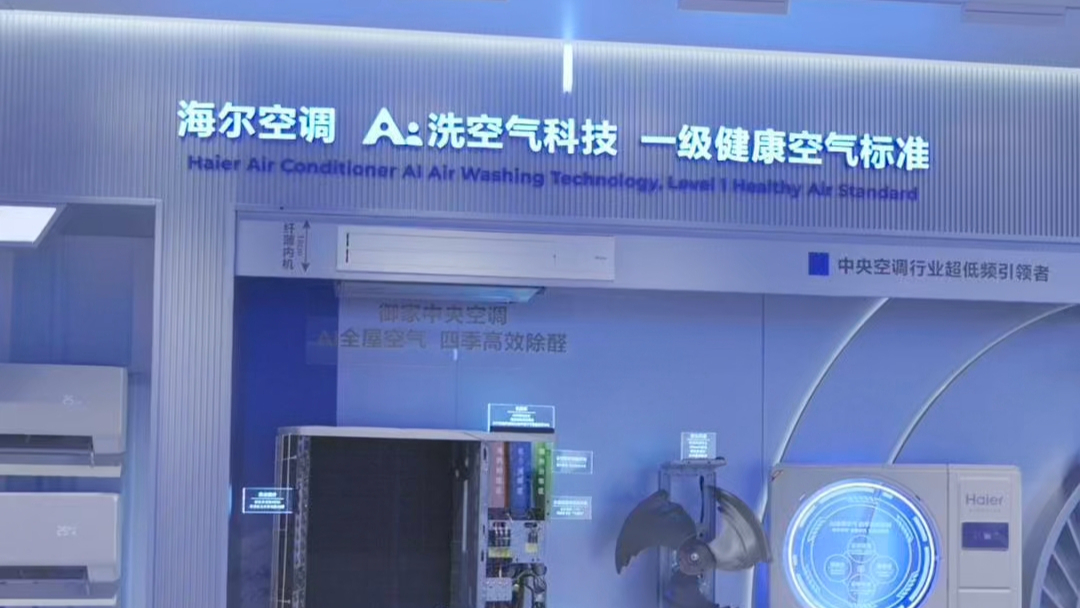
The first L4 level intelligent agent air conditioner in the AWE industry has been launched. At what level has your air conditioner evolved?


 WeChat registration or login

 Subscribe