Economic Observer Follow
2025-05-06 16:29



On April 2nd, Trump announced the imposition of tariffs globally. The old order of globalization and free trade has come to an end, with the US stock market plummeting and the US dollar falling, and the economic outlook shrouded in dark clouds. This makes us realize that the world is entering a world of relativity - relative to the increasingly polarized external chaos, China's stability and development are even more precious; The various intense measures launched in the era of "Trump 2.0" prompt us to ponder: what exactly is progress? What are the blind spots of elites? The structural problems of the economy and society constantly exposed by the United States, as well as the prescriptions prescribed by various parties, also provide us with very important mirrors to analyze the possible problems in the Chinese economy. The current world of relativity makes it even more urgent for us to calibrate our understanding of this world.
Give a few examples to understand what the world of relativity is: compared to the chaotic world, China has maintained order and stability; Compared to the pursuit of security in the past few years, development has once again become the engine. This change is particularly evident against the backdrop of the "Trump 2.0" whirlwind sweeping through the United States. From various visits since the end of February, it is evident that there is a lack of trust in the United States: elites lack trust in the "Trump 2.0" team; The public lacks trust in elites and experts; The general public lacks trust in traditional media. This brings a series of problems.
The same applies to the capital market. The foam of the US stock market was punctured by two arrows. One is the huge uncertainty brought by Trump's unorganized tariff war; The second is the ongoing fermentation of DeepSeek. In contrast, the reality of Chinese high-tech companies being undervalued is being uncovered.
This year, the State Council issued theNotice of the 10th Anniversary. More and more countries are starting to re-examine the effectiveness of China's industrial policies in driving high-tech development, especially the current AI driven industrial development model. Which of China and the United States can quickly promote and implement AI applications has become a topic of global concern. Obviously, AI has been rapidly deployed on the government, consumer, and commercial hardware sides in China. If another batch of innovative achievements similar to DeepSeek can emerge in the future, coupled with the government's repeated positive signals on attracting foreign investment, private economy, and business environment, market confidence may be further restored.
The United States and Europe have reduced their aid to developing countries, and Musk has cut down on USAID in the United States. Europe needs to increase military spending, which has also sparked discussions on foreign aid. Against this backdrop, China's emphasis on infrastructure construction and cooperation from borrowing to equity investment in foreign aid have become more pragmatic and better able to meet the current needs of developing countries.
Recently, many Americans have been asking a question: why can't we build things anymore? A frequently cited example is that the high-speed railway with a speed of 450 kilometers per hour, which will be opened between Beijing and Shanghai in 2026, will shorten commuting time between the two cities to within 3 hours; However, the high-speed trains in San Francisco and Los Angeles, California, are still castles in the air. China's ability to build has increasingly become a gap between China and the United States. China's can attitude, also known as the spirit of competence, is particularly worthy of praise in the chaotic present. In the world of relativity, it is inevitable to rise in the east and fall in the west. The connotation and extension of the rise in the east and fall in the west still need further explanation.
The New York ice rink that hasn't been repaired for three years
In the early 1980s, New York City Mayor Cork instructed the Port Authority to renovate an ice rink in Central Park. It seems that the simple project took more than three years to complete, exceeded the budget, and the ice making at the final ice rink was problematic and unusable.
Why did this situation occur? Why can't the government even accomplish such a simple thing? The reason is due to doubts about the government, concerns about engineering corruption, and worries that government officials will subcontract lucrative projects to contractors who have intricate interests with them. For this reason, similar bills have been passed in major cities in the United States. For example, the bill in New York stipulates that municipal engineering projects exceeding $50000 must go through bidding, and a municipal project needs to be divided into different stages, such as pipelines, electricity, heating, ventilation, and final construction, which need to be separately tendered. Each stage is won by the contractor with the cheapest bid. The result of this series of institutional checks and balances is that good intentions lead to bad things. The government simply does not have the manpower and ability to coordinate different aspects, and repeated delays and budget overruns in municipal projects have become the norm.
Taking the renovation project of the Central Park ice rink as an example, a contractor is responsible for dismantling the old pipes under the foundation of the skating rink and replacing them with a new set of technically complex pipes. But there were problems with the connection of bidding processes in different stages of the port management bureau, and another contractor responsible for laying cement did not start working until a year later. At this time, the newly laid pipeline had been exposed for a year, exposed to wind, rain, and flooding, leaving a huge hidden danger. In addition, the contractor who laid the cement made a calculation error and did not prepare enough cement. In order to meet the deadline, they chose to dilute the cement and did not flatten it according to the rules. As a result, the cement and pipeline problems led to continuous ice making after the ice rink was put into use.
How was this problem ultimately resolved? A New York real estate developer stepped forward and promised to renovate the skating rink in a year at a much lower price than the government quote. In the end, he completed the project in six months at one sixth of the cost quoted by the government. The answer is not complicated. Even for relatively simple projects like ice rinks, experienced general contractors still need to coordinate subcontractors for each project, balancing multiple dimensions such as cost, capability, experience, and trust in previous collaborations. The government, which is governed by rules, highlights the ability of private contractors to succeed.
The New York real estate developer who solved the problem is none other than Trump!
Can the United States no longer build
More than forty years ago, the municipal projects in New York City were a microcosm of the decline in America's construction capacity. Three new books, "Abundance," "Why Nothing Works," and "Stuck," analyze the predicament of the United States from different perspectives.
Abundant "provides an economic analysis perspective to examine the problems in the United States from both the supply and demand sides. The United States favors "demand side reform" and blindly trusts the market, believing that as long as there is demand, supply can always be created. It is easy to see the problem of demand side reform from the response to the COVID-19 crisis: on the one hand, people have a lot of money in their hands, and if they do not buy goods, they will push up asset prices; On the other hand, the supply side bottleneck caused by the epidemic can also lead to soaring prices of goods like cars in the United States, pushing up inflation.
The book 'Abundant' suggests that beneath the illusion of prosperity in the US commodity economy lies the artificial scarcity of public goods. Overall, the working class in the United States faces four major challenges: firstly, housing. While housing prices have skyrocketed, the supply of new home construction cannot keep up due to various NIMBY phenomena that constrain real estate development. As a result, the wealth gap and intergenerational gap (between older homeowners and younger homeowners) are widening. Next is transportation, where investment in infrastructure is lackluster. Infrastructure such as highways, bridges, railways, and subways are becoming increasingly outdated but lack funds for maintenance and renovation. New infrastructure such as high-speed rail is difficult to promote. The construction of a new subway line in New York has set a record for the world's longest time and highest unit cost. The third is education, especially the increase in higher education costs. Over the past forty years, tuition fees for higher education in the United States have grown much faster than GDP, leaving many college graduates burdened with heavy tuition debt. Finally, in terms of healthcare, the United States has the highest per capita healthcare cost among developed countries, but its life expectancy has decreased instead of increased.
Underneath the surface of extreme abundance of consumer goods lies a deep-seated structural crisis in the US economy. Abundant "provides a very interesting metaphor: fifty years ago, a college graduate could buy a house after working for a few years, but could not afford a television, and high-tech consumer goods were very expensive. Nowadays, buying a flat screen TV is almost a bargain, giving many people a surreal feeling of living a middle-class life, but it is extremely difficult to buy a house. This is because the United States has undergone fundamental changes in the past fifty years, transforming from a manufacturing powerhouse to a consumer powerhouse. Consumption has become the most important engine driving economic development, but excessive consumption is not enough.
Looking back at the series of chain reactions caused by Trump's performance on tariff issues throughout April, it is not difficult to see that the reason why the United States was able to make consumer goods so cheap is inseparable from globalization, Chinese manufacturing, and even expanding supply chains to Southeast Asian countries such as Vietnam. It is unwise for the United States to hope to decouple from the broad concept of Chinese manufacturing through tariffs. But the bigger crisis facing the United States is not the hollowing out of the manufacturing industry, but the increasing difficulty in providing public goods domestically and the government's inability to succeed.
Why can't the government succeed? Why Nothing Can Do "reflects on why the United States has fallen into a situation of political reform and infrastructure investment being constrained everywhere from the perspective of progressive ideological changes. We often use the term 'gridlock' to describe the system design of excessive checks and balances in American politics to limit wrongdoing. Although it is impossible to do bad things, it is also impossible to truly achieve them. This phenomenon is also true in American politics and the provision of infrastructure public goods outside of politics.
Progressives typically agree with the following statement: women have the freedom to have children (including abortion), and the world should actively address climate change. But these two statements encompass two layers of progressive thinking that sometimes conflict with each other. This is similar to the two sets of ideas advocated by the founding fathers of the United States. Represented by Hamilton, he believed that the United States, as a loose alliance, was not strong enough. He improved the financial system of the United States, introduced a unified currency, and built a central bank. The overall idea was to establish a stronger federal government from top to bottom, helping the United States quickly grow into an industrialized country. Another set is represented by Jefferson, who believed that it was precisely the powerful British government that oppressed the various North American colonies greatly. Since the victory of the War of Independence, independent states should be given more power and not repeat the mistakes of a strong central government that may bring new oppression. Jefferson's argument can correspond to women's reproductive freedom; And Hamilton's idea supports the notion that global climate change requires strong government action. If progressives cannot unify these two statements, big problems will arise.
The reason why the United States is deadlocked is precisely because the pendulum has swung to Jefferson's side in the past few decades. Progressives have constantly questioned the government's ability and designed a series of systems to restrict government behavior, while conservatives who insist on small government have fueled the situation. The result of these systems and ideologies makes it impossible for the government to succeed.
In the 1950s and 1960s, New York City was indeed able to build a tunnel through the Hudson River despite opposition from the working class. But after the 1970s, this ability to accomplish things was lost. It's not that everyone didn't want to build, but because there were too many stakeholders involved, although they all had the willingness to build, it was very difficult to unify the details of their intentions, and each party could cause trouble. As the most important hub, New York Central Station carries more passengers every day than the three airports in the Greater New York area combined, but it has been unable to undergo any repairs for fifty years. For most travelers, the first thing they see when entering the world's most important financial center is actually a messy and rundown storefront.
From the perspective of stagnant social mobility, 'Unable to Move' analyzes why American society has become so divided and indirectly responds to the reasons for the stagnation of American construction, as social mobility has significantly decreased. The United States has been an immigrant country since its founding, with a very good tradition of social mobility. Three or four decades ago, one-fifth of Americans moved every year, but by 2021, this proportion has dropped to one twelfth. Americans like to move because the United States encourages people to pursue opportunities and constantly change. Not moving means that people are unable to move in a certain place, as there is a widespread phenomenon of neighbor avoidance in wealthy areas, which limits social mobility with high housing prices.
A representative example is a small sign placed in the yard of a wealthy family in Washington D.C. One sign reads "Immigrant, we welcome you" in multiple languages (including Arabic), while the other sign clearly says "Choose not!" What do you want to choose or not? Do you choose to build large apartment buildings in the community. The phenomenon of avoiding neighbors is actually a manifestation of the widening wealth gap and the solidification of social classes in the United States. It also reveals, to some extent, the unity of social classes under the banner of diversity. The best communities are basically the most expensive, which ordinary people find difficult to afford.If we trace the development history of these best communities, we will find that people were able to break down racial discrimination (such as discrimination against black people, Jews, and other people of color) but could not break down class discrimination. During a period of reform measures aimed at better community development, such as regional planning and building codes, local governments and communities were given tremendous power. Now, this power has become exclusive, avoiding "strangers" (new immigrants) in order to protect housing prices and avoid community changes.
This is especially true in American metropolises with numerous job opportunities, such as the Bay Area and near Boston. Regional planning has made it increasingly difficult to build new houses, constantly pushing up housing prices and rents in these areas, forcing many people to move out. Half of tenants in the United States now spend over 30% of their salary on rent, and 25% of tenants' rent accounts for half or even more of their salary.
There are two aspects to being unable to move: on the one hand, particularly affluent communities are becoming increasingly closed and homogeneous, using high housing prices and other means to restrict newcomers from entering; On the other hand, the poor also have to be tied up in the communities where they grew up because of the decline in social mobility and the inability to move out, resulting in fewer opportunities for social class transition. The proportion of white people in impoverished communities who have never moved from childhood to adulthood voting for Trump is much higher, as American society is facing a social mobility crisis and access to opportunities has become a privilege for economic elites.
Re understanding the rise in the east and fall in the west
The biggest dilemma for the United States is not the hollowing out of the manufacturing industry that Trump believes, nor can it be solved by Trump waving the tariff stick around the world. The dilemma of the United States lies in its inability to provide what the people truly need, especially in areas such as housing, higher education, transportation infrastructure, and healthcare. The working class in the United States is burdened with several mountains, and the abundance of consumer goods conceals the inadequacy of public goods. The significant decline in social mobility in the United States has also caused more and more young people to lose confidence in the future. This is the dilemma of the United States.
The dissatisfaction of the working class with the government's "establishment faction" drove Trump to power, and Musk's simplistic and crude cuts in funding and layoffs by the bureaucracy were the wrong prescription. The right choice is to enable the federal and local governments to truly cultivate the ability to build public goods, win the trust of voters, and make up for the shortcomings of the market. The United States needs to reduce unrestrained consumption and enhance the government's ability to rebuild. From this perspective, the United States needs to learn from China and initiate its own "supply side" reforms.
If the United States has gone too far on the path of consumption and neglected manufacturing, especially the production of public goods, China happens to be a mirror image of the United States. The most serious structural problem of the Chinese economy is that the contribution of household consumption to GDP is too low compared to the United States and other developed countries, hovering below 40% for a long time, while the United States is close to 70%. The proportion of disposable income of Chinese people to GDP is also in a lower position globally. These two data reveal the reasons for China's long-term sluggish consumption.
In an era full of challenges in globalization and uncertainties in exports, not only will exports to the United States face high tariffs, but if exports to the United States are diverted to other developed markets, it will inevitably trigger a chain reaction of protectionism in these regions. This requires us to think more about how to solve long-standing consumption problems. Rising in the east and falling in the west, in this sense, is actually very simple. What needs to rise in the east is an increase in domestic consumption, starting from distribution, so that the people have more money to spend, while falling in the west is a decrease in exports to the outside world.
Singaporean Indian diplomat Ma Kaishuo's definition of rising in the east and falling in the west is very inspiring. He believes that the rise and fall of the East and the West are not absolute, but relative: on the one hand, more emerging countries and regions are joining the wealthy club, such as Japan and the Four Little Dragons in Asia, while China's rapid economic growth in the early 21st century is a phenomenon in global economic history; On the other hand, the way of doing things and influence in Asia are increasing day by day. Ma Kaishuo believes that this idea of Asian management and doing things should be incorporated into mainstream Western thinking, making it richer rather than replacing or competing for superiority, and it is important to be inclusive. The successful ideas that China excels in are precisely the areas that are worth learning from globally.
The advantage of relativity is that it allows us to constantly examine ourselves and mirror others. Due to the chaos of the "Trump 2.0" era, Americans will only think of using China's development as a reference. Similarly, when we consider the structural issues of China's economic development, we also need to refer to other countries. Two of these issues are particularly prominent: one is the sluggish consumption, how to stimulate consumption, and a long-term and pragmatic attitude is particularly important; The other is the rapid change in population structure, which accelerates the combination of aging and declining birth rates, and to a large extent, the population structure determines the future trend of China's economy.
Understanding the profound impact of demographic changes on the future of the Chinese economy requires us to continue in-depth analysis of urbanization and population mobility; Strive to create high-quality employment opportunities and effectively achieve the possibility of class transition through higher education; At the same time, further reform the household registration system to encourage more population mobility in pursuit of job opportunities.
The mirror image of the United States highlights the importance of adhering to long termism and pragmatism in promoting future development. Longtermism requires us to find and adhere to the value goals that reflect the most rewarding feelings of ordinary people among numerous goals; Pragmatism emphasizes being good at mobilizing resources, daring to adopt new technologies, and ultimately getting things done.
(The author is a financial writer, former editor in chief of The Economist Business Review, and founder of Morning Reading Group)

ST Qingyue fined 172 million yuan for suspected fraudulent issuance and illegal letter disclosure
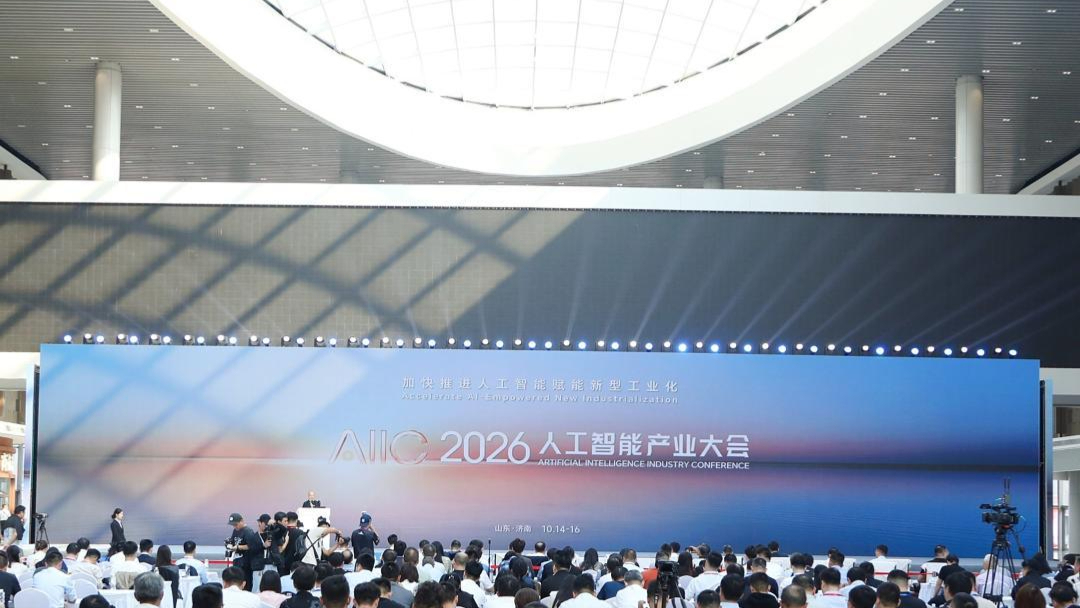
Focusing on "Artificial Intelligence Empowering New Industrialization", the 2026 Artificial Intelligence Industry Conference opens in Jinan

Can Traveler 7 take care of both commuting on weekdays and mountain trips on weekends? This time, the all-new Jetour Traveler 7 will focus on its "Keyo" # Smart Beauty Travel Champion Box # Kecheng Keyo Keyo Travel # 7 Series Square Box New Benchmark # New Traveler 7 Renewal Surprise Price Starting from 125900 yuan