Economic Observer Follow
2026-07-27 07:54


Economic Observer reporter Tian Guobao
On the morning of July 22nd, in the Xinqiao Community of Changgang Community, Gaoliu Street, Hefei Economic Development Zone, several elderly people sat around playing cards, while elderly people with children sat under the shade of trees chatting. This is a resettlement community, with many residents being relocated villagers from nearby villages. As noon approached, the crowd gradually dispersed and the community returned to calm.
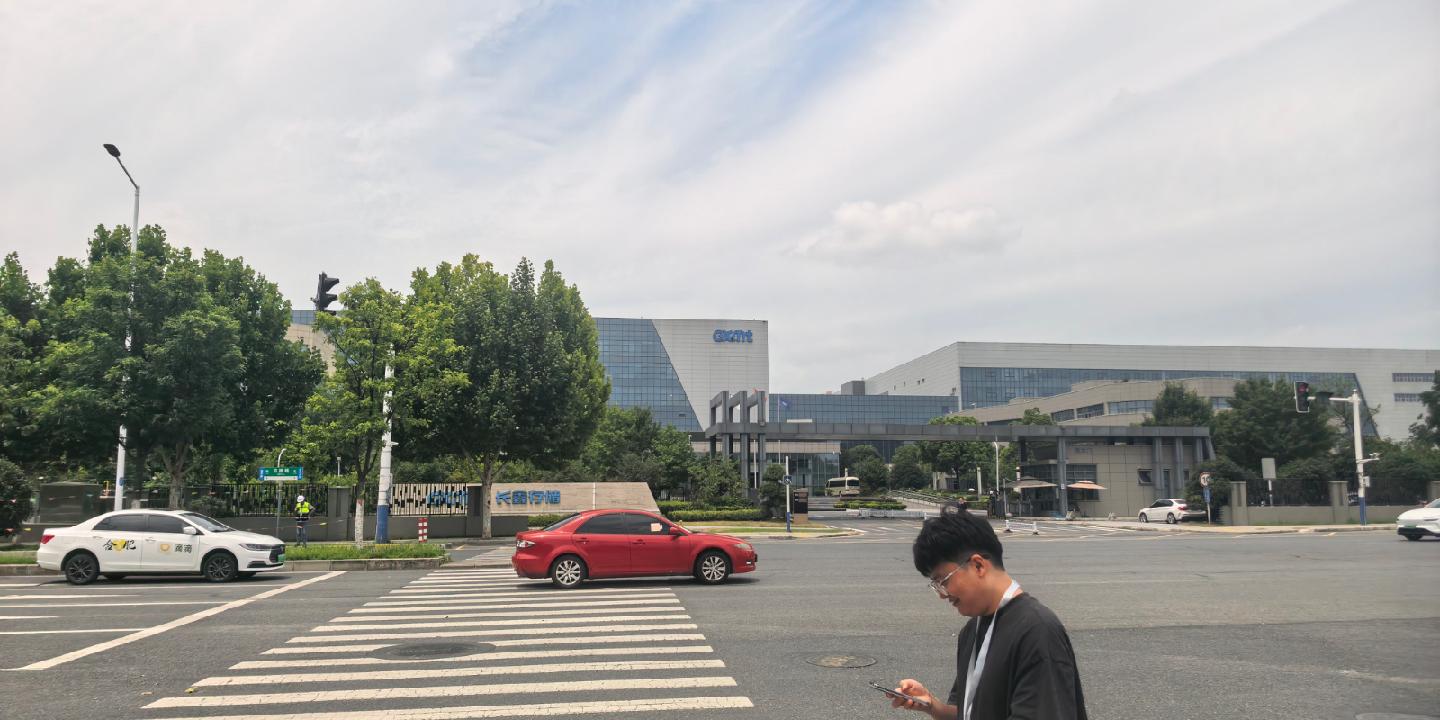
A few hundred meters away on the commercial street, the busiest time of the day has just begun. Employees of Changxin Technology are gradually leaving the park and flocking to the restaurants and convenience stores on the street. To the west of the community is the headquarters of Changxin Technology (688825. SH), which will be listed on the Science and Technology Innovation Board on July 27th.
Ten years ago, this area adjacent to Hefei Xinqiao International Airport and more than 40 kilometers away from the main urban area was still a cluster of villages and farmland. The Changxin Technology project was launched in 2016 and put into operation in 2019, but the changes were not initially significant.
The real turning point occurred in 2024, when a large number of employees and industrial chain enterprises flooded in, and the previously deserted resettlement communities gathered popularity. Rent increased, and Hilton, KFC, McDonald's, and Luckin Coffee landed one after another. The villagers who used to cultivate on this land are now renting their relocation to employees of Changxin Technology.
Changxin Technology's upcoming listing also means that state-owned shareholders such as Anhui Province, Hefei City, and Hefei Economic Development Zone will receive considerable returns. Changxin Technology's final round of capital increase price is 2.63 yuan per share, and the current issuance price is 8.66 yuan per share, with a book value increase of more than twice.
From village farmland to chip city, from population influx and housing rental to industrial agglomeration and capital return, a company is reshaping the development rhythm of a region.
Renting a one bedroom apartment is hard to come by
It takes nearly half an hour to drive from downtown Hefei to the headquarters of Changxin Technology. After leaving the urban area, both sides of the road gradually turned into farmland and villages, until near the factory area, dense residential communities reappeared.
A ride hailing driver told the Economic Observer that he is unwilling to take orders from Changxin Technology and can hardly receive customers when he comes back. He also has to drive an extra ten kilometers towards the airport to receive delivery orders. In the eyes of ride hailing drivers, this is still a remote area outside the city, but in the rental market, it is already difficult to find a house here.
The headquarters of Changxin Technology is not particularly large, with more than ten residential communities concentrated on the east side of the factory area. There are resettlement communities such as Xinqiao Jiayuan and Lianhuan New Village, as well as employee dormitories such as Changxin Jiayuan and Changxin Apartments, and long-term rental apartments such as Haichengru and Boyu. There is also a residential area of Overseas Chinese Town International Town on the north side of the factory area.
In 2019, the Hefei Municipal Government signed cooperation agreements with Changxin Technology, Overseas Chinese Town Group, North China Huachuang and other enterprises to launch the Changxin Integrated Circuit Manufacturing Base project, with a total investment of over 220 billion yuan, including 12 inch memory wafer manufacturing base, airport integrated circuit supporting industrial park, and Overseas Chinese Town International Town projects, hoping to build a complete industrial and living supporting system around Changxin Technology.
OCT International Town is the only commercial housing project in the Changgang area, mainly sold to Changxin Technology employees in the early stage, with a price range of 12000 to 14000 yuan per square meter. However, the overall project has been slow to sell, and sales have been fully opened up. Salespeople have introduced that the 5 and 8 plots for sale are both existing houses, with an average price of about 8000 yuan per square meter for western-style houses and even lower prices for high-rise buildings.
The rental market is a different scene.
A homeowner in OCT International Town told Economic Observer that by early 2025, the monthly rent for a two bedroom apartment will be about 2000 yuan, and there are many available rental properties; This year, the monthly rent has generally increased to around 3000 yuan, and many residential areas no longer have vacant rooms.
A resident of Xinqiao Community has a more direct feeling towards this change. She is a nearby villager. After the demolition, her family was allocated three sets of housing, one for self occupation and two for rent to employees of Changxin Technology. The annual rent for a two bedroom apartment is about 20000 yuan, and for a three bedroom apartment it is about 25000 yuan. Tenants rarely change after moving in. Her family's income mainly comes from her husband's work and rent. In the past, these houses were vacant for a long time, but in the past two years, the surrounding housing has become increasingly popular and has been rented out.
Multiple residents have confirmed that there are almost no vacant properties in the surrounding resettlement communities this year, and even a large number of unfinished houses that have not yet been renovated have been taken away by tenants. In addition to Changxin Technology employees, tenants also have employees from supporting enterprises, outsourcing personnel, and construction workers for the second phase project.
This area used to have a population outflow like most suburban villages, but now young people from outside have instead moved into the resettlement houses of the villagers.
Lianhuan New Village, adjacent to Xinqiao Community, is also fully leased.
A real estate agent told the Economic Observer that there are currently almost no available rental properties in the community, and those who want to rent can only wait for existing tenants to vacate. Even if they wait for two or three months, they may not be able to rent.
This intermediary introduced that there are a total of 9 resettlement communities in the surrounding area. When the construction of Hefei Xinqiao International Airport began, resettlement houses were built. After obtaining property rights certificates, these resettlement houses can be listed for trading. The transaction price of second-hand houses is about 5000 yuan/square meter, but the buying and selling is not active. The real change is happening in the rental market. In 2025, many housing units will still be difficult to rent out. This year, Changxin Technology continues to expand its enrollment, and the demand for new housing is rapidly released. Almost all nearby rental housing units have been digested.
The beginning of prosperity
Besides housing, the surrounding commercial ecology is also changing.
More than 100 meters away from the entrance of Changxin Technology, Xiaohong runs a convenience store. She is a local who initially opened a shop in a nearby relocation community, selling daily necessities, vegetables, and fruits. Her customers were mainly nearby residents, and her income was only enough to sustain the daily expenses of her family.
After the production of Changxin Technology in 2019, she and her husband moved their store to the vicinity of the factory. Many restaurants have gathered around the new store, and employees can easily buy water, cigarettes, and snacks after meals, resulting in a significant increase in foot traffic and much better business than before. The direction of store relocation is also the direction of the shift in the center of gravity in this area.
At the end of 2024, Shuojin Plaza serving Changxin Technology will open, and various catering and convenience stores will gradually enter, making competition even more intense. However, Changxin Technology continues to expand its enrollment, and the newly added consumer demand quickly absorbs the newly added supply. Except for a brief impact on business during the personnel adjustment period in the first half of 2025, store operations have remained relatively stable.
In the second half of 2025, the storage chip market will recover, Changxin Technology will restart large-scale recruitment, and the customer flow in Xiaohongdian will resume growth. As the listing approaches this year, the surrounding commercial atmosphere is further heating up.
The fluctuation of customer flow in Xiaohong store is due to the changes in the scale of employees at Changxin Technology. The prospectus shows that the number of employees in the company has increased from 9605 at the end of 2023 to 13858 at the end of 2024; Despite personnel adjustments in the first half of 2025, the total number of employees at the end of that year still reached 19298, with the vast majority working at the headquarters in Hefei. Since 2026, Changxin Technology has continued to expand recruitment. On July 22, its official website still had 1201 social recruitment positions and 43 campus recruitment positions open. Several employees expect that the total number of employees is expected to increase to 25000 by the end of this year.
The continuous expansion of employee scale has provided stable customer sources for surrounding businesses.
A technical employee of Changxin Technology told Economic Observer that he has been employed for more than a year and his salary and benefits are competitive among similar companies in Hefei. He works a lot of overtime, but the intensity is acceptable. His department usually finishes work before 10 pm, and some Saturdays require overtime.
Changxin Technology has an employee canteen in its factory area, but the queue time during lunchtime is relatively long. Many employees choose to dine outside the park, while others rest and shop on the commercial street after meals. The lively midday atmosphere in Changgang Community comes from these employees.
A restaurant owner told the Economic Observer that he started catering nearby during the early days of Changxin Technology's construction, and the customers were mainly project construction workers. After the opening of Shuojin Plaza, he moved the stores into the mall, and the consumer group shifted to employees of Changxin Technology and supporting enterprises. From construction workers to production line employees, customers have changed a batch, and the Changgang area has also transformed from a construction site to a park.
He said that the initial customer flow of the mall was not stable until the second half of 2025 when Changxin Technology expanded its enrollment, and the hotel operation truly entered the right track. Currently, the daily turnover is stable at over 2000 yuan, and can reach 3000 yuan at its peak.
In the eyes of many merchants, after the second phase of Changxin Technology project is put into operation, the number of employees will continue to grow, and there is still room for expansion in the surrounding commercial areas.
Supply Chain Collaboration
Housing and consumption are only the most intuitive parts of the Changxin effect, and the deeper impact lies in the formation of an integrated circuit industry chain.
In 2016, Changxin Technology project was launched in Hefei, with a total investment of 18 billion yuan in the first phase, of which Hefei Production Investment contributed 14.4 billion yuan, accounting for 80%. At that time, Chinese Mainland had not yet achieved large-scale mass production of DRAM chips, and Changxin Technology Project was still located in farmland and villages. This investment was more like a long-term bet full of uncertainty.
DRAM is the core memory of electronic products such as smartphones, computers, servers, and smart cars, and it is also one of the most fiercely competitive fields in the global semiconductor industry. Changxin Technology adopts the IDM model, covering the entire process from research and development, design, wafer manufacturing, packaging and testing to sales. At present, there are only four companies in the world that possess this complete capability: Samsung Electronics, SK Hynix, Micron Technology, and Changxin Technology. By 2025, the top three companies will still hold over 90% of the global market share, while Changxin Technology's market share will be less than 10%.
Around Changxin Technology, Hefei has planned and constructed an airport integrated circuit supporting industrial park. Nowadays, equipment, material, and component enterprises such as North Huachuang, Wanweikelin Precision Equipment, Hemeng Precision Industry, Semiconductor Materials, Yiyue Technology, Fuxian Automation, Zhichang Electronic Equipment, and Beslan Electronics have successively landed, forming a supporting system covering key upstream links.
Changxin Technology's factory area is also surrounded by companies such as Heguang Photomask Technology, Peidun Storage Technology, Guangzhou Iron and Steel Gas, Shangchao Materials, Asia Vietnam Semiconductor, and Zhihui Semiconductor Applications. Their businesses cover areas such as photomasks, packaging testing, electronic specialty gases, and new materials. The industrial chain links that used to require cross regional collaboration are gradually being centralized in the same region.
In the industrial planning of Hefei, this area is named as the Integrated Circuit Industrial Park, with a single project investment scale generally reaching billions of yuan, and dozens of supporting enterprises jointly forming an industrial ecosystem around the operation of wafer fabs. A factory that started from scratch ten years ago has now become the center of an industrial cluster.
Agglomeration is still extending to a larger scale. A large area of industrial land is reserved on the south side of the integrated circuit industrial park, and the intelligent electric vehicle industrial park with NIO as the core is connected to the north side. The area has gathered three vehicle factories, three power battery factories, and a large number of automotive parts enterprises. The two industrial chains of new energy vehicles and integrated circuits intersect in the airport area, further enhancing the regional industrial carrying capacity.
The connection between Changxin Technology and industrial chain enterprises is not limited to supply relationships. In the strategic placement list for this IPO, there are semiconductor equipment companies such as Zhongwei Company, Tuojing Technology, and Yitang Shares, as well as material companies such as Shanghai Silicon Industry, Anji Technology, and Yisiwei Materials, and packaging and testing companies such as Tongfu Microelectronics; Terminal application enterprises such as Xiaomi, TCL Technology, Weilai, Alibaba Cloud, ZTE, Huaqin Technology, Media Holdings, Kwai, Chery Automobile also appear in the list of strategic investors.
From equipment, materials, manufacturing to terminal applications, different links in the industrial chain are more closely connected through equity investment, with both capital bonds and business collaboration. Changxin Technology is becoming an important connecting node in the domestic storage industry.
Patience And Reward
From housing, commerce to the industrial chain, today's Changxin effect is built on ten years of continuous investment in Hefei. Changxin Technology has landed in the capital market, and this investment has entered the redemption period.
In 2016, Changxin Technology's predecessor, Hefei Zhiju, was established. Prior to its IPO, Changxin Technology completed nine rounds of financing and introduced more than 60 investment institutions, with a total financing amount of approximately 57.92 billion yuan.
As one of the early investors, Zhang Wei, Chairman of Cornerstone Capital, recalled that around 2016, the outside world generally underestimated the impact of intensified global technological competition on China's semiconductor industry. However, in his view, that was already a turning point of the times.
He believes that the importance of independent and controllable core technologies is constantly increasing, and basic industries such as storage chips will usher in long-term development opportunities. This is also an important reason for cornerstone capital to continue investing in hard technology enterprises such as Changxin Technology.
In the development process of Changxin Technology, Hefei State owned Assets have always played a key role. The initial financing of the company mainly came from local state-owned assets and the company's management.
In 2020, Changxin Technology launched market-oriented reforms. Hefei Industrial Investment and Hefei Economic Development Zone State owned Assets jointly transferred 69% of their equity to Qinghui Jidian, controlled by the founding team, and then introduced social capital to gradually complete market-oriented financing. By the completion of the last round of financing in June 2025, Changxin Technology will be valued at approximately 158.3 billion yuan.
According to the prospectus, before the IPO, Qinghui Jidian was the largest shareholder, holding 21.67% of the shares; Hefei Production and Investment Group holds 11.71% of the shares through its wholly-owned subsidiary, making it the second largest shareholder; The second phase of the National Integrated Circuit Industry Investment Fund holds 8.73% of the shares, while the employee shareholding platform holds 8.37%. Local state-owned assets are not only the main investors in the early stages of enterprises, but also maintain their important shareholder status.
In addition to capital investment, local governments have also undertaken a large amount of industrial supporting construction. According to an official source, since the establishment of Changxin Technology, the local government has continuously provided financial support, led the construction of industrial supporting facilities such as Xinqiao Integrated Circuit Technology Park, and introduced upstream and downstream enterprises through investment promotion. Some supporting enterprises are directly invested by local state-owned assets. The projects of Changxin Jiayuan and Changxin Apartments, as well as the commercial supporting Shuojin Square where employees reside, are mainly operated by the state-owned construction of Hefei Economic Development Zone.
These long-term investments have entered the harvest period as the company's operations improve. In 2025, Changxin Technology achieved its first full year profit, with a net profit attributable to shareholders of the parent company of 1.875 billion yuan. Entering 2026, the rapid development of artificial intelligence drives the growth of storage demand, and Changxin Technology's performance is further released. The net profit in the first quarter is 24.762 billion yuan, and it is expected to be between 50 billion yuan and 57 billion yuan in the first half of the year, a year-on-year increase of more than 20 times.
According to the issuance plan, Changxin Technology's IPO is expected to raise 57.92 billion yuan; If all over allotment options are exercised, the total amount of funds raised will reach 66.61 billion yuan.
For Hefei, returns are not just on paper. After Changxin Technology went public, the long-term investment of local state-owned assets was priced in the capital market, and the equity value significantly increased; The integrated circuit industry cluster formed around enterprises has driven population agglomeration, housing demand, commercial prosperity, and industrial chain synergy, cultivating new industrial growth poles for Hefei.
From a wafer fab to an industrial chain, and then to a new city, Changxin Technology's trajectory reflects another path of local industrial investment, which is to cultivate strategic industries with long-term capital, and then drive urban development through industrial agglomeration. When enterprises enter the harvest period, capital, industry, and cities are also synchronously realizing this decade long investment.
The card game under the shade of trees in Xinqiao Community, the midday pedestrian flow in the commercial street, and the difficult to find one bedroom relocation community are the most daily returns of this patient investment.
(At the request of the interviewee, Xiaohong is a pseudonym; our reporter Guo Hongchao also contributed to the report)
The front air spring has hidden dangers, and Xiaopeng X9 has initiated a recall

Test drive Huawei Qiankun ADS 5.0: WEWA 2.0 architecture first test, will be gradually installed on Huawei's models
The car owner's self driving new energy vehicle's overseas car infotainment system has been remotely locked for over 30 hours, and the brand involved has responded by triggering the built-in security protection mechanism of the car infotainment system, which is a commonly used anti-theft and damage prevention measure in the industry


 WeChat registration or login


 Subscribe