2026-07-24 19:00



In 2024, the Nobel Prize in Chemistry was awarded to two artificial intelligence scientists from Google DeepMind, Demis Hassabis and John Jepper. Their AlphaFold system predicted the three-dimensional structures of nearly 200 million proteins, which is equivalent to a thousand times the amount accumulated by global scientists over more than 50 years of experimentation.
Only by seeing the shape of the protein can we understand the disease and design drugs. About one-third of the marketed drugs in the world target disease related proteins. In 2020, the COVID-19 mRNA vaccine can complete the candidate molecular design within 48 hours after getting the viral gene sequence. One of the prerequisites is that scientists have seen the three-dimensional structure of the coronavirus spike protein before. The emergence of AlphaFold has greatly accelerated the efficiency of protein structure analysis and made AI assisted scientific research a global focus of attention.
AlphaFold is able to achieve this because the protein field has over 50 years of standardized data accumulation, mature and unified detection methods, and globally shared databases, making it naturally suitable for AI modeling.
But in many research fields, data conditions are far from being as good, and whether AI can also play a role in these fields is becoming a common concern for both the scientific and industrial communities.
In August 2025, the State Council issued the "Opinions on Deepening the Implementation of the 'Artificial Intelligence+' Action", which clearly stated the need to accelerate the exploration of new research paradigms driven by artificial intelligence. On July 18, during the 2026 World Artificial Intelligence Conference (WAIC), four institutions, namely Zhiyuan Research Institute, Chinese Academy of Sciences, Shenzhen Hetao University and Tsinghua University, presented their phased achievements at the "AI for Science: Beyond the Concept" round table forum.
The exploration directions of the four institutions are different, but the areas where AI can help scientists are already very specific, such as understanding messy experimental data, operating precision instruments, and managing experimental processes. In the past, researchers spent a lot of time on these repetitive tasks. By compressing this time, scientists can focus their energy on proposing hypotheses, designing experiments, and interpreting results.
Understand Experimental Data
In July this year, the research and development team of the Chinese Academy of Sciences Shanghai Silicate Research Institute locked in a new alloy catalyst from 20 million candidate formulations, whose activity was 38% higher than the commercial catalyst on the market, while a dry experiment screening process only took 30 minutes.
This catalyst is used for hydrogen evolution reaction, which decomposes water into hydrogen gas using electricity, and is a key material in the green hydrogen energy industry chain. Catalysts are also common in daily life, such as the three-way catalytic converter in car exhaust pipes, which is responsible for converting the carbon monoxide and nitrogen oxides emitted by the engine into harmless gases; Fertilizer plants use iron-based catalysts to synthesize ammonia, and nearly half of the world's population relies on this process for food production.
The performance of a catalyst directly determines how much energy is required and how long it takes for a chemical reaction, but finding the right catalyst has always been one of the most time-consuming tasks in materials science. The traditional approach is to repeatedly try and make mistakes among a large number of candidate formulas. Researchers synthesize a batch of materials, test their performance, analyze data, and adjust the formula. When the candidate formula is in the tens of millions, it often takes several months to complete one round.
The tool that helped this team compress several months into 30 minutes is ScienceOne Omni, developed jointly by multiple research institutes organized by the Chinese Academy of Sciences. A core problem that Panshi needs to solve is that data from different disciplines looks completely different. Molecular structures are three-dimensional coordinates, spectra are one-dimensional waveforms, proteins are amino acid sequences, and scientific images are pixel matrices.
Panshi's approach is to first encode these diverse data formats into a format that the model can handle, and then align and train the model with 170 million global scientific literature and the Chinese Academy of Sciences scientific corpus to establish connections between different disciplines. Finally, the model outputs results for specific scientific research tasks. The training data contains 8 million scientific reasoning samples, and the platform integrates more than 8000 professional research tools and skill libraries.
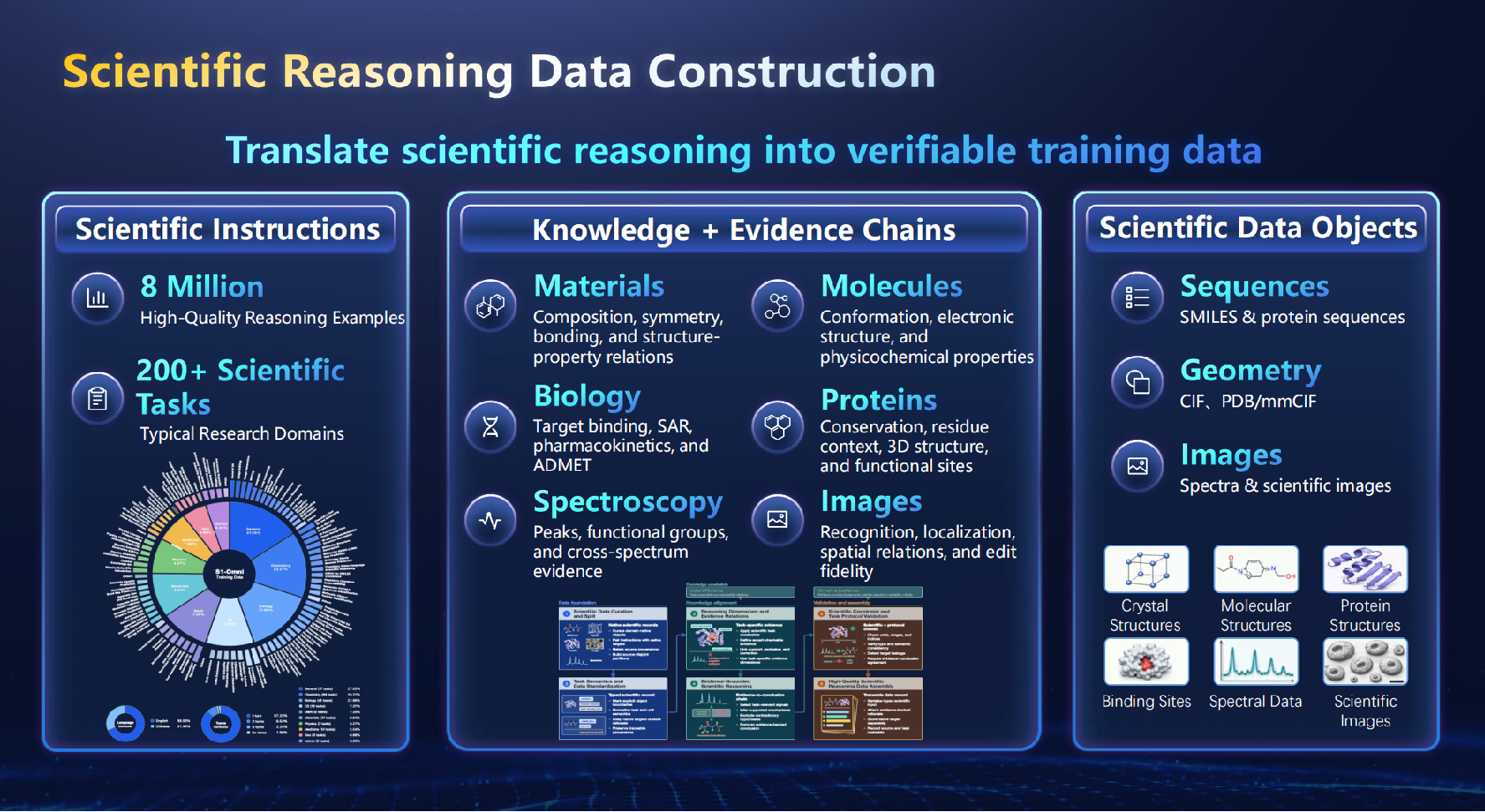
Xu Nan, a researcher at the Institute of Automation, Chinese Academy of Sciences, stated at a roundtable forum that Panshi 2.0 aims to "make models think like scientists".
Due to its ability to process data across disciplines, the application scope of Panshi extends far beyond catalysts. In the field of mechanical engineering, Panshi has collaborated with the Institute of Mechanics of the Chinese Academy of Sciences to compress the simulation analysis time of high-speed rail aerodynamic problems from hours to seconds, reducing key parameter errors by 42% in data scarcity scenarios. In the field of astronomy, Panshi has collaborated with the National Astronomical Observatory to build an intelligent inversion tool chain for stellar parameters, which has improved the recognition accuracy of rare celestial bodies by about 50% compared to existing methods. In the most time-consuming part of daily scientific research, literature research, a systematic literature review in the past usually took several days or even weeks, but Panshi 2.0 has compressed this process to around 20 minutes.
At present, Panshi has landed in more than 50 internal research institutes of the Chinese Academy of Sciences and more than 30 external institutions. Its computing power system is based on Huawei's intelligent computing laboratory solution and has been adapted to chips such as Ascend.
The disciplines covered by Panshi have a commonality, although their data formats are different, they all have mature literature systems and formulas to refer to, and AI modeling is based on evidence.
There are still some disciplines that do not have such conditions. Experimental data comes from different types of devices, with different formats and dimensions, and even a unified labeling standard has not been established yet. It is difficult for AI modeling to find a reliable starting point.
But even under such conditions, AI is beginning to produce serious scientific research results. For example, in the field of neuroscience.
In June 2026, a joint team from Beijing Zhiyuan Artificial Intelligence Research Institute and Tsinghua University published a study in the journal Science, which for the first time confirmed that memory can reverse regulate sleep. Positive memory makes sleep more continuous, while negative memory exacerbates sleep fragmentation, providing a new intervention approach for sleep disorders associated with depression and anxiety.
The data analysis for this research is supported by the self-developed multimodal neuroscience model, Wujie Brain μ (pronounced Brain-m ü).
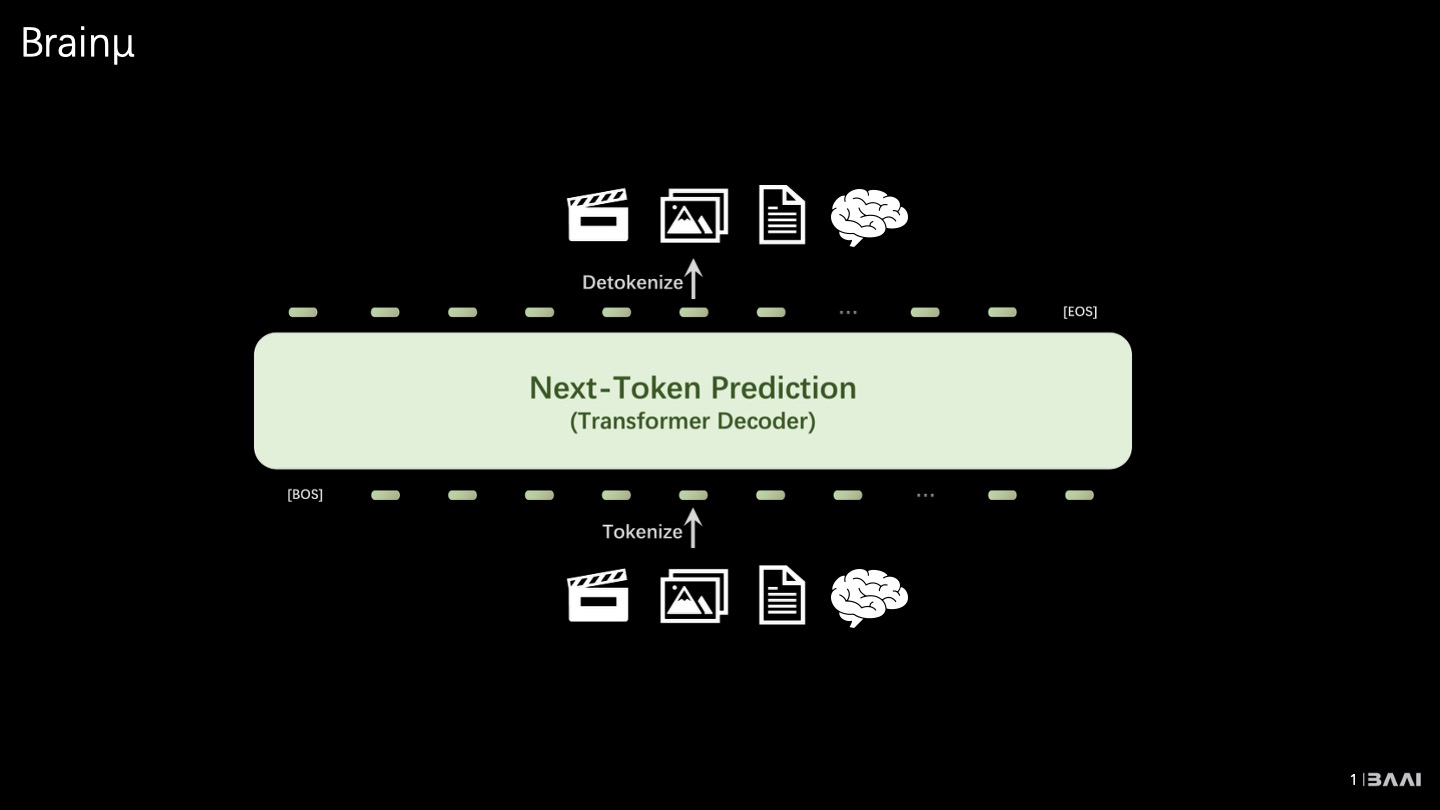
Researcher Lei Bo from Zhiyuan Research Institute said at the roundtable forum that the reason why protein structure prediction is suitable for AI modeling is because the data standards in the entire field were relatively mature at that time, and neuroscience still does not have such a foundation today. Electroencephalography records electrical signals on the surface of the brain, calcium imaging captures the activity of individual neurons in a local area, and neural probes collect discharges from deep brain regions in a limited area. These signals come from different devices, species, and experimental paradigms, with different formats and dimensions. Leibo said that even for the same set of data, different laboratories may provide completely opposite interpretations.
Faced with such a data dilemma, Zhiyuan's self-developed Wujie Brain μ took a different path, using pre trained multimodal models as a reference frame. Leibo explained that the brain is a high-dimensional entity, and each detection device can only capture a low dimensional projection of it, just like taking photos of the same building from different angles, where each photo only contains some information. Brain μ uses the existing representation space of multimodal models of language and vision to align the sparse data of various modes of neuroscience, so that the model can learn a more complete brain representation than a single mode.
After mastering this high-dimensional representation, the model can achieve the transformation between different modalities, such as inputting a low-cost EEG data and outputting functional magnetic resonance imaging (fMRI) images with larger information but expensive equipment. For primary healthcare institutions lacking high-end equipment, doctors may use AI to make diagnoses that could only be made by large tertiary hospitals.
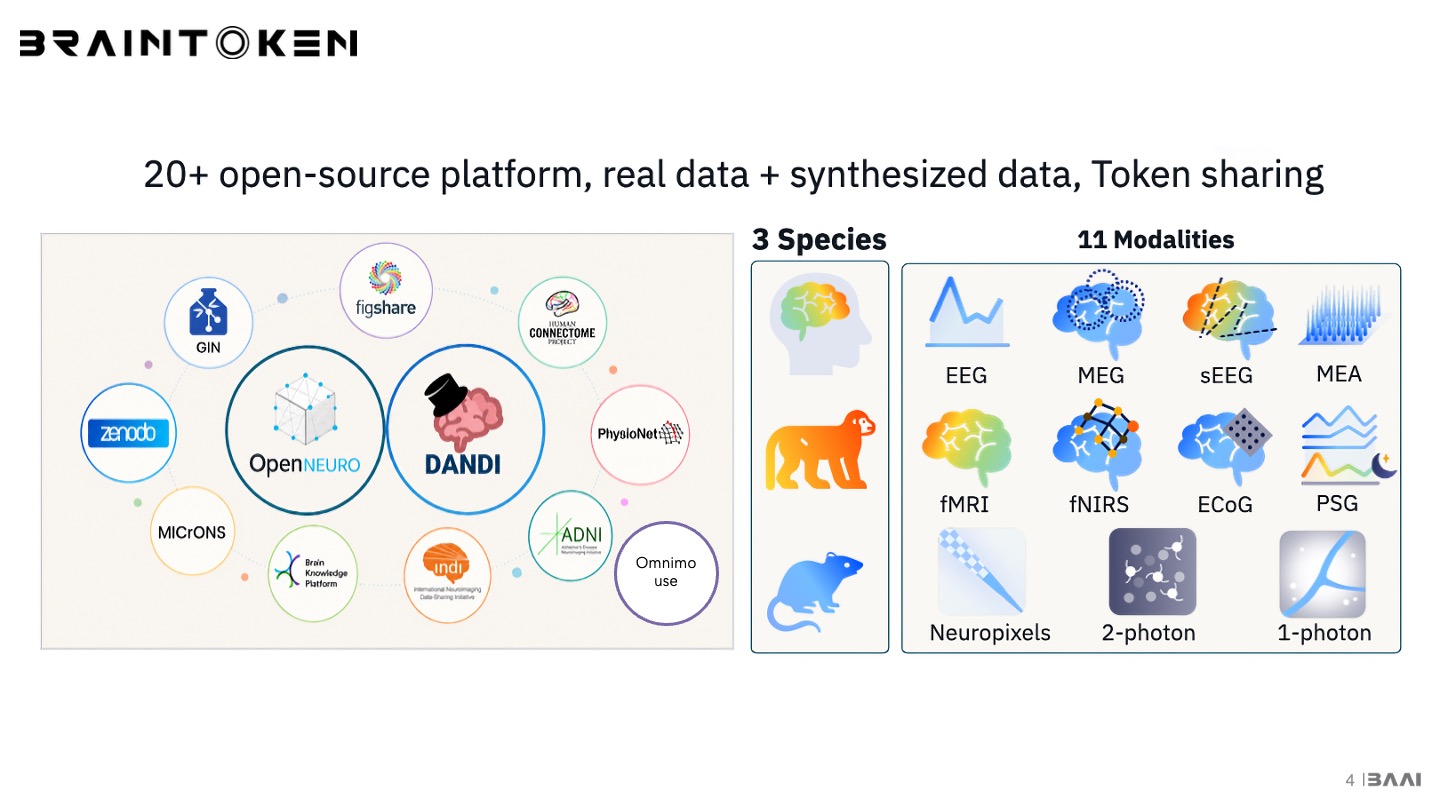
The supporting BrainToken data platform integrates data from three species: humans, monkeys, and mice, covering major neuroscience modalities from electroencephalography to two-photon calcium imaging. In collaboration with the Beijing Institute of Life Sciences, Wujie Brain μ has completed automated annotation and analysis of over 5000 nights of mouse sleep data. The analysis results over 12 months have been verified through two-way validation, maintaining high consistency with the manual judgment of professional sleep neuroscience doctors. The model training covers over 70000 sleep records. According to the Zhiyuan Research Institute, the team collaborated with Huawei to complete the inference adaptation and optimization of Wujie Brain μ using Ascend supernodes, and the entire process supported 12 months of automated analysis.
Leibo uses the development stages of big language models to measure the current position of scientific intelligence. In his opinion, the model capability is probably still in the GPT-1 stage, the industry's attention has reached GPT-3, and the feedback from scientists' use is close to the early stages of ChatGPT. The big language model is one where abilities mature first, applications keep up, and the logic of scientific intelligence is reversed. Applications run first, pulling the model forward. Requirements come before capabilities, and application validation drives model iteration in turn
AI starts managing laboratories
To conduct material research, it is necessary to use different instruments to obtain information on the composition, structure, and morphology of materials. Ouyang Wanli, Vice Dean of Shenzhen Hetao College, said at the roundtable forum that just as performing a physical examination requires various equipment such as electrocardiogram, ultrasound, and CT, the "physical examination" of materials also relies on a series of precision instruments such as scanning electron microscope, X-ray diffractometer, and energy dispersive spectrometer. The operation of these instruments relies heavily on human intervention. Researchers need to manually prepare samples, control instrument software, repeatedly adjust parameters and wait for graphs to appear, and then manually analyze data. The software systems between different devices are mutually closed.
The AuraID multi-agent unmanned representation platform jointly launched by Shenzhen Hetao College and Suzhou National Laboratory has chosen a different path. This system does not require instrument manufacturers to open software interfaces, allowing intelligent agents to operate device interfaces in the same way as human experts, observe screen images, click buttons, read data, and adjust parameters.
In the testing of scanning electron microscopy, after the Lingjian took over the operation, the initially captured image had obvious noise. The system automatically adjusted the acceleration voltage and magnification, and the image gradually became clearer. Finally, it stopped at the optimal parameters and automatically completed image capture and particle size analysis.
At present, Lingjian has covered 6 types of precision instruments and more than 10 characterization modes. In the micro CT (micro computed tomography) alignment task, the AI independent completion rate has increased from 33% in version 1.0 to 80% in version 2.0. The workload of crystal structure analysis has been reduced by 50.6%, and the time for microstructure analysis has been shortened from 9 minutes to 7.5 minutes. The same set of operating rules can support the characterization of three different samples: energy materials, nanomaterials, and metal materials.
Wang Zhihui, representative of Shenzhen Hetao College, said that many research institutions are already promoting automation on the synthesis side, but unmanned and intelligent representation on the characterization side is still blank, and Lingjian is precisely targeting this link.
Professor Yu Li from the School of Life Sciences at Tsinghua University and Director of the National Key Laboratory of Membrane Biology introduced the practical considerations of the Black Lamp Laboratory in the field of life sciences at the roundtable forum.
In December 2025, Tsinghua University officially established the Life Science Artificial Intelligence Research Center, providing an institutional foundation for the implementation of this direction. The concept of the black light laboratory originated from the "black light factory" in the manufacturing industry, where the production line does not require human supervision and the lights do not need to be turned on. Yu Li introduced this idea into scientific research, allowing large models to be directly integrated into research instruments. While collecting data, analysis is completed, and the results are fed back into the database for model training, forming a cycle that does not require continuous human intervention.
Yu Li revealed that his team started introducing large models to assist in the experimental process two years ago. The specific approach is to have students fully discuss the plan with the large model before designing the experiment, and to identify potential problems in advance. Last year, the team further deployed intelligent agents to manage the entire chain.
After introducing the large model, the experimental cost was reduced by 25% when the team expanded by 20 people. Around this direction, Yu Li has built supporting research institutions in Hangzhou and other places, equipped with cryo electron microscopes, large-scale computing power, and storage infrastructure, gathering chemists, biologists, doctors, and engineers to collaborate in the same space. According to Yu Li's vision, it used to take 10 years and 1 billion US dollars to develop a new drug, but with the deep involvement of AI in the scientific research process, it may be compressed to 3 months and 3 million US dollars in the future.
Panshi's interdisciplinary modeling, Brain μ's neuroscience signal analysis, Lingjian's instrument control, and Yu Li's black light laboratory all rely on the support of computing power to make these achievements successful.
In addition, for domestic research institutions, the importance of independent innovation in computing power needs to be further emphasized.
Scientific computing involves a large amount of sensitive data and core research results, relying on self-developed computing power base, which is not only a practical need to ensure data security, but also a basic condition to enhance the overall competitiveness of domestic scientific research. The intelligent computing laboratory and intelligent scientific research solutions launched by Huawei's research team have explored this direction. The former solves computing power scheduling and data management, while the latter connects the entire scientific research process. Currently, they have served more than 20 key laboratories across the country.
At the Jiageng Innovation Laboratory, the material science intelligent computing platform co built by Huawei has been put into operation, improving the computational efficiency of tasks such as material simulation and molecular screening by 20%. From the supply of high-quality computing power to the digitization of the entire scientific research process, the self-developed technology ecosystem of software and hardware is providing increasingly complete support for the implementation of scientific intelligence.
AlphaFold has proven that in the field with the best data conditions, AI can achieve prize level results, and what these four institutions are doing may not be as dazzling, but it is more important. They want AI to be able to help even in places where data conditions are far from ideal, allowing scientists to spend less effort on repetitive work and more time on problems that only humans can figure out.

The front air spring has hidden dangers, and Xiaopeng X9 has initiated a recall

Test drive Huawei Qiankun ADS 5.0: WEWA 2.0 architecture first test, will be gradually installed on Huawei's models

The car owner's self driving new energy vehicle's overseas car infotainment system has been remotely locked for over 30 hours, and the brand involved has responded by triggering the built-in security protection mechanism of the car infotainment system, which is a commonly used anti-theft and damage prevention measure in the industry


 WeChat registration or login