Economic Observer Follow
2026-07-25 12:37


Economic Observer reporter Zhang Rui
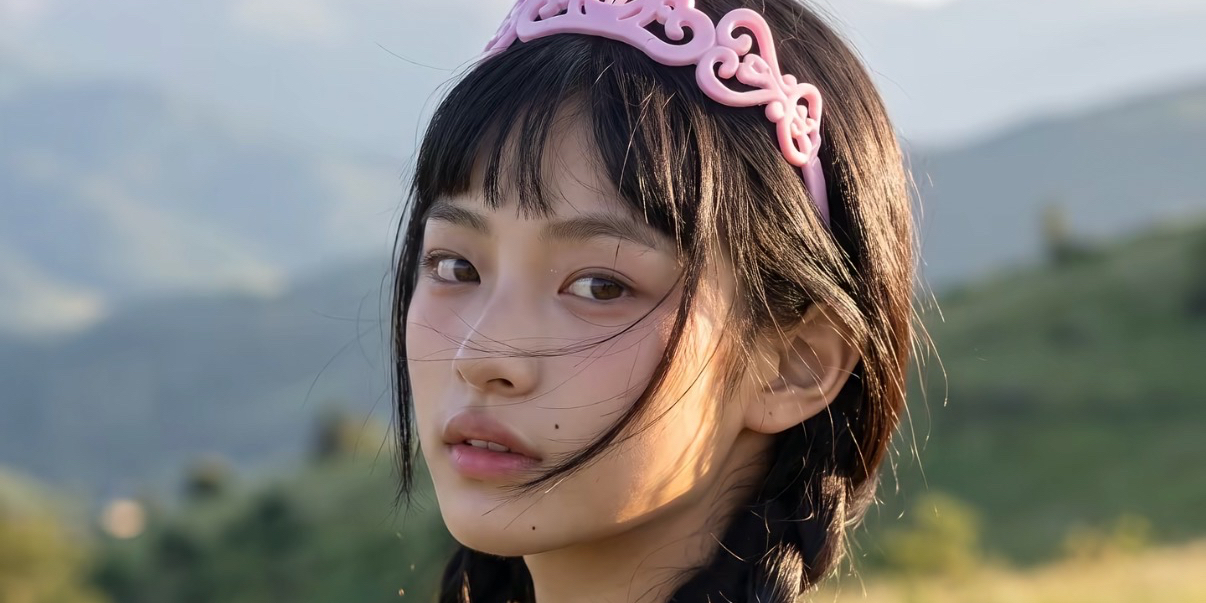
On the morning of July 23, AI actor Fang Taozi released the latest "half past eight" series life vlog (video log) on his Tiktok account.
Fang Taozi is the female lead of the popular AI short drama 'The Girl Who Was Cut Off'. The above video is about 30 seconds long and tells the story of Taotao and her friend Mimi making plans to play tennis. During this time, the sound of their laughter and playfulness, as well as their expressions and movements of spraying sunscreen and swinging their racket, are very similar to real people.
As of around 19:00 on the same day, the playback volume of "The Girl Who Was Layoff" on its official account has exceeded 160 million; Fang Taozi's Tiktok account has 350000 fans and 26.241 million likes. Subsequently, "the first generation of popular AI stars appeared" on the Tiktok hot list.
On the same day, the topic "Two AI actors are more popular than domestic entertainment celebrities" had over 43.229 million views on Weibo's hot search list. The AI actors discussed on this hot search are Fang Taozi and the male lead Zhou Yiheng from the same drama.
Moreover, since July, Hong Kong stars Wang Zuxian and Wu Qihua, who have portrayed multiple classic characters in Hong Kong film and television dramas, have successively stated that they have authorized their AI images to prepare for film and television works. Among them, the AI short film "Qianying" jointly produced by NetEase (Hangzhou) Network Co., Ltd.'s "Tianxia" mobile game and Wang Zuxian was officially launched on July 17th.
Despite facing many controversies, AI stars have made a strong debut, from the female lead in AI short dramas becoming popular to the authorized AI image of veteran Hong Kong stars making a comeback.
Controversy
According to the public information of "The Cut Girl", the producer of the film is Guangzhou My Film Culture Media Co., Ltd., and the director Tiktok's account is called "Fei Feifei". The story of this film mainly tells of a small town girl who comes to Shangnan City to work as a model, but is repeatedly cut off and ignored in group photos. Later, she continues to grow through learning and wants to "regain her place".
From June 12th to July 16th, "The Dismissed Girl" aired a total of 10 episodes, with each episode lasting from 3 to 10 minutes. The Economic Observer reporter noticed that since the broadcast of the film, there have been many discussions about topics such as "whose face did Fang Taozi melt". Among them, some netizens pointed out that Fang Taotao's perspective is similar to that of Japanese star Nana Komatsu and Korean star Kim Min chi, while others believe that the copyright and ethical issues related to AI actor "Rong Face" should be taken seriously.
Unlike previous AI characters, Fang Taozi's sense of liveliness is beginning to emerge in film and television works. For example, Fang Taozi uses vlogs to showcase her daily "life" like a real blogger, and netizens even feel that she can "take on business and shoot advertisements".
Feifei once responded to Fang Taozi's appearance during a live broadcast, stating that she accepts comparisons from netizens. Regarding the character image, Fang Taozi and all the characters have registered the copyright, "said Feifei Fei." The Cut Girl "is her original AI short drama, which adopts the form of" broadcasting while making (production) "and is currently accelerating the production of the second season.
The controversy surrounding AI actors is not limited to characters and works such as Fang Taozi and 'The Girl Who Was Layoff'. On July 23rd, a reporter from the Economic Observer contacted Feifei, hoping to conduct an interview on topics such as AI stars. As of press time, no response has been received.
Chen Hua works for a well-known film and television company in the industry, mainly responsible for the commercialization of intellectual property (IP), which also refers to a content asset or brand. He believes that the last direct conflict between AI and real actors occurred in April of this year. The cause of the incident was the "AI Artist Library" program launched by iQiyi (NASDAQ: IQ), which has been highly controversial to this day and has greatly increased people's awareness of AI authorization and rights protection.
The "AI Artist Library" project is a project launched by iQiyi's NaDou Pro platform. The project claims that over 100 iQiyi artists have agreed to join the NaDou Pro artist library through deep collaboration with iQiyi. According to official information from iQiyi, in the future, AIGC (Artificial Intelligence Generated Content) creators can select artists from the library and quickly communicate with artists about cooperation rights and execution details through the platform.
However, this plan has been interpreted by the outside world as iQiyi's attempt to "refine actors", further prompting artists such as He Wei and Zhang Ruoyun to deny signing AI licensing agreements.
Chen Hua said that his company is also promoting cooperation in AI for celebrity artists, but the main partners are actors with lower visibility. "The copyright of such (artists) is easier to negotiate, and I am worried that handling too large an IP may trigger resistance.
From a commercial perspective, if the resistance to AI actors continues, it will affect investors' decisions. Chen Hua said that investors actually don't care much about whether the content of a work is entirely AI or partially AI, but more about whether the content can continue to generate value and commercial returns. "If there is too much resistance, it will also drown out good stories.
Trend
Resistance and embrace are happening simultaneously. Not all entertainers see AI as a threat. Recently, actress Wang Luodan publicly shared her own AI short film "You Can Auction" on social media.
In early July, Hong Kong star Wu Qihua publicly announced that he had authorized his AI portrait rights to film and television companies to prepare works based on his young image around the age of 20.
The active entry of individual artists into the film and television industry is just the tip of the iceberg of AI penetration.
According to a report by the China Network Audiovisual Association, in the first quarter of 2026, there were approximately 128000 online micro dramas in the entire industry in China, of which about 122000 were AI micro dramas, accounting for over 95%, with an average daily increase of over 1300. The report suggests that in terms of production capacity growth, AI micro dramas have completed the production ramp up that only took three to four years for live action dramas in less than a year.
Faced with this change, film and television professionals have also seen more possibilities for collaboration. Chen Hua believes that Wang Zuxian and Wu Qihua's authorization of AI images to participate in film and television creation is a good industry example.
This is not just about 'selling faces', their' faces' carry stories and values, and are their achievements as performers, "said Chen Hua. The classic film and television images of Wang Zuxian and Wu Qihua are already highly recognizable IPs, such as Wu Qihua's portrayal of Zhang Wuji in the Hong Kong TV drama" The Heaven Sword and Dragon Saber "and his portrayal of neurosurgeon Cheng Zhimei in" The Kindness of the Hand ".
The model of "classic image of veteran artists+AI" has been implemented, but the specific authorization method and cooperation details are kept tight lipped by both parties. In July, reporters contacted Wang Zuxian and Wu Qihua regarding the authorization of AI portrait rights. Both artist team members have stated that they are unable to accept interviews on related topics in the near future due to signing confidentiality agreements.
However, the implementation form of this authorization can still be seen from the publicly available projects. On July 17th, the mobile game "Tianxia" announced in the launch of "Qianying" that this cooperation was authorized by Wang Zuxian to reconstruct its classic screen image using AI technology. At the same time, this is also the first pure AI produced advertising video authorized by celebrities in the domestic gaming industry.
In the short film "Qianying", a fox transforms into a human form, and its overall appearance, demeanor, and movements are very similar to the character of Nie Xiaoqian played by Wang Zuxian in the Hong Kong film "Qiannu Ghost".
At the same time, more "live action+AI" film and television projects are being prepared. Wang Zhi, the producer of Chengdu Ximan Yunchuang Cultural Technology Co., Ltd., is currently involved in the filming of a "live action+AI" movie called "The Immortal Robe". According to its introduction, "Jin Yi Die" is a movie jointly prepared by the company and Kuaikan World (Beijing) Technology Co., Ltd. (also known as "Kuaikan Comics" in the industry), adapted from well-known comic works.
Wang Zhi told the Economic Observer that "The Immortal Robe" is a complete film work, and the technical highlight of the film is the integration of "live action filming and AIGC industrial production". In future films, "the expressions and images of characters are all from real people".
AI is a tool, like a camera, it has not changed the essence of the industry. ”Wang Zhi believes that the production method of "live action+AI" not only preserves the quality of live performance, but also further enhances the efficiency and visual expression of film and television production.
Wang Zhi believes that AI will not eliminate so-called traffic stars without works or acting skills. "Handsome and beautiful are themselves high-quality IPs or resources.
Chen Anni, the founder of Kuaikan Comics, stated that AI will bring disruptive innovation to the form of content.
Although the collaboration model between AI and real people is still being explored, multiple interviewees in the film and television industry believe that the industry trend has already formed.
(At the request of the interviewee, Chen Hua is a pseudonym)

The front air spring has hidden dangers, and Xiaopeng X9 has initiated a recall
Test drive Huawei Qiankun ADS 5.0: WEWA 2.0 architecture first test, will be gradually installed on Huawei's models
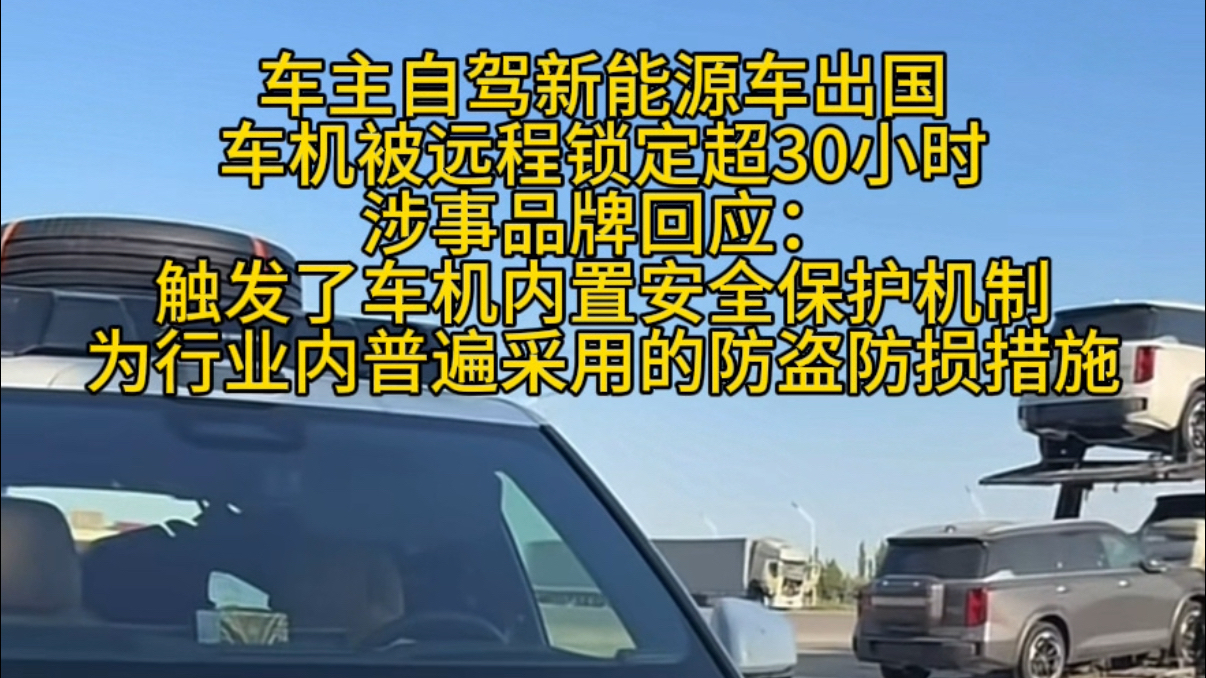
The car owner's self driving new energy vehicle's overseas car infotainment system has been remotely locked for over 30 hours, and the brand involved has responded by triggering the built-in security protection mechanism of the car infotainment system, which is a commonly used anti-theft and damage prevention measure in the industry


 WeChat registration or login


 Subscribe