Economic Observer Follow
2026-07-24 11:07


Fu Lin | Wen
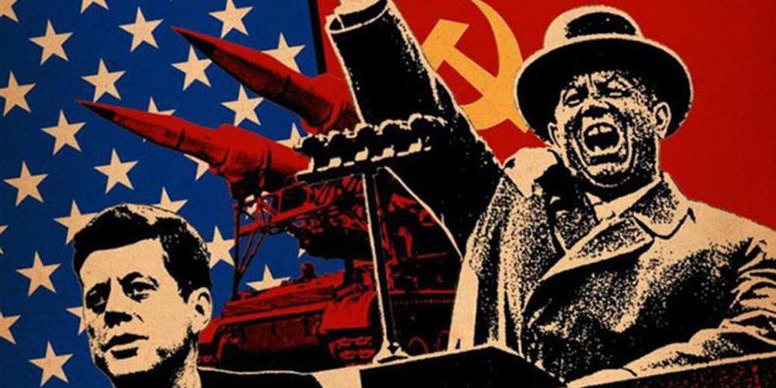
The end of World War II marked the beginning of a 45 year long Cold War standoff. The Cold War "marked the transformation of military confrontation into a war of ideas, and many supporters of such ideas were economists from the Cold War era," New Zealand economist Alan Ballard began in "The Economist of the Cold War," placing the grand narrative of the Cold War within a unique analytical framework: it was not only a confrontation between superpowers over nuclear arsenals and geopolitical spheres of influence, but also a highly intellectual "war of ideas.
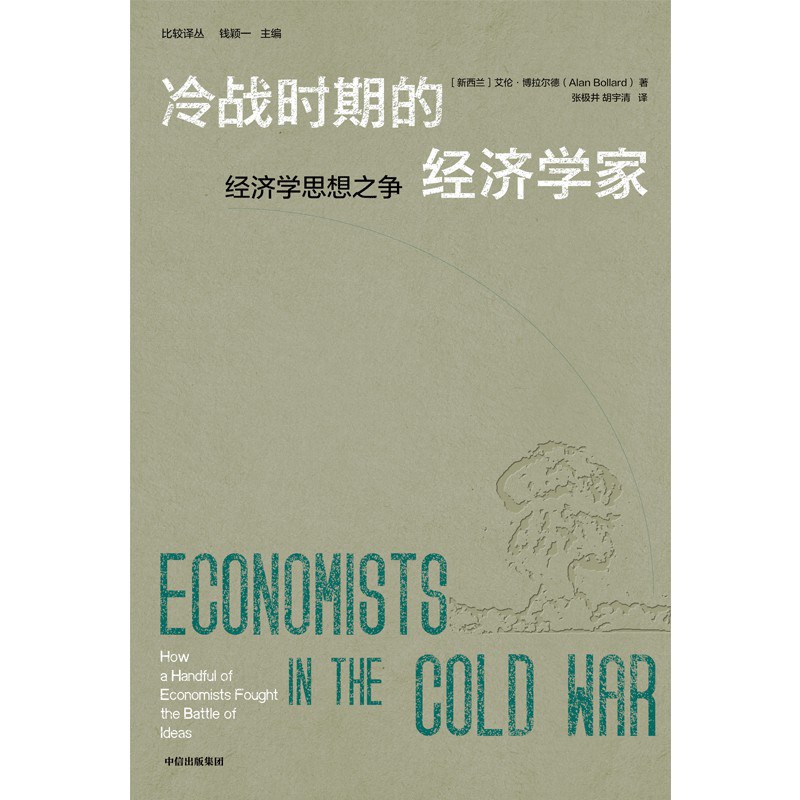
Economists during the Cold War
[New Zealand] by Alan Ballard
Zhang Jijing and Hu Yuqing | Translated
CITIC Publishing Group
May 2026
In this struggle, the economic paradigm is no longer a value neutral mathematical deduction in an ivory tower, but directly transformed into an intangible weapon of national mobilization, mechanism design, geopolitical expansion, and institutional legitimacy argumentation, reflecting the intellectual struggle between political pressure, academic establishment, and human destiny.
The geo economic evolution in the early Cold War period presented multiple binary oppositions between ideologies and concepts such as "left" and "right", central planning and market allocation, capital accumulation and labor value, macroeconomic stability and national security. Borard reveals the complex symbiotic relationship between economic knowledge and state power by meticulously reconstructing the personal destinies, theoretical changes, and policy practices of seven representative economists, including Harry Dexter White, Oscar Lange, John von Neumann, Ludwig Erhard, Joan Robinson, Saburo Dailai, and Raul Prebish.
The Bretton Woods Conference: White, Keynes, and the Disillusionment of Great Power Co governance
The first stage of the reshaping of the Cold War geo economic order focused on the construction of the post-war international monetary and financial system. Harry Dexter White, as Assistant Secretary of the Treasury and a core member of the New Politics faction, clashed with British economic giant John Maynard Keynes at the Bretton Woods Conference, reflecting the transition from the old colonial system of the British Empire to the emerging American hegemony.
Keynes and White had a consensus in principle that the post-war world economy should be based on cooperative competition, financial stability was crucial, and competitive currency devaluation should be avoided. However, Keynes advocated for an "internationalist" approach with highly inclusive and symmetrical regulatory mechanisms, attempting to establish a decentralized international clearing union and create a non-state sovereign international reserve currency called the "Bancor". Through an automatic overdraft mechanism, creditor and debtor countries would share the responsibility of adjusting their international balance of payments, thereby maintaining long-term balance of international trade and protecting the bankrupt British finances.
White's plan has a distinct exclusivity and dollar hegemony background, eager to eliminate Britain's "imperial preferential system" and colonial tariff barriers. White proposed the establishment of a fixed exchange rate system centered around the gold dollar, and granted the United States substantial veto power over international balance of payments adjustments and emergency aid loans. Keynes attempted to occupy the intellectual high ground with his lightning fast discovery of any contradictions in opposition and unparalleled eloquence, but the final design of the International Monetary Fund more reflected White's plan than Keynes', which also reflected the power comparison between the United States and Britain at that time.
The most tragic aspect of White is the irreconcilable 'double loyalty'. As a staunch supporter of Soviet cooperation in the Roosevelt New Deal government, White believed that the prerequisite for post-war peace was the friendly coexistence of the two great powers, the United States and the Soviet Union. He highly sympathized with the Soviet economic system and firmly believed that the Soviet Union should play a crucial leadership role after the war. Based on this understanding, White utilized his sensitive position at the Ministry of Finance to transmit original confidential documents on international loan negotiations, Allied policies towards China, and post-war German reconstruction to Soviet intelligence agencies for a long time.
He not only advocated for providing the Soviet Union with a post-war loan of up to $10 billion, but also handed over copies of currency printing templates to the Soviets when printing the German occupied Mark, which led to the Soviet Union printing "at least seven times the amount of Allied currency issued" without restraint, and ultimately being accepted by the US and British governments, causing billions of dollars in direct financial losses.
When White was questioned harshly by Richard Nixon and others at the House Un American Activities Committee, his fragile heart finally couldn't bear the heavy pressure. Years after his death, the Attorney General of the Eisenhower administration, Brownell, still characterized the American founder of the Bretton Woods system as a shameful traitor in his speech: "Harry Dexter White is a Soviet spy
Along with the birth of the Bretton Woods system, the US Treasury Department completely relinquished its diplomatic leadership to the designer of containment policies, the US State Department, due to the espionage scandal. The disillusionment of great power co governance declared the collapse of the multilateral official cooperation mechanism in the early Cold War, and the Soviet Union ultimately announced its refusal to sign the Bretton Woods Agreement, completely decoupling the global financial and trade system between the two camps.
Planned Utopia: Lange's "Trial and Error Method" and "Mixed Economy" Proposition
The second core battlefield of the Cold War ideological war was the competition between central directive planning and free market price distribution in terms of operational efficiency: "For some time, economists have been debating whether the theoretical economic foundations of communism - state ownership or public ownership, labor value theory, and central planned distribution - can really play a role in practice, namely the so-called socialist calculation problem.
Polish economist Oscar Lange attempted to use modern Western neoclassical economic tools to justify the theory of socialist planned economy. In his 1938 publication "Socialist Economic Theory," he proposed that even in the absence of private ownership of the means of production, a planned economy can simulate competitive market operations through the "trial and error method" - the Central Planning Commission tracks whether the supply of goods is surplus or shortage, and dynamically adjusts its accounting shadow prices and output based on this until reaching a general equilibrium state. That is to say, by designing an efficient, democratic, and market-oriented planned utopia through mathematical models, socialism can not only achieve micro efficiency equivalent to capitalism within the general equilibrium framework, but also overcome the imperfect competition, unemployment, and Great Depression brought about by capitalist monopolies.
At the same time, Lange advocated for a mixed economy model in his homeland Poland: large enterprises and banks should be nationalized, key industries should be socialized, while small businesses, farms, cooperatives, and shops can maintain private ownership; A massive private economy is necessary to maintain the flexibility, adaptability, and sensitivity that can only be achieved through private initiative.
However, when Lange gave up his position as a full professor at the University of Chicago and his newly naturalized American citizenship, and returned to Warsaw with the ideal of "sharing weal and woe with the new Poland", he was sent back to the United States and served as Poland's ambassador to the United States and representative to the United Nations. The mixed socialist model envisioned by Lange failed to materialize, and was replaced by a Soviet style command economy that excluded price accounting and prioritized the development of heavy industry and military industry.
After Khrushchev's "secret report" denying Stalin in 1956, the atmosphere in Poland eased somewhat. Lange returned to teach at the University of Warsaw and attempted to introduce computer technology, econometrics, and control theory into socialist optimal decision-making. He published the first econometrics textbook in Eastern Europe, based on input-output tables and Marxist production technology theory, introducing technical analysis tools on economic cycles and market mechanisms.
He planned to write a three volume treatise on political economy, incorporating the rational behavior principles of Western neoclassicism into the framework of Marxist historical materialism, but he ultimately only completed one and a half volumes because he found it difficult to keep up with the pace of history due to the significant changes in socialist economy.
Zero sum game and cold rationality: the mathematical confrontation between von Neumann and Kantorovich
With the sudden escalation of the nuclear arms race between the United States and the Soviet Union, mathematical and quantitative analysis techniques were directly and thoroughly instrumentalized as strategic advisors for major power military confrontation. As one of the most outstanding mathematical geniuses of the 20th century, Hungarian American mathematician von Neumann not only deeply participated in the Manhattan Project to develop the atomic bomb, but also provided a rational mathematical model for analyzing strategic confrontations in the nuclear age through the establishment of game theory.
During his tenure at the Princeton Institute for Advanced Study and the Rand Corporation, von Neumann collaborated with Oscar Morgenstern to publish "Game Theory and Economic Behavior". He simplified the nuclear standoff between the United States and the Soviet Union into a zero sum, non cooperative, two player game model, and proposed the famous strategy of "ensuring mutual destruction": if any nuclear power launches an attack, it will inevitably face retaliation from another nuclear power, and a fragile state of peace equilibrium can be achieved in zero sum confrontation. During the four-year window of exclusive nuclear monopoly in the United States, he vigorously lobbied the Pentagon and the President to launch a preventive nuclear strike against the Soviet Union: "If we want to risk war, it's best to take the risk when we have atomic bombs, because they haven't yet
At the same time, on the other side of the Iron Curtain, Soviet mathematician Leonid Kontolovich was like the "Soviet version of von Neumann, leading the competition with the United States in researching atomic bombs, optimization models, and computer architecture.
Kantorovich independently developed the linear programming method in 1939 to find the optimal solution for production and logistics configuration under given resource constraints. During World War II, he successfully solved the calculation problem of logistics transportation during the Siege of Leningrad using this mathematical tool, and was commissioned to join the Soviet atomic bomb project codenamed "ENORMOZ" after the war, responsible for the calculation of atomic reactors. However, when Kantorovich attempted to extend linear programming techniques to the entire planned economy of the Soviet Union to improve macroeconomic efficiency, he was strongly criticized by orthodox theorists because the optimal price derived from linear programming and repackaged as the "most favorable valuation" did not conform to the theory of labor value.
The mathematical confrontations in the early stages of the Cold War indicate that regardless of which camp, optimal control and efficiency calculations inevitably carry strong national mobilization attributes. However, different academic environments provided a smooth channel for von Neumann to thoroughly translate game theory into strategic policies, but hindered the practice of Kantorovich's linear optimization theory.
North South confrontation and center periphery deadlock: The debate between Prevish and Rostov
As the Cold War gradually solidified the borders between Europe and East Asia, the ideological battlefield of the 1960s shifted to the vast Third World. The debate between Argentine economist Raul Prebisch and American geopolitical strategist and economic historian Walt Whitman Rostow pushed the intellectual game of the Cold War to a new height of "North South confrontation".
As the soul figure of the Economic Commission for Latin America and the Caribbean, Prebisch, based on half a century of experience in primary commodity exports in Latin America, confronts the "international division of labor" and "comparative advantage" theories of Western classical economics, pointing out that there is a long-term trend of "deteriorating trade terms" in the global trading system: due to the extremely high supply elasticity of primary commodities and the extremely low demand elasticity of core industrial countries, the dividends of technological progress have completely flowed to the "central" countries in a position of technological and capital monopoly, while the "peripheral" developing countries in a position of primary product exports face sustained disadvantages and losses.
As a result, Prebisch constructed the influential "Dependency Theory": if peripheral countries accept the Western dominated free market division of labor, they will not only fail to achieve spontaneous economic growth, but will also permanently fall into financial, technological, and industrial dependence on the central country; Therefore, third world countries must implement government intervention, vigorously promote "import substitution industrialization" through protective tariffs, fiscal subsidies, and nationalization of key industries.
This radical theoretical innovation was fiercely countered by Rostow, the National Security Advisor to the President of the United States. Rostow proposed a highly targeted linear takeoff model in his classic work "Stages of Economic Growth" published in 1960, attempting to prove to the Third World that any country can achieve spontaneous "takeoff" of the economy and ultimately enter a high consumption stage as long as it can maintain private property rights, maintain full employment, ensure stable political order, and raise savings and investment rates to critical thresholds in mass industry and agriculture.
The debate between Prebisch and Rostow at the United Nations Conference on Trade and Development was exceptionally intense. Rostow packaged his linear model as an academic weapon against the temptation of revolution, and regarded Prevish and others as stubborn individuals who refused to accept market common sense; Pravish believed that Rostow, with a condescending imperialist preaching attitude and overly simplified assumptions such as a perfect property rights system and full employment, imposed American capitalist economic theory on Latin American countries deeply mired in structural inequality.
During Rostow's tenure as Chairman of the National Security Council, he demonstrated an extremely hawkish military stance and vigorously promoted the military escalation of the United States in Vietnam. But with the withdrawal of troops from Vietnam by the United States and the widespread application of Prebisch's dependency theory in Latin America, the United States attempted to use a simple linear model of American capitalism to regulate and absorb the geopolitical strategies of the Third World, but encountered setbacks and bankruptcies in academic practice.
The Battle of San Diego: From Allende's Utopia to Pinochet's' Chicago Boys'
The surging academic trends, geopolitical games, and intellectual fanaticism in the first half of the Cold War pushed the Cold War games of planning and markets, control theory and laissez faire, and great power intervention and human tragedy to their peak. The ideological Cold War was raging, with various ideas about economy, market, and planning colliding fiercely, but no peaceful solution could be found. In the end, in Santiago, the capital of Chile in the 1970s, there was a brutal and bloody confrontation.
In 1970, Chilean socialist Salvador Allende was elected as president through democratic elections, marking the first peaceful transition to socialism in Latin American history. Faced with severe domestic inflation, oligopoly, foreign investment control, and the economic blockade initiated by the United States, the Allende government announced the nationalization of 500 core large enterprises, including copper mines and banks.
However, how to effectively coordinate the production and distribution of these state-owned enterprises in a backward economy lacking skilled managers and facing external sanctions? Allende set his sights on the emerging fields of control theory and computational science - precisely the areas that Oscar Lange dreamed of and where von Neumann and Kantorovich laid the foundation for mathematics and physics.
In the era before the birth of personal computers and the Internet, Allende hired British management scientist Stafford Bill to design and build a computer real-time management system in Santiago, code named "Cybersyn" ("Cyber Collaboration"). Bill cleverly utilized 500 electric transmission machines discovered in a state-owned enterprise as terminals to connect major enterprises and government departments to the central government's large computer mainframe. The daily production data, raw material shortages, and surplus indicators of 500 state-owned factories are transmitted in real-time to the control hall, where futuristic style fiberglass armchairs, control buttons, and screens displaying various indicators are placed. Algorithm programs process the data in real time and provide feedback and coordination instructions to each factory.
This is the first true real-time digital technology implementation of Oscar Lange's "trial and error method" and Kantorovich optimization planning at the national macro level. In the 1972 large-scale strike initiated by the Chilean opposition and truck drivers, which was secretly funded by the United States, the Allende government effectively discovered key material shortages and coordinated supply through the real-time scheduling of the Cybersyn system, generating daily charts of production, transportation, and bottleneck situations. "Previously, it took six months to release this information.
A socialist mathematical planning utopia based on cybernetics, abandoning bureaucratic rigidity and market exploitation, seems to be just around the corner in San Diego. However, on September 11, 1973, with the explicit support and covert funding of the Nixon administration, Chilean Army Commander in Chief Augusto Pinochet launched a military coup. The Moneda Palace of the Presidential Palace was bombed by military aircraft, and Allende died in resistance. The control hall of the Cybersyn system was immediately captured. Pinochet's soldiers carried bayonets on their rifles and poked all the monitor screens.
Pinochet established a far right military government and thoroughly purged Chile's academic and administrative system, replacing it with a group of young Chilean scholars known as the "Chicago Boys". These scholars have received funding from the Ford Foundation and the Rockefeller Foundation, and received systematic training from neoliberal masters such as Milton Friedman at the University of Chicago. They are now able to enter the Chilean cabinet and take charge of the economic lifeline.
The Chicago Boys implemented the most radical and pure free market price experiment in Chile: complete elimination of price controls, privatization of industry and land, reduction of social security, crackdown on unions, and complete opening of the country to foreign investment. Friedman even personally visited Santiago to support the Pinochet military government and defend himself: "I don't think it's guilty for an economist to provide technical economic advice to the Chilean government, just as I don't think it's guilty for a doctor to provide technical medical advice to the Chilean government to help it overcome an infectious disease epidemic
The bayonets and blood of Santiago not only declared the end of the Latin American democratic socialist calculation experiment, but also marked a major turning point in the global geopolitical and economic ideological battlefield in the late Cold War: Keynesianism, developmentalism, and attachment theory receded under the escort of military violence; The neoliberalism represented by the Chicago School and the Washington Consensus embarked on a hegemonic journey to reshape the rules of the second half of globalization.
Intelligence, Power, and Geopolitical Heritage
This is a book about economics, and more importantly, a story about human nature. "The Economist of the Cold War showcases the attempts of several generations of economists to change the world and plan for the future through theory, deduction, and mechanism design. But scholars ultimately cannot fully incorporate complex ideologies and human nature into the model, leaving only the flesh and blood warmth of being dragged by geopolitics, tested on the edge of power, and struggling in the abyss of faith.
Economics has never been an isolated existence that is value neutral and detached from power. From the offices of the Treasury Department in Washington to the archives of the Kremlin, from the computing lab in Princeton to the Moneda Presidential Palace in San Diego, theory has always been the core weapon of state machine mobilization, geopolitical power games, and institutional legitimacy argumentation.
Whether it was White's design of the International Monetary Fund to consolidate the hegemony of the US dollar, von Neumann's inclusion of human nuclear destruction as one of the results of game theory deduction, or Rostow's packaging of the takeoff model as a "non communist manifesto" to counter the red tide, intelligence was most directly and ruthlessly militarized and politicized during the Cold War, with both sides realizing that economic policies were inevitably linked to competitive politics and international confrontation.
The ultimate winner of the Cold War ideological game is not determined by the sophistication of theories and formulas, but by institutional efficiency. Oscar Lange's trial and error method is impeccable in mathematics, and Cybersyn is also full of futuristic technological aesthetics, but they ultimately turn into historical dust. The capitalist camp exhibits a certain degree of systemic flexibility and self correction ability, but also needs to face serious distortions in macro factor allocation caused by uneven development, social inequality, and the military industrial complex.
The undercurrents of geopolitics are never far away, and the game of great powers may be searching for the next equilibrium. Borrard takes history as a mirror and leaves us with inspiration in a turbulent world: to transcend the shackles of binary opposition, abandon the fanaticism of instrumentalizing knowledge politics, and seek an inclusive and peaceful path between scientific rationality, fair order, market efficiency, and basic human well-being, in order to avoid repeating the same mistakes.

The front air spring has hidden dangers, and Xiaopeng X9 has initiated a recall

Test drive Huawei Qiankun ADS 5.0: WEWA 2.0 architecture first test, will be gradually installed on Huawei's models
The car owner's self driving new energy vehicle's overseas car infotainment system has been remotely locked for over 30 hours, and the brand involved has responded by triggering the built-in security protection mechanism of the car infotainment system, which is a commonly used anti-theft and damage prevention measure in the industry


 WeChat registration or login