Securities Daily Follow
2026-07-10 21:26


On July 9th, KPMG officially released the "KPMG Health 50 Report" (hereinafter referred to as the "Report"). This report systematically reviews the current development status, competitive landscape, and future trends of China's healthcare industry, covering three core sectors: upstream healthcare technology and products, midstream healthcare services, and downstream healthcare payment industry. It provides a highly valuable panoramic analysis framework for the industry.
The report shows that, driven by multiple factors such as the deepening of population aging, the upgrading of residents' health consumption and the powerful guidance of policies, the scale of the health care industry continues to expand, and the industrial connotation continues to be enriched, which has accelerated the expansion from traditional pension and recuperation services to emerging scenarios such as smart pension products, online health management, and Internet medicine.
The report mentioned that in the industry panorama, the upstream relies on artificial intelligence, big data, and IoT technology to continuously promote the iteration of smart elderly care products, the innovation of rehabilitation equipment, and the innovation of auxiliary devices; The midstream achieves a significant increase in the efficiency of health management and elderly care services through the deep integration of online platforms with offline scenarios such as home, community, and institutions; The downstream focuses on the intelligent transformation of medical insurance and commercial insurance payment systems, using intelligent auditing, risk management, and precise services to build a service loop covering the entire lifecycle.
In response to the competitive landscape of the industry, the report shows that upstream health and wellness technology and domestic substitute products exhibit the core characteristics of "comprehensive autonomy in basic fields and accelerated breakthroughs in high-end fields", while midstream health and wellness services face challenges such as imbalanced urban-rural development and serious homogenization of some elderly care institutions. Downstream diversified payment systems are deeply bound to midstream health and wellness services, forming a virtuous cycle.
Li Zhixian, Managing Partner of KPMG China's healthcare industry, believes that under the global trend of aging population, China's healthcare industry is integrating into the global value chain with an open attitude. Relying on the huge domestic demand market, Chinese healthcare enterprises are accelerating their ascent to the mid to high end of the global value chain and building a differentiated global path along the upstream, midstream, and downstream of the industry chain. The Chinese health and wellness industry is undergoing a profound transformation from scale expansion to high-quality development. Collaborative innovation in various links of the industry chain has become the core engine driving industrial upgrading. The upstream product supply, midstream service operation, and downstream payment guarantee are moving from traditional linear transmission relationships to a deep collaborative and two-way empowering ecological symbiosis system.
(Editor Li Jiaqi)
The front air spring has hidden dangers, and Xiaopeng X9 has initiated a recall

Test drive Huawei Qiankun ADS 5.0: WEWA 2.0 architecture first test, will be gradually installed on Huawei's models
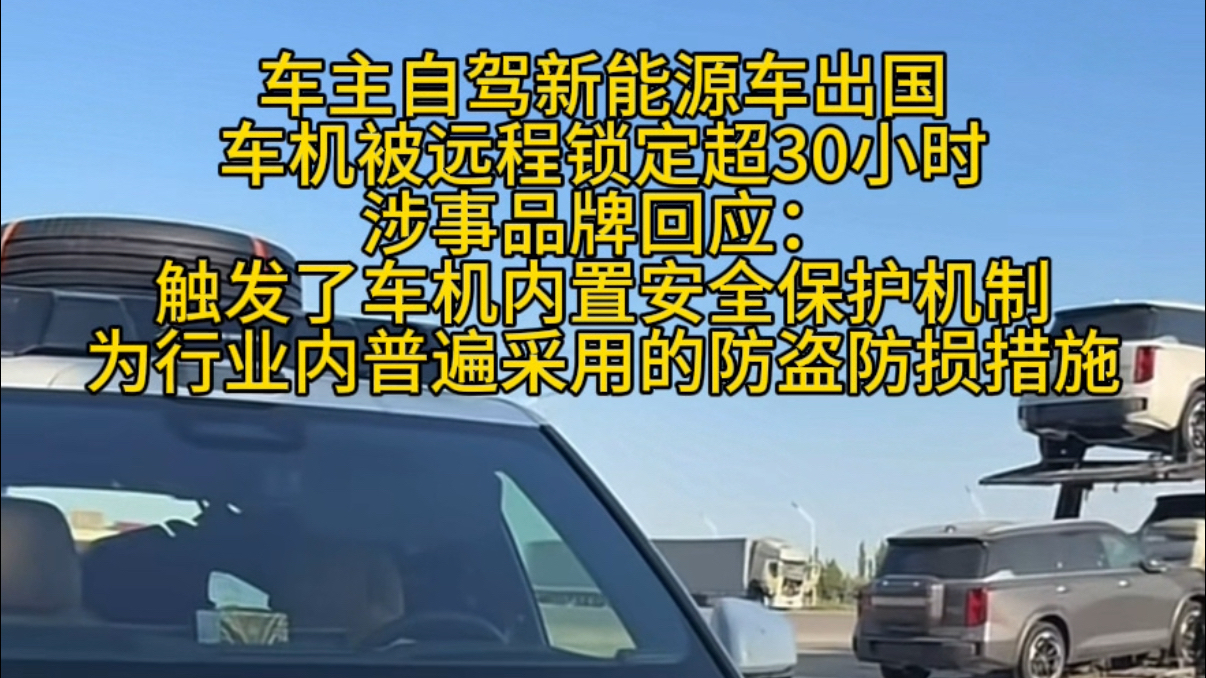
The car owner's self driving new energy vehicle's overseas car infotainment system has been remotely locked for over 30 hours, and the brand involved has responded by triggering the built-in security protection mechanism of the car infotainment system, which is a commonly used anti-theft and damage prevention measure in the industry


 WeChat registration or login