2026-03-08 11:52


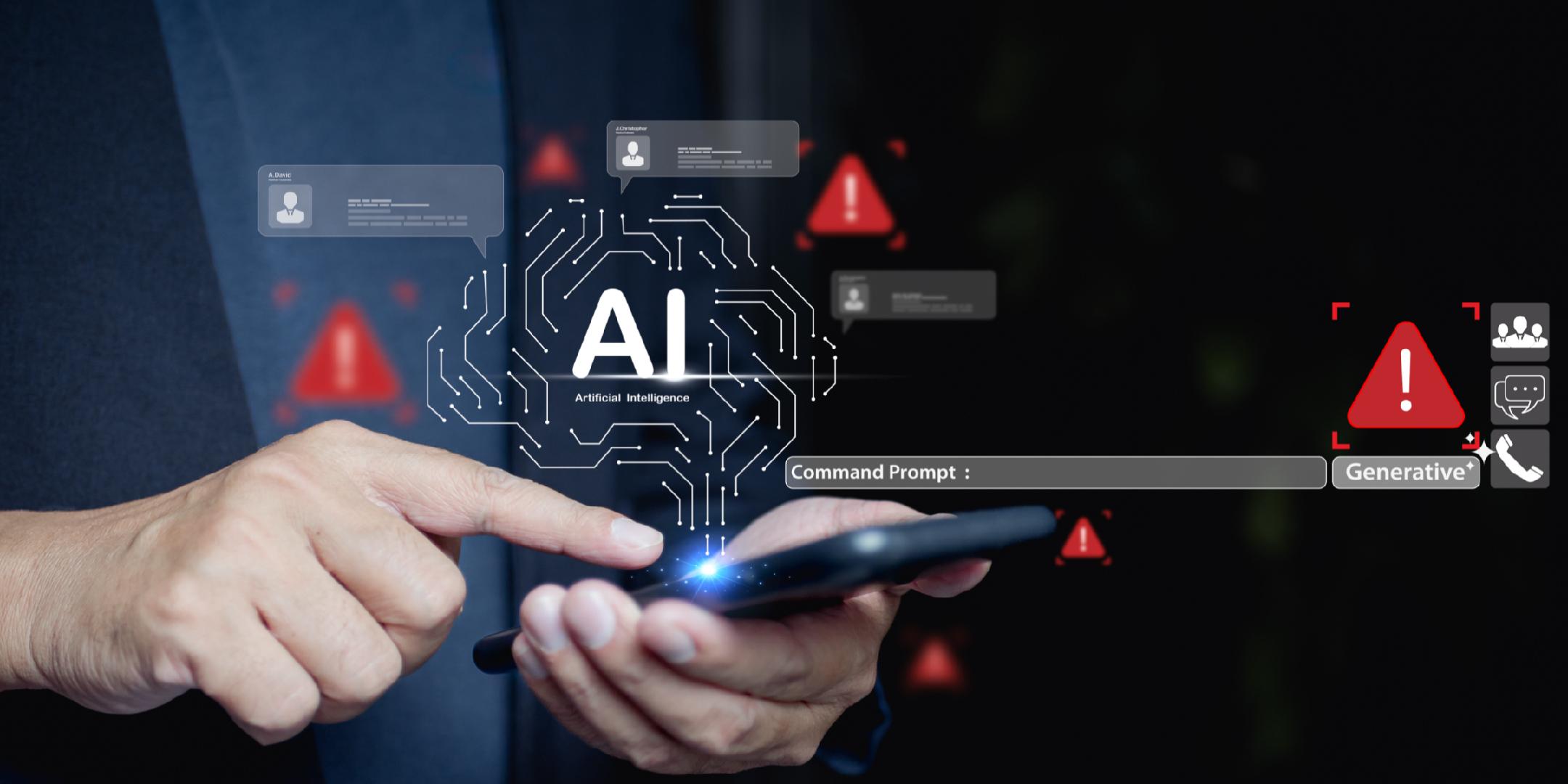
Recently, Tencent held a free installation event for OpenClaw (nicknamed "Crayfish") in Shenzhen. Tencent Cloud engineers provided one-stop services on-site, covering installation and deployment, model configuration, IM (instant messaging software) channel connection, and unlocking popular skills, adding another flame to the popularity of OpenClaw, a phenomenal open-source AI intelligent agent.
OpenClaw was developed by software engineer Peter Steinberger. It is not a traditional conversational chatbot, but is designed as an autonomous AI agent that can actually perform tasks. It can run on users' own devices (supporting cross platform platforms such as macOS, Windows, Linux, etc.) and cloud hosts, usually interacting with instant messaging tools. It can manage emails, operate browsers, read and write local files, organize information, write code, and can also call external APIs or tools through extended "Skills" mechanisms to achieve more complex tasks.
According to media reports, at the Tencent free installation event on March 6th, there were thousands of people queuing up to install, including a 68 year old man who arrived by car more than an hour ago. Many people expressed their intention to use it in stock trading, video editing, self media and other fields. However, behind the rapid rise of the "shrimp farming" trend, not everyone is suitable for raising this popular "crayfish".
If you don't even know how to install it, don't keep it for now
The core advantage of OpenClaw lies in local deployment and data privatization, where all memory and file indexes are stored on user devices. However, this advantage also constitutes a significant threshold, and the installation and configuration process is far from being summarized by a "one click start".
Users need to clone GitHub repositories, configure Python environments, install dependency packages, and manually set model access keys and other settings. For developers familiar with the command line, these steps may only take a few tens of minutes, but for ordinary users, even if the official documentation provides detailed guidance, it may still take hours or even days to debug in the face of terminal commands, environment variable configuration, and potential compatibility issues. More importantly, OpenClaw is not a closed application, but a modular architecture, and first-time use requires selecting or customizing the "Skills" extension package, which further enhances the learning curve.
Many users have reported on social media and forums that they encountered issues such as model API connectivity failure, abnormal permission granting, or memory overflow during the installation phase, and ultimately chose to give up. Even if you use it through "one click installation", there are still user feedback asking Lobster to help you run the crawler program. However, when encountering articles, there are anti crawler mechanisms or verification mechanisms that require browser cookies or API integration with official websites... The value of technical tools lies in their use, rather than creating new obstacles. If users use it step by step, perhaps they should start slowly.
Lobster is a devouring beast, using tokens is not cheap
OpenClaw itself does not have a built-in large language model, but adopts model independent design, requiring the integration of external large models such as Claude, GPT series, DeepSeek, or Kimi as the "brain". Although this architecture gives users flexibility, it also brings sustained economic costs.
Every time the lobster task is executed, whether it is email writing, web browsing, or code generation, external APIs need to be called, consuming a large amount of tokens (which can be understood as the "words" or "phrases" of large language models, and are also the billing standards of AI). Taking medium-sized tasks as an example, a complete calendar organization and email reply process may consume thousands to tens of thousands of tokens; If users enable long-term memory, multi-agent collaboration, or scheduled wake-up functions, daily consumption often exceeds 100000 tokens. Even if calculated according to the current mainstream charging standards in China, token consumption continues to grow exponentially under high-frequency usage. Assuming 100000 tokens are output daily, DeepSeek or Kimi may still reach several hundred yuan.
Recently, a 36Kr article claimed that users with a monthly salary of 20000 yuan lamented that they "cannot afford to support AI employees" because OpenClaw burns money faster than it makes money, with a daily basic consumption of up to 400 yuan and a 6-hour extreme case bill of 1172 yuan. For users with limited budgets or only requiring simple Q&A, such implicit expenses can easily exceed expectations. Reasonably evaluating their task frequency and budget is a prerequisite for deciding whether to "raise lobsters".
Data security issues cannot be ignored
The powerful execution capability of OpenClaw lies in its deep access to system resources. It can read and write local files, operate browsers, and execute terminal commands. The goal of this design is to achieve a "fully automated" proxy, but there are currently certain security risks.
According to overseas media reports, high-risk vulnerabilities, including permission bypass and remote code execution risks, were exposed in the early stages of the project. Although they were fixed and taken over by the foundation in February 2026, sporadic security incidents continue to be reported by the community. All user data stored locally may seem secure, but in reality, it heavily relies on device self-protection; Once the host is invaded or configured incorrectly, AI agents may become a "backdoor" for attackers to enter the system. Even more tricky is that under autonomous task mechanisms, AI may trigger sensitive operations without explicit user authorization, such as accidentally deleting important files or leaking private information to external APIs. Even if users strictly limit their permissions through the Skills mechanism, model illusions or instruction ambiguities may still lead to unexpected consequences. In addition, cross platform instant messaging access may further expand security vulnerabilities.
On February 5th, the Network Security Threat and Vulnerability Information Sharing Platform (NVDB) of the Ministry of Industry and Information Technology of China issued a notice stating that monitoring has found that some instances of OpenClaw open-source AI intelligent agents have high security risks in default or improper configuration, which can easily lead to security issues such as network attacks and information leaks.
At present, AI technology and tools are in a period of rapid iteration, with new models and more user-friendly products emerging almost every month. Ordinary people facing the "shrimp farming fever" and even new tools in the future do not need to feel anxious about missing a specific tool. The technological dividends will eventually sink into the hands of ordinary users through more mature and user-friendly products.


The State Administration for Market Regulation has taken action to crack down on "eye-catching big characters and exempt small characters from liability" advertisements

Honda incurs its first annual loss since going public: a strategic impairment of 2.5 trillion yen on electric vehicles, equivalent to the total profits of the past three years

The first L4 level intelligent agent air conditioner in the AWE industry has been launched. At what level has your air conditioner evolved?


 WeChat registration or login

 Subscribe