Economic Observer Follow
2025-05-23 18:17



Without a doubt, this year's 618 e-commerce shopping festival has once again broken the length of the promotion cycle: starting from May 13th, major e-commerce platforms have launched 618 promotion activities.
618 and Double 11 are the two most important e-commerce shopping festivals of the year, and the big promotion has been extended from the original shopping festival day to the current span of one month, and this year it has been extended to five weeks.
This phenomenon has had a profound impact on consumers, brand owners, platforms, and the entire online ecosystem. On the one hand, the shopping festival has been initiated and led from one of the earliest platforms, and has developed into a "scuffle" of multiple platforms, such as Tmall, JD, Pinduoduo, Tiktok, Kwai, etc. On the other hand, pre-sales must start one month in advance to seize consumer budgets, and the gameplay has evolved from discount promotions to complex combinations such as cross store discounts, live flash sales, member exclusive, and billions of subsidies.
Behind the continuous extension of shopping festival time and the renovation of promotional styles, we have seen some surprising data. It is understood that in the beauty category, the sales generated by the big promotions of these two shopping festivals account for 75% of the annual online sales of beauty brands; Combined with the promotion of Women's Day on March 8th, the sales of these three promotional festivals account for 90% of the annual sales. The approximate sales proportion is: 50% for Double 11, 25% for 618, and 12% for Women's Day.
At the same time, we also see some other data: the online sales of all categories on Double 11 in 2024 exceeded 1.4 trillion yuan, accounting for about 25% of the total online retail sales for the year. The online sales of top brands, Double 11 accounts for 30% -50%, and 618 accounts for 15% -30%; The combined proportion of the two items reaches 45% -80%. The proportion of waist and new consumer goods or vertical category brands should be higher.
These data intuitively reflect that brand merchants heavily rely on two shopping festival promotions for their online sales, and the proportion is surprisingly high.
The large-scale promotional activities on e-commerce platforms have gradually led consumers to form a hoarding mentality of "not buying unless there is a big promotion", greatly suppressing the daily online consumption needs of many brands. The big promotion has become the harvest point for the brand.
And price is the most important factor that major platforms value during major promotions. Behind various means lies the ultimate demand for low prices. The platform has set up a price comparison system, and if a brand does not have a sufficiently low price, it will not receive traffic.
Many brand owners deeply feel that this business structure is very unhealthy. The longer the promotional period, the harder it is to sell products at their normal prices, which means that the vast majority of sales are generated by discounts. Frequent large promotional discounts have led consumers to associate brands with low prices, weakening the brand's high-end positioning and premium ability, and even questioning product quality. Merchants want to make profits, but if they can't sell at a high price, they can only lower their costs, which will lead to a decrease in the quality of the goods consumers receive, ultimately resulting in the wool coming out of the sheep.
The concentrated sales during the promotional season have also caused great difficulties for the entire production and logistics chain in the future. The surge in orders during the big promotion period will inevitably lead to pressure on the supply chain, while the contraction of daily order volume will cause drastic fluctuations in resource utilization. Logistics companies often face the problems of idle equipment and surplus manpower after major promotions.
On the other hand, a big promotion means seizing limited traffic and marketing entry within a limited time. Top brands have resource advantages to seize traffic, and the platform's mechanism also tilts traffic towards top merchants and merchants with growth potential. But how should small and medium-sized businesses bear the high marketing costs to seize traffic?
Just by counting the expenses, you can tell that there is a huge investment behind the big promotion. Taking the beauty category as an example, the platform's commission on brand sales is around 8%. Of course, the commission for different categories of merchants and platforms is not the same, and the commission ratio is also linked to the GMV (Gross Merchandise Volume) ladder. In addition, there is a significant cost for the platform's internal advertising, including advertising traffic ports and brand exposure, which accounts for about 20% to 30% of GMV.
For many brands, online sales are becoming increasingly difficult to extricate themselves from. The sales brought by low price concentration and large promotions make it difficult for brand owners to maintain market share and profit. Consumers habitually wait for promotions, leading to sluggish daily sales of the brand. The market presents two "pulse style" sales on Double 11 and 618 every year, making it difficult to form stable demand. Moreover, the long-term benefits of promotional investment decline, ultimately leading to a vicious cycle of 'the more investment, the less revenue'.
This is definitely not beneficial for the business ecosystem. Brand owners, consumers, and e-commerce platforms need to build a sustainable ecological balance from their respective roles. Brands need to break away from excessive reliance on promotional drivers and shift towards brand and value drivers, while consumers need to cultivate rational decision-making abilities. The most important thing is for the platform to build a healthier marketing environment and adjust rules to guide ecological upgrading. Only in this way can we shift from "traffic competition" to "user asset operation" and replace short-term GMV sprints with sustained sales based on value.

ST Qingyue fined 172 million yuan for suspected fraudulent issuance and illegal letter disclosure
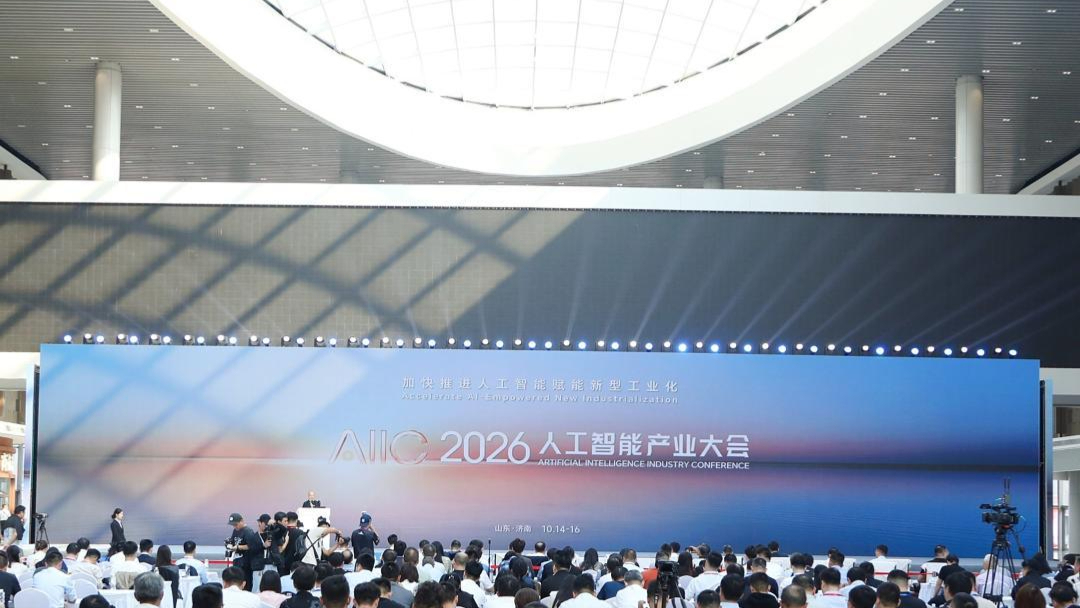
Focusing on "Artificial Intelligence Empowering New Industrialization", the 2026 Artificial Intelligence Industry Conference opens in Jinan

Can Traveler 7 take care of both commuting on weekdays and mountain trips on weekends? This time, the all-new Jetour Traveler 7 will focus on its "Keyo" # Smart Beauty Travel Champion Box # Kecheng Keyo Keyo Travel # 7 Series Square Box New Benchmark # New Traveler 7 Renewal Surprise Price Starting from 125900 yuan