Economic Observer Follow
2025-05-07 17:32


Wang Anshi's name is always associated with the reforms he led. Sima Guang said he was a "stubborn minister" who always insisted on his own views when implementing new laws. Therefore, the new party that could please him were all petty flatterers. Historians included these new party officials in the "Biographies of Corrupt Officials". Like all political 'losers', they are silenced, their names are chiseled from stone tablets, and stripped from bamboo slips and fabrics. In a chaotic historical record, it is difficult for us to distinguish right from wrong in the party struggle thousands of years ago.
Since modern times, when the trend of seeking strength through reform has become the mainstream ideology in the intellectual community, people have begun to re-examine the historical contributions of Wang Anshi's reforms. Liang Qichao even called Wang Anshi the "Cromwell" of China, believing that it was Wang Anshi who revealed a possibility for us to move towards a modern nation-state that we once had for the Chinese people in confusion.
The ideology of benefiting the people through the reform of the Feng dynasty has always been regarded as inferior by scholars who emphasize eloquence, but this ideology can be echoed by Bentham's utilitarianism and Dewey's pragmatism. Therefore, how to dispel the fog of history and re-examine the great transformation that occurred during the Feng period in the middle of the Northern Song Dynasty is related to our current situation.
Inevitable mid imperial syndrome
Xiao Han's book "Fengcanzhao: Reforms in the Mid Northern Song Dynasty" (hereinafter referred to as "Xifeng Canzhao") comprehensively reviews the successes, failures, and successes of the Fengtian Reform led by Emperor Shenzong of Song and Wang Anshi, but its opening does not directly delve into the theme of the Xifeng Reform. On the contrary, the first two chapters of the book outline the various imperial crises and reforms during China's 2000 year feudal empire period, and examine them at the scale of world history and overall history.

Fengcanzhao: Reforms in the Mid Northern Song Dynasty
Xiao Han | write
University Questions | Guangxi Normal University Press
January 2025
This writing aims to emphasize the special position of the Fengtian Reform in national history. Xiao Han believes that this reform is one of the few comprehensive changes in the history of China's feudal dynasties, which can only be compared with the Westernization Movement more than 900 years later and the New Deal at the end of the Qing Dynasty.
The problem is that during the Westernization Movement, China was in the midst of a shock from the Middle Ages to modern times. Even if we can't ruminate on this period of history with the "shock response theory" created by Sinologists such as Fei Xiaotong, we can still read the internal drive for change directly from the old photos and the dim expressions of the characters in the photos. Otherwise, if we do not understand the accumulated problems of redundant troops, officials, and expenses in the hundred years since the establishment of the Northern Song Dynasty, we will find it difficult to discover the vortex beneath this calm abyss. On the surface, apart from frequent border disputes, Northern Song was indeed a peaceful country.
However, the political body of the imperial dynasty has its own metabolism, and once it matures, it will experience decline. The system established at the beginning of the founding of the country always had to absorb the lessons of the downfall of the previous dynasty.
The parallel system of prefectures and states in the early Han Dynasty aimed to reconcile the differences between the feudal system and the county system. In the eyes of the rulers of the early Han Dynasty, the overly centralized county system and strict Qin laws were one of the reasons for the downfall of the Qin Dynasty. Therefore, Emperor Gaozu of Han entered Xianyang and abolished the Qin laws, leaving only the "Three Chapters of the Covenant". During the reigns of Emperor Wen and Emperor Jing, there was even lighter corv ? e and lower taxes, allowing the people to rest.
When the Northern Song Dynasty was established, Emperor Taizu of Song was moved by the chaos caused by the military dictatorship of the late Tang and Five Dynasties, and adopted a policy of emphasizing literature over martial arts, with strong officials and weak branches, finally enabling the Northern Song Dynasty to emerge from the shadow of military generals seizing power. And Emperor Taizu of Song did not, like Emperor Gaozu of Han or Emperor Taizu of Ming in later generations, wield his butcher's knife towards the founding fathers who made great achievements in the past. He used bribery to appease the former royal family's old ministers and regain the military power under the generals.
This move by Emperor Taizu of Song foreshadowed a different political character of the Northern Song Dynasty from the past. Subsequently, the emperors of the Song Dynasty also followed the old practice of Emperor Taizu of Song and solved thorny political problems through bribery. They give extreme preferential treatment to the royal family; They did not suppress the refugees blindly, but incorporated them into the Xiang army to guard the country's borders; For northern dynasties such as the Khitan and Western Xia, after engaging in war with them, they often chose to sign treaties and exchange annual coins for opportunities for peaceful coexistence.
Therefore, Sima Guang, who was then in charge of the Tongzhi Jianyuan, wrote in the sixth year of the Jiayou reign of Emperor Renzong of Song (1061): "From this perspective, there have been over 1700 years of unification, and only over 500 years of unification. During this time, there have been occasional disasters and chaos, which cannot be all. Since the country was pacified in Hedong for more than 80 years, there has been no such prosperous period of governance in the past three generations." In Xiao Han's view, this bribery politics has greater flexibility compared to violent politics, and it can be seen as a "cooperative rule" between the court and various forces such as scholars, officials, and the people.
However, the drawbacks of this mode of governance are equally evident. After a hundred years of founding the country, beneath the surface of peace, the Northern Song court was already struggling to make ends meet. After ascending to the throne, Emperor Taizong of Song placed great emphasis on the imperial examination system in order to cultivate his political power. He selected a large number of talents through the imperial examination and filled the officialdom. The official system in the early years of the Northern Song Dynasty was extremely complex and cumbersome. The separation of official positions from official positions resulted in a mismatch between official names and positions, leading to a large number of redundant officials with a surplus of personnel.
Zhao Yi, a historian of the Qing Dynasty, commented: "When the Song Dynasty was founded, there were still fixed positions for officials. Later, the number of recommended positions, the abundance of favors and favors, the vulgarity of miscellaneous streams, and the abundance of ancestral wealth increased day by day and month by month, reaching an unrecognizable level
The continuous expansion of the Northern Song army also caused a serious financial crisis. During the Kaibao period of Emperor Taizong of Song Dynasty, there were a total of 378000 soldiers in the army, including 193000 imperial guards and 185000 imperial guards. During the reign of Emperor Taizong of Song, this number increased to 666000. The issue of redundant troops is becoming increasingly prominent. By the time of Emperor Yingzong of Song, military spending had even accounted for over 80% of fiscal expenditure. In the early years of Emperor Shenzong's reign, the number of soldiers in the Song army had reached 1.162 million, including 663000 infantry and cavalry in the Forbidden Army alone.
From the perspective of institutional reform, the Xifeng Reform
After demonstrating the necessity of reform, "Feng Can Zhao" systematically sorted out every measure of the Feng Reform. Among them, Xiao Han particularly emphasized the economic and political system reforms of Emperor Shenzong of Song and Wang Anshi.
If Wang Anshi's reform plans such as the Qingmiao Law, the Market Exchange Law, and the copper ban reflected his advanced economic thinking of "sharing profits with the people", then the Heavy Salary Law (also known as the "Warehouse Law") implemented on September 12, 1070, paved the way for the future civil service system.
Since the Wei and Jin dynasties, officials responsible for political affairs and petty officials responsible for specific execution have long been divided into two completely different classes. Before the implementation of the heavy salary law, petty officials often had no salary, or only a salary so small that it was difficult to make ends meet. Therefore, initially for survival, and later for greed, petty officials took advantage of the trust of scholars and officials who had read extensively but lacked the ability to participate in trivial administrative affairs, profited greatly, exploited the people, and led the court into the "Tacitus Trap". After receiving salaries, the corruption of the petty official system was effectively alleviated.
However, during the Xining period when Wang Anshi was appointed as prime minister, a comprehensive reform of the official system was not initiated. It was not until the reign of Emperor Shenzong of Song in the third year of Yuanfeng (1080) that the official system reform known as the "Yuanfeng Reform" was introduced in later generations. Its main contents include four items: firstly, restoring the three provinces and six ministries system and dismissing officials who do not match their actual names; The second is to redefine official ranks, reducing the 29 levels of the Tang system to 18 levels; The third is to distinguish official ranks, dividing officials into twenty levels of court officials and five levels of capital officials, and replacing them with the previous officials who sent salaries; The fourth is to reform the power of the prime minister, merging the previously independent three departments into one and making them subject to the orders of the prime minister.
From the perspective of institutional reform, among these four points, the reform of relative power is the most important. From then on, the enormous administrative power originally managed by the Three Departments was dispersed and integrated into various departments, ultimately unified under the leadership of the Central Secretariat presided over by the Prime Minister. The reason for the emergence of powerful ministers such as Cai Jing, Qin Hui, and Jia Sidao during the late Northern Song Dynasty and the Southern Song Dynasty is due to their significant expansion.
Even in the 13th year of the Hongwu reign of the Ming Dynasty (1380), the system of prime ministers was abolished by Ming Taizu, and the centralized financial management system formed after the "Yuanfeng Reform" was still in use. However, the person in charge of this system changed from the prime minister, who was the head of the hundred officials, to the emperor himself.
All of the above seems to confirm the "Tang Song Revolution Theory" proposed by Japanese sinologist Naito Hunan, which states that in terms of economy and politics, Song Dynasty China already had an internal driving force towards modernization. Therefore, the Tang Song Revolution signifies the end of medieval times and the beginning of modern times.
Wang Anshi intended to build an ideal country of "one morality, same customs" through reforms, which was almost the predecessor of modern nation states. He wanted to create an imagined community in the form of education, and to this end, he implemented the Three Part Method, establishing disciplines such as law, martial arts, and medicine to cultivate specialized talents. This is regarded as the origin of Chinese universities, and the university system in late Qing Dynasty, Republic of China, and China since 1978 can find its historical roots here.
But before Liang Qichao wrote the book "Wang Jinggong", the traditional historical community had a mostly negative attitude towards the Feng Reform. The main reason is that after the Song Dynasty's southward migration, it attributed the downfall of the Northern Song Dynasty to Wang Anshi's reforms, as well as the increasingly heated party struggles arising from the reforms. As a result, historical materials such as "History of the Song Dynasty", "Long Compilation", and "Annals of the Song Dynasty" have almost become slanderous books in Liang Qichao's mouth. The old party's repeated attacks on the reform, as well as their insults and insults towards the new party members, have been carefully included in the official history, while the defense of the new party is often missing in the official history.

Biography of Wang Anshi
Written by Liang Qichao
Hunan People's Publishing House
February 2018
The unfair partisan views of historical compilers have obscured this unprecedented great transformation. Due to the historical background, historians who came from the ranks of literati tend to distinguish between gentlemen and villains in an ethical sense, and reject those who were caught up in the vortex of reform. In their eyes, Wang Anshi was a petty person, while the old party was mostly composed of upright gentlemen such as Sima Guang and Su Shi. They are not accustomed to change, only accustomed to living in the inertia of the old system, until the hammer of the times falls and shatters the shell of the system they reside in.
Centralization, Prudence, and Abuse of Power: Dimensions of Northern Song Politics
Writing with limited and biased historical materials is a difficult task. But the book 'Fengcanzhao' did not view the Xifeng Reform as a failed imperial self rescue movement according to common views. Xiao Han carefully examined the benefits obtained from each reform measure.
In this process, he found that although according to popular belief, the Xifeng Reform focused on expanding financial resources rather than reducing expenditures, in reality, Wang Anshi also issued multiple policies to cut costs, including reducing the treatment of the royal family, disarmament, and opening up private horse breeding. Even at the level of open source, the benefits of Wang Anshi's reform were significant. The exemption law alone has generated a large amount of revenue for the court. During the Xifeng period, the central and local governments still received a huge revenue of 50 million guan shi from the Qingmiao Law and the Exemption Law, after deducting expenses.
However, it should be acknowledged that some reform measures ultimately backfired and became unjust laws. For example, the market reform law, which was originally intended to suppress mergers and protect the interests of small merchants, ultimately became the worst measure in the Ning Reform due to the intervention of bureaucratic institutions such as the market reform bureau, which disrupted the market by buying at a low price and selling at a high price, buying and selling forcefully, and lending and collecting interest. Wang Anshi opened up the horse protection law for folk horse breeding, which can save the court 2.4 million guan annually and also provide good horses for the court. But in the third year of Yuanfeng, the Horse Protection Law was changed to the Household Horse Law, which forced wealthy households to raise horses. In the seventh year of Yuanfeng, it was changed to the Capital Horse Maintenance Law, which required each capital (50 households) to raise 50 horses. This approach made the people turn pale at the news of horses, but it also failed to solve the problem of the Song army lacking good horses.
The expansion of Xiangquan and the changes in the law of protecting horses both occurred during the reign of Emperor Shenzong of Song in the Yuanfeng period. Although we often refer to the reforms during the Ning and Yuanfeng periods as the Feng Reforms, and this reform indeed had its inherent policy coherence, the direction of these two reforms was not entirely the same due to the different political personalities of the leaders.
By reforming the official system and expanding the power of the prime minister, Emperor Shenzong of Song allowed imperial power to penetrate deep into the capillaries of the national administrative machinery. He granted the prime minister greater power, but the condition was that the prime minister's power must become an extension of the imperial power. From the changes in the Baoma Law, we can also see that Emperor Shenzong of Song had a more firm governing style in his later period, treating the people more harshly. At this time, compared to when he first ascended the throne, he had less empathy. This is also why Wang Anshi quickly faded out of politics after his second appointment as prime minister.
Wang Anshi was not greedy for the power of the prime minister, and those who blindly flattered him only aroused disgust. Even for political opponents, he always only expelled them from the center of power and did not persecute them. After his resignation, the political conflict between the new and old parties became increasingly intense, and many reform measures were dismissed.
From the Wutai Poetry Case during the reign of Wang Anshi, to the Chegaiting Poetry Case during the later period of Wang Anshi, we can see the changes in the political atmosphere of the Northern Song Dynasty. In the Wutai Poetry Case, Emperor Shenzong of Song was only afraid of Su Shi's influence and wanted to use a small "literary inquisition" to strike at the old party in the court. In the tumultuous public opinion atmosphere stirred up by the remonstrators in Taiwan, Emperor Shenzong of Song dealt with Su Shi almost lightly. At the Chegaiting Poetry Case, the old party used the hand of Empress Dowager Gao to exile the new party's prime minister Cai Que to Lingnan, and ultimately caused him to die during his exile.
And decades later, this lost dynasty finally met its downfall amidst the aftershocks of the old and new party struggles.
The State Administration for Market Regulation has taken action to crack down on "eye-catching big characters and exempt small characters from liability" advertisements
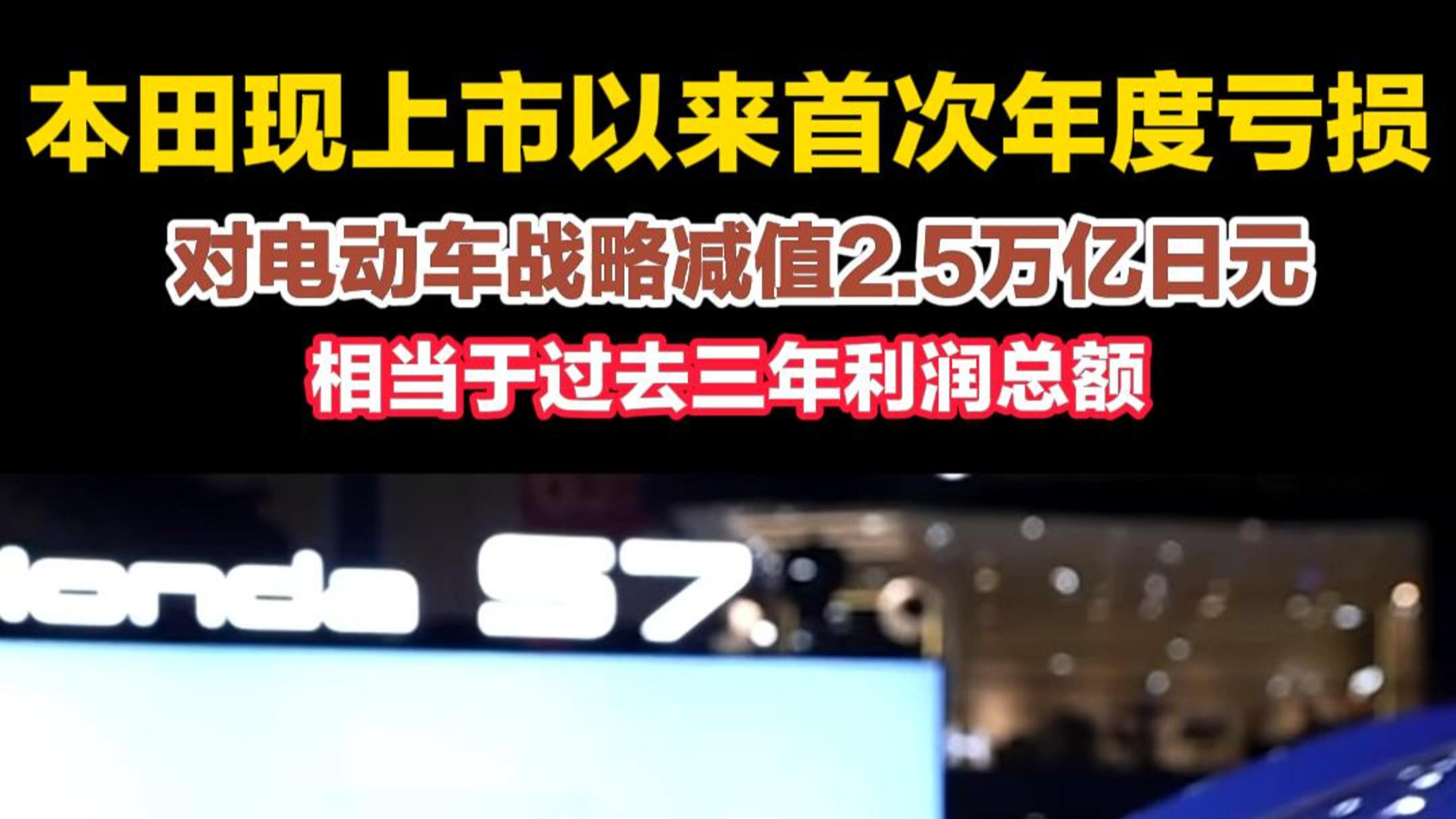
Honda incurs its first annual loss since going public: a strategic impairment of 2.5 trillion yen on electric vehicles, equivalent to the total profits of the past three years
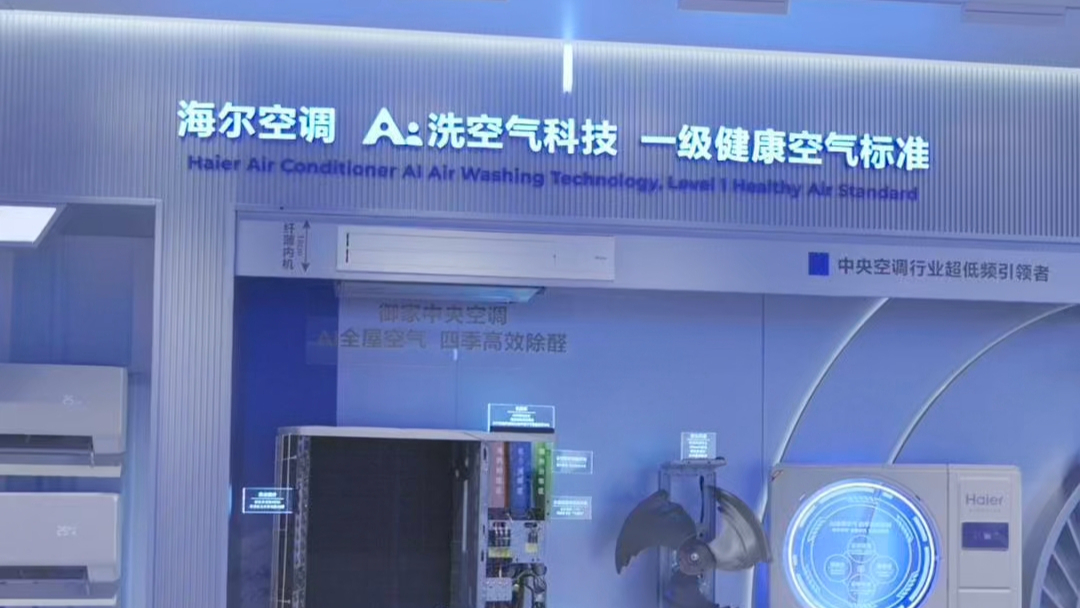
The first L4 level intelligent agent air conditioner in the AWE industry has been launched. At what level has your air conditioner evolved?


 WeChat registration or login