Economic Observer Follow
2025-05-06 16:23


Since the self generated AI revolution, hot topics in the AI field have emerged one after another, and related new terms have also emerged one after another. If we talk about the hottest concept at present, it is probably none other than "AI agents".
It is not difficult to find through recent media reports that both overseas giants such as Microsoft, Google, Amazon, OpenAI, and domestic enterprises such as Alibaba, Tencent, ByteDance, and Baidu have vigorously promoted AI intelligence as a key business direction. Many professional consulting firms and technology media are also very optimistic about the development prospects of AI intelligent agents: market research firm Forrester lists it as one of the key emerging technologies for 2025, while well-known technology consulting firm Gartner ranks it as the top ten technology trends for 2025. Industry experts also have high expectations. Microsoft founder Bill Gates predicted in a podcast that in the near future, every person will have an AI agent, which will have a profound impact on people's daily lives; OpenAI CEO Sam Ultraman said, "The era of building super large models has come to an end, and AI agents are the real challenge of the next stage. ?
Many industry insiders are optimistic about the rapid popularization and economic benefits of AI intelligent agents. According to Gartner's calculations, only about 1% of enterprise software will have AI intelligent agent functionality built-in in 2024, but by 2028, this proportion is expected to soar to 33%, by which time about 15% of daily business decisions will be automated by AI. Goldman Sachs predicts that by 2030, AI agents will create approximately $7 trillion in economic benefits, a significant portion of which will come from efficiency improvements.
However, what is more noteworthy than the direct growth in efficiency and revenue is the reshaping of the entire business ecosystem by AI. Many experts believe that with the rise of AI agents, the existing platform centric business landscape may be disrupted, and new business forms, organizational structures, and models will emerge. Another study suggests that the popularity of AI agents will challenge the current logic of 'data is king', and the future competition core may shift towards' intelligence and connectivity '.
So, what exactly is this AI intelligent agent highly praised by the media? Why does it have such enormous potential? As AI intelligent agents become increasingly popular, how will the existing business ecosystem and business logic evolve? How should we observe and analyze this new business model? Regarding these issues, let's listen to the following text one by one.
What exactly is an AI intelligent agent?
Before starting the formal discussion, let's take some time to understand the concept of "AI intelligent agents". AI agent is the Chinese translation of AIAgent or AgenticiAI in English. Due to the meaning of "agent" in English, it is also translated as "AI agent" or "agent-based AI" in some contexts. In addition, in some earlier literature, there have also been transliterated versions of "Ai Zhen Ti".
Unlike other AI systems we are familiar with, AI agents have the ability to autonomously plan and execute tasks. For example, when we use ChatGPT or DeepSeek to complete a task, we usually need to constantly interact with it through prompt words, repeatedly adjust, in order to obtain the expected output results. When using an AI agent, we only need to hand over the task to it once, and it will disassemble the task, find solutions, and independently complete each link. As the issuer of instructions, we do not need to intervene during the execution process, we just need to wait for the results.
AI agents can be both virtual and embodied. The so-called virtual AI intelligent agents refer to those intelligent agents that only exist in computer simulation environments and have no physical form. For example, after GPT became popular, researchers at Stanford built a small town composed of dozens of virtual AI people based on GPT capabilities, and these "virtual little people" are typical virtual AI agents. Correspondingly, embodied AI agents have actual physical forms, such as existing autonomous vehicles, humanoid robots, and so on.
Whether virtual or embodied AI agents, they typically consist of three main parts: sensors, control centers, and actuators. Sensors are used to collect information from the external environment; The control center is responsible for analyzing data and developing action plans; The actuator takes action according to the plan and exerts influence on the environment. The difference is that these components of virtual agents are all digitally implemented, while the sensors of embodied agents need to read data from the real world.
As early as the birth of artificial intelligence, many researchers have attempted to manufacture intelligent agents. But in early practice, people mainly constructed "deterministic" agents: their response to the external environment was pre-set by programs, and once they encountered unexpected new situations, the agents were unable to cope. With the development of AI technology, these deterministic agents are gradually being replaced by "non deterministic" agents. The latter does not preset specific action rules, but sets a utility function that can be dynamically adjusted based on task completion, so that the intelligent body can continuously optimize its own behavior through learning in a constantly changing environment and achieve self evolution.
Although related research started early, it is only in recent years that AI intelligent agents have truly achieved a performance leap and entered the field of production and life. There are multiple factors behind this transformation: on the one hand, the rapid advancement of AI technology, especially in natural language processing, visual recognition, and other fields, has greatly improved AI's abilities in perception, understanding, decision-making, and other aspects, endowing agents with smarter "brains" and sharper "eyes"; On the other hand, the abundance of computing power resources makes it possible to train and deploy large-scale intelligent agents, resulting in a rapid decrease in research and development costs due to economies of scale, while performance continues to improve.
More importantly, the emergence of a large number of open standard communication protocols for intelligent agents not only enables AI agents to flexibly call various external tools, but also makes coordination and collaboration between them possible.
If you are interested in the news in the field of AI, you may remember that in early March this year, an AI intelligent agent called Manus attracted widespread attention. According to reports at the time, this intelligent agent developed by a domestic startup is known as the world's first universal AI agent. It can independently call external tools based on user instructions without human intervention to complete complex tasks such as job resume screening, real estate research, and stock analysis. It has achieved SOTA (State of the Art) rating in the authoritative GAIA benchmark test, surpassing similar products from many well-known companies including OpenAI. Many people even praise Manus as another milestone achievement in China's AI field after DeepSeek.
However, Manus did not withstand the test of professionals like DeepSeek. Shortly after its release, technical personnel quickly analyzed and successfully replicated its implementation principle.
So, what is the secret to achieving "universality" in Manus? The answer lies in a communication protocol called MCP. MCP (ModelContextProto col) is an open protocol launched by Anthropic in November 2024, aimed at unifying the communication interface between large language models and external data sources and tools, enabling large models to flexibly call external tools. The developers of Manus use the MCP protocol to enable the large model to easily disassemble tasks, allocate steps, and call tools one by one to complete each step as needed. Therefore, counterfeiters can also replicate similar results in just one day using the same protocol. It can be seen that with the MCP protocol, building a general AI agent based on a large model has become exceptionally simple.
In addition to the MCP protocol, there are two key communication protocols that are crucial for the development of AI agents. One is the Agent Network Protocol (ANP), which supports AI agents to discover, connect and interact spontaneously on the Internet to establish a collaborative network; The second is the Agent2Agent (A2A) protocol developed by Google, which is specifically designed to facilitate communication and task management among multiple agents, serving as a collaborative hub.
With the three major protocols of MCP, ANP, and A2A, AI agents not only have the ability to use external tools, but also can interact and collaborate with other AI agents. As a result, AI intelligent agents have officially moved from specialized assistants to general independent agents, evolving from human assistants to intelligent agents that can autonomously undertake complex tasks.
How will AI intelligence change the business ecosystem?
With the rise of AI intelligent agents, the situation where "humans" are the only decision-making body in the business ecosystem will be broken, and intelligent agents will join as new participants and decision-makers. In the past, when analyzing the business ecosystem, we usually divided the participating entities into elements such as individuals, families, businesses, and governments. But whether it's families, businesses, or governments, they are essentially just "artificial people" - they don't have the ability to think and make decisions independently, and all their decisions are ultimately made by individuals within them. Therefore, before the emergence of AI agents, humans were actually the only entities in the business ecosystem capable of independent decision-making; Even after the emergence of the big model, this has not changed because the big model only provides references and does not directly make decisions. The rise of intelligent agents will rewrite this pattern.
Compared to humans, the decision-making methods of AI agents are completely different. As human creations, intelligent agents naturally aim for the "optimal solution". For example, if an intelligent agent purchases the cheapest steak online, it will instantly traverse the product information of all shopping platforms and select the one with the lowest price. However, human decision-making is not so serious, and in most cases, they only pursue "satisfactory solutions". The same task is given to someone, who probably just opens a certain platform, searches for "steak", and then selects a seemingly cost-effective product from the previous few pages of results to place an order; As for traversing the entire network like an intelligent agent, he lacks both ability and interest. Therefore, some behavioral economists jokingly refer to humans as "irrational AI" after comparing the decision-making patterns of humans and AI.
This diversity of subjects may seem ordinary, but its impact can be profound. The past business forms such as C2C, B2C, B2B, B2G, etc. were essentially transactions between people; All business strategies and rules are designed around human characteristics. With the addition of AI intelligent agents as a new subject, existing models, rules, and even the entire business ecosystem may change accordingly.
Specifically:
Firstly, it may have a disruptive impact on the current platform centric online business ecosystem.
As is well known, the most thriving form of enterprise in the past two decades has been platform based enterprises. Unlike traditional "pipeline type" enterprises, the main profit model of the platform is not to buy low and sell high to earn price differences, but to match transactions between different entities to collect service fees. To win in competition, platforms usually need to: use strategies to delineate merchants and customers, and enhance stickiness; Quickly expand the user base on at least one side through price subsidies and other means, amplify the neural network effect, and initiate a "snowball" process; Design a reasonable charging system to effectively convert users into paying groups and maximize profits.
Upon closer examination, the platform model is designed around human irrationality. If an individual searches for a trading partner on their own, they not only have to bear high search costs, but also need to handle many affairs during and after the transaction. To save these costs, people are willing to pay a certain commission and let the platform match on their behalf. The reason why the network effect of the platform is important is precisely because users believe that it is easier to find ideal trading partners on platforms with more users, and larger platforms often provide more comprehensive services. The underlying logic of platform success ultimately lies in exploiting and amplifying users' weaknesses, making it difficult for them to leave.
However, with the rise of AI intelligent agents, the above logic will be in jeopardy. Compared to humans, intelligent bodies can retrieve market information at extremely low cost and extremely fast speed and automatically match transactions; If both parties use intelligent agents, the transaction can be seamlessly completed through smart contracts without worrying about subsequent disputes. In this situation, the value of the platform as an intermediary sharply decreases, and its painstakingly operated network effect will also lose its meaning.
Secondly, many current business strategies may become ineffective.
In today's online competition, "attention" is a scarce resource that companies are vying for. The design of many business models essentially revolves around "attention".
Bidding ranking advertising is an example. For many e-commerce platforms, auctioning golden advertising spaces on their homepage and search results is an important source of revenue. Third party merchants have to bid high prices in order to give their products a more prominent display position. The fundamental reason why prominent positions are so crucial is that human attention is limited: shoppers usually do not spend too much energy browsing through all products. If the product is placed in an inconspicuous position, the probability of transaction is extremely low. From this perspective, bidding ranking is like "buying attention with money".
However, once the user hands over the shopping task to the AI agent, this model may collapse. The retrieval and filtering capabilities of AI far exceed those of humans - whether a product is located on the first or last page of search results does not make much difference to it. At that time, merchants will no longer need to pay a premium for prominent locations, and the value of auction style advertising spaces will be significantly reduced.
Recommendation algorithm is another typical case. Nowadays, many content distribution apps use algorithms to continuously push information that may be of interest to users, in order to continuously capture their attention and lock it in their own ecosystem, and then monetize it through advertising, e-commerce, and other means.
With the popularity of AI agents, this model also faces challenges. Intelligent agents can serve as personal assistants: users only need to make requests, and they can quickly retrieve and integrate the required content across apps and platforms. As a result, the logic of information acquisition will shift from 'you push it to me' to 'AI shows it to me'. Users are no longer confined to the "information cocoon" of a single app, and the model of relying on recommendation algorithms to grab attention and commercialize "harvesting" may also come to an end.
Thirdly, the pattern of 'data is king' may change.
In the current Internet competition, data is the core resource that enterprises compete for. In order to gain an advantage in data acquisition and analysis, companies not only invest huge amounts of money, but also have numerous disputes with competitors. The reason why data is so valued is that enterprises can use data to gain insights into user information, formulate precise strategies, and obtain higher profits.
However, when AI agents replace humans as decision-makers, the traditional value of data will be weakened. At that time, the "customers" of enterprises may be extremely rational AI agents that are difficult to be influenced by traditional business strategies, and enterprises no longer need to spend effort collecting and analyzing behavioral data of such "users".
It should be emphasized that this does not mean that data will become irrelevant in the era of AI agents, but rather that its mode of operation and demand structure will undergo profound changes. In order to ensure that the brain of AI agents - the basic model - maintains a high level of intelligence, training with a large amount of high-quality data is still essential. But at this point, it is no longer all enterprises that have a strong demand for data, but a few companies that focus on model development; The most valuable data is no longer personal behavior data, but professional data that contains rich knowledge and information and can significantly improve model performance. As a result, the market competition pattern is likely to undergo a new reshaping.
Fourthly, it may bring about significant changes in the form of cooperation.
Traditionally, there are roughly two paths for cooperation: one is through the market, and the other is within the organization. In market-oriented cooperation, all parties have equal status and exchange information according to market rules; Organizational cooperation involves division of labor and hierarchy, with a few individuals in leadership positions giving instructions and assigning tasks to other members. Both of them have their own weaknesses: organizational cooperation can concentrate human and material resources, but it is difficult to expand the scale; The market cooperation covers a wide range, but due to the lack of hard constraints, the depth of cooperation is limited.
The rise of platform models is seen as an improvement over the aforementioned shortcomings. The platform serves as both a 'market', providing opportunities for a vast number of potential collaborators, and a 'maintainer of order', regulating the behavior of all parties and enhancing the depth of collaboration. However, the cost of this model is high: the platform, as an intermediary, draws a large amount of fees, significantly reduces the benefits of cooperation, and then attacks the willingness to cooperate.
The emergence of AI intelligent agents is expected to alleviate the contradiction between depth and breadth. Unlike humans, intelligent agents can quickly match potential partners across the entire network at almost zero cost; With the help of protocols such as MCP, ANP, A2A, etc., they can collaborate with each other and independently complete complex tasks without human intervention. As a result, the scope and depth of cooperation are expected to significantly increase.
The transformation of cooperation methods will inevitably reshape the form and boundaries of enterprises. The current enterprise characterized by fixed personnel, fixed assets, and hierarchical management is essentially an organizational form that reduces collaboration costs. With the popularization of AI intelligent agents, the cooperation radius of individuals has been unprecedentedly expanded, and they no longer have to belong to a certain enterprise. The boundaries of enterprises are gradually blurring, and the scene of "everyone collaborating directly with everyone" is no longer far away.
Business awareness requires a 'Copernican revolution'
Through the above discussion, we can see that with the rise of AI intelligent agents, the entire business system will undergo tremendous changes. Whether it is the participants in the business ecosystem, the forms of business competition, the key resources in competition, or the organizational methods of business cooperation, they will all be significantly different from existing models. In this context, our perspective on observing the business environment and competitive behavior must also be adjusted accordingly.
In the traditional business environment, we have accumulated many theories for observing business competition, among which the following are more representative.
The first one is the "Five Forces Model" proposed by Michael Porter. This theory emphasizes examining business competition from the perspective of macro industrial structure, believing that the industrial structure in which a company operates is crucial to its competitive position. According to this model, the competitive strength of existing competitors in the industry, the threat of potential entrants, the threat of substitutes, the bargaining power of buyers, and the bargaining power of suppliers will collectively determine a company's competitive advantage, thereby affecting its strategic behavior and profit level.
The second type is the Resource Based View (RBV) theory proposed by Edith Penrose, Jay Barney, and others. This theory advocates understanding business competition from the perspective of available resources for enterprises, believing that the main source of competitive advantage for enterprises is the scarcity, non imitability, and non substitutability of their internal resources.
The third type is the dynamic capability theory proposed by David Teece. This theory holds that the key to determining the outcome of market competition lies in the ability of enterprises to perceive the external environment, acquire key resources, and undergo transformation and reconstruction. This dynamic capability is the core of sustained competition and sustainable operation for enterprises.
The fourth type is the currently popular theory of business ecosystems. This theory suggests that interdependent market participants will form a complementary and collaborative network ecosystem around specific value propositions. In this system, all participants create and share value through coordination and collaboration. Just as every organism in a natural ecosystem has its unique ecological niche, participants in a commercial ecosystem also have their own roles to play. Among them, "cornerstone enterprises" play a key role in the ecosystem, requiring the establishment of rules and coordination of participants to ensure the healthy operation of the ecosystem.
Overall, the above theories have conducted in-depth observations of the business environment and competitive processes from different perspectives, and have drawn many valuable conclusions. Therefore, these theories are widely cited and play an important role in both academic research and business practice. However, with the rise of AI agents and their gradual emergence as market participants alongside humans, the limitations of these theories will become increasingly apparent.
Specifically, the rise of AI intelligent agents is reshaping collaboration, and the previously clear, top-down value chain is evolving into a complex value network. In this network structure, the boundaries of concepts such as "upstream", "downstream", "supplier", "distributor" will become blurred, and even the definitions of "industry" and "enterprise" will become increasingly unclear. We will find it difficult to determine whether a business collaboration between people and others through AI agents occurs within a company or crosses its boundaries. In this context, whether it is the "Five Forces Model" based on industrial structure analysis or the resource-based theory based on internal resource analysis of enterprises, the original explanatory power will be greatly weakened.
At the same time, with the increasing importance of AI agents' intelligence level in business competition, their own learning and adaptability will dominate compared to human dynamic abilities, and the applicability of dynamic ability theory will also be challenged. In addition, in the era of AI intelligent agents, the boundaries and functions of enterprises may further blur, and they may no longer easily belong to a specific ecological niche. In addition, cooperation and transactions are more likely to be achieved in a decentralized manner, thus the position and role of "cornerstone enterprises" will be significantly weakened. In this case, the explanatory power of the business ecosystem theory will also be significantly affected.
In response to the above situation, if we want to understand the business competition in the era of AI intelligent agents, we need to undergo a "Copernican revolution" in cognition, shifting the perspective of observing the business environment from people, enterprises, and industries to AI intelligent agents. Specifically:
At the macro level, the analytical approach based on industrial structure established by scholars such as Porter should be revised, and a new analytical framework should be constructed starting from the network properties of AI agents. For example, traditionally when observing the market power of a company, we usually use market share as an important indicator. But in a business environment dominated by AI agents, the importance of this indicator may decrease. Instead, it is possible to consider introducing centrality, connectivity, and other indicators from network analysis to measure the position and influence of agents in the network. Based on these new indicators, we will explore the industrial restructuring, value chain restructuring, and competitive relationships among enterprises centered around AI intelligent agents.
At the meso level, we should focus on the impact and transformation of existing business models (including platform models) caused by AI intelligent agents. We should focus on the value creation and distribution process brought by the adoption of peer-to-peer cooperation mode by AI intelligent agents, and closely monitor the response strategies of platform enterprises in the face of AI intelligent agent challenges and the chain changes they trigger.
At the micro level, it is necessary to analyze the changes in business behavior and strategies triggered by AI agents as independent decision-makers. For example, in traditional platform economy analysis, we attach great importance to indirect network effects, that is, the impact of user size on the attractiveness of users on one side. With the popularization of AI intelligent agents, the importance of indirect network effects will decrease, replaced by direct network effects closely related to technology and infrastructure completeness, which may become the key to determining the success or failure of competition. In addition, when analyzing Internet competition, we traditionally attach importance to attention competition, but in the era of AI agents, the focus of competition may turn to cooperation agreements and collaboration mechanisms between agents.
In summary, with the rise of AI intelligent agents, the entire business environment is undergoing a profound transformation. Correspondingly, we must also promptly shift our observation perspective and shift our focus to AI agents and their network relationships. Only in this way can we see more clearly and grasp the initiative of the future in this great change.


ST Qingyue fined 172 million yuan for suspected fraudulent issuance and illegal letter disclosure
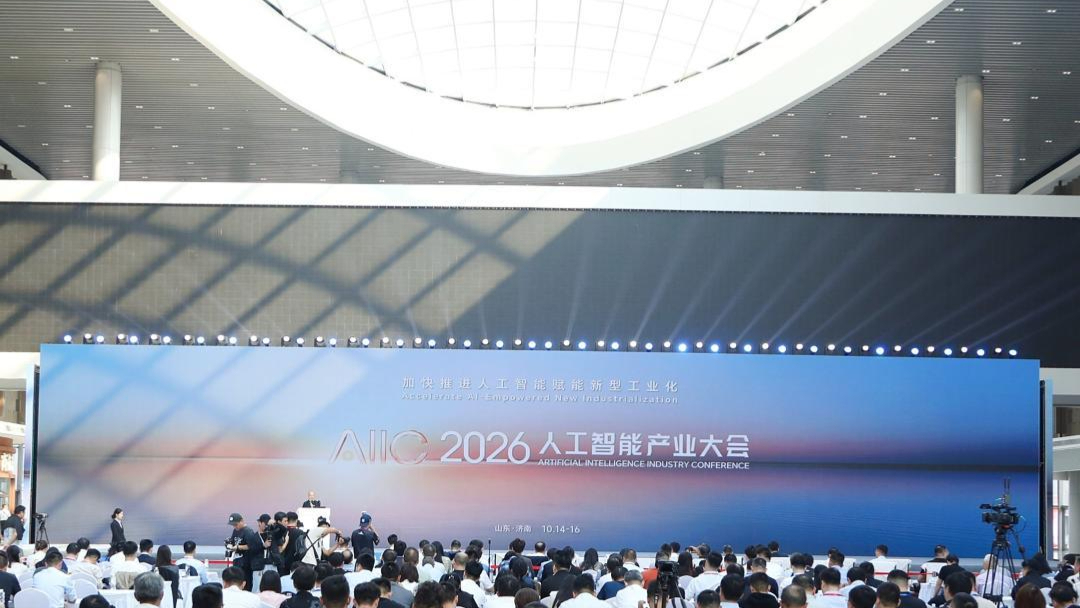
Focusing on "Artificial Intelligence Empowering New Industrialization", the 2026 Artificial Intelligence Industry Conference opens in Jinan

Can Traveler 7 take care of both commuting on weekdays and mountain trips on weekends? This time, the all-new Jetour Traveler 7 will focus on its "Keyo" # Smart Beauty Travel Champion Box # Kecheng Keyo Keyo Travel # 7 Series Square Box New Benchmark # New Traveler 7 Renewal Surprise Price Starting from 125900 yuan


 Subscribe