Economic Observer Follow
2026-11-14 10:25

Economic Observer reporter Zheng Chenye
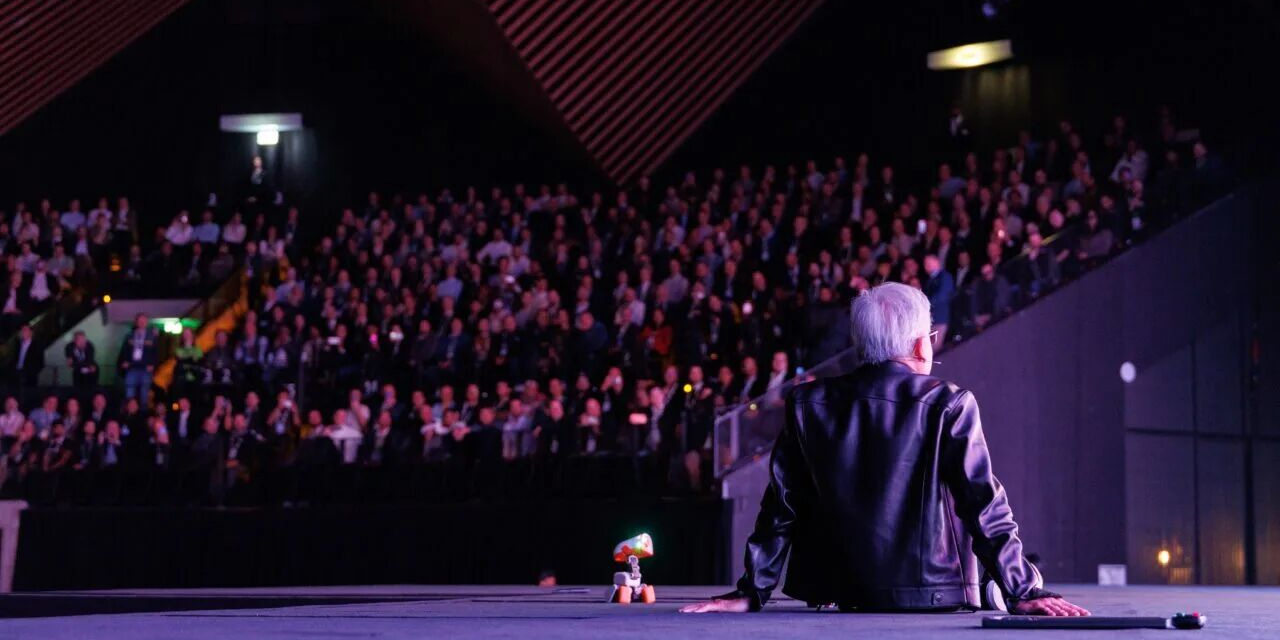
On November 12th at 22:00 Beijing time, half an hour before the opening of the US stock market, Nvidia (NVDA. O) announced on its official website that founder Huang Renxun has resigned from his positions as president, CEO, and director, effective immediately. After the announcement, Nvidia's stock price fell more than 14% at the opening of the day, and the decline narrowed to 4.34% at the closing.
According to the announcement, Colette Kress, Executive Vice President and Chief Financial Officer of NVIDIA, has been appointed as interim CEO and will continue to serve as CFO; Harvey Jones, who has been a director of Nvidia since 1993, has been appointed as chairman, a position that Nvidia had never previously established.
The board of directors has also initiated the selection of the official CEO, with both internal and external candidates under consideration. The announcement did not specify the reason for Huang Renxun's resignation, and there was no mention of his personal statement in the entire text.
On November 8th, due to a personal emotional dispute, Huang Renxun wrote a letter to employees. The NVIDIA board of directors announced on the same day that an independent director would lead the investigation and expressed confidence in Huang Renxun and his management team. But just four days later, this company welcomed its first leadership change in 33 years since its establishment.
According to public information, Huang Renxun is 63 years old and has been the only CEO of Nvidia since its founding in 1993. During his tenure, Nvidia grew from a graphics chip company to a core supplier of global AI computing power, and became the world's first publicly traded company with a market value exceeding $5 trillion in October 2025.
On September 2nd, more than two months ago, during a conversation with US Secretary of Commerce Howard Lutnick, Huang Renxun said, "Of course, I don't have to work anymore, but I don't want to miss it. I will never miss the next 10 or 15 years
In the global AI computing power industry chain, from TSMC's advanced processes, Korean manufacturers' high bandwidth storage chips (HBM), to A-share listed companies' production of optical modules, printed circuit boards (PCBs), and liquid cooling equipment, the expansion of upstream production mostly follows Nvidia's annual product rhythm.
In the past, the specifications used for each generation of Nvidia products, the amount of production capacity booked upstream, and the amount of financial support provided to downstream customers were mainly decided by Huang Renxun himself. Now that he has resigned, although Nvidia's products and orders for the next two years have been scheduled, longer-term planning will have to be handed over to his successor, adding variables to the A-share listed companies in this industry chain.
Four days of changing coaches
Public information shows that unlike many American technology companies where founders hold super voting rights, Nvidia implements equal rights and shares, with Huang Renxun holding approximately 3.58% of the shares. Before Huang Renxun resigned, out of the 11 members of the board of directors, 10 were independent directors except for him. The attitude of the board of directors towards Huang Renxun's departure seems to have changed within four days.
On November 8th, the Nvidia board of directors stated in a statement that the investigation was led by a committee composed of independent directors and assisted by external independent lawyers. Huang Renxun supported the investigation and promised to cooperate. The statement concludes that the board of directors has confidence in Huang Renxun and his leadership team.
On November 10th, two days later, Nvidia's independent directors issued a separate statement. This statement has only one sentence, which states that the independent directors have hired an external law firm to conduct a thorough and independent investigation, without further mentioning their confidence in Huang Renxun.
According to documents submitted by Nvidia to US securities regulators, on November 11th, the board of directors accepted Huang Renxun's resignation and appointed 73 year old Jones as chairman on the same day. Before the opening of the US stock market on November 12th, this result was announced to the public.
A senior person who has long been following the semiconductor industry told Economic Observer reporters that Nvidia was originally scheduled to release its financial report and provide performance guidance for the new quarter on November 17th. There are still a lot of long-term agreements to be pushed forward with customers and suppliers. If the CEO's departure remains uncertain, these matters will be affected, and the board of directors needs to give a clear result before the financial report is released.
Previously, Nvidia did not have a chairman, and the board of directors was chaired by the chief independent director. According to the announcement, Jones, who was appointed as the chairman, previously served as the CEO of New Think Technology. He stated in the announcement that the board of directors has full confidence in Kress and the management team, and Nvidia's daily operations, commitment to customers, and product roadmap will not be interrupted.
According to public information, Kress, who serves as interim CEO, is 59 years old. He joined Nvidia in September 2013 and has been serving as CFO ever since. When she joined, Nvidia's market value was less than $10 billion. For the past 13 years, Nvidia's quarterly performance and guidance have been largely explained to investors during earnings conference calls.
In a letter sent to employees on November 12th, Kress stated that the past period has been extremely difficult for employees, and the management has scheduled a staff meeting for November 18th. Prior to this, on November 17th, Nvidia will release its third quarter financial report for fiscal year 2027 as originally planned, with a revenue guidance of approximately $108 billion previously provided. At that time, Kress will face investors for the first time as interim CEO.
Most of Nvidia's key decisions in the past 33 years have come from Huang Renxun. In 2006, Nvidia launched the software platform CUDA, which enabled graphics processing units (GPUs) to perform general-purpose computing tasks. However, this investment did not generate corresponding revenue for many years until the rise of the deep learning era in 2012, when its value became apparent. Today, it has become one of Nvidia's main competitive barriers.
According to Nvidia's financial report, ChatGPT was released in November 2022 during Nvidia's 2023 fiscal year, with an annual revenue of approximately $27 billion; As of the second quarter of the 2027 fiscal year ending in July 2026, Nvidia's single quarter revenue has reached $96.2 billion, of which $89 billion comes from its data center business. During this period, the product rhythm and sales methods of NVIDIA were determined by Huang Renxun himself.
In terms of product pace, in June 2024, Huang Renxun announced during the Taipei International Computer Show that he would accelerate the iteration pace of AI chips from every two years to every year.
Afterwards, the Blackwell platform was launched in 2024, and the VeraRubin platform began mass production and shipment in August 2026. The roadmap previously released by Nvidia shows that the Rubin Ultra and Feynman platforms are planned to be launched in 2027 and 2028, respectively.
In terms of sales methods, starting from the Blackwell generation, Nvidia's main products have expanded from single chips to whole cabinets, with one cabinet integrating 72 GPUs and supporting central processing units (CPUs), switches, liquid cooling, and power supply systems. Morgan Stanley estimated in a research report released in May 2026 that the material cost of a VeraRubin cabinet is approximately $7.8 million, which is about 95% higher than the previous generation cabinet.
Kress also provided a set of data during the August 2026 earnings call, stating that for every 1 gigawatt (GW) of data center built, Nvidia's potential revenue increases from approximately $18 billion for the Hopper generation launched in 2022 to approximately $25 billion for the Blackwell generation and $40 billion for the VeraRubin generation.
Kress and the future official CEO will take over the product rhythm and sales approach set by Huang Renxun.
NVIDIA without Huang Renxun
Nvidia's products and orders for the next two years have been confirmed before Huang Renxun's departure, and the impact of the change in leadership on this part of the business is limited.
At the financial conference call in August 2026, Kress stated that he expects Nvidia's revenue for the 2028 fiscal year (ending in January 2028) to increase by about 70% year-on-year, and at least until the end of that fiscal year, the products will still be in short supply. According to its introduction, the capital expenditures of the top five cloud providers worldwide are expected to reach nearly $800 billion in 2026 and $1.3 trillion in 2027.
A technology analyst from a large securities firm in southern China told Economic Observer reporters that the platforms and architectures of Rubin Ultra and Feynman's two generations of products have been determined, and most of Nvidia's supply for 2027 and 2028 has also been reserved by customers. At present, the customer is negotiating with Nvidia for supply in 2029 and beyond. The impact of the change of coach will not be apparent until later, and it will be concentrated on several tasks previously handled by Huang Renxun himself.
In terms of products, Guo Mingchi, an analyst at Tianfeng International Securities, recently posted on social media that Huang Renxun may not be the most knowledgeable person within NVIDIA about new technologies such as high-voltage direct current power supply and co packaged optics (CPO). His value lies in being able to turn the technology that the engineering team believes is possible into a product that the entire company is willing to invest resources, take risks, and must deliver.
Guo Mingchi believes that as a result, the supply chain has gained high order visibility and is willing to cooperate with Nvidia's upgrade and expansion. In his opinion, the impact of the change in leadership on Nvidia's product development will not be apparent until 2028 at the earliest, which can be observed from Nvidia's subsequent production capacity bookings and specification upgrades.
Outside of the product, the upstream production capacity has also been personally locked in by Huang Renxun for a long time.
In a recent report released by semiconductor research firm SemiAnalysis, it was pointed out that Huang Renxun's previous trip to South Korea was aimed at ensuring the supply of storage chips. Nvidia's supply and capacity commitments to suppliers increased from $119 billion to $279 billion within a quarter, with the majority of it used for storage chips. Most of these agreements were negotiated by Huang Renxun himself.
HBM's supply contracts are usually finalized about a year in advance, and most of the usage and prices for 2027 have already been determined, which will not change in the short term due to a change in leadership. ”Chip said ICTIME Chief Analyst Lin Meibing told Economic Observer reporters.
According to its introduction, Nvidia has long been a priority customer for Korean storage manufacturers, which is related to Huang Renxun's communication with the manufacturer's senior management over the years. As usual, negotiations on the usage for 2028 will begin in 2027, and it will only be clear at that time whether the successor can continue this relationship.
Supporting downstream customers is another task that Huang Renxun is responsible for. According to SemiAnalysis's report, as of the second quarter of fiscal year 2027, Nvidia provided a total of approximately $530 billion in various guarantees to external parties, compared to $184 billion in the previous quarter. Many computing leasing companies rely on Nvidia's guarantees to obtain financing at a lower cost.
According to public information, on August 10, 2026, Nvidia announced the establishment of a financing platform with a scale of approximately $500 billion in collaboration with multiple financial institutions, providing financing for customers to purchase Nvidia chips and guaranteeing the residual value of some chips, with a maximum guarantee ratio of 25% for a single transaction.
The senior semiconductor industry insiders mentioned earlier believe that this financing platform is driven by Huang Renxun himself, and even if the new management continues to support downstream, there may be a pause in the middle. Competitors such as Broadcom and AMD may gain more space in the next round of order competition. The organizational structure of Nvidia is built around Huang Renxun alone, "the person said. Most of Nvidia's business leaders only report to Huang Renxun, and he also handles the coordination between businesses. Regardless of who takes over, it takes some time for internal candidates to familiarize themselves with the businesses they were not responsible for before.
SemiAnalysis also mentioned in the aforementioned report that Huang Renxun had publicly stated that he had about 60 direct subordinates. The two candidates who have been mentioned more internally at Nvidia are Ian Buck, the Vice President who led the development of CUDA, and Jonah Alben, the Senior Vice President responsible for GPU design. Both are skilled in software and chip design, but may not possess the same level of control over the supply chain as Huang Renxun.
The institution believes that a founder with the full support of the board can bear the risk of long-term investment, and a successor, regardless of how long they serve at Nvidia, will be accountable to the board and shareholders in different ways, significantly reducing the likelihood of making similar decisions.
In other words, the customer is already in negotiations with Nvidia for supply in 2029 and beyond, and the specifications and production capacity of these products need to be determined by the successor.
Variables in China's industrial chain
During Huang Renxun's tenure, his dinner party was always a topic of great interest in the market and a window for the outside world to observe Nvidia's supply chain.
According to public information, in October 2025, Huang Renxun had a dinner with Samsung Electronics Chairman Lee Jae yong and others in Seoul; On the evening of January 31, 2026, he hosted a banquet for nearly 40 persons in charge of supply chain enterprises in a restaurant in Taipei. Wei Zhejia, chairman of TSMC, Lin Baili, chairman of Quanta, Liu Yangwei, chairman of Hon Hai, were among the attendees, including persons in charge of PCB enterprises from Chinese Mainland. This gathering is known as the "Mega Yuan Banquet" by the outside world.
Every time a group photo is leaked, the market will identify the companies to which the attendees belong and interpret it as a list of Nvidia's supply chain. Huang Renxun himself once joked during the financial report conference call in August 2026 that one of the most interesting things in the past year was that the outside world was always wondering where he would go for dinner and who he would eat with.
The aforementioned securities firm technology analyst stated that a group photo of a dinner party was interpreted one by one by the market, which indirectly illustrates Huang Renxun's control and influence over the supply chain. Which companies can enter Nvidia's supply system and how much market share they can gain largely depends on him.
The companies known as "Nvidia Chain" in the A-share market are mainly concentrated in optical modules PCB、 Liquid cooling and server assembly processes. The revenue these companies receive from the NVIDIA industry chain depends on the shipment volume of cabinets and the value of components used in individual cabinets. The former follows the capital expenditure of cloud vendors, while the latter is determined by the specifications of each generation of NVIDIA platforms.
During the interview with Economic Observer, it was learned that domestic supply chain enterprises generally believe that the change of leadership will not affect the shipment of cabinets and current orders in the short term. The variable lies in whether Nvidia's subsequent platform upgrades can maintain the original pace and magnitude.
The market manager of an optical module company in East China told the Economic Observer that the orders signed between the optical module company and overseas top customers are divided into two categories: long-term orders that cannot be modified or cancelled, and annual framework orders that can be adjusted monthly. The former will account for 30% to 40% in 2025 and is expected to exceed 50% in 2027.
According to its introduction, the demand for 1.6T optical modules in the entire industry is expected to exceed 100 million units by 2027. However, due to limitations in the supply of core chips such as digital signal processors (DSPs), the effective supply is only around 70 million units. In the situation of supply shortage, customers have no incentive to reduce orders.
The market leader of a large server assembly enterprise in southern China also told Economic Observer reporters that the production arrangement of the whole machine enterprise follows the capital expenditure plan of cloud manufacturers and the platform switching rhythm of Nvidia, and changing the CEO itself will not change these two points. What the industry is more concerned about is whether the next few generations of platforms can be launched at the original pace and specifications.
The person in charge believes that the specification upgrades of Nvidia's past two generations of platforms have significantly increased the value of individual cabinets. According to its introduction, according to industry calculations, the value of PCBs used in a single cabinet has increased from approximately $35000 to over $110000, from the GB300 cabinet of the previous generation Blackwell platform to the VeraRubin cabinet. One of the reasons is that the new platform replaces some of the cables inside the cabinet with PCBs.
VeraRubin is also Nvidia's first fully liquid cooled platform, expanding its heat dissipation range from GPUs to all heating devices such as memory, network cards, and power supplies. As a result, the liquid cooling value of a single cabinet has increased to around $120000.
The next round of upgrades is already on the roadmap. According to its introduction, based on the information currently available in the industry chain, the new generation of cabinets equipped with Rubin Ultra is planned to be mass-produced in the second half of 2027. The power consumption of a single chip will increase from 2300 watts for Ve raRubin to 3600 watts, and the copper cables inside the cabinet will be replaced by 78 layer PCB backboards. The power supply voltage will be increased from 54 volts to 800 volts, and the overall power consumption of the cabinet will be increased to around 600 kilowatts. The high-end production capacity investment plan announced by top domestic PCB companies has exceeded 40 billion yuan in total.
In his view, the expansion of domestic suppliers is based on the expectation of Nvidia's continuous upgrading of specifications. If the successor tends to be conservative in specification upgrades and capacity bookings, the growth of upstream enterprises after 2028 will slow down, which is more worthy of attention than short-term order fluctuations.
In addition to specifications, supplier access and key materials are also in Nvidia's hands.
The market leader of the aforementioned server assembly company stated that when purchasing liquid cooling and other components, complete machine companies can only choose from the Nvidia certified supplier list, which is constantly adjusted as the platform iterates. At present, manufacturers in Taiwan, China, Europe and the United States are still leading in core components such as cold plates and manifolds, while manufacturers in Chinese Mainland have only entered this list in the coolant distribution unit, quick connector and other links in the past year.
The market leader of the aforementioned optical module company also pointed out that the core materials such as laser chips used in supplying Nvidia's optical modules need to be certified by Nvidia. When materials are scarce, Nvidia often coordinates with upstream manufacturers.
According to its introduction, optical modules are evolving from pluggable solutions to new solutions such as Near Package Optics (NPO) and CPO. The timing and scale of import also depend on the platform planning of top customers such as Nvidia. According to current industry expectations, the NPO program will begin to increase in volume in the second half of 2027.
Beyond the supply relationship, Nvidia's changes will also affect more Chinese companies through storage chips.
Lin Meibing said that Nvidia is the largest buyer of HBM (High Broadband Memory), and storage manufacturers are shifting a large amount of production capacity to HBM, which is one of the reasons for the tight supply and rising prices of general storage chips.
In his opinion, if Nvidia's pace of purchasing HBM changes in the future, the supply and price of general-purpose memory chips will also change, and this will be transmitted to domestic module manufacturers and terminal manufacturers such as mobile phones.
Public information shows that Huang Renxun has repeatedly advocated for NVIDIA to continue selling products to the Chinese market. After his departure, several securities firms believe that the United States is expected to impose stricter export controls on advanced chips, and domestic AI chips are entering a window period for shipment.
However, Nvidia's market share in China has already significantly declined. According to Kress' financial conference call in August 2026, in the second quarter of fiscal year 2027, Nvidia's revenue from selling Hopper series chips to Chinese customers was less than 1% of its data center business revenue, and subsequent performance guidance did not include data center computing revenue from China.
According to IDC statistics, in the first half of 2026, Nvidia's market share in China's data center AI chip market has dropped to 34%, Huawei Ascend's market share has risen to 28%, and Alibaba's Pingtouge, Cambricon, Baidu Kunlun Chip, and Haiguang Information's market share are each between 3% and 7%.
Lin Meibing believes that domestic computing chips are currently mainly used for inference, and shipments are still constrained by advanced process capacity and HBM supply. The market space left by Nvidia already exists, and Huang Renxun's departure has not changed the current supply and demand situation. How much share domestic computing chip companies can undertake depends on their own production capacity and supply chain.
In the past few years, the global AI computing power industry chain has been built around Nvidia's product rhythm, and Chinese AI computing hardware companies have also grown in this process. The person who makes decisions for this rhythm has always been Huang Renxun.
The expansion of production in the upstream and downstream of the industrial chain is to some extent based on the judgment of Huang Renxun alone. Whether Nvidia can continue its previous attacking pace after his departure remains to be tested by time.

Changan Automobile listed for transfer of 10% equity of Avita Technology, with a minimum price of approximately 3.2 billion yuan

The "golden nine and silver ten" in the car market have faded domestically, but exports have surged

Post Friendship Period "has become a hot search and hit the screen, becoming a dark horse in variety shows in 2026


 Subscribe