Economic Observer Follow
2026-11-13 18:59


Speech/Writing A recent entry on social media is about old-fashioned college life.
The so-called 'old-fashioned college life' refers to the relaxed, free, pure, and upward atmosphere on university campuses more than a decade or even twenty or thirty years ago. There is no monitoring of head up rate, no mandatory requirements for campus running, no sign in, clock in, check in, or evening self-study. Both school administrators and families assume that college students should manage themselves. When it's time to attend class, you have the freedom to decide whether to study, where to study, or for entertainment and rest. There are many interactions between classmates, such as making plans to watch an outdoor movie or eat at a street food stall; After turning off the lights, we talked in the dormitory and bid farewell with a toast during graduation season. Some college students now say that they rarely feel this youthful friendship. Peer competition gradually silenced each other, and some even reported their classmates in order to win the postgraduate entrance examination. Employment pressure and GPA anxiety leave them with no time or mood to relax.
Someone asked on social media: Who exactly stole my old-fashioned college life? Someone in the comment comment comment said: There is no such university at all.
Of course, there is a filter of "slow carriage in the past" in nostalgia, and in "old-fashioned university life", there are also dormitories without air conditioning, independent bathrooms, and the inconvenience of having to rely on the delivery room master to answer the phone. However, at that time, college students were indeed seen as adults and could and should manage themselves. College was not a continuation of high school. From the questioning of young people, we see a longing for freedom.
There is no clear boundary as to when the change began, but in recent years there have been increasing criticisms of the high school transformation in universities. Establishing parent groups, holding parent meetings, taking leave in the system when going home during holidays, and using various attendance methods such as app check-in, radar check-in, and gesture check-in for classes. High technology makes management more convenient, but it also makes it easy for management to cross boundaries. Recently, a university's "Campus Sunshine Run" program has sparked controversy. The program has requirements for students' running frequency, amount, and pace, and is linked to graduation qualifications. This kind of mandatory rule is not an isolated case. The starting point for young people to stay fit and healthy is not a problem, but do college students who have reached the age of 18 not even have the autonomy to exercise, choose what kind of exercise, and run at what pace?
The atmosphere of universities is never an isolated island, it is a microcosm of the social atmosphere. When a society is debating whether university gates should be opened or when a university announces that admission does not require an appointment and becomes news, campus governance becomes difficult to truly relax. Many voices opposing openness come from within the campus. But it should be noted that both internal freedom and external openness are built on a relaxed and flexible governance state. When the management approach prioritizes risk avoidance and uncertainty elimination, this logic will not only stop at the school gate. To some extent, the high school management and closed school gates in universities are two sides of the same tightening posture.
In addition to freedom, the sense of relaxation from college life is now long lost. The changing times are objective reasons. In today's fiercely competitive society, anxiety is projected downwards onto universities, middle schools, and even elementary schools. For college students, the competition for GPA is extremely fierce, and the gap between them may only be a fraction of a point, which is related to their recommendation for postgraduate studies. In addition to GPA, they also have to compete on the track of comprehensive quality assessment. To some extent, this has allowed competition among classmates to overshadow partnership. Teachers have observed that communication between students seems to have decreased. In the competition for recommendation for postgraduate studies, mutual vigilance and even reporting have also emerged in some universities. Under the combined pressure of reality and a competitive educational environment, many college students who have been subjected to high school management have been shaped into early socialization.
We cannot use the change of the times as an excuse to not seek change. Regardless of objective reasons, this is not what universities should be like. For young people, university should be their bridge to a wider part of life, a carrier for them to reminisce about their youth in the future, rather than leaving them confused: "The road of life is getting narrower and narrower
The pressure of reality in society will not disappear immediately, and it may even intensify under the wave of AI (artificial intelligence). When considering the impact of AI on employment, we should at least pay more attention to young people and not let them bear the pressure of the era's transformation alone, facing greater employment anxiety. Adjustments can also be made to the evaluation criteria. Some universities are already undergoing a "de GPA" reform, which means loosening the evaluation criteria and allowing college students to no longer be exhausted by indicators. This kind of change can be explored even more.
On the official website of the General Education Center of Wuhan University, a student mentioned an anecdote about Associate Professor Yi Dong from the School of Arts at Wuhan University in a reminiscence article. It is said that during the peak of cherry blossoms, Yi Dong, who was teaching "Chu Ci" in a classroom full of ivy windows, said to his students: "Skip class, skip class. If cherry blossoms always bloom and youth always exists, all of this would not have such touching emotions. Anecdotes are passed down from mouth to mouth, perhaps because they embody the aspirations of young people: university life is worth having a beautiful experience that is not utilitarian. How can one enjoy a life with a limit without engaging in useless activities? University is not just a resume, but also a life.

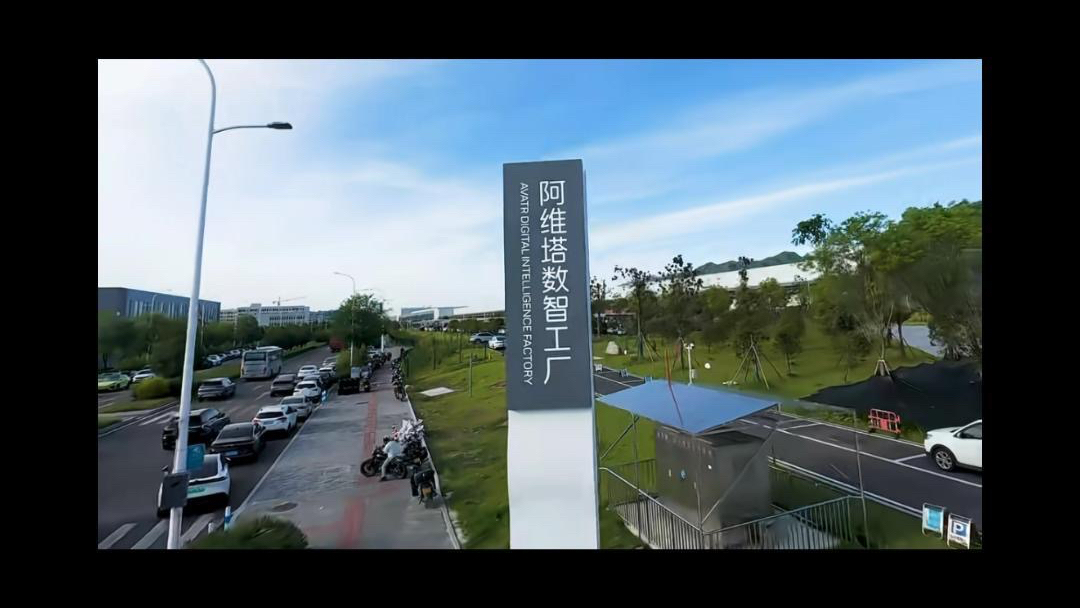
Changan Automobile listed for transfer of 10% equity of Avita Technology, with a minimum price of approximately 3.2 billion yuan

The "golden nine and silver ten" in the car market have faded domestically, but exports have surged

Post Friendship Period "has become a hot search and hit the screen, becoming a dark horse in variety shows in 2026


 Subscribe