2026-11-13 11:44


Economic Observer reporter Lao Yingying
In recent days, the overall trend of the bond market is obviously weak, and the treasury bond bond index of Shanghai Stock Exchange has fallen for three consecutive days.
In this context, Ms. Wang's investment product purchased from a state-owned large commercial bank's wealth management subsidiary on October 21st has started to turn green again. This wealth management product has a holding period of 30 days and a risk level of R2 (medium low risk). On November 10th and 11th, the net value of the product decreased by 0.01% and 0.04% respectively, and Ms. Wang is unsure how long it will be "green" again this time. She sighed and realized that investing in this one month product without losing money is already rare, but the product is still nearly 10 days away from expiration, and even if there is a floating loss, she "can't even run".
A person from the Financial Market Department of a South China joint-stock commercial bank told the Economic Observer that the bond market experienced fluctuations again on November 10th, mainly due to the trading funds used for hedging in the previous borrowing market choosing to take profits and leave, returning to the equity market, which is a typical "stock bond seesaw" effect. At the same time, the marginal tightness of market funds, the central bank's net withdrawal of liquidity over the past few days, and the decline in the willingness of large banks to lend funds have all contributed to the short-term bearish trend in the bond market due to multiple factors.
Low risk products experience increased volatility
Ms. Wang told the Economic Observer reporter that the reason why she invested in the above-mentioned wealth management product is because the product focuses on a "steady low wave" strategy, investing in low wave assets. "Even when there is a significant adjustment in the bond market, the net value of the product may fluctuate less or not at all," which is in line with her investment philosophy of hating net value drawdown or product losses.
From early September to late October, the overall net value of the product steadily increased, achieving small positive returns on most trading days, and some days although the returns were 0, there was no pullback. The change occurred after October 30th, and the net asset value of the product began to decline, dropping by 0.07% on October 30th and 0.05% on November 2nd. For Ms. Wang, who holds a position of about 300000 yuan, the floating loss in just two days reached over 360 yuan, while the accumulated income in the previous days was only over 150 yuan, and the income was rapidly eroded, even losing the principal. Fortunately, after several consecutive days of market recovery, the net value of the product returned to above cost, but unexpectedly fell again after November 10th.
In the inherent impression of many investors, bank wealth management products labeled as R1 (low-risk) are unlikely to experience a net asset value drawdown. An investor told Economic Observer reporters that he has held a daily redeemable R1 bank wealth management product for nearly 60 days, with a cumulative return of about 600 yuan. He has not experienced a net asset value drawdown before, but on October 30th, the product fell by about 0.019% on the same day, causing a daily floating loss of about 64 yuan. Afterwards, the product's revenue returned to positive.
According to Puyi Standard Data, as of November 8th, the average annualized yield of open-ended fixed income wealth management products (excluding cash management products) in the entire market for the past month was 0.79%, a decrease of 0.3 percentage points compared to the previous month; The average annualized yield of closed-end fixed income wealth management products in the entire market over the past month is 0.91%, a decrease of 0.52 percentage points compared to the previous month.
The above-mentioned financial market officials stated that on October 30th, rumors of individual credit risk events sparked panic selling in the credit bond market, leading to a significant weakening of interest rate bonds and exacerbating short-term market volatility.
Liu Sijia, a researcher at Puyi Standard, also told Economic Observer reporters that some bank wealth management products have experienced a net asset value pullback recently, which is directly caused by the phased adjustment of the bond market at the end of October under multiple short-term pressures. Since mid September, the bond market has continued to strengthen, and the market's profit taking sentiment has become more sensitive to marginal changes. Coupled with tight liquidity at the end of the month and increased demand for profit taking by institutions, the bond market has experienced a significant pullback, putting pressure on the net value of bank wealth management products. Subsequently, the performance of wealth management products showed differentiation, with the core reason being the different underlying configurations of the products.
Liu Sijia believes that with the recovery of the bond market in early November, some pure fixed income products with relatively stable investment styles have started to reverse and gradually return to positive returns. The "fixed income+" products that partially allocate equity and convertible bonds may continue to be under pressure due to the slow pace of net asset recovery or the impact of equity market volatility before the equity market stabilizes and rebounds. In addition, the pace of product net asset value recovery is also influenced by various factors such as asset duration.
Extend the holding period of 'rights containing products'
In addition to significant fluctuations in pure fixed income products, the volatility of "equity" wealth management products is even greater. An investor told reporters that at the beginning of 2026, due to the popularity of Hong Kong stock IPOs, they purchased a "fixed income+Hong Kong stock IPO wealth management" product with a minimum holding period of 180 days. The product mainly invests in debt assets and increases returns through Hong Kong stock IPOs (initial public offerings), with a risk level of R3 (medium risk).
Since February, he has invested several hundred thousand yuan in multiple installments, and the highest yield of this product was only 0.01%. Now, the holding yield has turned negative, and his last investment will not be redeemable until January 2027. The reporter saw that the annualized returns of the product in the past June, March, and January were -3.06%, -3.97%, and -6.36%, respectively.
In the second half of 2026, the Hang Seng Index will experience three consecutive months of decline, and there will be an increase in cases of new stock issuances in Hong Kong stocks. According to Live Report, a deep data platform, from July to October, 20 out of 34 new stocks in Hong Kong went bankrupt in the dark market, and 17 went bankrupt on the first day, with a first day IPO rate of 50%.
A product insider from a wealth management subsidiary of a South China joint-stock commercial bank told the Economic Observer that most of the time, the drawdown comes from the risk exposure of equity assets. Therefore, when making asset allocation, it is necessary to study and judge the future market situation. Only when the expected return of equity assets changes from negative to positive, will the position of equity assets be increased. If the stock market rises more than expected, they will also take profits in a timely manner. For example, in January 2026, there was a wave of extreme rise in the A-share market. Due to the rapid rise in the market, they carried out profit taking operations on the targets with excessively high gains in their positions, avoiding the risk of significant drawdown in the future.
Liu Sijia believes that there is no one size fits all answer to financial allocation. It is recommended that investors maintain patience and discipline, and choose products that are suitable for their own risk preferences and fund arrangements based on a full understanding of the products, in order to cope with market fluctuations more calmly. Firstly, investors should do a good job in fund management, prioritize short-term funds to ensure liquidity and safety, and should not bear excessive equity risks. Medium - and long-term idle funds can consider equity products on the premise of matching their own risk tolerance; Secondly, in terms of product selection, investors should not only focus on short-term returns, but also distinguish the risk return characteristics of different products. For example, for long-term products or equity products with high return elasticity, the observation period should be extended, and multiple indicators such as multi range returns, maximum drawdown, and periodic redemption should be retrospectively evaluated. Combined with market conditions, strategy application, investment cycle, and other factors should be comprehensively evaluated before allocation.
Liu Sijia also emphasized that investors need to uphold rational thinking, and during market fluctuations, they can moderately strengthen asset allocation diversification, not heavily invest in a single track, and moderately extend the holding period of equity products to avoid missing possible repair opportunities due to frequent short-term redemptions, and strive to obtain long-term growth value of high-quality assets.

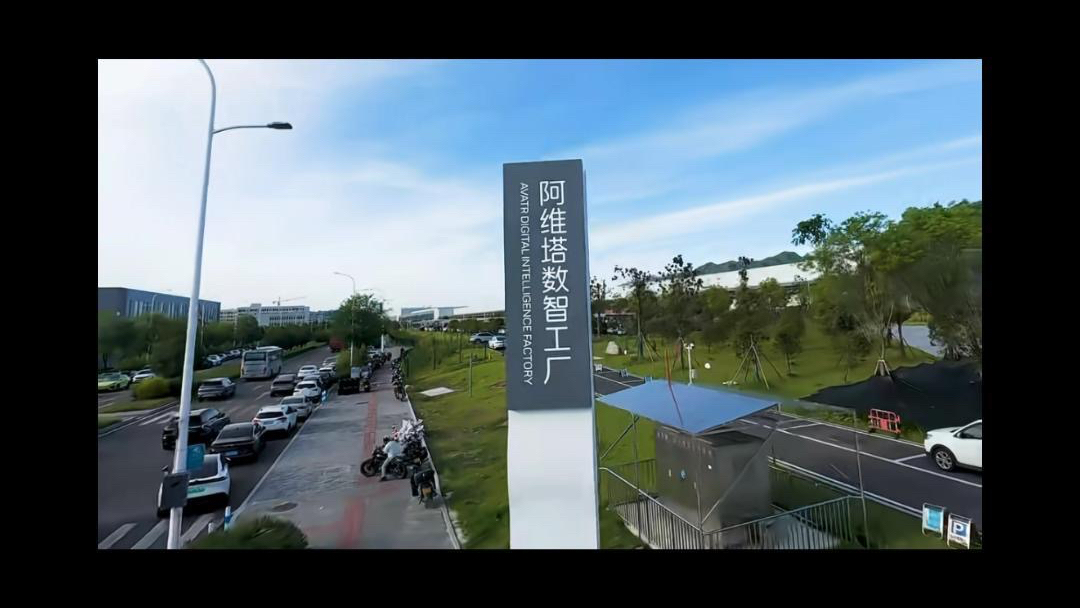
Changan Automobile listed for transfer of 10% equity of Avita Technology, with a minimum price of approximately 3.2 billion yuan

The "golden nine and silver ten" in the car market have faded domestically, but exports have surged

Post Friendship Period "has become a hot search and hit the screen, becoming a dark horse in variety shows in 2026


 Subscribe