2026-11-13 09:51

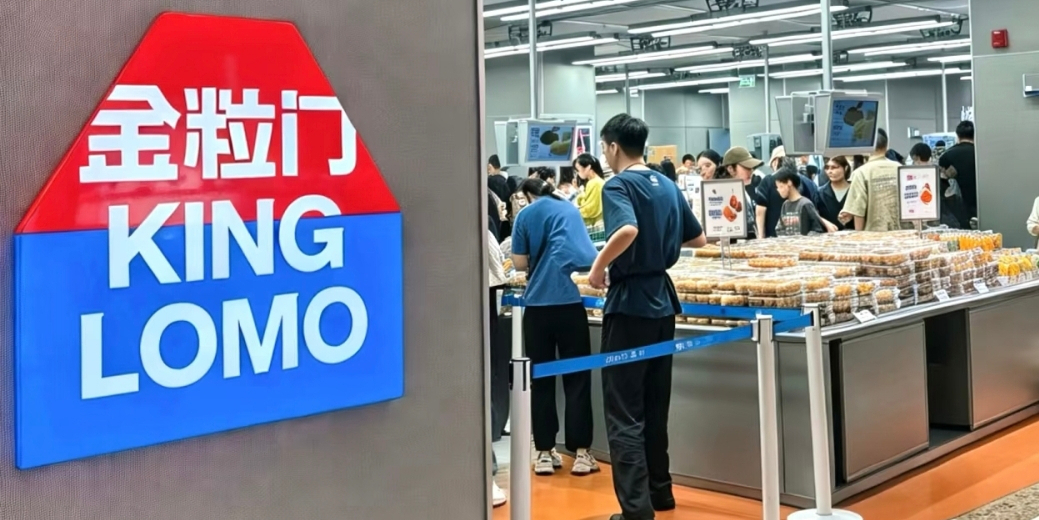
As "freshness" transforms from a product label to a selling point that more and more companies are vying to create, a competition around short-term warranty, on-site production, and supply chain efficiency is accelerating.
Long queues have formed in offline stores, and online consumers have repeatedly made additional purchases to save on shipping costs. At the same time, brands such as Jinliangmen and Jiduoquan have accelerated their store openings, and fresh snacks have become a rare buzzword in the consumer market. However, under the heat, problems such as high loss, difficult quality control, and easy product replication also exist. Why did this craze arise? What are the tests for companies entering the market?
Why are fresh snacks popular?
Unlike traditional long-term snacks that often have a shelf life of several months and a long list of incomprehensible additive names, fresh snacks mostly focus on short shelf life and clean ingredient lists. Baked products and braised cooked foods have a shelf life of 2-3 days, and freshly made drinks even need to be consumed on the same day.
Consumers' awareness of "short warranty=less preservatives=healthier" has become a major reason for the current popularity of fresh snacks. According to a survey conducted by Huachuang Securities, fresh snack brands represented by Jinliangmen account for 46.1% of their 139 SKUs of short warranty products with a shelf life of 1-5 days, and are expected to account for over 60% of their sales revenue.
Secondly, the sensory experience brought by "freshly made" packaging is incomparable to that of long shelf life packaged foods. Freshly roasted nuts, light braised dishes, and freshly baked products provide consumers with immediate emotional value through on-site visual and olfactory stimulation. The spread of tags such as "Made Today" and "Limited Edition" on social media further amplifies this appeal, making purchasing behavior not only about obtaining food, but also a showcase of lifestyle. Both native stir fry brands and cross-border food and tea beverage companies are trying to capture the minds of young users through on-site experiences.
Small packaging and scene based design are also following the characteristics of young people's consumption. Fresh snacks in small portions not only meet the needs of satisfying cravings, but also avoid the problem of waste from large packaging that cannot be eaten. Unlike the logic of bulk selling snacks with "big packaging and hoarding", fresh snacks focus on "buy and eat", whether it's afternoon tea in the office, snacks on the way shopping, or small snacks for daily family use, suitable products can be found. From braised food brands such as Juewei Food and Youyou Food, to cross-border players such as Cha Yan Yue Se and Liu Liu Mei, to emerging brands such as Jin Li Men, Ji Duo Quan, and Ming Ming Very Busy, the entry of these brands confirms the potential of this track.
Rapid expansion, but easy to replicate
Consumers are willing to pay, and brands naturally accelerate their expansion. From publicly available data, fresh snack stores will enter a centralized expansion phase in 2026: the number of Golden Grain Gate stores will increase from 30 in July 2026 to over 50 in October, and will expand beyond Hunan to multiple provinces; The number of stores has increased from 69 in February 2026 to 261 in October.
The number of these fresh snack stores is increasing, but the differences between products are not significant. At present, most fresh snack stores focus on categories such as short-term baked goods, braised food, nut stir fried goods, and freshly made beverages. One store sells well with its "Queen Roll", while another quickly launches similar products; One braised food company specializes in zero preservatives, while the other also follows up with a clean ingredient list. According to Securities Daily, some stores only stay at the level of "fresh" marketing concepts and lack stable and sustained product research and development capabilities, which can easily lead to a new round of price competition.
Faced with product convergence, brands are trying to differentiate themselves based on product form. Golden Grain Gate has broken down popular items such as Swiss rolls and sweet potatoes that Sam's Club has verified into smaller and lower priced small portions, with mainstream prices ranging from 10-25 yuan. This is an adaptation attempt, and the small portion set has lowered the threshold for trying out. But supermarkets can also respond with their own brands and scale advantages, and the small portion packaging itself does not constitute an exclusive advantage. In other words, products can be slightly innovative, but it is difficult to become a long-term moat.
Where is the real test
While the popularity is soaring, the fresh snack industry is also facing challenges in supply chain and quality control. The core selling point of fresh snacks is their "short warranty". But the shelf life is too short, and there are high requirements for every link from warehousing, distribution to store sales. Once a certain link cannot keep up, the product is prone to expiration, resulting in higher losses. Public information shows that the average loss rate of fresh snack short-term products is as high as 8% to 15%.
There is no unified industry standard for how long the shelf life of fresh food should be. The "Guidelines for Determining the Shelf Life of Food" implemented in August 2026 only provide a method for determining the shelf life, without specifying the specific number of days. The lack of quantifiable hard constraints on 'freshness' has led some brands to set their own standards, making' freshness' visible.
For example, in terms of grading and labeling, Dingdong Maicai classifies products into grades A to F based on five indicators: raw materials, seasoning, craftsmanship, ingredient list, and shelf life, with only grades A, B, and C classified as fresh snacks. The product is divided into six levels, A to F, based on the cleanliness of the ingredients. Grade E and F products containing preservatives are not available for sale, and the store screen will display the inspection report in a scrolling manner. Some products in the Three Squirrels Life Hall are also labeled with "True Fresh" or "A" grade identification. Some brands are also trying to display in a more intuitive way, with a shelf life of about 3 days for baked goods and jerky products at the One Chestnut NUTCO store, and a designated production area at the store site.
Whether providing testing reports or on-site displays, they are all part of the transparent operation of fresh food that is close to consumers. The true transparent operation of fresh food is to make the entire chain of fresh food from the place of origin to the dining table "visible", and to make the key node information of enterprises from breeding, processing, warehousing, transportation to shelving and sales publicly available for inspection. This means that companies not only need to display real watermark photos strongly bound to specific batches, but also visualize key nodes such as quarantine information, cutting environment, and cold chain temperature; Even like "24-hour dishes", the time and temperature of transportation and delivery should be made public according to regulations. This transparent operation helps to force stores to do a good job in quality control and reassure consumers, but whether it can be consistently and stably implemented remains to be seen. After all, losses and quality control investments are the actual costs of a single store.
It should be pointed out that fresh snacks are not simply about shortening their shelf life or bringing them to the store. According to reports from Beijing Business Daily, Interface News, and other sources, the short-term warranty model requires a complete supply chain system: brands estimate demand based on store sales data, place orders, and hand them over to central factories for small-scale production, and then deliver them to stores through high-frequency cold chain delivery; The store also needs to do a good job of staggered shelving, product rotation, and timely inventory. Otherwise, 'freshness' will become a cost pressure rather than a premium capability.
Fresh snack brands not only have to bear internal cost pressure, but also face more direct customer flow diversion. Short term baked goods, refrigerated braised foods, and freshly made beverages are the core categories of supermarkets such as Hema and Sam. Consumers can easily buy them all when they go shopping, and they may not necessarily go to snack shops specifically for them.
Overall, fresh snack brands cannot rely solely on the concept of "freshness" to build a strong moat, but must establish comprehensive advantages in supply chain efficiency, product research and development, logistics loss control, and brand building. For example, predicting sales through digital systems to reduce losses, developing exclusive popular products based on regional tastes, and relying on membership systems to increase user repurchase rates. After all, consumers' enthusiasm for queuing will eventually fade, and only brands that can continue to provide stable quality, cost-effective products, and achieve healthy profits can ultimately stay in the industry reshuffle.
(The author is a researcher at the Jingguan Research Institute)
Changan Automobile listed for transfer of 10% equity of Avita Technology, with a minimum price of approximately 3.2 billion yuan

The "golden nine and silver ten" in the car market have faded domestically, but exports have surged

Post Friendship Period "has become a hot search and hit the screen, becoming a dark horse in variety shows in 2026