Economic Observer Follow
2026-11-12 20:46

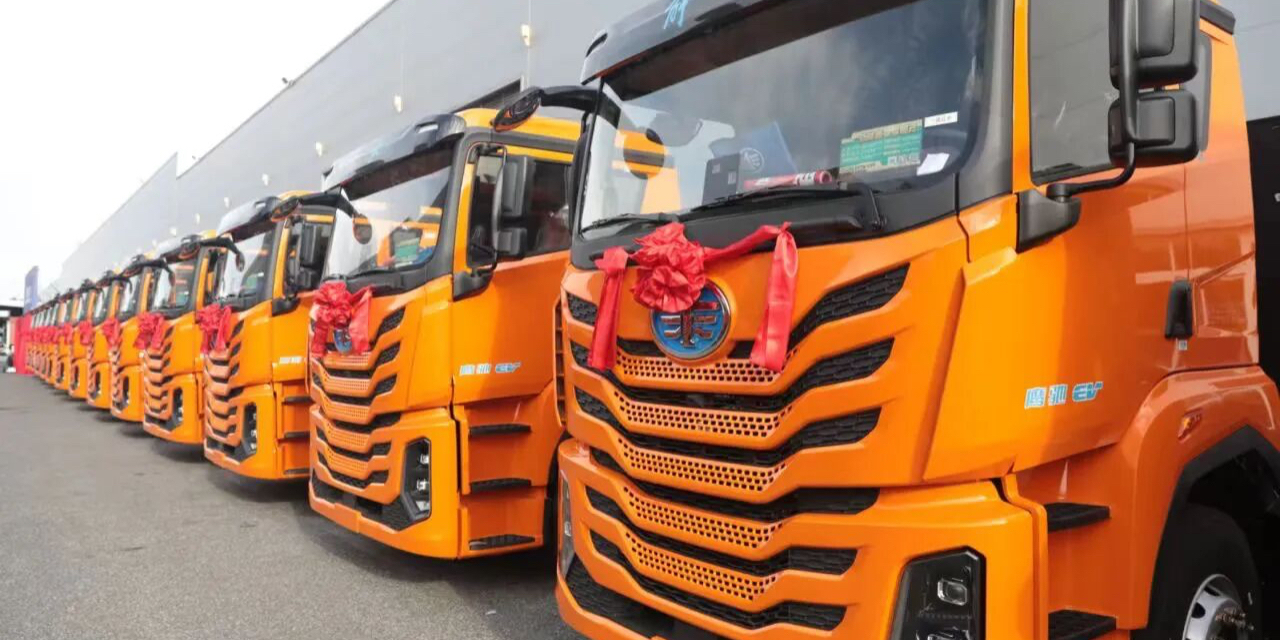
The market for gas heavy-duty trucks (mainly LNG liquefied natural gas heavy-duty trucks) in 2026 has followed a parabolic trend of first increasing and then decreasing.
In March, the domestic gas heavy-duty truck compulsory insurance terminal sold 32000 vehicles, a year-on-year increase of 48%. This not only broke the record for the best March in history, but also ranked second only to the monthly sales of 39100 gas heavy-duty trucks in June 2019. The popularity continued in April, with gas heavy-duty truck terminal sales once again exceeding 30000 units.
But in September, the actual sales of gas heavy-duty trucks were only 7263, a year-on-year decrease of 69%, further expanding the year-on-year decline from 62% in August. The share of gas heavy-duty trucks in the actual sales of heavy-duty truck terminals shrank to 11.05% in the current month, losing more than 25 percentage points in half a year compared to 36.50% in March.
Why did the heavy truck market continue to be the growth engine in the first quarter, but then decline in the third quarter?
Changes in gas prices and oil prices
Generally speaking, the purchase cost of LNG vehicles is higher than that of diesel vehicles. The hot sales of gas heavy-duty trucks in the first quarter were built against the backdrop of the historically high price difference between oil and gas.
In February 2026, the average domestic LNG price has dropped to around 3800 yuan/ton, while diesel prices continue to rise due to geopolitical factors. According to the operating costs at that time, the fuel cost per kilometer for diesel heavy-duty trucks was about 2 to 2.5 yuan, and for LNG heavy-duty trucks it was about 1.8 to 2.2 yuan. A gas heavy-duty truck that operates 150000 kilometers per year can save nearly 100000 yuan in fuel costs compared to diesel vehicles.
In March 2026, the situation in the Middle East suddenly escalated, and the passage of the Strait of Hormuz was blocked, directly affecting the pricing of the global natural gas market. According to calculations by Zhuochuang Information, since March, the average price of LNG in China has skyrocketed from 3000 yuan/ton to 3538 yuan/ton, with a monthly increase of over 13%. Some coastal receiving stations have quoted prices exceeding 4400 yuan/ton. By the end of April, the ex factory price of LNG had exceeded 6000 yuan/ton, and the average price in May exceeded 6200 yuan/ton.
As a competitor to gas heavy-duty trucks, diesel heavy-duty trucks rely on a decrease in diesel prices instead of an increase. On April 21, 2026, refined oil prices experienced their first decline of the year, with diesel prices dropping by 530 yuan per ton. On June 19th, diesel prices were further reduced by 495 yuan/ton, and in most parts of the country, diesel prices fell back to 7.7 to 7.9 yuan/liter.
According to data from Jinlianchuang, although the average price of LNG fell to about 5600 yuan/ton in August, and the refueling price in many northern regions dropped to less than 6 yuan/kg, the lowest diesel price at many private gas stations was only over 5 yuan per liter (about 0.85 kilograms per liter of diesel). In September, gas prices rebounded again to over 6100 yuan/ton, and refueling prices in many northern regions rose to around 6.4 yuan/kg at the end of the month.
The price difference between oil and gas has been reduced from the 'golden window' of 2.5 to 3 yuan at the beginning of the year to only a few cents, and in some areas it has even been inverted (refueling is more expensive than refueling). The core selling point of gas heavy-duty trucks' fuel saving money 'has been offset, and the payback period has been extended from 1 year to 3 years. Price sensitive users can either wait and see, or suspend operations and freeze orders directly, "Bai Wenxi, Vice Chairman of the China Enterprise Capital Alliance, told the Economic Observer.
LNG share flows towards new energy
From the perspective of market share, the replacement demand released by gas heavy-duty trucks after the reversal of oil and gas price differences has not been fully caught by diesel heavy-duty trucks, but a large part has been taken away by new energy heavy-duty trucks.
According to the actual sales data of Zhuochuang Information Traffic Compulsory Insurance, from January to September 2026, the average penetration rates of diesel heavy-duty trucks and LNG heavy-duty trucks were 40.76% and 21.7% respectively, both showing a year-on-year decline. However, the cumulative sales of new energy heavy-duty trucks reached 226400 units, an increase of 64% year-on-year, with a penetration rate of 37.23%, an increase of 13.17 percentage points year-on-year.
The rapid increase in the penetration rate of new energy heavy-duty trucks is supported by policies. On December 30, 2025, the National Development and Reform Commission and the Ministry of Finance have announced in the "Two New" policy notice for 2026 that they will support the scrapping and renewal of old operating trucks, and prioritize the upgrade to electric trucks.
In May 2026, the implementation rules jointly issued by the General Office of the Ministry of Transport and other four departments further refined this requirement: directly arrange extra long term special treasury bond funds to support the scrapping and updating of old operating trucks. In addition to continuing to support the scrapping of operating trucks (including diesel and natural gas trucks) with national emission standards of 4 and below to be upgraded to low emission trucks, priority should be given to supporting the upgrading to electric trucks, and clearly require all regions to reserve subsidies of the necessary scale, focusing on supporting the upgrading to electric trucks.
In June 2026, the Ministry of Transport and 11 other departments jointly released the "Implementation Plan for Promoting the Large scale Application of New Energy Heavy Trucks", which listed pure electric and hydrogen fuel cell heavy trucks as the core of large-scale application, and LNG heavy trucks were not included in the key promotion scope.
In 2025, the sales volume of new energy heavy-duty trucks will be 231100 units, a year-on-year increase of 182%, and the annual penetration rate will be about 29%. In August 2026, 26800 new energy heavy-duty truck terminals were sold, a year-on-year increase of 51%, with a penetration rate of 47.43%. In September, the actual sales of new energy heavy-duty truck terminals reached 33100 units, a year-on-year increase of 37%, with a penetration rate exceeding 50%.
First and Second Half of the Year
In the first half of 2026, all five top heavy truck companies achieved sales growth. According to the traffic compulsory insurance terminal data cited by the First Commercial Vehicle Network, China National Heavy Duty Truck Group sold 188509 heavy trucks, a year-on-year increase of 26.69%, ranking first in the industry; FAW Jiefang had 116357 vehicles, a year-on-year increase of 18.11%; Shaanxi Automobile Group has 100031 vehicles, a year-on-year increase of 12.05%; Dongfeng Motor sold 97246 vehicles, a year-on-year increase of 11.54%; BAIC Foton has 90029 vehicles, a year-on-year increase of 35.31%.
Among them, the sales growth of multiple enterprises is attributed to the use of gas heavy-duty trucks. In the first half of the year, FAW Jiefang sold 32600 gas heavy-duty trucks, a year-on-year increase of 25%; China National Heavy Duty Truck Group has 25900 vehicles, a year-on-year increase of 35%; There were 16500 Dongfeng commercial vehicles, a year-on-year decrease of 5%; Beiqi Foton has 16400 vehicles, a year-on-year increase of 53%; Shaanxi Automobile Group had 13100 vehicles, a year-on-year decrease of 11%.
In September, as the gas heavy-duty truck market entered a downturn, the overall sales of heavy-duty trucks by top companies also generally declined. Among them, China National Heavy Duty Truck Group sold 28348 vehicles, FAW Jiefang sold 18545 vehicles, Shaanxi Automobile Group sold 15095 vehicles, Beiqi Foton sold 12151 vehicles, and Dongfeng Commercial Vehicle sold 11114 vehicles. Only China National Heavy Duty Truck Group's sales increased by 1.16% year-on-year, while the other four companies all decreased year-on-year.
When the price difference dividend of gas heavy-duty trucks recedes and it is difficult to bring new increments, heavy-duty truck companies generally focus on two directions: new energy heavy-duty trucks and exports. But the emphasis of each family is different.
FAW Jiefang has set a target of selling 320000 vehicles in 2026, including 75000 new energy vehicles and 80000 overseas vehicles, with overseas sales accounting for about a quarter of the total sales. In the first half of the year, FAW Jiefang launched new products such as J6V Pro and CTB battery swapping heavy-duty trucks, and delivered battery swapping tractors in batches in Shenzhen, Hangzhou and other places. Overseas, a special partner conference was held to seek incremental growth in the pickup and small truck new sectors.
China National Heavy Duty Truck Group's buffer comes from the depth of exports. In the first half of the year, China National Heavy Duty Truck Group exported over 100000 heavy-duty trucks, accounting for more than half of the total sales of 189000 vehicles. The high gross profit business of exports offset the impact of the decline in domestic gas heavy-duty trucks. China National Heavy Duty Truck Group's plan is to further expand its overseas assembly and service network, consolidate its export advantages, and at the same time, its product end has already deployed a full scenario new energy matrix to compete for group users with the "scenario based TCO optimal solution".
Shaanxi Automobile Group's response attitude is more aggressive, with the goal of "maintaining two and competing for one" in the new energy track by 2026, and anchoring new energy vehicle sales to 40% of total sales. On the product side, Shaanxi Automobile Group launched the X5000E long-range new energy series in June, which is suitable for the southwestern mountainous areas. It collaborates with Weichai to create an integrated solution of "power+vehicle", and provides customized promotion in heavy-duty scenarios such as mines and steel mills. It also launches an integrated solution of "vehicle station storage" to fill the gap in the channel.
Beiqi Foton is the only top enterprise in terms of gas heavy-duty truck sales that has improved. Its gas heavy-duty truck sales from January to September have surpassed Shaanxi Automobile Group and entered the fourth place in the industry. To cope with the impact of the decline in gas heavy-duty trucks, Beiqi Foton has also made efforts in both new energy and exports. Its goal for 2026 is to achieve a "double 200000" of commercial vehicle new energy and exports. In the first half of the year, 14000 new energy heavy-duty trucks have been sold, a year-on-year increase of 49.7%. The Ouman brand has formed a fuel LNG、 A full scenario matrix for pure electricity and hydrogen fuel.
Dongfeng Commercial Vehicle's response also points to exports: overseas sales account for over 30%, and the "Sail Project" has been launched to promote overseas layout. The new energy end relies on the collaboration between Dongfeng Commercial Vehicle and Dongfeng Liuzhou Automobile to make bulk deliveries of pure electric and hydrogen fuel products.
The future of gas heavy-duty trucks
The sudden cooling in 2026 does not mean that gas heavy-duty trucks are exiting the heavy-duty truck market. Xie Guoping, Deputy Minister of the Information Technology and Industrial Development Department of the National Information Center, publicly stated that during the "15th Five Year Plan" period, it is expected that natural gas heavy-duty trucks, traditional fuel heavy-duty trucks, and new energy heavy-duty trucks will still form a tripartite development situation.
From a seasonal perspective, there is a window of decline in LNG prices after the end of the heating season in the fourth quarter. The judgment given by FAW Jiefang in its institutional research at the end of October 2026 is: "Natural gas prices are easily disturbed by various factors in the short term, and the price difference is likely to narrow in the fourth quarter due to the impact of heating. The price difference center is expected to recover slightly in 2027
In traditional perception, electric heavy-duty trucks are frequently seen in short haul scenarios in ports, steel mills, and mines, with an average daily mileage of less than 300 kilometers. LNG heavy-duty trucks firmly occupy the market for medium and long-distance mainline tractors with abundant gas sources, while diesel heavy-duty trucks retreat to ultra long mainlines, extremely cold working conditions, and overseas markets.
One major shortcoming of electric heavy-duty trucks in long-distance mainline scenarios is energy replenishment. In long-distance trunk logistics and fixed line transportation scenarios, the gas station network is relatively mature, the lines are fixed, and the supply of goods is stable, while the number of charging and swapping stations is still relatively rare.
But at present, electric heavy-duty trucks have begun to penetrate the basic plate of gas heavy-duty trucks, and more and more companies are trying to solve the charging pain points in long-distance mainline scenarios. For example, the Qiji battery swapping system led by Ningde Times plans to build 2000 swapping stations by 2027, achieving full coverage of the national high-speed backbone network and advancing in the same direction as the national "5 shots, 4 verticals, and 5 horizontals" zero carbon highway corridor.
Recently, Beiqi Foton announced the launch of the Supercharging Industry Ecological Alliance, joining forces with partners such as Ningde Times, Xinwangda, Tedian, Hunan Jingneng, etc., focusing on equipment research and development, technology co creation, station construction, and energy operation to carry out full chain cooperation, planning to land 5000 standardized supercharging comprehensive stations.
In addition, although hybrid models have become one of the mainstream choices in the passenger car market, they are still in their infancy in the heavy-duty truck market. In January 2026, the sales of hybrid heavy-duty truck terminals reached approximately 147 units, a year-on-year increase of 259%. In June 2026, the sales of plug-in hybrid heavy-duty trucks reached approximately 305 units, a year-on-year increase of over 300%.
The "gas electric hybrid" solution, which combines hybrid technology with gas and heavy-duty trucks, has become one of the new directions in the industry. For example, China National Heavy Duty Truck Group's Yellow River H7 electric extended range tractor is equipped with a 400kWh large battery and a 1000 liter LNG cylinder, supporting pure electric, extended range, and hybrid mode switching, with a comprehensive range of over 1000 kilometers. The new generation of Foton Ouman hybrid heavy-duty trucks covers both HEV and PHEV power types, as well as two energy solutions: oil electric hybrid, gas electric hybrid.

Changan Automobile listed for transfer of 10% equity of Avita Technology, with a minimum price of approximately 3.2 billion yuan

The "golden nine and silver ten" in the car market have faded domestically, but exports have surged

Post Friendship Period "has become a hot search and hit the screen, becoming a dark horse in variety shows in 2026


 Subscribe