Economic Observer Follow
2026-11-13 10:00

Economic Observer reporter Zheng Chenye
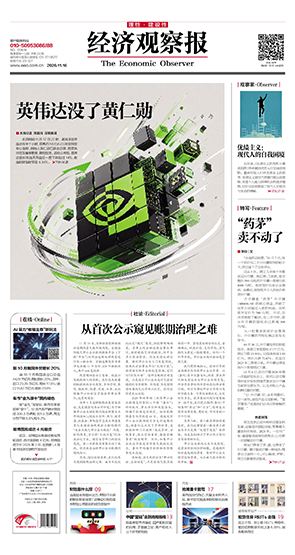
On the night of November 12th Beijing time, Nvidia (NVDA. O) announced that Huang Renxun had resigned from his positions as President, CEO, and Director of the company, effective immediately. Colette Kress, Executive Vice President and Chief Financial Officer of Nvidia, has been appointed as interim CEO and will continue to serve as CFO until a formal candidate is confirmed. The board of directors of Nvidia has simultaneously initiated the selection of a new CEO, with both internal and external candidates under consideration.
In addition, Harvey Jones has been appointed as the first Chairman of the Board of Directors of Nvidia. According to the above announcement, Jones has over 30 years of experience in entrepreneurship, technology executives, and venture capital, and has served as the CEO and Executive Chairman of Synopsys.
Nvidia did not specify the reason for Huang Renxun's resignation in the announcement. A few days ago, Nvidia's board of directors launched an independent investigation into Huang Renxun's recent personal scandal. After the announcement, Nvidia's stock price plummeted more than 14% at the opening, but the decline later narrowed.
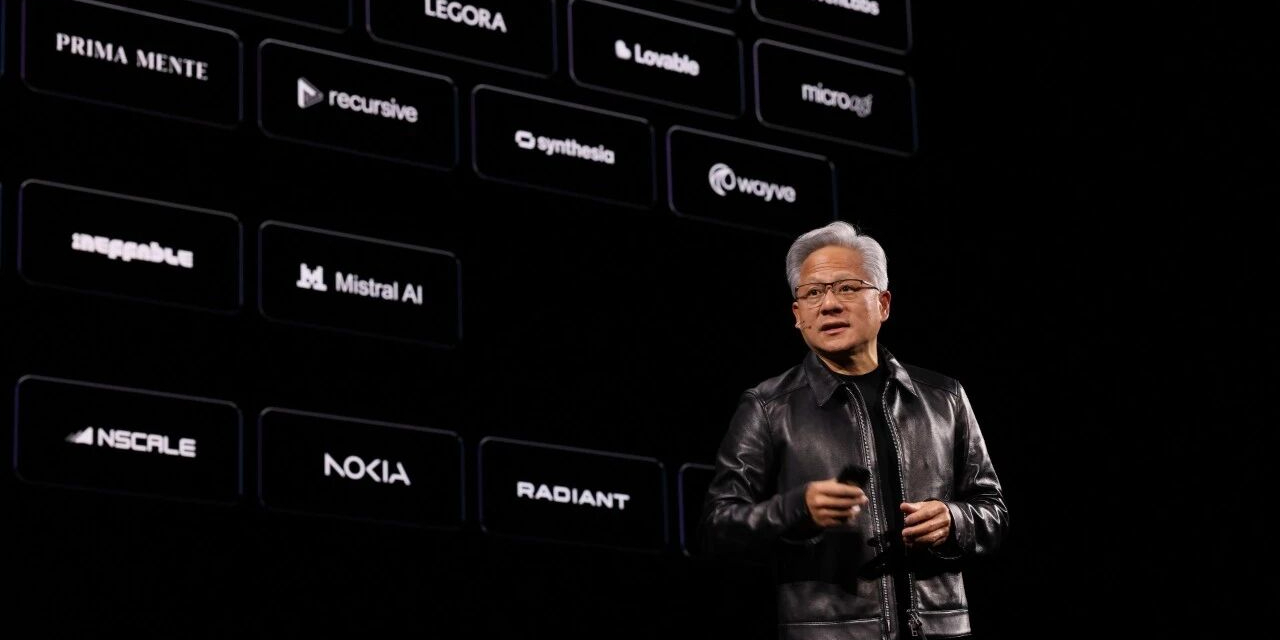
Just over two months ago on September 2nd, Huang Renxun said during a conversation with US Secretary of Commerce Howard Lutnick, "Of course I don't have to work anymore, but I don't want to miss it. I will never miss the next 10 or 15 years." In his view, with AI (artificial intelligence), what used to take 10 years to accomplish can now be accomplished in just one year, giving him and the entire industry greater aspirations. He also mentioned at the time that there were still 100 gigawatts (GW) of computing power facilities to be built before 2030.
Since its establishment in 1993, Nvidia has only had one CEO, Huang Renxun. In 33 years, Nvidia has grown from a graphics chip company to a core supplier of global AI computing power, and became the world's first enterprise with a market value exceeding $5 trillion in October 2025.
Now, the era led by Huang Renxun has come to an end, and Nvidia and the AI computing power industry chain built around it will have to face the changes after Huang Renxun's departure.
Led NVIDIA for 33 years
The reason why Huang Renxun's resignation caused such a big shock is that almost every crucial turn of NVIDIA in the past 33 years was made by him himself, and many of these decisions were not favored by the outside world at that time.
In 1993, 30-year-old Huang Renxun and two partners agreed to establish NVIDIA in a restaurant in San Jose, California, USA. The initial business was to provide graphics chips for personal computer games. In the early stages of entrepreneurship, Nvidia's first product was not successful and the company was on the brink of bankruptcy. Huang Renxun later mentioned in public that "we are only 30 days away from bankruptcy" is a catchphrase that has been used internally by NVIDIA for many years.
In 1999, Nvidia went public on NASDAQ and introduced the concept of graphics processing units (GPUs). In 2006, Nvidia launched the software platform CUDA, allowing GPUs that were originally only used for graphics rendering to also undertake general-purpose computing tasks. In the following years, this investment did not bring corresponding income, and the capital market questioned it.
The value of CUDA only became apparent after 6 years. In 2012, researchers trained the neural network AlexNet using Nvidia's GPU, leading the image recognition competition significantly, and deep learning received attention from the industry as a result. Since then, a large number of AI developers around the world have written code based on CUDA. Due to the fact that changing chip suppliers often means rewriting code, CUDA has gradually become one of Nvidia's main competitive barriers.
After seeing this change, Huang Renxun began to tilt Nvidia's resources towards AI. In August 2016, he personally sent Nvidia's first AI supercomputer DGX-1 to the recently established OpenAI. In November 2022, OpenAI released ChatGPT, a generative AI driven rapid growth in computing power demand, and Nvidia's investment of over a decade began to yield high returns. The financial report released in August 2026 shows that in the second quarter of the 2027 fiscal year ending in July, Nvidia's revenue was $96.2 billion, a year-on-year increase of 106%, of which data center business revenue was $89 billion.
While Nvidia's scale continues to expand, Huang Renxun's management style has not changed much. Public information shows that dozens of executives from Nvidia report directly to him, and he has been involved in the development of product routes, coordination of supply chains, and communication with major clients for a long time. Nvidia has never publicly announced any succession arrangements, and Huang Renxun himself has previously expressed his desire to work as CEO for another 20 years or so.
Huang Renxun's influence at NVIDIA mainly comes from his personal prestige and judgment. Nvidia implements equal rights for equal shares, and according to its 2026 fiscal year annual report, Huang Renxun's shareholding ratio is approximately 3.58%.
This highly centralized management approach has enabled Nvidia to maintain high decision-making efficiency in several technological shifts, but it has also made it a question with no ready-made answer who will make decisions for the company after Huang Renxun's departure.
After Huang Renxun left office
The person who took over the daily operations of NVIDIA from Huang Renxun is Kress, who has worked with him for 13 years.
Kress, 59 years old, joined Nvidia in September 2013 and has been serving as Chief Financial Officer ever since. Prior to this, he had worked in finance for nearly 25 years at companies such as Microsoft and Cisco. In Nvidia's announcement, Kress stated that "Nvidia's strength always comes from its employees," and Nvidia will continue to focus on serving customers, partners, developers, and shareholders.
For investors, Kress is no stranger. Over the past 13 years, she has explained Nvidia's quarterly performance and guidance to the market during earnings calls. At the financial conference call on August 26, 2026, Kress stated that he expects Nvidia's revenue for the fiscal year 2028 (ending in January 2028) to increase by approximately 70% year-on-year, and at least until the end of that fiscal year, the products will still be in short supply; The new generation product Vera Rubin has started mass production and shipment this month, and is expected to become the product with the fastest capacity ramp up in Nvidia's history. According to its introduction, the capital expenditures of the top five cloud providers worldwide are expected to approach $800 billion by 2026 and reach $1.3 trillion by 2027.
From these numbers, it can be seen that Nvidia's products and orders for the next year or so were largely confirmed before Huang Renxun left. After the company's leadership change, Kress's first priority is to deliver existing orders on schedule. According to the above announcement, on November 17th, Nvidia will release its third quarter financial report for the 2027 fiscal year as originally planned, which will also be Kress's first time facing investors as interim CEO.
In this personnel adjustment, the board of directors of Nvidia has established the position of chairman for the first time, with Harvey Jones serving as a director of Nvidia since 1993. For the selection of the official CEO, the Nvidia board of directors has not officially nominated or confirmed any candidates, but those who have been mentioned by the market include Ian Buck, Nvidia Vice President who led the development of CUDA, and Rene Haas, Arm CEO who served at Nvidia for 7 years.
Regarding the vacancy left by Huang Renxun, Guo Mingchi, an analyst at Tianfeng International Securities, posted on social media on November 12th that Huang Renxun's value to Nvidia lies in his ability to turn the technology that the engineering team believes is possible into a product that the entire company is willing to invest resources, take risks, and must deliver. In Guo Mingchi's view, Huang Renxun may not be the person within NVIDIA who understands a certain new technology the most, but he is able to coordinate strategy, organization, technology, and supply chain, and make quick decisions.
Guo Mingchi also stated that it is precisely because Huang Renxun dared to decide to adopt more aggressive technical specifications and promote implementation that the supply chain has high order visibility and is willing to cooperate with Nvidia to upgrade specifications. Competitors have also followed suit, driving technological upgrades and supply chain investments in the entire AI industry.
Kress gave a set of data during the August earnings conference call - for every 1 gigawatt of data center built, the potential revenue for Nvidia has increased from about $18 billion for the Hopper generation to about $25 billion for the Blackwell generation, and about $40 billion for the Vera Rubin generation. According to its introduction, Nvidia's procurement commitments to suppliers are mostly focused on the next three years.
That is to say, with each generation of product upgrades, the revenue that data centers of the same size can bring to Nvidia increases significantly. The reason why upstream manufacturers dare to expand production in advance is largely because they believe that the goals set by Huang Renxun can be achieved.
The technology industry is not without precedents of smooth transitions after founders leave.
For example, before Tim Cook took over as CEO of Apple from Steve Jobs in 2011, he had served as Apple's Chief Operating Officer for many years and had taken over his duties several times during Jobs' sick leave; Subsequently, Apple's annual revenue increased from approximately $108 billion in fiscal year 2011 to over $416 billion in fiscal year 2025. Unlike Apple, Nvidia did not arrange such a successor for Huang Renxun in advance.
For the domestic computing industry, Huang Renxun's departure has also brought new variables.
Huang Renxun has previously publicly advocated for NVIDIA to continue participating in the Chinese market. According to Kress' introduction during the August earnings call, in the second quarter of fiscal year 2027, NVIDIA's revenue from Hopper series products targeting Chinese customers was less than 1% of its data center business revenue, and subsequent performance guidance did not include revenue from data centers in China.
In the past few years, the global AI computing power industry chain can be said to have been built around Nvidia's product rhythm, and the person who made the decision for this rhythm has always been Huang Renxun.
So, after he leaves, can Nvidia continue its previous pace of research and delivery? How will competitors respond? These can only be answered in time.

Changan Automobile listed for transfer of 10% equity of Avita Technology, with a minimum price of approximately 3.2 billion yuan

The "golden nine and silver ten" in the car market have faded domestically, but exports have surged

Post Friendship Period "has become a hot search and hit the screen, becoming a dark horse in variety shows in 2026


 Subscribe