2026-11-03 09:26

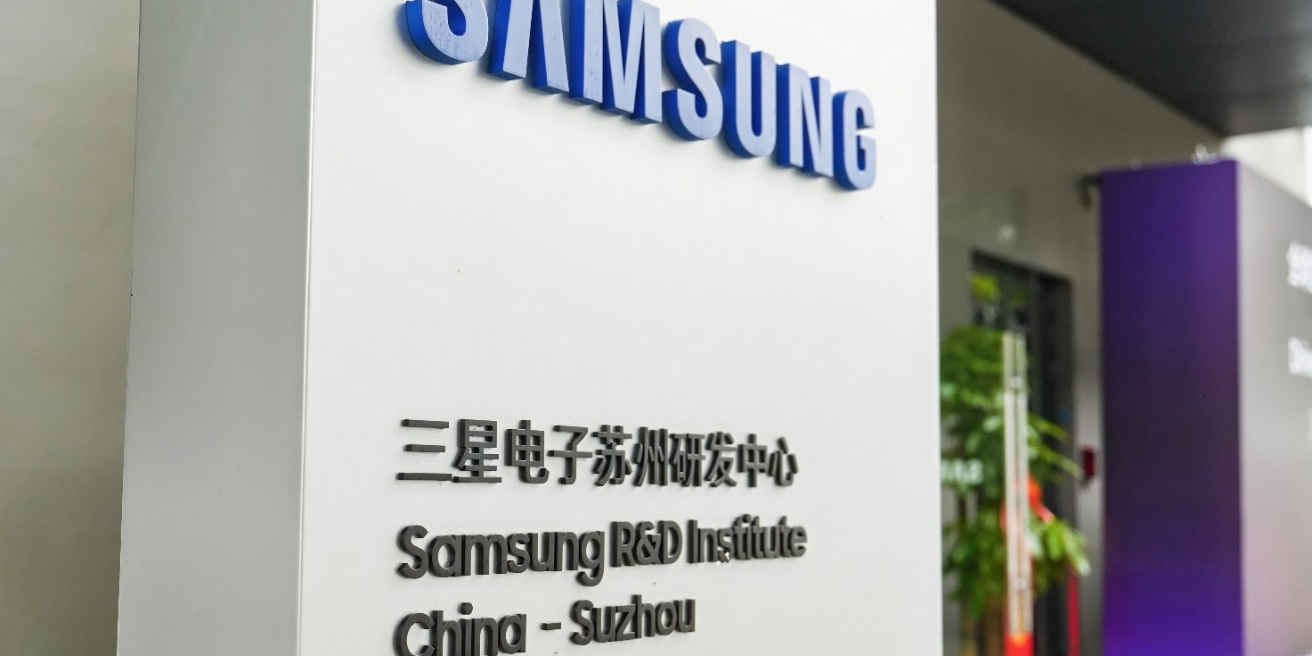
On October 20th, Samsung China Production Technology Research Institute unveiled its plaque in Suzhou Industrial Park.
This is Samsung's first establishment of a production technology research and development center in China. For a multinational enterprise that has been operating in China for 35 years, this is not an ordinary move to add new institutions.
It means that Samsung's role in China has undergone another change.
For a long time in the past, China has taken on more production, manufacturing, and supply chain links from multinational corporations. Now, high value-added links such as research and development, processes, automation, and production technology are being increasingly placed in China. Samsung's establishment of its first overseas production technology research institute in Suzhou is a facet of this change.
This is also one of Samsung's multiple "firsts" in China this year.
In 2026, Samsung Medical's first overseas self built production line will land in Suzhou, the first overseas R&D center for biopharmaceuticals will be located in Beijing, and the first overseas production technology research institute will also choose Suzhou.
Now, with the arrival of the 9th CIIE as scheduled, Samsung's new research and development layout in China has also ushered in a window for external display. Samsung, which has participated in the exhibition for nine consecutive years, is shifting its focus from a single terminal product to underlying technology, industry chain capabilities, and localized innovation. The landing of Suzhou Research Institute perfectly explains why this multinational enterprise continues to invest in China and also explains China's changing position in its global industrial system.
The Industry Signal Behind a New Institution
The mission of Samsung China Production Technology Research Institute is not aimed at ordinary consumers.
It focuses on technology closer to the depths of the factory. Automation solutions, process optimization, production efficiency improvement, and core production technologies that can adapt to various manufacturing scenarios are all issues that it will address in the future.
These types of institutions are usually not easily perceived by the outside world. It does not have a directly visible product form like a mobile phone, a screen, or a medical device. But in the competition of manufacturing industry, it often determines whether the enterprise can produce stable technology, reduce costs, and maintain yield and efficiency under complex working conditions.
Samsung chose to establish its first overseas production technology research institute in China, primarily due to the complexity of the manufacturing industry scene in China.
China is one of the few economies in the world that simultaneously possesses a huge market, a complete supply chain, a large group of engineers, and diverse manufacturing scenarios. From consumer electronics to automobiles, from medical devices to core components, China's manufacturing industry has both scale and speed. For a multinational technology company, this is not just a sales market, but also a high-density technology testing ground.
Li Gezhu, director of Samsung Production Technology Research Institute, said at the opening that China is a market that combines strong manufacturing capabilities and abundant research and development talents. Samsung will rely on its research and development base in Suzhou to develop customized solutions that are suitable for various manufacturing scenarios, and transform research and development achievements into global manufacturing competitiveness.
The key word in this sentence is' various manufacturing scenarios'.
Samsung's business in China is not singular. Currently, Samsung has established 15 manufacturing enterprises and 14 research and development centers in China. Accumulated investment in China is about 59 billion US dollars, with cutting-edge industry investment accounting for nearly 90%, mainly invested in technology intensive fields such as semiconductors and MLCC.
This means that Samsung's development in China spans across multiple industry sectors. It needs to handle precision control in semiconductor related manufacturing systems, meet quality requirements in localized production of medical equipment, and serve efficiency improvement in fields such as electronic components, displays, and intelligent terminals.
The value of Suzhou has also become clearer here. It is not an isolated research and development site, but a new puzzle embedded in Samsung's industrial chain in China. It connects Samsung's global production technology system upwards, connects with local manufacturing scenarios in China downwards, and then feeds back solutions to more markets.
Guo Hongtao, Director of Samsung China Production Technology Research Institute, said that establishing a production technology research and development base in Suzhou is a high recognition of the environmental value of China's manufacturing industry. The research institute will build a research and development team that grows together with local talents and partners.
This also explains why it is Suzhou.
As of the end of 2025, Suzhou has accumulated 317 recognized foreign-funded research and development centers, accounting for 60% of the total in Jiangsu Province. Here, global manufacturing companies, universities, research institutions, and local supporting enterprises have been gathering for a long time, and the industrial ecology is thick enough, with a relatively stable supply of talent. For a production technology research institute, having a separate R&D team is not enough, it also requires a large number of verifiable, iterative, and collaborative real industry scenarios.
Suzhou Industrial Park happens to provide such an environment.
From manufacturing base to innovation node
Samsung's industrial layout in China has undergone a significant change in the past few years.
It has not stayed in the traditional manufacturing process, but continuously brought higher technological barriers and higher value-added businesses to China.
This is particularly evident in this year's three "firsts".
The establishment of a medical device production line for the first time in Suzhou, China, means that Samsung Medical Equipment has further entered the stage of localized manufacturing in China from display and sales. The establishment of the Biomedical R&D Center in Beijing focuses on the development of ADC antibody coupled drugs, demonstrating Samsung's integration of cutting-edge research and development in the field of life sciences into China's innovation network. The establishment of Suzhou Production Technology Research Institute has also brought the research and development of production technology into China.
The three actions belong to different industries, but point to the same direction. China is transforming from a market and factory for multinational corporations to an industrial node where research and development, manufacturing, supply chain, and application scenarios work together.
The CIIE provides an observation window.
Samsung has participated in the CIIE for nine consecutive years. At the early CIIE, Samsung showcased more cutting-edge global technologies and terminal products. At the second CIIE, Samsung's first mass-produced foldable screen phone made its debut in China, and the foldable screen entered the public eye for the first time in the form of a large-scale product. At the 9th CIIE, Samsung showcased its eighth generation foldable screen products.
The product is still iterating, but the narrative has changed.
At this year's CIIE, Samsung's focus shifted to showcasing a matrix of hardcore technologies such as semiconductors, cutting-edge AI technologies, medical devices, core components, and intelligent terminals. The exhibits such as LPDDR5X-PIM, UFS 5.0, ISOCELL HPC, QD-OLED panel, and ultrasound equipment R20 form a technological chain from bottom computing power, storage, display, imaging to terminal applications.
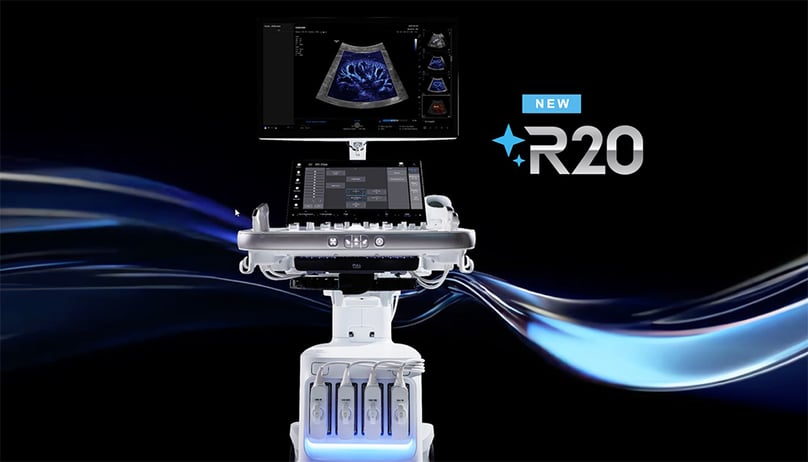
Among them, the domestically produced ultrasound equipment R20 in Suzhou will complete its first exhibition in China at this year's CIIE. It is equipped with AI driven automation tools, targeting clinical scenarios such as abdomen, thyroid, musculoskeletal, vascular, breast, obstetrics, gynecology, urology, etc. What is displayed on the booth is a medical device, with the localization manufacturing capability of medical equipment behind it.
This echoes with Suzhou.
On one hand, there are medical devices that have already achieved localized mass production, and on the other hand, there are production technology research and development institutions targeting a wider range of production scenarios. The former indicates that Samsung is putting more high-end products into Chinese manufacturing, while the latter indicates that it also needs to build production technology capabilities in China to support the continuous iteration of these products.
The upgrading of manufacturing industry does not only happen in laboratories. It happens more often next to the production line, in the details of engineers constantly debugging parameters, optimizing processes, shortening processes, and improving yield.
This is also the financial meaning of Suzhou Institute.
A multinational corporation willing to place its production technology research institution in China indicates its judgment that there is still room for continuous upgrading in China's manufacturing industry, and also demonstrates that Chinese engineers and supply chain partners are able to participate in more advanced and complex technological collaboration.
In this sense, Suzhou office is not a newly added office for Samsung in China. It is more like an interface that connects the scenes, talents, and industries of Chinese manufacturing to Samsung's global production technology system.
China's innovation feeds back to the world
The development logic of multinational corporations in China is changing.
The common path in the past was to bring mature global products into China and then expand the scale through the Chinese market. Now, some multinational corporations are starting to consider China as a place of innovation. The product is localized here, the technology iterates here, the supply chain collaborates here, and the experience is brought to the global market.
Samsung's supply chain cooperation in China has already taken a similar path.
Taking the Tianjin MLCC project as an example, Samsung Electric's local layout has driven many core suppliers to build factories nearby, forming an industrial chain cluster effect. Zhejiang Jiemei Technology, which mainly produces thin carrier tapes, entered the Samsung supplier system in 2010. At the beginning of the cooperation, Jiemei Technology was more of a supplier of supporting consumables. Samsung has repeatedly emphasized the importance of independent and controllable raw materials, prompting Jiemei to invest funds in introducing base film production lines, upgrading from simply purchasing raw materials for processing to fully integrated production processes.
During the cooperation process, Samsung shared its production management methods and technical standards with Jiemei Technology, and helped it establish a management and quality system through expert training, on-site coaching, and other means. Later, Jiemei Technology grew into a leading enterprise in the industry and invested 1.45 billion yuan in Tianjin Economic Development Zone to build a production and research headquarters base project in North China, serving customers such as Samsung nearby.
A similar story also happened in Suzhou.
In 2003, Jiangsu Xin'an Electric, which mainly produces intelligent controllers, established a cooperation with Samsung. At that time, Xin'an was not yet perfect in terms of environmental protection and EHS management, and was more focused on order delivery. Suzhou Samsung has sent experts to the site multiple times to assist in connecting with upstream suppliers, exporting EHS management experience, and arranging internal trainers for on-site training. Years later, Xin'an's sales increased from two to three billion yuan to over three billion yuan, becoming the largest private intelligent controller enterprise in East China.
In 2004, Suzhou Xingheyuan, a home appliance PCM steel plate enterprise, established cooperation with Suzhou Samsung Electronics. The Samsung technology team has entered the enterprise multiple times to solve production and quality issues together, and has also incorporated green production, ESG and other requirements into the cooperation process. Xingheyuan later formed a strong scale advantage in the field of PCM steel plates for household appliances.
These cases illustrate that the relationship between multinational and local enterprises is shifting from simple procurement to capacity building.
The establishment of Suzhou Institute will make this collaboration more advanced.
In the past, Samsung has driven supplier growth more through orders, technical standards, and on-site coaching. In the future, production technology research institutes can accumulate more research and development capabilities, automation experience, and process optimization solutions in China, and then iterate together with local talents and industry partners. Once this collaboration is formed, it will not only serve Samsung's business in China, but may also serve Samsung's global manufacturing network.
This is a further change after 'in China, for China'. Chinese innovation achievements have begun to participate in global deployment.
The macro background is also undergoing changes. Facing the development cycle of the 15th Five Year Plan, China emphasizes the cultivation of new quality productive forces, the construction of a modern industrial system, and the promotion of high-level opening up to the outside world. The focus of competition in the manufacturing industry is also changing. Labor, land, and scale advantages are still important, but technological density, organizational efficiency, supply chain resilience, and green transformation capabilities are becoming new watershed points.
Samsung's landing in Suzhou is precisely in line with the pace of this round of manufacturing upgrading.
For Samsung, the significance of the Chinese market is no longer just terminal demand, nor is it just supply chain support. It has begun to become a comprehensive carrier of research and development resources, production technology, and industrial synergy. For Suzhou, the continued increase in foreign-funded research and development centers also indicates that the local manufacturing ecosystem is still attracting higher-level industrial links.
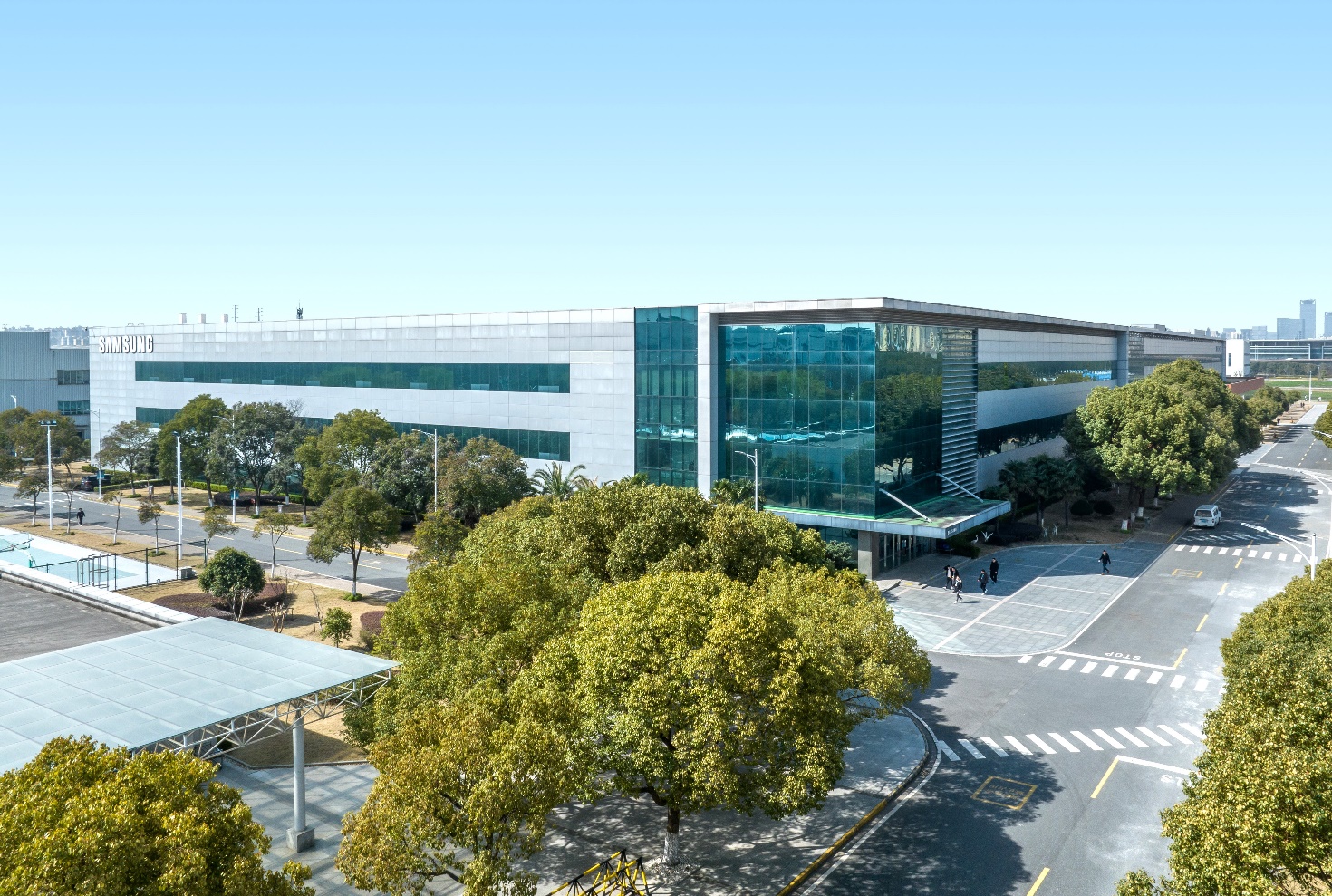
The 9th CIIE is about to open, and Samsung will continue to showcase a batch of new products and technologies. From foldable screens to AI chips, from ultrasound equipment to QD-OLED panels, these exhibits will attract a lot of attention.
But outside the exhibition booth, the newly unveiled research institute in Suzhou Industrial Park may better illustrate Samsung's real choice in China at this moment.
It is aimed at production lines, processes, automation, and the less visible links deep in the manufacturing industry. It is precisely in these links that the next round of competitiveness of Chinese manufacturing is being redefined. Samsung's placement of its first overseas production technology research institute here is actually incorporating China into the core chain of its global manufacturing upgrade.
This is also the most commendable positive signal for multinational corporations to deeply cultivate in China.
Haosi Power CPO Hu Shichuan: Follow us to go global and promote our products worldwide
Lotus Group CEO Feng Qingfeng: The goal is not to catch up with Ferrari, but to surpass Ferrari
Haosi Power Global CTO/Aurora Bay Global CEO Zhao Fucheng: The world's largest independent powertrain supplier is ready