Economic Observer Follow
2026-10-17 09:58

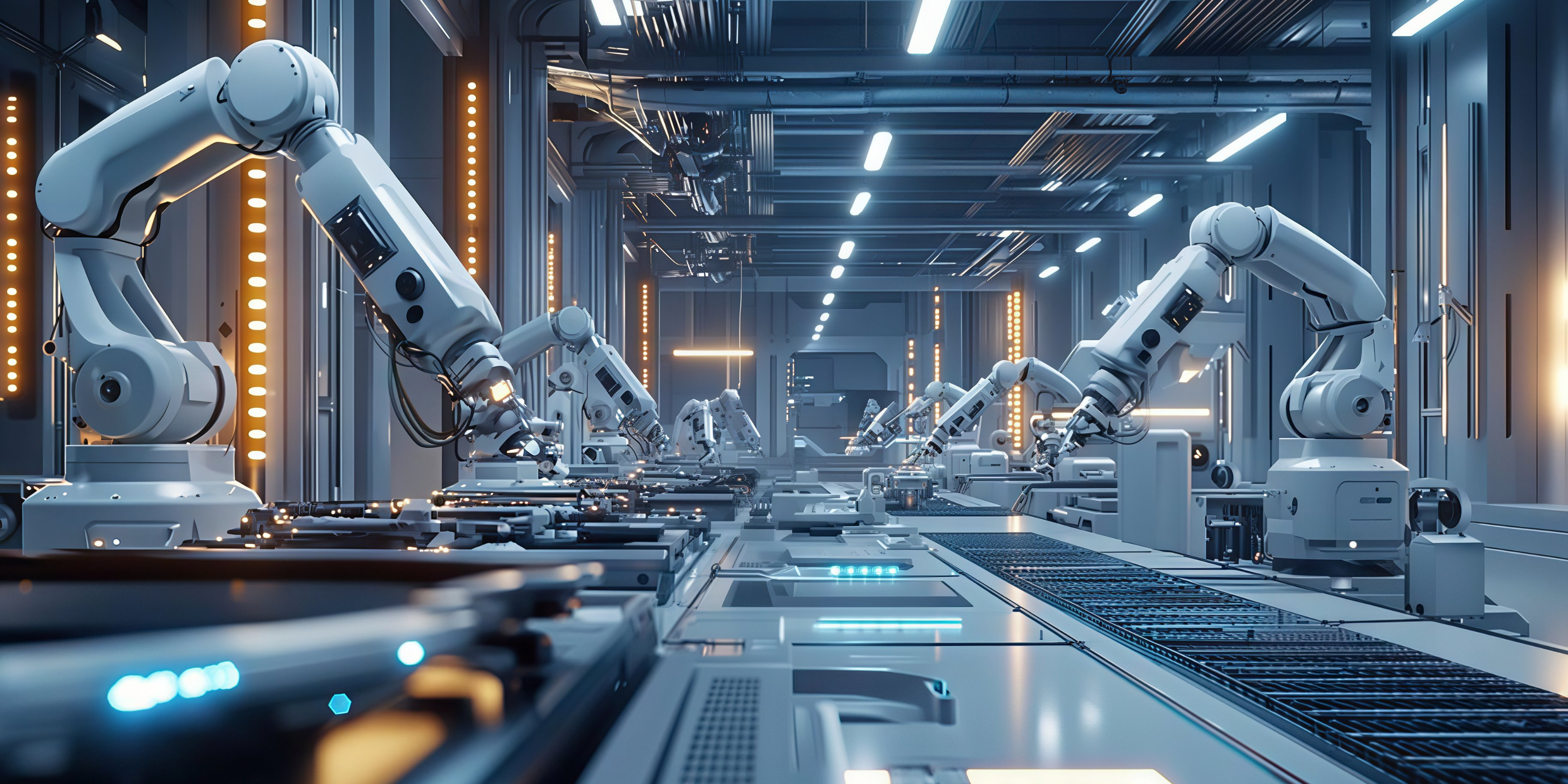
On the morning of October 14, 2026, at the Jinan Yellow River International Convention and Exhibition Center. When the curtain of the 2026 Artificial Intelligence Industry Conference opens, the names of seven industrial vertical domain models are lit up together on the giant screen of the main venue - Hairuo, Tianzhi, Interstellar, Yunding, Xinggang, Shangzhi, and Qizhi Kongming. They were given a highly imaginative name: 'Qilu Seven Stars'.
Without speculating on the concept of trillions of parameters or performing universal dialogues, these seven "stars" are rooted in different industrial soils such as petrochemicals, ports, steel, home appliance manufacturing, industrial vision, coal chemical industry, and intelligent manufacturing equipment, together forming the most eye-catching vertical matrix on the Shandong industrial model map.
This is not a stage technology show about "somersaults" and "throwing handkerchiefs", but a deep response about "how AI (artificial intelligence) can truly serve physical manufacturing". General large-scale models can understand human language, while industrial vertical large-scale models can understand the roar of machines. If AI in consumer scenarios is shallow water, lively, cool, and more closely related to people's lives; The AI in manufacturing scenarios is a deep water zone, silent and boring, but it can improve productivity and determine the future of a country's manufacturing industry.
This may be a somewhat surprising appearance to the outside world. As the "Hundred Model Battle" of general large-scale models is in full swing, Shandong has silently carved out a "Shandong path" for industrial AI between workshops, ports, furnaces, and mines.
Economists say that Shandong is a classic epitome of China's transformation. 2026 is regarded as the first year of large-scale commercialization of China's large-scale models. Shandong is trying to answer a question of the times: what path should industrial AI take for China, a country that has consistently ranked first in global manufacturing for 16 consecutive years? The answer may be hidden in the intelligent production lines of Qilu and the AI brains of Shandong factories.
The Seven Stars of Qilu
Whenever night falls, looking north, one can often see seven bright stars, forming a "spoon" hanging in the sky. Since ancient times, Chinese people have used the Big Dipper to distinguish directions and determine seasons. The seven stars each occupy their respective positions, forming a coordinated array to provide directional references for agricultural labor and long-distance travel.
On the morning of October 14th, at the 2026 Artificial Intelligence Industry Conference held in Jinan, seven industrial vertical large-scale models from Shandong, namely Hairuo, Tianzhi, Interstellar, Yunding, Xinggang, Shangzhi, and Qizhi Kongming, made their first collective appearance and were named the "Qilu Seven Stars".
These 7 industrial stars are completely different from the well-known general models of the past: the latter is on the consumer end, an "all-around player" who can write and draw, and an "encyclopedia" that knows both astronomy and geography. But when you walk into the factory workshop and stand next to the production line, you will find that these 7 industrial stars are more like "masters" who have been "learning from teachers" in the factory for many years, or "engineers" who have spent most of their lives in the workshop. They are deeply rooted in a certain sub field of industry, able to understand the temperament of a device, remember every valve on the pipeline that may go wrong, and distinguish the warning signals hidden in every equipment vibration
Among the stars in the sky, the Big Dipper is easily recognizable due to its striking appearance. The "Qilu Seven Stars" are also the most eye-catching representative among many large models in Shandong.
According to statistics, as of now, 389 large model products have been evaluated by third-party organizations in Shandong Province. In the first half of this year, the Shandong Provincial Department of Industry and Information Technology selected and released 100 key vertical large-scale models for promotion.
Chen Fei, Secretary of the Party Group and Director of the Shandong Provincial Department of Industry and Information Technology, introduced that these 7 models, carefully selected from 100 vertical domain models, have four distinct characteristics: firstly, they have a great influence in the industry, such as the wave like sea model, which is the first large model in the province and the first batch in the country to complete the dual filing of the Cyberspace Administration of China; Secondly, it is deeply rooted in the industry, with the Shanding Yunke Shangzhi big model focusing on fields such as steel smelting and rolling processing, gathering over 10TB of data corpus, and landing on hundreds of scenarios such as intelligent ore blending and automatic steel conversion; Thirdly, it has strong technical performance. For example, the Polar View Interstellar Large Model uses 1 billion real business datasets to create the largest AI visual algorithm mall in China, gathering over 1500 mature algorithms and hundreds of thousands of developers; The fourth is the good application effect, such as Qizhi Kongming's large model service for more than 1800 enterprises in the fields of semiconductor, automotive equipment, energy and power, ranking first in the domestic industrial large model application market share.
Rooted in the rich industrial soil of Shandong, the "Qilu Seven Stars" have distinct personalities, each guarding a segmented track, but able to collaborate and jointly build an industrial ecology——
Some span across multiple industries and solve the same bottleneck; Some are rooted in a specific niche and focus on resolving pain points in a particular industry; Some grow out of roaring workshops, turning the implicit experiences in the minds of the master into computable digital assets; Some have already matured in their field and are replicating the model to the entire industry; Some have grown out of the platform ecosystem, using models of different sizes to collaborate and meet the fragmented needs of various industriesThe commonality of the "Qilu Seven Stars" lies in their respective differences: the deeper you delve, the more nutrients you can draw from the soil of their respective industries and develop unique skills; The higher you go up, the more inseparable it is from each other's cooperation.
On May 15th of this year, during an event, three participating companies, Inspur, Kaos, and Guogong Intelligence, quickly reached an agreement and jointly developed a universal model for the Shandong petrochemical industry in just 70 days, forming the "Huayu Tiangong" artificial intelligence co construction plan. It is an industrial battlefield battle aimed at integrating the strengths of various operational organizations and platform units, jointly building an artificial intelligence capability center for the petrochemical industry, and solving the long-standing pain point of Shandong as the largest chemical province in China, which is "big but not intelligent".
As Wei Daisen, Vice President of Inspur Group, said, in the industrial field, the situation of "one big model dominating the world" no longer exists. Enterprises need to flexibly combine general large models, industry vertical models, machine learning models, and lightweight small models based on multiple indicators such as business task complexity, accuracy requirements, operating costs, and security, and collaborate according to business processes to form a "model matrix" collaborative combat capability.
At the same time, Shandong is actively introducing domestic resources and promoting joint research and development with local industrial entities in Shandong. For example, Huawei Pangu Big Model and Shandong Energy Group jointly tackle the mining big model, and China Mobile established the Qilu Artificial Intelligence Innovation Institute to distribute wutong big data and Jiutian big model to Shandong's industrial texture, and deeply empower the chemical, marine, rubber tire and other industries.
Based on this, Shandong has formed a development model of "one model and one ecology" in the industrial field, and launched industrial AI innovation ecological co construction plans in several traditional industries, such as the "rubber tire Yuzhi" co construction plan in the rubber tire industry, the "port navigation smart hub" innovation plan in the port logistics industry, and the "mine intelligence Anlan" ecological system in the mine energy industry, to explore how to let different vertical industrial models work together to intelligently upgrade traditional industries.
An official from the Shandong Provincial Department of Industry and Information Technology believes that no single industrial model can operate a factory alone and upgrade an industry. Only when multiple industrial models stand in their respective positions, form a matrix, and work together to cover the diverse and complex scenarios of the manufacturing industry, can they calibrate the direction and guide the path for thousands of industries in the night of intelligent upgrading of the manufacturing industry.
This is a major transformation that combines AI and industry. In Shandong, a path from point to surface and from benchmark to ecology has already taken shape, from seven stars to a hundred model matrix.
Breaking through the 'narrow road'
When the "Qilu Seven Stars" shine, they illuminate a journey of exploration that has lasted for more than ten years.
In early 2018, the State Council officially approved the establishment of the Shandong New and Old Kinetic Energy Conversion Comprehensive Experimental Zone. At that time, people couldn't imagine what challenges and opportunities the rise of AI would bring to the entire world in a few years. As the province with the most complete industrial system in China, Shandong has all 41 major industrial categories, 207 medium industrial categories, and 625 minor industrial categories. Among them, the chemical, papermaking, metallurgy, machinery, textile, rubber and other industries rank among the top in the country. At that time, the challenge faced by this manufacturing province was how to promote the revitalization of traditional industries and reshape the "core" that drives Shandong's economic development.
At that time, the digital wave was on the rise. On October 31, 2018, Shandong Province Big Data Bureau was established, and big data bureaus in various cities were also listed. Shandong's industry first attempted to use the digital economy to promote the upgrading of physical industries to new driving forces.
A large number of enterprises have begun to build digital infrastructure such as MES, ERP, SCADA, etc. in their workshops, with sensors, cameras, and DCS systems covering every corner of the workshop. After massive data collection, the next question is how to use this data and how to monetize it.
Some system interfaces and data formats lack unified standards, and key information such as production plans, equipment status, and quality inspection cannot be integrated, resulting in data "islands"; The experience in the master's mind, written in the operating procedures on paper, cannot be transformed into computable algorithms; After the data center was built, it guarded the gold mine of data but did not receive any real returns
The report from the National Development and Reform Commission shows that a large amount of high-value data is accumulated within different government departments, industries, and large enterprises, forming "data islands" and "data chimneys". According to statistics from International Data Corporation (IDC), structured data currently accounts for only about 20% of manufacturing data, and a large amount of unstructured data containing process and workflow knowledge is difficult to utilize.
Why is it difficult to monetize big data? Originally, big data heavily relied on manual programming and pre-set rules, and could only respond to deterministic problems designed by users in advance. Faced with actual vague descriptions, unknown working conditions, and non-standard textual records, a large amount of industrial data became a "dormant treasure trove" due to its inability to be developed and utilized.
Until the emergence of large-scale artificial intelligence models.
At the end of 2022, ChatGPT emerged and sparked a new investment boom, with the C-end universal large model being the first to be affected. In 2023, the "100 model war" will be officially launched. Domestic Internet giants and AI start-ups will gather together on the general model track. Parameter competition, concept game and list marketing will take turns and be very lively.
Amidst the hustle and bustle, Shandong did not blindly follow the trend. Instead, it organized multiple relevant government departments to conduct research and inspections in provinces and cities such as Zhejiang, Shanghai, Guangdong, and Beijing, and took a different approach based on its comparative advantages.
Gradually, a judgment of profound influence on Shandong began to form: compared with Beijing, Shanghai and other consumer Internet resource clusters, Shandong's real comparative advantage lies in a wide range of substantial industries. The landing of AI ultimately depends on how it will enter and empower various industries, and industrial vertical models will therefore become key.
Shandong has discovered new opportunities from it. The value of big models for Shandong's industry lies in breaking through the constraints of "manually defining logic one by one". AI can independently read text corpora, analogize historical experience, respond to open-ended business questions, assist practitioners in mining unforeseen clues from massive data, awaken dormant massive data, and activate wealth hidden in equipment and production lines.
If we consider data as "raw materials" and computing power as "furnace fire", the big model is the long-awaited "blast furnace" that can forge raw materials into heavy objects. However, from the beginning, this was a "narrow road" that required us to calm down, a path of breakthrough that required us to tackle the "hard bones".
In June 2024, Shandong officially issued the document "Accelerating the High Quality Development of the Large Model Industry" (Lugongxinfa [2024] No. 8). This is the first provincial-level guidance document for high-quality development of large-scale models in China.
Shandong's goal is clear: to accelerate the cultivation of new quality productivity and empower new industrialization, by 2025, Shandong will accelerate the breakthrough of a number of forward-looking, original, and leading key technologies for large-scale models, actively create basic level large-scale models with certain international influence, and cultivate a number of industry level and scenario level large-scale models with wide coverage and high product energy efficiency in key areas and key links.
Shandong's profound accumulation in the field of data has been put to good use. Wang Chao, Technical Director of Kaos Industrial Intelligence Research Institute, said that digitization enables enterprises to have "data and systems"; The intelligence brought by big models is the solution to the pain points of "having data but no decision-making, having systems but no staff, collaboration relying on communication, and execution relying on human monitoring". Guo Shenggang, Vice General Manager and Chief Engineer of Weichai Power, confirmed this judgment through enterprise practice: by using AI vision to achieve 100% automatic detection of key processes, the risk of unplanned downtime of key equipment is reduced by more than 60%, the average time between failures is extended by 50%, and the comprehensive operation and maintenance cost is reduced by 15%. This is not something that can be achieved by 'writing down data', but by 'making data think and make decisions'.
In May 2025, Shandong released the Promotion Plan on Accelerating the High Quality Development of Key Areas of Artificial Intelligence Energization (LZBZ [2025] No. 38), which clearly proposed to embed the big model into Shandong's pillar industries - chemical industry, aluminum industry, steel, mining, high-end equipment, and biomedicine, and make a landing list of "one industry, one model".
In May of the same year, Shandong Province issued the "Several Policy Measures to Support the Innovative Development of the Whole Industry Chain of Artificial Intelligence" (Lu Zheng Ban Zi [2025] No. 49), coordinating 1 billion yuan of fiscal funds, launching incentive tools such as computing power coupons, model coupons, corpus coupons, innovation coupons, etc., covering the entire chain, thus forming a closed loop of enterprise scenarios and data, AI manufacturers providing the base, and policy investment reducing model procurement costs.
The digital transformation stage focuses on investment in infrastructure. For example, purchasing sensors, building data centers, etc., are mainly funded. Only through the application of large-scale models and intelligent upgrades can production efficiency be improved and industries increase their income. Under the guidance of the government, the industrial wealth accumulated by Shandong for decades has been unlocked by the "golden key" of the big model, along with massive data and rich scenarios, releasing unprecedented intelligent manufacturing potential.
The intensive matrix of "one industry, one model" and "one industry, one scheme", from Rizhao Iron&Steel's big model to Binzhou's big model of smart aluminum industry, from Weifang Hongrun Petrochemical's big model of refining smart torch to Weichai's "Qitian big model", from Shengruan Technology's big model of "knowing oil" to Instantly Digital Technology's big model of paper industry, is being rolled out all over Shandong.
By 2025, the core industry revenue of artificial intelligence in Shandong Province will reach 128.93 billion yuan, accounting for about 1/10 of the national total, with a year-on-year growth of 39.2%. In the first half of 2026, the revenue scale of the core industry of artificial intelligence exceeded 85 billion yuan, a year-on-year increase of 33.2%. As of now, 10 industrial models in Shandong have been selected as one of the top 50 industrial models in China, ranking first in the country in terms of quantity.
Xiao Xue, Chief Engineer of Inspur Group and Chairman of Inspur Cloud, said that Shandong has a complete range of industrial categories and broad application scenarios, and has its own "unique background" for promoting the development of vertical artificial intelligence. He hopes that Shandong will use this advantage to become the "province of vertical models in China" and set a benchmark for the development of artificial intelligence in vertical fields nationwide.
When the stars shine brightly
Li Husheng, Director of the Data Security Institute at the National Industrial Information Security Development Research Center, pointed out that Shandong's core advantage lies in its complete range of industrial categories and numerous application scenarios, providing excellent soil for the growth of vertical large-scale models. This advantage is not available elsewhere. Some segmented scenarios can only be found by enterprises in Shandong, from which practical application products tailored to industrial manufacturing can be derived. This provides strong support for the transformation and upgrading of the manufacturing industry in Shandong Province, as well as for the integration of artificial intelligence and manufacturing.The "Qilu Seven Stars" tells us that when the second half of AI turns to the industrial vertical domain, Shandong is not only facing a technological iteration, but also a historic opportunity to deeply bind decades of accumulated manufacturing industry, digital and scene advantages with AI - rooted in Shandong's complete industrial system, the vertical large-scale model attracts national and even global AI technology in the upstream, and deeply binds and empowers Shandong's local processes, local production capacity, and local industrial clusters in the downstream.
For large manufacturing enterprises, even a 1% -2% improvement in the manufacturing process may mean annual profits of millions or even tens of millions of yuan. If millions of factories improve efficiency through AI, it will add strong impetus to the future growth of Shandong's industrial economy.
At present, Shandong has cultivated 2 national leading level intelligent factories and 49 excellent level factories, built 130 "industrial brains" and 5657 "morning star factories", and the artificial intelligence penetration rate of large-scale manufacturing enterprises has reached 35%. Represented by a number of national level intelligent factories such as Hisense and Weichai, Shandong's manufacturing industry has completed large-scale digital, networked, and intelligent transformation, forming a high-density, complete system, and mature industrial intelligent scene matrix throughout the country.
Shandong has not stopped at the starting point of the big model. At present, Shandong's industrial AI is evolving layer by layer along the path of "big data → big models → intelligent agents → embodied robots".
If big models are like industrial "brains" responsible for thinking and decision-making; Industrial intelligent agents equip the brain with "nerves" and "limbs", capable of autonomously perceiving the environment, calling tools, and executing tasks. Intelligent agents can be divided into two categories: software intelligent agents and hardware intelligent agents: the former are either apps or "digital employees"; The latter is either a robotic arm or a embodied robot.
For example, Kaos, with the Tianzhi Industrial Big Model as its core "industrial brain", began to focus on developing and building industrial intelligent agents - shaping three virtual roles: CEO "digital person", factory director "digital person", and energy station manager "digital person"; Innovation Qizhi focuses on "one brain, multiple bodies", using the Qizhi Kongming large model as the "brain" to adapt to different forms of robots and complete steel transportation and high-risk job operations.
Inspur Group was the first to invest in building an Inspur artificial intelligence factory. Unlike traditional factories, the "raw materials" here are big data, and the processing equipment is servers. When massive amounts of raw data enter the 11 production units, after 75 processes and 180 sets of tools, the final output products are various intelligent agents that can be deployed in thousands of industries.
In terms of hardware intelligent agents, Shandong has emerged enterprises such as Luoshi, Youbaote, and Future Robotics based on its manufacturing foundation. Data shows that out of every 5 collaborative robots in China, 2 are manufactured in Shandong. The vast number of industrial robots in stock, production, and application has enabled Shandong to have the most densely populated industrial intelligent execution terminals in the country.
As a result, a distinctive development path for industrial AI in Shandong has gradually become clear - "driving model innovation with application scenarios, and feeding model iteration with industry data", forming a positive cycle of "scenario data model", and constructing an industrial closed loop of "perception decision execution".
Moreover, Shandong's exploration of the industrial AI track is generating increasingly strong spillover effects, starting to replicate in the same industry and promote across regions.
The Kaos Tianzhi big model has been implemented and applied in 9 industries and more than 40 scenarios; Inspur Hai Ruo provides large-scale model services to clients in multiple industries across the country, including Jingbo Petrochemical and Shanxi Coal Machinery; Innovative and intelligent industrial visual solutions serve national leading enterprises such as Baosteel, and CAD drawing analysis of large models has revitalized decades of accumulated industrial design wealth; The Xinggang Big Model, originating from Qingdao Port, has been launched and applied in Rizhao Port and Yantai Port, and has been replicated and promoted in multiple domestic ports
At the 2026 Artificial Intelligence Industry Conference, Gao Xiaoteng, a senior engineer of the China Industrial Internet Research Institute, said that the Qilu Seven Star Industrial Model released this time is a major tool for Shandong to build a big country based on its own resources. It can be called the "Big Dipper" for industrial industry implementation and application, and it is a new path for Shandong to build a "manufacturing power" strategy.
An economist once said, 'Shandong is a classic epitome of China's transformation.'. This can explain why Shandong is the only approved comprehensive experimental zone for the conversion of new and old kinetic energy. With the advent of the AI era, the new question that needs to be answered in the transition between old and new driving forces is how AI can truly be used and empower various industries.
Perhaps it can be said that the shining "Qilu Seven Stars" and the vertical domain model matrix of Shandong provide a set of Shandong solutions that are constantly releasing new energy.


 Subscribe