Economic Observer Follow
2026-09-28 17:41


By 2026, 'space computing power' will become one of the hottest concepts in the commercial aerospace industry. Multiple domestic start-up companies are involved in an attempt to move data centers into space and send computing power into the sky.
On this track, the positioning of Zhongke Tianhua (Shanghai) Information Technology Co., Ltd. (hereinafter referred to as "Zhongke Tianhua") is somewhat unique. We can be understood as the dawn of space, we sell computers in space, "Liao Zhewen, Deputy General Manager of Zhongke TianSuan, said in an interview with the Economic Observer during the 2026 Service Trade Fair in mid September.
The technical foundation of CSTC comes from the Institute of Computing Technology of the Chinese Academy of Sciences (hereinafter referred to as the "Institute"), whose team has started to develop on-board intelligent computers since 2019. At present, Zhongke Tianju has completed multiple rounds of financing worth hundreds of millions of yuan and plans to apply for the Science and Technology Innovation Board in 2029.
From "days based calculation" to "days based calculation"
The pain point of traditional satellites is' only the cerebellum, not the brain, '"Liao Zhewen made an analogy. The onboard computer of traditional satellites is only responsible for attitude control, task scheduling, network communication, and other work, and cannot perform large-scale data processing, let alone run large models. Low Earth orbit satellites typically fly at a speed of about 7.8 kilometers per second, taking about 1.5 to 4 hours to orbit the Earth. The communication time window with ground receiving stations usually does not exceed 15 minutes. Therefore, with the improvement of image accuracy, remote sensing and other types of data collected by satellites are difficult to transmit within one communication window, often requiring two or three transmissions.
Timeliness is another challenge. The traditional satellite images that people see transmitted to the ground are likely to have been taken several hours ago. For example, after discovering a forest fire, the golden time for emergency rescue is within 30 minutes of the fire. Sending a picture of the fire point several hours ago is not very meaningful for the urgent rescue operation that is racing against time, "said Liao Zhewen.
More importantly, data utilization. When satellites observe the Earth, the scattering caused by atmospheric and cloud cover, as well as dust, can affect a large number of observation areas. Nearly 80% of the remote sensing data captured in a single shot is therefore not valuable, but still requires valuable satellite to ground transmission bandwidth.
In response to these pain points, Zhongke TianSuan proposed the idea of "day by day calculation" several years ago: to install intelligent computers on satellites, allowing satellite data to be directly processed on the satellite to determine which data is valuable. Discard worthless data directly, transmit valuable results first, and then consider transmitting the original data later. For example, in identifying forest fires, ground emergency departments can quickly respond based on feedback data without the need to download raw images.
But satellite computers and ground computers face completely different environmental constraints. Liao Zhewen summarized the current space environment as "three highs and one strictness": high radiation - protons, neutrons, and heavy ions may cause components to burn out or store bad points; High temperature difference, high vacuum - accelerated fatigue and performance drift of materials; The harsh mechanical environment - the enormous acceleration during rocket launch - requires extremely high reliability for electronic components. After the satellite is launched, it cannot be repaired at present. Once the calculated payload fails, the entire satellite's function will be affected, "said Liao Zhewen.
From laboratory to engineering
The team of Zhongke Tianhua mainly comes from the Computing Institute, which is known as the "cradle of Chinese computers" and has incubated many listed companies such as Lenovo, Shuguang, Loongson, Haiguang, Cambrian, etc.
From laboratory to engineering, it took many years for Zhongke TianSuan to overcome difficulties. According to Liao Zhewen, the company's team has been conducting relevant research since 2019, relying on national key tasks to continuously tackle challenges. The first batch of payloads for this mission will officially operate in orbit in 2022. Prior to this, related technologies had long been stuck in the ground verification and scheme iteration stage, lacking an engineering carrier for launch.
A technology that travels from the laboratory to the launch site, and from the ground to space, alone is not enough. It also requires the traction of the industry and the pace of engineering. "Liao Zhewen frankly stated that the substantial progress of the project is closely related to the overall acceleration of the commercial aerospace industry in recent years - it is the maturity of the industry that has enabled years of accumulation to find exports for rapid iteration and mass application.
Since 2025, Zhongke Tianhua has completed several rounds of financing totaling hundreds of millions of yuan, and a new round of financing is currently underway. Regarding investors' concerns, Liao Zhewen, who has many years of experience in equity investment, summarizes them into three points: firstly, the company's genes, the background of incubating shareholders, and the background of the founding team determine whether the company can receive sustained support during industry cycle fluctuations; Secondly, the status of the industrial chain, that is, whether it is the industry standard setter and whether it has been recognized by the long chain owners and leading enterprises of the industrial chain; The third is the progress of product technology, whether the technological route is at the forefront of the mainstream, and whether it can lead the industry's technological development.
At present, the shareholder lineup of Zhongke Tianhua includes early-stage institutions and industrial capital, including Shanghai Future Industry Fund, Gewu Zhizhi, Qiji Chuangtan, Baidu Venture Capital, Meihua Venture Capital, Shenzhen Venture Capital, SMIC Juyuan, etc. Subsequently, it will continue to introduce well-known investment institutions such as Shuimu Tsinghua, Zhongke Chuangxing, Junlian Capital, Yingnuo Fund, Yuanhe Capital, Xinwei Capital, Futeng Capital, Infinite Fund, Chuanxiang Capital, etc. It is worth noting that the fund jointly invested by ICBC Investment and Beijing Financial Holding, a banking investment platform, has also appeared in the shareholder list of Zhongke Tianhua, with a total investment amount of 30 million yuan.
For traditional financial institutions, this is indeed a track that requires a re establishment of cognitive frameworks, "said Liao Zhewen." But ICBC Investment has people who understand it, that is, they introduce industry and technology experts through equity platforms to judge technology routes and balance pre loan risks. The banking system is exploring new paths to serve hard technology, and this transformation itself is not easy
Do difficult but right things
The entire commercial aerospace industry is still in the investment phase, and Liao Zhewen does not shy away from this. This is not just a business that only considers financial returns, "he compared the chip industry: if only considering economic accounts, internationally leading products still have obvious advantages in energy efficiency and performance, and it seems more cost-effective to directly purchase mature solutions. The necessity of self research does not seem obvious; But the key core technology cannot be obtained, bought, or obtained. If the independent and controllable computing power base is not in one's own hands, once the international situation changes suddenly, it will face a "bottleneck".
Liao Zhewen compared the current space computing power to the 2G to 4G communication network construction stage in the mobile Internet era. In the first few years of building 3G and 4G networks on the basis of 2G, operators invested heavily and had a long return period. If it is required to pay back the cost in one or two years at the beginning, otherwise, the communication infrastructure will not be the same as it is today, and there will be no trillions of killer applications to drive the vitality of mobile Internet. ”He said, "Today's space computing power may also be at a similar stage
Turning to whether there is a foam in space computing power, he said that the development of space computing power can be roughly divided into three steps: the edge computing power has landed, and is evolving from "counting by the number of days" to "counting by the number of days", and the market scale is expected to reach 100 billion yuan. The ultimate point may be the computing network integrating heaven and earth, as well as the application ecological change brought by space-based Internet. In his view, the current heat comes more from the concentrated release of industrial investment rather than speculation detached from demand.
For financial institutions, he expects more than just funds. In addition to financial support, the company also hopes to gain collaboration at the business level. "Liao Zhewen gave an example that satellite data can provide an objective and verifiable third-party perspective in asset operation, agricultural insurance, credit risk control and other scenarios: for example, using regional activity to assist in judging the operating status of commercial real estate, and identifying crop growth and soil moisture to assist in the preliminary research of agricultural credit.

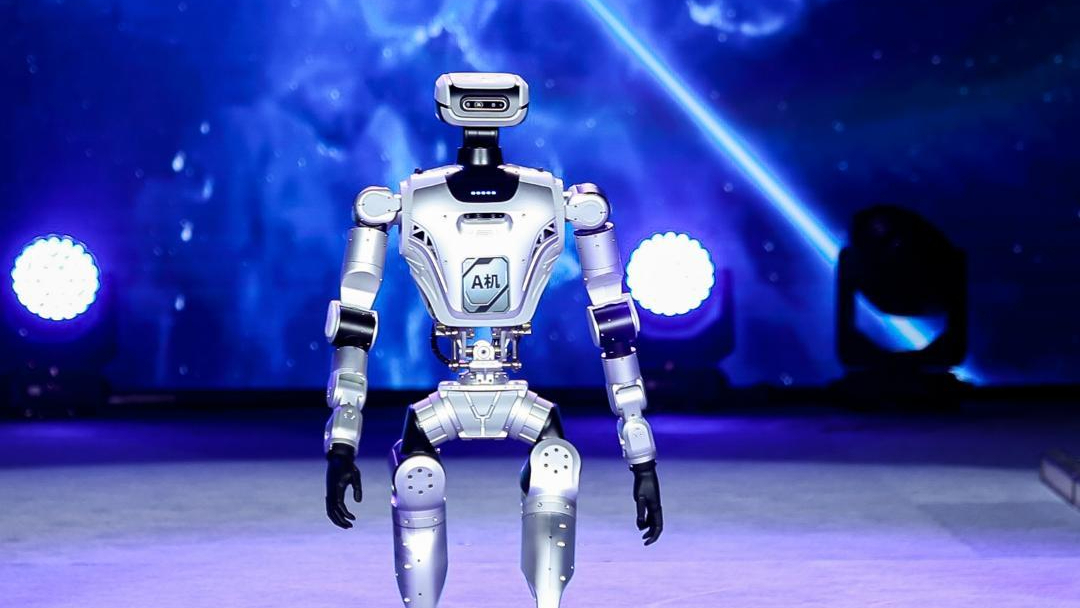
Technology Show | embodied intelligence milestone event! Robot Supplement "Domestic Nervous System“
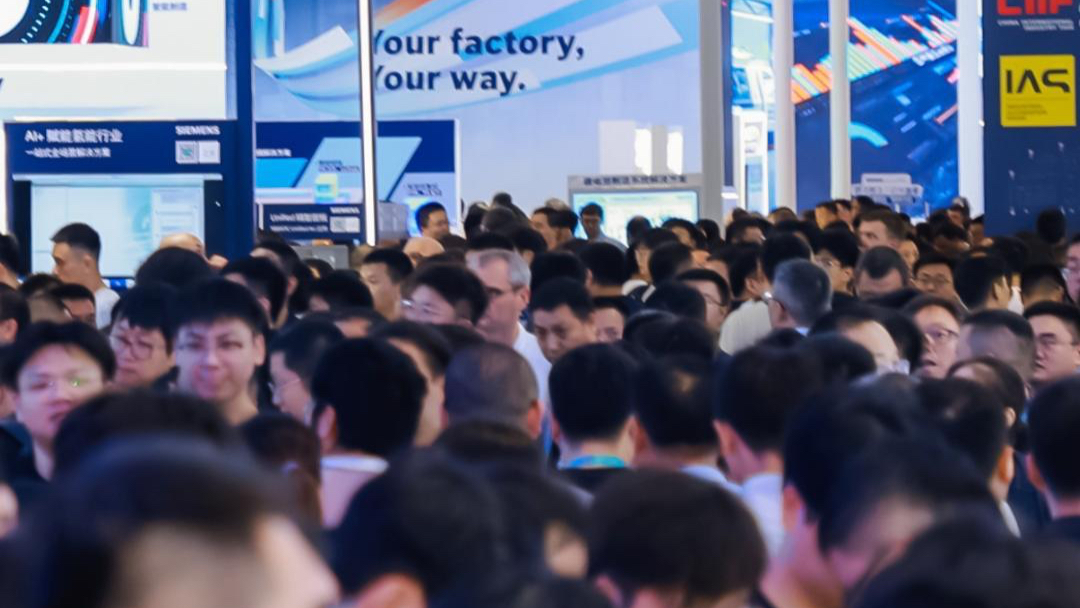
The space computing power has arrived, and the exhibition booth at the Industry Expo is filled with AI

Live streaming room launches securities commission battle, Datong Securities quote is only 0.0691 ‰


 Subscribe