2026-09-28 13:58


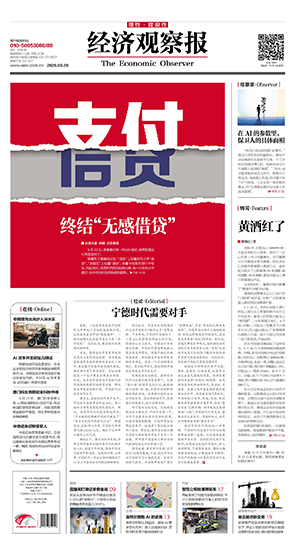
Recently, Chalk has released two "short essays" in a row, breaking away from the traditional image of "nurturing students with mentors and offering conscience courses at a loss" created by public examination training institutions. An article titled 'Who is the Conscience of the Public Examination Training Industry' directly breaks down the profit books of peers, exposes the tragic narrative of competitors' operating losses, and even talks about significantly lowering the pricing of interview classes next year; Another article openly revealed that the new product, from course structure, question volume to deposit rules, all imitated the super grid National Day seven day camp at the pixel level, with a price of 1380 yuan compared to the other party's 2180 yuan product. More than 1200 copies were sold in just one day of launch.
Chalk's "frankness" this time may seem like a product benchmark, but it is actually a public dissection of the homogenization dilemma in the industry: the marginal cost of education and training courses is extremely low, and the content, faculty, and services are becoming increasingly similar. Competition is difficult to win by differentiation value, and it relies more on cost control and traffic reception. This also echoes the article "A Letter to Chalk Students" released by Chalk on August 6th: the price reduction of the system class "is not a conscientious discovery, but it is becoming increasingly difficult to sell and has no other choice"; When competing courses sell out and scalpers raise prices, it's better for us to create a similar product and meet some demands that our peers cannot meet. These texts collectively point to a fact: the price war in the public examination industry is shifting from strategic choices to survival. In the highly rational user decision-making and extremely transparent information public examination market, price has become the most direct and quantifiable competitive benchmark.
Comprehensive hand to hand combat
As early as the end of 2020, Huatu Online launched a trial on the low price of 980 yuan system for class allocation. 980 yuan system class was once regarded as a watershed in the industry. And Chalk's confession this time indicates that the public examination training industry is gradually crossing the psychological threshold: no longer hiding the passivity of price adjustments, and even actively writing "unsold" as a premise in official communication.
Behind this transformation is the real pressure brought by the continuous increase in candidates and the narrowing of the recruitment ratio. According to data from the Ministry of Education, the number of graduates from ordinary universities in China in 2026 will reach 12.7 million, an increase of 480000 compared to the same period last year. The number of confirmed applicants for the national examination has increased from 1.948 million in 2023 to 2.613 million in 2024, and further to 2.982 million in 2025, with a growth of over one million people in three years.
At the same time, the number of recruitment plans is shrinking: after seven consecutive years of expanding enrollment, the National College Entrance Examination will switch to reduced recruitment for the first time in 2026, with a planned recruitment of 38100 people, a decrease of about 1600 people from the previous year.
The reduction in enrollment in provincial exams is even greater, with an overall reduction of 15.3% in the 23 joint exam provinces, and a staggering 32.38% in Guangdong. This has a comprehensive and profound impact on candidates. With the increasing number of candidates applying year by year and the downward trend in the number of recruitment plans, the ratio of the number of qualified candidates for the national examination to the number of recruitment plans has also increased from about 70:1 in 2023 to 98:1 in 2026. The supply-demand imbalance on the recruitment side has pushed up the customer acquisition costs of public examination institutions and exacerbated conversion anxiety.
Although there were price probes in the early stages of the public examination industry, it was rare to see such a dense cycle of "imitation price reduction imitation". Chalk's self exposed "7+1" and "paint brush" products are quick imitations of successful models from competitors. According to its open letter on August 6th, the original intention of imitation was to "ride on some popularity" and "make the courses of peers seem worthless".
Landing Rate
While acknowledging business mistakes, Chalk announced a shift in internal assessment from "revenue and profit centered" to "entry rate and landing rate centered". This shift is not idealism, but a passive choice after the price war squeezes gross profit. In the first half of 2026, Chalk's revenue was 1.248 billion yuan, a year-on-year decrease of 16.3%. The revenue cost increased to 726 million yuan due to training service costs and personnel optimization severance pay, from a net profit of 227 million yuan in the same period last year to a net loss of 184 million yuan. The income side is affected by the contraction of recruitment and price wars, while the cost side is squeezed by the increase in product and manpower, making it difficult to continue relying on scale expansion. Shifting the focus of assessment to admission rate and landing rate is essentially an attempt to shift from "selling more courses" to "letting more people pass", using results rather than revenue to build barriers.
There is currently no authoritative and transparent statistical standard for the landing rate in the public examination and training industry. The overall competition in the civil service examination is fierce, with an average competition ratio of 98:1. Many interview sessions are conducted in a ratio of 3:1 or 5:1, and the proportion of successful candidates from registration to final recruitment is extremely low. The admission rate for the 2026 national examination is only 1.35%. However, many training institutions claim that the pass rate is as high as 85% and that passing the course will not result in full withdrawal, using exaggerated advertising to attract candidates to register. In June 2026, three departments in Beijing issued a notice clarifying that public examination institutions shall not falsely advertise or exaggerate the effectiveness of training, and shall not make guaranteed promises on the pass rate and employment results of the examination. If Chalk really wants to make the landing rate its core KPI, it must synchronize and implement research and development investment, real question research and development, personalized diagnosis, and effectiveness verification. Otherwise, it will only replace the trust overdraft of "price reduction and profit sharing" with the trust overdraft of "result commitment".
The price war is also rewriting the industry's price bottom line. Chalk priced at 1380 yuan compared to the National Day camp priced at 2180 yuan, selling over 1200 copies in a single day, indicating that mid to high end users are willing to pay for deterministic effects, provided that the cost-effectiveness is clear. This forces top institutions to reassess their product matrix. Chalk publicly reveals hidden costs such as "lecture cost of about 100 yuan" and "AI class reduces data configuration to control costs", breaking industry information asymmetry and making pricing logic more transparent. After the price bottom line is opened up, competition will shift from "who is cheaper" to "who can deliver at a low price and cannot be replaced at a high price".
What to fight for after the price war
Chalk's radical strategy not only impacts the industry, but also the entire industry. After the price bottom line is opened up, it is difficult for public examination training to return to the state of maintaining high gross profit through information asymmetry. Zhonggong and Huatu are no longer facing the issue of following up with price reductions, but rather proving their effectiveness after the low prices are offered. Can the entry rate and landing rate be improved, and can they be made into traceable and verifiable hard indicators.
Pixel level imitation can be profitable, but it does not mean that standardized products have an absolute advantage. Chalk's open letter stated that the benchmark class profit of 1380 yuan was about 30000 to 50000 yuan, and more than 1200 people were sold on the first day. The appearance of the course is easy to replicate, but the product delivery capability, cost control, and verifiable effects are difficult to replicate. The price war rewrites the bottom line of prices, and ultimately forces the bottom line of value. Whoever can maintain delivery and prove effectiveness is qualified to say 'there is no minimum, only lower'.
(The author of this article is a researcher at the Jingguan Research Institute)

Technology Show | embodied intelligence milestone event! Robot Supplement "Domestic Nervous System“
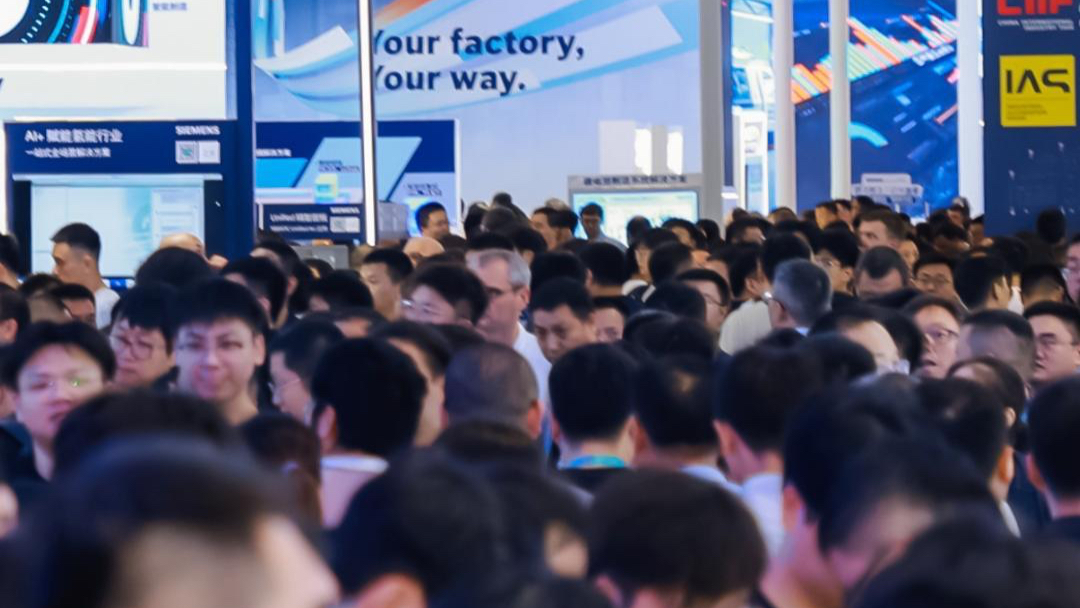
The space computing power has arrived, and the exhibition booth at the Industry Expo is filled with AI

Live streaming room launches securities commission battle, Datong Securities quote is only 0.0691 ‰