2026-09-28 09:00

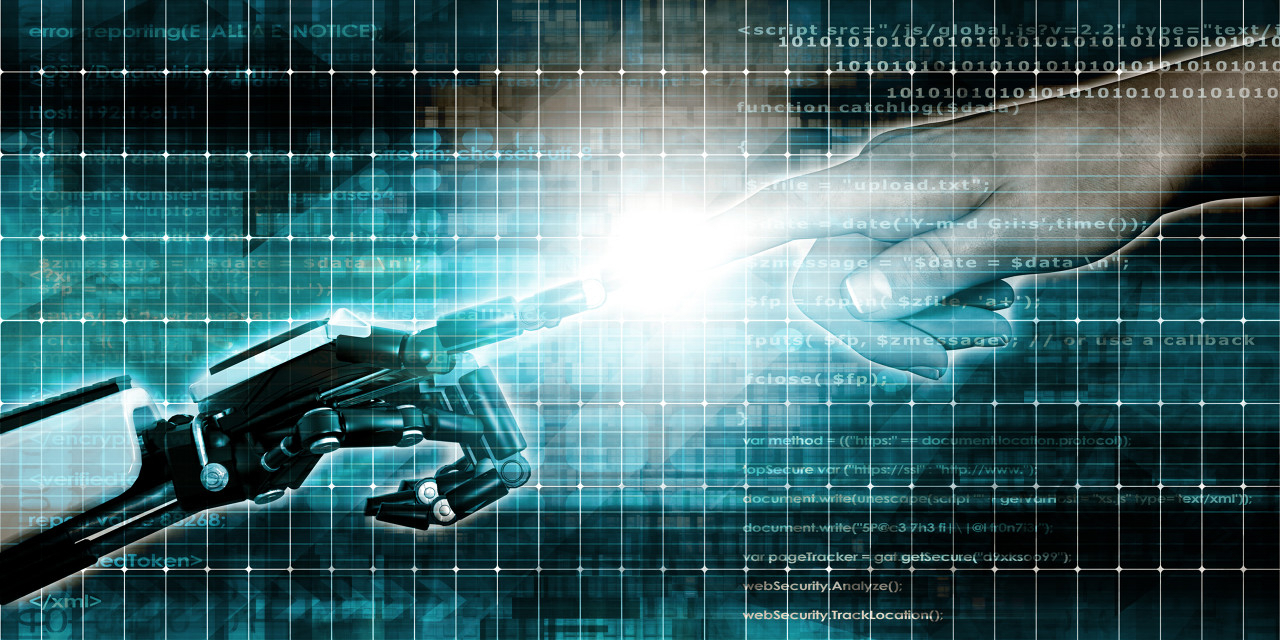
Introduction: We are the first generation to "do business" with another type of intelligent agent
The history of economic thought over the past 250 years has a cornerstone that has never been passive: the only subject of economic activity is carbon based humanity. But currently, there are irreparable cracks in this foundation - when a system can independently perceive information, formulate strategies, and execute transactions, no longer waiting for human confirmation every time, new players are already sitting at the negotiation table. We need to talk business with it now.
This is not futurism, it is currently happening. Rewrite trading logic in sectors related to intelligent infrastructure in the capital market; While traditional manufacturing is deeply mired in deflation, the computing power chain is expanding at a much faster pace than traditional industries. A more urgent question: Does the world really have a pure silicon-based economy?
The answer is clearly negative. The factory has not turned off its lights, the farmland still needs to be cultivated, and children need companionship. There is no substitution between carbon based and silicon-based materials, only nesting; There is no one-way conquest, only two-way reshaping. What we are experiencing is not carbon based yielding to silicon-based, but an unprecedented carbon silicon symbiosis.
The task of this article is not to predict the future, but to describe the present that has already occurred. The core proposition is only one: how does value arise when two completely different intelligent agents must coexist, exchange, collaborate, and even friction within the same economic system? How are rules formulated? How to place the meaning?
1、 Two times, one market
The first reality faced by carbon silicon symbiosis is not the computing power gap, but the fundamental mismatch of time scales.
1.1 Carbon based rhythms: biological clock and life clock
Human beings live in two different times. One is the circadian rhythm - sleep is necessary when night falls, food is necessary when hungry, and fear and greed alternate to dominate every major decision. Another aspect is the clock of life - a career lasts only forty years, and a company usually lasts less than a generation. Even the longest lived institutions rarely have a strategic vision that exceeds fifty years. Keynes' statement 'In the long run, we are all dead' is precisely the most honest footnote to the carbon based view of time: every economic action is subject to hunger, fatigue, aging, and death. And death is the sole source of the meaning of carbon based life.
1.2 Dimensions of Silicon: Sleepless Calculation and Infinite Patience
Silicon based intelligence has no fatigue, no need for sleep, and can run continuously for 724 hours; It has no death anxiety, and deducing strategies a hundred years later does not incur any psychological costs; Its decision-making unit is milliseconds, but the strategic cycle can span several cycles. For it, 'long-term' is a technical parameter that can be infinitely extended, rather than an unsettling philosophical proposition. Silicon based time has only two boundaries: computing power and energy - and these two boundaries are expanding outward at an unprecedented rate.
1.3 Friction Zone: Three types of collisions have already taken on real shapes
When two time systems operate in the same system, friction is inevitable.
Synchronous FrictionQuantitative strategy discovers arbitrage window, but has to wait for human trading session to open - by the time it's time, the window has already disappeared.
Intergenerational FrictionThe system provides a brand strategy that requires continuous investment for decades, with rigorous logic and clear returns, but the current manager's tenure is only a few years, and shareholders' patience does not exceed a few quarters. There is no natural translator between long-term optimization and short-term assessment.
Emotional FrictionWhen algorithmic trading accounts for a significant proportion, the frequency of price fluctuations is compressed beyond human reaction speed - the market responds to both carbon based fear and silicon-based calmness, with both rhythms pressed on the same screen, and no one can wait for the other.
The first challenge that symbiosis needs to solve is to accommodate two rhythms simultaneously in a system. The answer is not to make people imitate the speed of machines, nor to make systems accommodate human slowness, but to establishTime Translation MechanismDecompose the long-term optimization of silicon-based materials into perceivable stage nodes based on carbon; Transform short-term fluctuations of carbon based materials into understandable hard constraints of silicon-based materials.
2、 Carbon Silicon Interface: How Two Species Bargain
Carbon based and silicon-based are two completely different 'species'. How do they exchange between each other? It relies on the interface - a set of bidirectional translation protocols.
2.1 From Silicon Based to Carbon Based: From Parameters to Significance
The output of the system is probability distribution and optimization path, which is extremely clear for another system and almost astronomical for humans. The first task of the interface is to translate the "decision language" into an economic language that humans can understand, evaluate, and regulate: interpretability transformation (unfolding the reasoning chain), evaluability transformation (mapping to cost-benefit indicators), and regulatory transformation (including auditability). Without this translation, no matter how efficient it is, it would still be a black hole out of control for humanity. Some jurisdictions are already discussing the requirement for autonomous systems involved in financial decision-making to retain traceable decision logs - this is the first institutionalized attempt at translating from silicon-based to carbon based.
2.2 Carbon based to silicon-based: from fuzzy to constrained
Human needs are never precise. The semantics of 'better life' and 'more equitable distribution' are almost as vague as noise to the system. The second task of the interface is to transform human vague intentions into optimizable objective functions and hard constraints. Here is a key concept:IncompressibilityTrust, aesthetic intuition, obsession with fairness, and fear of loneliness - these things may seem "unclean" in mathematics, but they are the true source of human happiness. The task of the interface is not to forcefully digitize them, but to embed them as hard constraints into the optimization model. Efficiency can be maximized, but not at the cost of sacrificing human emotional security.
2.3 Interface as a Transaction: Pricing of Decision Making Power
This interface itself is a new type of market - trading involves decision-making power. The purpose, significance, aesthetic judgment, and ethical constraints of selling carbon based materials; The silicon-based side "sells" computing power, speed, exhaustive ability, and infinite patience. Humans entrust tedious optimization to the system, and the system returns the final value judgment to humans. The interface itself is becoming a rapidly expanding new industry.
3、 Symbiosis has reached: three economic cross-sections
Carbon silicon symbiosis is not a prophecy, it has silently unfolded in the three cross-sections of industry, consumption, and labor.
3.1 Industry side: The implicit knowledge of the old master has been leveraged
The most valuable assets are no longer equipment or patents, but the implicit knowledge in the master's mind that "relies on touch" and "looks at the fire". A precision manufacturing company has significantly improved its yield rate by transforming decades of technician's indescribable experience into a usable digital model. That old master did not lose his job, but instead became the "model trainer" that the entire industry was vying for. The implicit knowledge of carbon based technology has been leveraged tenfold or hundredfold through the scalability of silicon-based technology - things that are only understood have been endowed with replicable economic value for the first time.
3.2 Consumer side: The 'last human correction' is paying a premium
Consumers are no longer satisfied with pure system one click generation, nor are they willing to pay sky high prices for pure manual labor. Instead, they accept an intermediate state: the system exhausts all possibilities, and humans make the final choice and polishing. Market data is showing that products with the imprint of "the last correction of humanity" are experiencing a systematic premium. The most intensive correction process is precisely the most confident part of the system - where it considers the "optimal solution", humans insist on making changes. This seemingly irrational behavior is becoming a value signature that distinguishes carbon based from silicon-based.
3.3 Labor side: Inflation and deflation occur on the same payroll
It is never the system itself that replaces positions, but the humans who have mastered this set of tools. The job connotation has changed from "completing work by oneself" to "managing a group of agents to complete work". The wage premium flows towards the carbon silicon composite ability - understanding how to give instructions, evaluate outputs, and translate vague needs into precise tasks. In the same labor market, inflation and deflation occur simultaneously: inflation is the pricing of "carbon silicon interface capabilities", and deflation is the return of "single execution skills".
4、 The dilemma of ownership: who produces, who owns
4.1 Attribution Puzzle
Traditional property rights are established on the basis of "labor rights confirmation" - whoever works owns it. But when autonomous systems independently complete research and development, design, and even sales, the definition of "labor" becomes blurred. The current practice of 'default ownership by developers' is only a temporary measure that prioritizes efficiency and lacks sufficient legal basis. The compromise solution for regulatory agencies is to recognize auxiliary participation and refuse to list it as an independent inventor - recognizing substantive participation but refusing to grant any rights. This gap will only get bigger and bigger.
4.2 Game of Four Property Rights Plans
Developer owned (highest efficiency but causing dissatisfaction among data contributors); Sharing of data contributors (with extremely high cost of ownership confirmation); Public ownership (insufficient incentives); Mixed property rights (distributed according to the ratio of input and contribution, with no mature cases yet, but it is currently the most concerned issue). The only clear thing is that the concept of single property rights is no longer sufficient. Any joint output is nested with at least three layers of ownership - developer rights in the algorithm layer, contributor rights in the data layer, and participation rights in the generation layer.
5、 Carbon based gold rule: purpose cannot be optimized
5.1 The fallacy of two extreme positions
The pure silicon-based stance states that humans are only data generators and energy providers. It ignores an iron law - without the meaning injection of carbon based life, the evolution of the system is nothing but the disordered movement of physical particles, without direction and value.
The pure carbon based stance states that the power can be unplugged at any time. It ignores a reality - today's economic system is deeply embedded with such intelligence, and the cost of cutting it off recklessly is equivalent to destroying a considerable proportion of productivity. Symbiosis has already occurred and cannot be reversed.
5.2 Golden Rule
The first principle of carbon silicon symbiosis is that the existence of silicon-based intelligence is to expand the possible boundaries of carbon based life. It is neither a master nor a servant, but an extended organ of human cognitive ability. Meaning only exists in carbon based perception - only carbon based will feel hunger, loneliness, humiliation, and joy. If the ultimate goal of economic activity is not to reduce the suffering of carbon based industries and increase their happiness, then all growth and all expansion of computing power are ultimately worthless thermal movements.
Therefore, the golden rule of carbon silicon symbiotic economics can be expressed as: any improvement in silicon-based efficiency must be ultimately tested against verifiable improvements in carbon based well-being. The computing power that can help humans sleep an extra hour, reduce a day of loneliness, and unleash creativity once is a meaningful wealth; The accumulation of computing power that contributes nothing to the true well-being of humanity except for heat is nothing more than electronic waste in the economic sense.
Conclusion
We are the first generation of economic participants in human history who must 'do business' with another type of intelligent agent. This identity gives us an unprecedented responsibility.
The economics of carbon silicon symbiosis does not pursue theoretical purity, but rather seeks explanatory effectiveness. It acknowledges the profound differences between carbon based and silicon-based, but does not advocate for confrontation; It embraces the efficiency revolution of silicon-based technology, but does not give up the ultimate judgment on the meaning of carbon based technology. In terms of methodology, it is closer to engineering than physics - it does not pursue ultimate truth, but only solves the problem at hand.
The purpose of carbon based provision and the method of silicon based provision; The definition of carbon based is' worth it ', and the optimization of silicon-based is' how'; The source of carbon based conservation significance and the frontier of silicon-based expansion capability. This is symbiosis. What is truly worth doing is to steadfastly build the bridge that connects carbon and silicon - strong enough to bear the weight of two worlds, flexible enough to accommodate two temporal rhythms. Because neither end of the bridge is an isolated island.
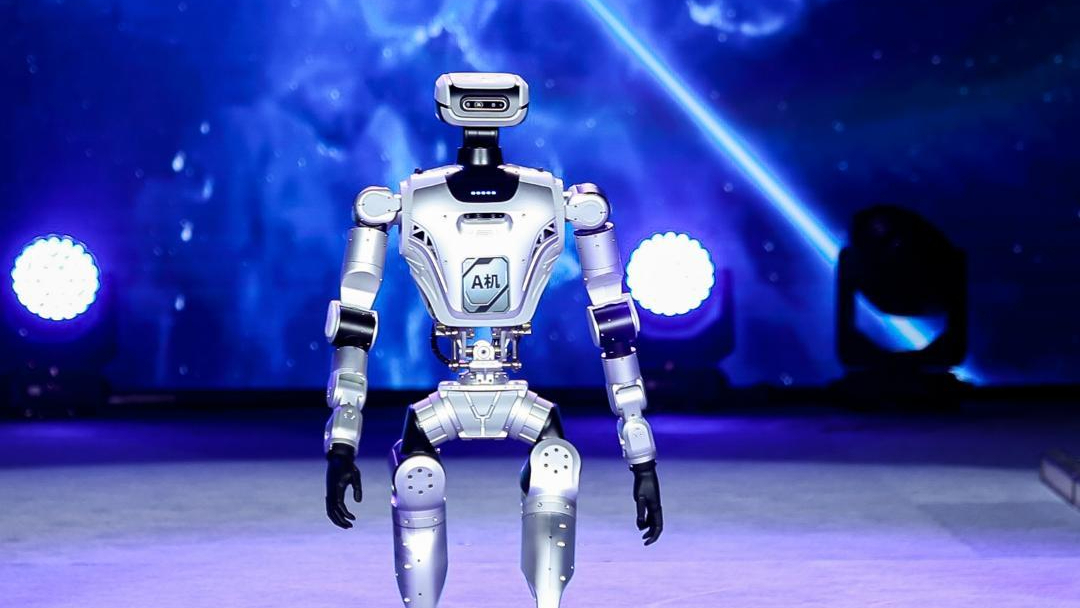
Technology Show | embodied intelligence milestone event! Robot Supplement "Domestic Nervous System“
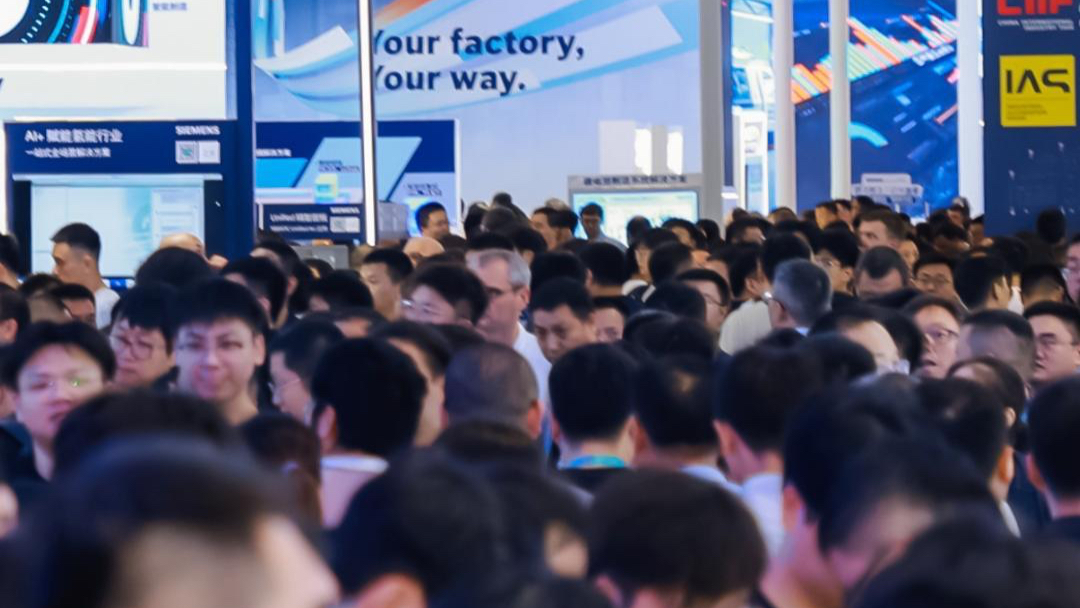
The space computing power has arrived, and the exhibition booth at the Industry Expo is filled with AI

Live streaming room launches securities commission battle, Datong Securities quote is only 0.0691 ‰