2026-09-27 11:34


In August 2026, a large cultural and tourism industry investment enterprise in the area where Tang Qian is located decided to invest in a new cultural and tourism project, requiring approximately 200 million yuan in funding.
Multiple banks came upon hearing the news, offering credit financing plans with the best interest rates. However, Tang Qian remained unmoved.
As the financial director of this cultural and tourism industry investment enterprise, she has another idea - to issue 3-year corporate bonds. She calculated that the average annual interest expense for issuing corporate bonds is about 3.8 million yuan, which is lower than the 5 million yuan interest expense for bank credit. Currently, Tang Qian is persuading the management of the company to agree to the bond issuance plan.
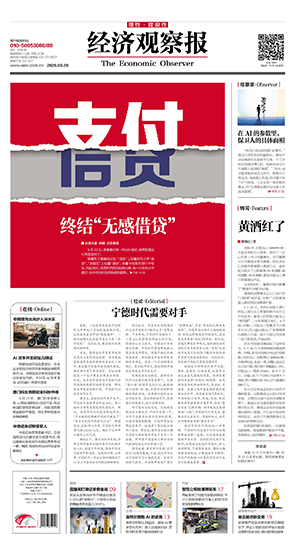
Since the beginning of this year, the demand for corporate bond financing has significantly increased.
On September 14th, financial data released by the People's Bank of China showed that in the first eight months of this year, the proportion of bond and stock financing in the increase of social financing scale rose to 50.31%, significantly exceeding the proportion of loans. Among them, the proportion of corporate bonds in the increase of social financing scale has risen to 11.67%, an increase of 5.8 percentage points compared to the same period last year.
Another set of data provides a more intuitive representation of the trade-off between bank credit and corporate bonds. In the first six months of this year, RMB loans issued to the real economy increased by 10.76 trillion yuan, a year-on-year decrease of 1.98 trillion yuan; In comparison, the net financing of corporate bonds was 2.07 trillion yuan, an increase of 916.7 billion yuan year-on-year.
Zhang Qiang is the president of a joint-stock bank's Shenzhen branch. He revealed that in the third quarter, the number of companies attempting to issue corporate bonds increased by over 30% compared to the first half of the year, with an average of 10-12 companies per month.
He found that the main players who are enthusiastic about issuing corporate bonds are central state-owned enterprises, local industrial investment groups, listed companies, and leading industrial enterprises. The key driving factor is that compared to the annualized loan interest rate of about 2.5% -3%, the current bond issuance interest rate for companies with credit ratings above AA is generally lower than 2.1%.
Zhang Qiang stated that the financing structure of enterprises is undergoing profound changes - the proportion of direct financing such as bonds continues to increase, which is having a certain "substitution effect" on banks' corporate loans. This has caused some frontline corporate account managers to have a slight sense of crisis. If large enterprises collectively turn to issuing bonds for financing, how should their assessment indicators for corporate loan disbursement be achieved.
Choose to issue bonds
At a corporate financial management seminar held in March, Tang Qian learned about the advantages of issuing corporate bonds. At that time, she was not interested in corporate bond financing.
After her company decided to launch a new cultural and creative project investment and construction with a financing of 200 million yuan in August, the senior management of the company proposed to reduce the financing cost by at least 40 basis points, which inspired her to consider issuing bonds.
Although multiple banks have provided the best interest rate loan schemes, the loan interest rate is generally around 2.5%, which is only 15-20 basis points lower than last year's loan interest rate, making it difficult to meet the cost reduction requirements of corporate executives.
By comparison, the results of issuing corporate bonds are different. According to Tang Qian's preliminary calculations, given that the credit rating of her company is AA+, based on the current issuance interest rate of corporate bonds, the issuance cost (coupon rate+underwriting fee) of the relevant 3-year corporate bonds will not exceed 1.95%. This means that the actual financing cost of the enterprise has decreased by at least 70 basis points compared to last year's loan interest rate, exceeding expectations to complete the task.
On September 10th, Henan Airport Investment Group Co., Ltd. (hereinafter referred to as "Henan Airport") completed the issuance of 1 billion yuan, 3-year corporate bonds. According to the comprehensive evaluation of China Chengxin International, the credit rating of Henan Airport is AAA, with a stable rating outlook.
A person from Henan Airport told reporters that before deciding to issue corporate bonds, multiple banks offered corporate loan plans with optimal interest rates ranging from 2.5% to 2.7%. But they found that the loan interest rate was still more than 60 basis points higher than the coupon rate of issuing corporate bonds, and the management of the company ultimately chose to issue corporate bonds.
The person said that the issuance of corporate bonds also came at a good time. On September 8, the interest margin of 10-year AAA and AA+enterprises' middle notes fell to 29 basis points and 44 basis points respectively compared with treasury bond in the same period, hitting the lowest point since 2025.
As a result, the coupon rate for the issuance of this 3-year corporate bond is set at 1.68%, lower than the company's previous estimate of 1.7% -1.8%.
The above-mentioned person from Henan Airport told reporters that after seeing the unexpected drop in financing and financial expenditures, the management of the enterprise requested that the finance department and financing department increase coordination to further enhance the proportion of direct financing tools such as bonds in the enterprise's financing structure.
In early September, Zhao Yong's Zhumadian Industrial Investment Group completed the issuance of 324 million yuan, 5-year corporate bonds.
Zhao Yong told reporters that due to the credit rating of the corporate entity being AA+, the initial expectation of the finance department was that this corporate bond could be fully subscribed with a coupon rate not exceeding 2.3%.
To the surprise of the company, the full subscription multiple of this bond reached 5.8 times, and the coupon rate was as low as 2.12%, setting a new historical low for local bond issuance rates.
Recently, the senior management of this company requested the finance department to seize the current opportunity of low interest bond financing, further increase the proportion of bond financing, and strive to replace some high interest loans with low interest bond funds.
Zhang Qiang deeply felt the enthusiasm of local large enterprises to issue bonds for financing.
He told reporters that the cost of corporate bond financing is lower and they are continuing to seize the market share of corporate loans. Starting from the second half of the year, when he visited local large enterprises seeking to expand cooperation in corporate loans, the other party had already chosen the latter between loans and bond issuance.
In Zhang Qiang's view, this is also the result of market interest rate liberalization. Currently, loan interest rates are stabilizing at around 3%, but the interest rates in the capital market continue to decline due to factors such as moderately loose monetary policy. This has driven the comprehensive financing costs of AAA and AA+credit rated large enterprises issuing bonds (including paying bond underwriting fees of 0.07% -0.1%) to generally be lower than 2.3%, prompting enterprises to actively choose bond financing based on financial cost savings considerations.
Enterprises are enthusiastic about issuing bonds and have another plan.
Zhao Yong pointed out that the reason why the senior management of his company requested to increase the issuance of bonds is also because in recent years, the company has invested in a large number of new projects online, resulting in a significant consumption of its own funds. The funds raised through bonds can be used as project capital, which invisibly alleviates the turnover pressure of the company's own funds.
Zhang Qiang noticed that in the first quarter, those who were enthusiastic about issuing corporate bonds were mainly local large-scale industrial investment enterprises and central state-owned enterprises. Since the second half of the year, listed companies have been actively consulting with industry leaders on the feasibility and interest rates of corporate bond issuance. Among them, some listed companies and industry leaders with credit ratings of AA+told Zhao Yong that they hope to control the comprehensive financing cost of bond issuance at around 2.3%, and plan to use some of the bond issuance financing funds to prepay loans that are still in existence (with an interest rate of 3.5%).
Bank's joys and sorrows
Large enterprises are enthusiastic about issuing bonds, which makes Zhang Qiang both happy and uncomfortable.
Starting from this year, the joint-stock bank he works for has vigorously promoted the "commercial bank+investment bank" comprehensive corporate financial services, requiring frontline corporate account managers to expand investment banking businesses such as corporate bond underwriting and industrial mergers and acquisitions, and enhance non interest income contributions.
At first, Zhang Qiang was concerned about the lack of understanding of corporate bonds among large enterprises in his jurisdiction and was unwilling to easily test the waters. Now, with large enterprises in the jurisdiction issuing corporate bonds one after another, he found that as of the end of August this year, the branch has completed the investment banking business revenue target set by the branch. Among them, the revenue generated from underwriting corporate bonds and custody of corporate bond fundraising funds increased by over 40% compared to the same period last year, exceeding 8 million yuan.
According to Zhang Qiang, underwriting corporate bonds is making a significant contribution to the comprehensive business revenue of the company. Among them, 5 companies plan to use the raised funds for daily operations and new project construction. These enterprises not only entrust the custody business of the raised funds to the joint-stock bank where Zhang Qiang works, but also handle services such as salary payment, corporate wealth management, and supply chain fund settlement, accumulating more low interest corporate current deposits for the branch and increasing revenue from settlement and wealth management business.
However, everything has two sides.
In August, multiple corporate customer managers at the branch repeatedly expressed to Zhang Qiang that the issuance of bonds by large enterprises has put considerable pressure on them to complete the assessment of corporate credit allocation.
In early September, Zhang Qiang conducted a retrospective analysis of the completion rate of credit allocation indicators for branch to corporate customer managers and found that 30% of customer managers still had a lower amount of new credit allocation than the same period last year. The reason was that they had spent energy negotiating with large enterprises for this year's new credit limit, but were suddenly "blocked" by corporate bonds.
Zhang Qiang suggested that corporate account managers should increase their efforts to penetrate the market and increase credit allocation to medium-sized enterprises within their jurisdiction (with annual revenue of 50-100 million yuan and overall asset size of less than 1 billion yuan). The credit ratings of these companies generally have not yet met the conditions for issuing bonds. Even if they issue corporate bonds through credit enhancement measures, their comprehensive financing cost for issuing bonds is likely to exceed 3%. Therefore, these companies are more inclined to seek bank credit.
However, some corporate account managers did not take prompt action. Zhang Qiang admitted that this move by the corporate account manager is also understandable. Medium sized enterprises in the jurisdiction have lower risk resistance and refinancing capabilities compared to large enterprises, resulting in higher exposure to loan delinquency and bad debt risks. In the second half of the year, as banks focus on stabilizing the quality of credit assets and vigorously reducing credit delinquency rates, they also dare not take risks.
The head of the corporate department of a state-owned bank's East China branch told reporters that since the beginning of this year, dozens of their strategic level corporate clients (mainly local large-scale industrial investment enterprises, listed companies with a market value exceeding 100 billion yuan, and well-known leading enterprises in the industry) have shown a high willingness to issue bonds, and 70% of them are working to increase the scale of bond issuance, which indeed has a certain "substitution effect" on corporate credit.
However, branch leaders believe that this may not necessarily put pressure on the branch to complete its annual corporate credit allocation tasks. The key is for the branch's corporate department to take the initiative, expand the coverage of corporate credit services, and fill the gap through incremental credit, "said the business manager of the corporate department mentioned above. Starting from the second half of the year, the branch requires the public sector to increase credit investment in advanced manufacturing, high-tech, and green industries, in order to obtain a larger market share of corporate credit from high growth industries.
This is also a new challenge that banks must face in the changing market financing structure, "said the head of the corporate sector business. With the continuous increase in the proportion of direct financing, corporate credit is bound to face certain substitution pressure. In this trend, banks themselves also need to actively optimize their credit structure and upgrade their credit services, increase their credit layout for long-term enterprises, and find new ways to stabilize the growth of corporate credit.
(At the request of the interviewee, Tang Qian and Zhao Yong are given pseudonyms)


 Subscribe