Economic Observer Follow
2026-09-26 12:51

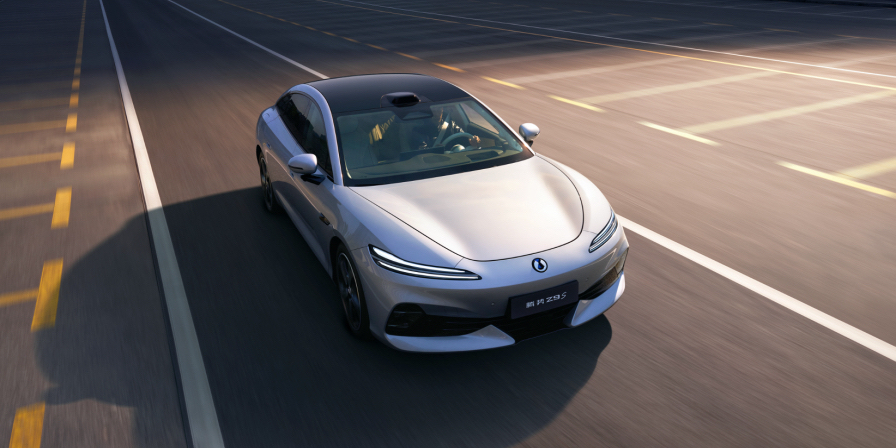
On September 23rd, the Tengshi Z9S was officially launched, with an official guide price of 255800 yuan to 325800 yuan, a significant drop of 64000 yuan from the starting price of 319800 yuan in August pre-sales.
For this high-end brand under BYD, the pricing of Z9S is not only a product level adjustment, but also reflects the logic of BYD's high-end strategy under financial pressure: replacing traditional brand premiums with technological density, diluting costs through the scale of high-end products, and ultimately improving the profit structure.
BYD is currently at a delicate financial juncture. In the first half of 2026, BYD achieved a revenue of 344.815 billion yuan, a year-on-year decrease of 7.13%, and a net profit attributable to the parent company of 12.325 billion yuan, a year-on-year decrease of 20.54%. In terms of automobile gross profit margin, it decreased from 22.31% in 2024 to 20.49% in 2025, the lowest level in nearly five years.
In the first half of the year, the total sales of the three high-end brands, namely Wangwang, Tengshi, and Equation Leopard, were about 228000 vehicles, a year-on-year increase of 61%, accounting for approximately 12.8% of BYD Group's total sales. While high-end brand sales are growing, prices are under pressure. The Equation Leopard Titanium series will be priced in the range of 150000 to 200000 yuan, and the Tengshi Z9S will also enter the market at a lower price. This "price for quantity" strategy not only improves the sales structure, but also brings new tests to the brand's premium ability.
BYD Chairman Wang Chuanfu did not shy away from this at the 2025 annual shareholders' meeting. Faced with the long-term weakness of high-end models, he admitted that the company's technology and products are not good enough. At the same time, he clearly stated that after the increase in high-end models, the company's gross profit and single vehicle profit issues will gradually be resolved.
This statement reveals BYD's core path towards high-end development: not relying on the historical accumulation of traditional luxury brands, but building product competitiveness through continuous investment in technology. In the first half of 2026, BYD's R&D investment was about 28.9 billion yuan, and the cumulative R&D investment has exceeded 270 billion yuan. Core technologies such as blade batteries, EasyThree, and cloud based systems are all born from this system. Wang Chuanfu summarized this logic as "less tricks, less fancy, return to the origin, and do a good job in technology and products".
The pricing strategy of Z9S is the latest example of this competitive logic. The new car comes standard with second-generation blade batteries and flash charging technology across the entire range, with a pure electric range of up to 1100 kilometers. It is equipped with the Yunnian-A intelligent air body control system and the Yisanfang vehicle intelligent control technology platform. The top of the line version adopts a three motor independent drive scheme.
From the perspective of technical configuration, the Z9S continues BYD's product strategy of "fully utilizing technology". However, from the perspective of market positioning, the starting price of 255800 yuan has directly pushed this model into a highly competitive price range. In the pure electric mid to large sedan market of over 200000 yuan, Xiaomi SU7 and Tesla Model 3 have formed a "dual dominant" pattern, with a combined market share of nearly 80%. The brand recognition of Tengshi in the sedan field is still to be established, and Z9S needs to provide consumers with reasons for their choices outside the parameter table.
It is worth noting that in 2025, Tengshi ranked second in the price range of 250000 to 400000 yuan with an average brand transaction price of 360000 yuan, surpassing BMW and Audi. This data indicates that Tengshi has a certain high-end pricing ability, but this ability is mainly based on the unique position of D9 in the MPV segment market.
Z9S entering the sedan market at a more competitive price may help boost sales in the short term, but it may also put downward pressure on Tengshi's existing pricing system. How to find a balance between scale expansion and brand improvement is a challenge that Tengshi management needs to continue to face.
From a broader perspective, BYD's path towards high-end development is entering a critical stage. The logic of replacing brand premium with technology is reasonable in the stage of high barriers to electrification technology, but as the gap between competitors in dimensions such as range, fast charging, and intelligent driving gradually narrows, whether the leading advantage of technical parameters can continue to translate into consumers' brand preferences will determine the ultimate effectiveness of this path.


 Subscribe