Economic Observer Follow
2026-09-26 08:10

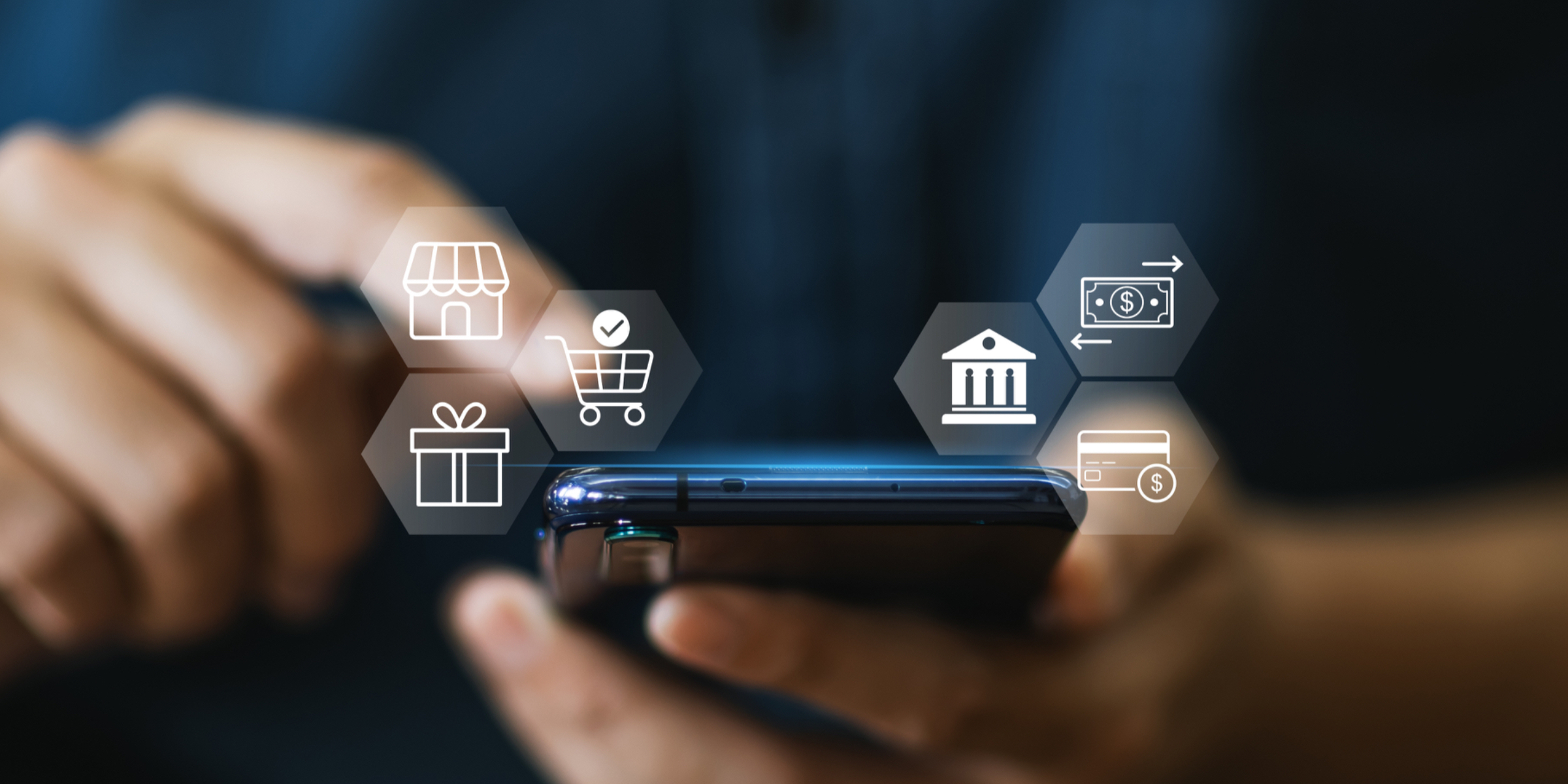
On September 23rd, when Li Yi ordered takeout as usual, she suddenly noticed that the payment interface had changed.
She saw clear partitions: "Huabei" had gray small letters "Credit" written on it, "Yu'ebao" had "Wealth Management" written on it, and savings cards were placed in the bank card section. At the same time, next to the Huabei entry in the credit column, there is a small gray text indicating that the service is provided by CITIC Trust Credit Purchase.
On that day, she updated Alipay to the latest version. Li Yi recalled that earlier, when using Alipay to pay for goods, there was no such clear division and no clear identification of service providers. I used to think that Huabei was not a loan, similar to using a credit card, but recently I found out that Huabei is a loan, "she said.
Behind seemingly subtle changes, a silent yet transformative transformation of the industry ecosystem is happening in the online payment scene.
Previously, many users who clicked on the checkout page of food delivery and e-commerce apps (mobile applications) may not be able to distinguish whether they clicked on a payment tool or completed a credit contract. These settlement pages are often guided by discounts such as immediate reduction and interest free for a limited time, which are also often placed in a prominent position at the settlement cashier of the Internet platform.
Many users originally intended to spend money on consumption, but inadvertently opened and used credit products until they received a repayment reminder and realized they had borrowed a loan; There are also users who think they just participated in the platform activity of first consuming and then repaying, but unknowingly added a record on their credit report. This is commonly known as "contactless lending" in the industry. In the wave of Internet traffic realization over the past years, this is one of the presentation ways of financial business on many platforms.
However, recently many users have found that some payment methods that were previously "insensitive" are becoming "sensitive". In addition to the sections for wealth management, credit, bank cards, etc. appearing in the payment interface, some platforms display the funding and expected annualized comprehensive interest rate on the credit page. Some previously 'hidden' signs are becoming clearer.
This is related to the "Management Measures for Online Marketing of Financial Products" (hereinafter referred to as the "Measures") that will be implemented from September 30, 2026. In April, the People's Bank of China and eight other departments jointly issued the "Measures", which explicitly stated that non bank payment institutions shall not include financial products such as loans and asset management products as payment tool options, and shall not provide marketing services for financial products such as loans and asset management products.
This means that regulators need to thoroughly clarify the boundary between "spending money" and "borrowing money" on platforms, and return the right to know and choose to consumers. This will also force the entire consumer finance industry to reconstruct its growth logic.
Traffic Bundling
Li Yi is a long-term user of consumer financial products on multiple Internet platforms. His monthly usage quota for Meituan, Tiktok and Huabei is about 5000 yuan, which is mostly used for daily consumption such as takeout and commodity purchase.
Every repayment day, Huabei will call to remind, and the opening line of the call is usually "Hi, I'm calling from Huabei". She once incurred overdue payments due to forgetting to repay, resulting in interest of several yuan.
There are many users on social media who have similar experiences to Li Yi. A user posted on social media claiming that they only realized the payment method was monthly payment after buying something, and unknowingly opened a credit service, inexplicably owing 200 yuan.
Lawyer Wei Bin from Long'an (Shenzhen) Law Firm has been involved in many related dispute cases. He stated that in previous consumer scenarios, consumers' perception of "themselves applying for a loan" was often weakened. For example, the loan entrance is embedded in consumption, payment, or other scenarios, with interface designs such as "limit", "discount", "use first, pay later", etc., making consumers more concerned about their immediate consumption without fully realizing that the actual loan relationship is formed behind it.
Wei Bin summarized that such "emotionless lending" often leads to three types of problems: the first is the lack of the right to know and the right to make independent choices. The operation interface of a large number of such products lacks prominent prompts for key information such as actual lending entities, annualized interest rates, comprehensive financing costs, credit authorization, and overdue consequences, which may affect consumers' ability to make truthful and fully informed choices; Secondly, it is easy to cause the accumulation of small debts, especially among young people, who may experience a situation where they are difficult to repay; Thirdly, there is a significant information and evidence asymmetry in the process of safeguarding rights. Consumers come into contact with apps or platforms, but behind them may involve multiple entities such as platforms, financial institutions, and loan assistance agencies. Once a dispute arises, the first thing to do is to figure out who is marketing, who provides loans, who makes credit decisions, and what actions each entity has taken.
At present, the credit products of the Internet platform mainly include two types: one is credit purchase, monthly payment and other "pay after use" products, such as Ant Flower Baibei, Jingdong Baitiao, Tiktok monthly payment, Meituan monthly payment, Tencent distribution, and the other is pure credit products, such as Ant Loan Baibei, Jingdong Jintiao, and so on.
It is worth noting that the first type of product is deeply embedded in consumer scenarios and bound to them, which is also the focus of this regulatory regulation.
The relevant person in charge of the People's Bank of China stated in response to a reporter's question that according to the requirements of the Measures, loan products will not be allowed to use marketing tactics such as "low threshold", "instant payment", "low interest rate", etc; The payment tools on the checkout page of payment institutions must be displayed separately from financial products such as loans, and users must not be misled into confusing payment tools with loan products.
The ability of such Internet products to obtain users is obvious. JD Baitiao claims to have served over 300 million users, while Ant Consumer Finance (the operating company of Huabei) has linked over 400 million consumers.
Previously, relying on the logic of traffic monetization, credit products in such scenarios continued to expand. The payment business relies on daily consumption scenarios to have massive high-frequency traffic, but "payment" transactions themselves are low profit, while "credit" is a monetization tool that can bring high returns. By seamlessly embedding credit products into the payment chain, massive ordinary payment users can be converted into credit users at a lower cost. This is the core logic of the Internet platform to build its financial landscape.
Wang Pengbo, Chief Analyst of the Financial Industry at Broadcom Consulting, stated that the previous model mainly utilized the checkout transaction scenario, displaying credit products and regular payment options side by side, overlaying discount strategies, and default checkups to achieve conversion. In this mode, the platform is responsible for scene diversion and obtaining profits, while banks and licensed consumer finance institutions export funds to bear credit risks, essentially converting payment flows directly into credit assets.
And the removal of credit products from the checkout payment option is equivalent to directly cutting off the customer acquisition link bundled with this scenario.
Partition Rectification
The Economic Observer reporter noticed that the "Measures" require payment instruments to be displayed separately from financial products such as loans. This situation is mainly reflected in the checkout interface, which is the payment page that pops up after submitting the order. The core action is to select the payment method and complete the fund deduction.
On September 23, the reporter of the Economic Observer learned from several Internet platforms that the separation rectification of the cashier interface of the current mainstream Internet platform has been basically completed, and individual platforms are still in the process of adjustment.
Economic Observer reporters tested multiple apps and found that after rectification, most platforms have achieved segregated display of cash registers.
Among them, Taobao shopping enters the payment stage, "Huabei" is classified as an independent credit column, "Yu'ebao" is divided into the wealth management column, and payment methods such as savings cards are uniformly included in the bank card column; The rectification logic of Tencent Pay interface is consistent with it, clearly dividing into three major sections: credit, bank cards, and wealth management; Tiktok's monthly payment page is divided into two special areas of "payment tools" and "credit services". Tiktok's monthly payment belongs to the credit services section, and the lower part of the page is synchronously marked with small characters, reminding that the service is provided by Shenzhen Zhongrong Small Loans and its cooperative institutions with consumer credit services; The checkout interface for purchasing goods on JD.com displays "JD Pay", "WeChat Pay", "Enjoy Now Pay", and "JD White Bar", with the option for "Other sources of funds" displayed above; Meituan cashier payment interface,Classified by "Financial Services", "Payment Products", "Meituan Payment", "Other Payment Methods, Find Someone to Pay", Meituan Monthly Payment is included in the Financial Services section.
However, the reporter also found that some platforms still retain the credit product entrance on the bill of lading interface, and the bill of lading interface often displays the preferential activities of the credit product.
The so-called bill of lading interface refers to the confirmation page before the user selects the goods, confirms the specifications, fills in the delivery information, and clicks to submit the order. The core steps are to complete the confirmation of the goods, quantity, delivery address, and order amount. At this time, the fund payment process has not yet entered.
If you directly select the payment method on the bill of lading interface, such as monthly payment or IOU, you can enter the password to complete the loan and payment after viewing the installment and service fees, without separately entering the checkout interface.
Taking the Meituan food delivery scenario as an example, after clicking "checkout", you will be redirected to the order confirmation page. The page will then slide down to the payment area where you can see options such as "Meituan monthly payment" and "express payment". After Meituan monthly payment, there will be a small text prompt indicating "consume first, pay later".
When purchasing goods on the JD app, the bill of lading page will also display the JD white label option, along with words such as "consume first, repay later" and "limited time up to 67 yuan off". When the user clicks on the JD white bar option, the page will further display "Credit purchase service provided by Zhaolian Finance". If you choose JD Baitiao not to installment, there will be a random discount. After selecting "JD Baitiao", the user will directly enter the payment password interface and complete the payment on the bill of lading interface. But if the payment is not completed, a checkout interface with a clear distinction between payment and credit will appear after clicking the "Go to Pay" option.
A person from the Internet platform told the reporter that because the Methods mainly involve the cashier page, some platforms on the bill of lading page have not changed or are gradually improving.
The Economic Observer reporter learned that although the separation between payment and credit in most platforms' cash registers has been basically completed, some platforms are still conducting grayscale testing and dynamic adjustments, which will be completed before September 30th.
People from several Internet platforms said that at present, all platforms are strictly implementing and implementing the Measures to inform consumers, and all aspects are being adjusted. The platform will sort out the online marketing links of relevant financial products item by item in accordance with the requirements of the Measures, and make corresponding adjustments and improvements to the page display, user notification and confirmation process, etc. The platform is further optimizing marketing display and information disclosure to safeguard consumers' right to know and independent choice, and to enable users to have a clearer understanding of the source of payment funds and make their own choices based on full knowledge.
In addition to the design of interfaces such as checkout counters and bill of lading pages, many users have also mentioned that similar "induced" designs are not uncommon in online consumption scenarios. Many platforms still have hidden "mechanisms" in their user interface design. For example, when a user purchases a plane ticket on an online travel platform, the settlement page often defaults to selecting various coupon packages, airport transfer coupons, and hotel coupons. As a result, the order price quietly increases, and if they want to cancel it, they need to search through the entrance layer by layer. If they are not careful, they may buy a ticket for unused benefits; For example, users often have to bypass multiple recommended seats to arrive at the original price airfare without any additional services. Some users lamented that if all consumption pages could display "additional items" and real prices openly like payment interfaces, consumption would be much more worry free.
An independent designer who has participated in e-commerce design said that similar inducement methods are nothing more than bolding the font of the guide items, turning the buttons red or bright colors on the first page, or making the font of the main title smaller or gray, and enlarging the subheadings, etc., to make users instinctively want to click in.
Refactoring Logic
With the separate display of payment and credit, the Internet consumer finance industry may further step into compliance operation and usher in a new stage of returning to real demand.
Wang Pengbo believes that in the short term, without the natural flow of checkout scenarios, the customer acquisition scale of licensed consumer finance institutions will decline, which in turn will push up the cost of acquiring customers per customer, and the growth rate of impulsive small assets will slow down accordingly; Internet platforms will also lose a large amount of direct financial diversion income, and the flow realization efficiency will decline.
From a long-term perspective, the underlying logic of the industry will switch accordingly, and the payment business of the platform will return to the basic settlement origin. Financial credit business must operate independently, so the previous profit sharing cooperation model between the funding side and the platform may need to be restructured, and the weight of risk control will be higher than that of front-end traffic deployment.
A licensed consumer finance institution insider told reporters that the profit sharing cooperation model may indeed need to be restructured. In the past, both parties may have set a bottom line for interest rates based on actual situations, and will distribute profits according to the proportion of funds in each user's loan. However, financial institutions often agree on the minimum interest rate, amount of funds, and profit sharing rebate based on factors such as platform traffic, market size, and bargaining power. The two parties will also agree on the proportion of funding in the contract. For example, there are two related credit products in an Internet platform, each of which has a single number and product pricing. Maybe one of them is a high priced product and the other is a relatively low priced product. If you choose a high priced product, you need to negotiate and build a cooperation framework according to its product characteristics.
The above-mentioned licensed consumer finance institution personnel stated that generally speaking, for pure credit fund products that do not involve installment payments, some investors will choose the joint credit model, which means that the minimum ratio of funds between licensed financial institutions and lenders is 7:3, and the profit sharing is also set according to this ratio; The management of credit products involving consumer scenarios is more detailed, and the specific cooperation mode depends on the needs of the funding party.
The above-mentioned licensed consumer finance institution personnel stated that regulators do not want a situation of "unconscious lending", which often leads to disputes. Completely separating payment from lending will make it easier for users to perceive and to some extent reduce or even avoid such disputes.
The person believes that for consumer finance institutions, banks and other investors, the implementation of the Measures means stricter screening. For the investors, they will still choose some large-scale Internet platforms, often the larger the platform, the more emphasis on compliance, and strengthen risk control. However, some travel or travel platforms are prone to risks. In addition, the tightening of traffic may also be transmitted to the tightening of funds.
Wang Pengbo stated that the impact of this round of adjustments is quite direct. On the one hand, the cash register itself is an efficient conversion node for credit products to reach potential customers. After the link is cut off, a large number of potential customers who were originally in browsing and checkout status will no longer be reached by the algorithm, and the growth curve of new institutional customers will be significantly suppressed; On the other hand, after the unbinding of payment and credit, the data dimensions such as transaction frequency, consumer categories, and real-time fund flow that institutions relied on in the payment process in the past will be affected. The data collection loop will be broken, and the label density available for risk control modeling will decrease, which will further increase the difficulty of early judgment of new customer credit, and in turn, further shrink the available loan customer base.
Wang Pengbo believes that the scale of pure impulse small-scale high-frequency lending will inevitably shrink, and institutions will reduce the investment in embedded small-scale products and increase the layout of large-scale installment businesses with real consumption scenarios such as home decoration, home appliances, and education. The industry will not completely give up on small loans, and the real demand for small turnover of users still exists, but the customer acquisition method no longer relies on passive induction from the cashier. At the same time, the increase in compliance requirements will force institutions to tighten the borrower's repayment ability review standards and be more cautious in granting credit to long tail customers with weak qualifications.


 Subscribe