Economic Observer Follow
2026-07-24 07:41


Economic Observer reporter Song Fuli
Over the past 25 years, 'The Great Divergence' has been one of the most influential topics in the global economic history community. The research and debate surrounding the Great Divergence has greatly promoted the data construction of global economic history. Scholars from different regions around the world have begun to systematically construct cross regional databases, covering indicators such as historical GDP, real wages, skill premiums, government revenue, trade terms, human capital, and land use. These quantitative studies continue to spark a new round of intense discussions.
What is' major diversion '?
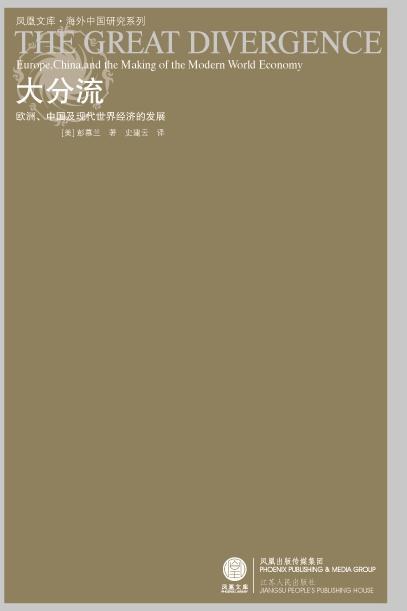
Kenneth Pomeranz, an American historian who has long been dedicated to the study of Chinese economic and environmental history, found that until the mid-18th century, the two regions of England and Jiangnan in China were very similar in terms of life expectancy, agricultural markets, labor systems, land use, capital accumulation, and technology, and Europe did not have significant advantages. In his book "The Great Divergence: The Development of Europe, China, and the Modern World Economy," Peng Mulan believes that the main reason for the historical divergence between the East and the West is the development of the New World in the Americas, where Western Europe overcame its ecological difficulties through overseas colonial plunder. Secondly, the advantageous geographical location of British coal mines, which are easy to mine and transport, led to the transformation towards a modern industrial society. The process of the divergence of Eastern and Western history is referred to as the "Great Divergence" by Peng Mulan.
However, the term "Great Divergence" was not invented by Peng Mulan, but he made this issue widely popular in the global economic history community and sparked a major debate that continues to this day. This debate also prompted economic historians to go beyond European experience and include China, India, Japan, Southeast Asia, Latin America, Africa, and other countries in the comparative framework, truly achieving the "globalization" of the discipline. These debates also tell us that the "gradual divergence" between the East and the West is not caused by a single reason, but by multiple factors such as institutional evolution, cultural genes (the way trust networks are built), geographical endowments, and policy choices at key historical nodes that have intertwined and accumulated over a long history.
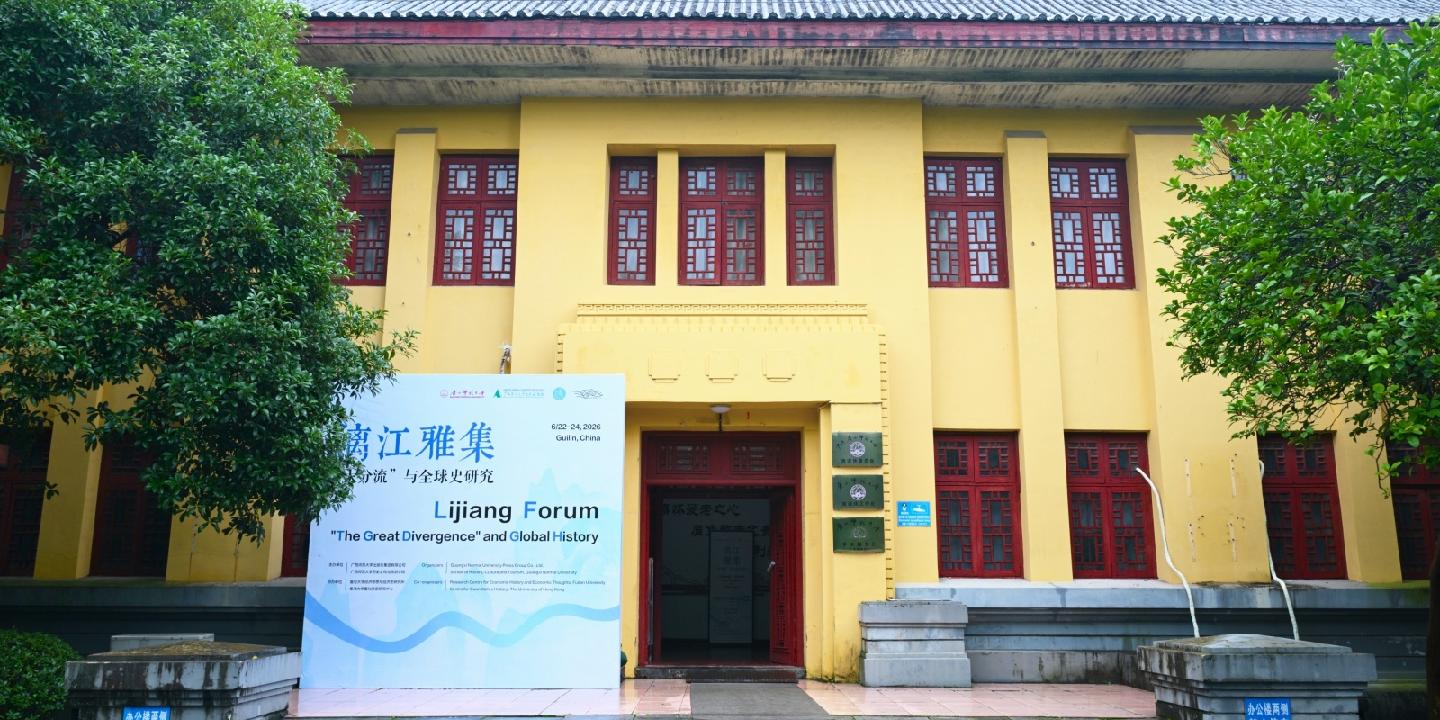
From June 22 to 24, 2026, the first "Li River Elegant Collection" international scholar exchange event will be held in Guilin. The core theme of this event is "The Great Divergence and Global History Research", which can be seen as a continuation of the global debate on the "Great Divergence". More than 30 Chinese and foreign scholars from 25 domestic and foreign institutions conducted in-depth discussions on three major topics: "The Great Divergence and China Studies," "Theory and Methods of Chinese Economic History Research," and "Big Data and Quantitative History Research.
This exchange event is jointly organized by Guangxi Normal University Press Group Co., Ltd. and the School of History, Culture and Tourism of Guangxi Normal University, and co organized by the Institute of Economic Thought and History at Fudan University and the Quantitative History Research Center at the University of Hong Kong. Huang Wentao, Deputy Secretary of the Party Committee of Guangxi Normal University, said in his speech that although the issue of "Great Divergence" originated in the Western academic community, only by building an equal platform for face-to-face discussions between Eastern and Western scholars and conducting two-way dialogue can we break free from the limitations of a single perspective and form a more objective and complete academic interpretation.
It is reported that Guangxi Normal University Press has introduced and published a series of economic classics and academic books from the perspectives of globalization, diversification, and horizontal comparison to examine the issues of technology diffusion, resource allocation, and global inequality revealed by the "Great Divergence". Huang Xuanzhuang, Chairman of Guangxi Normal University Press Group, also expressed his expectation to deepen the exchange and cooperation between the Chinese publishing industry and the global academic community through such exchange activities, promote the in-depth development of academic research to the global dimension through high-quality academic publishing, and achieve the goal of promoting academia, popularizing knowledge, and transmitting value.
During the exchange activities, Economic Observer reporters interviewed Stephen Broadberry, a professor of economic history at Oxford University and a member of the British Academy of Sciences, as well as Professor Chen Zhiwu, a lecturer in the Department of Finance at the University of Hong Kong and director of the Hong Kong Institute of Humanities and Social Sciences and the Center for Quantitative History Research. Although the two scholars have different entry points, they both emphasize the decisive role of openness and innovation in the evolution of civilization.
The following is an interview with them.
Stephen Braunschweig: The Contingency of Institutions, Geography, and History
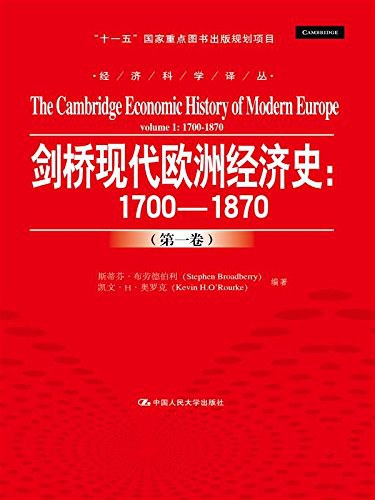
Professor Stephen Braunschweig's research spans across economic history, global history, and development economics, with a particular focus on long-term economic growth and development, macroeconomic history, the Industrial Revolution, the Great Divergence, and historical national income accounting. As a representative figure of the "quantitative turn" in contemporary economic history, his research has greatly promoted the integration of global history research and economic methods. His representative work "British Economic Growth, 1270-1870" is regarded as a milestone work in the study of economic growth in the UK, and "The Cambridge Economic History of Modern Europe" edited by him is also an important reference for the study of European economic history.
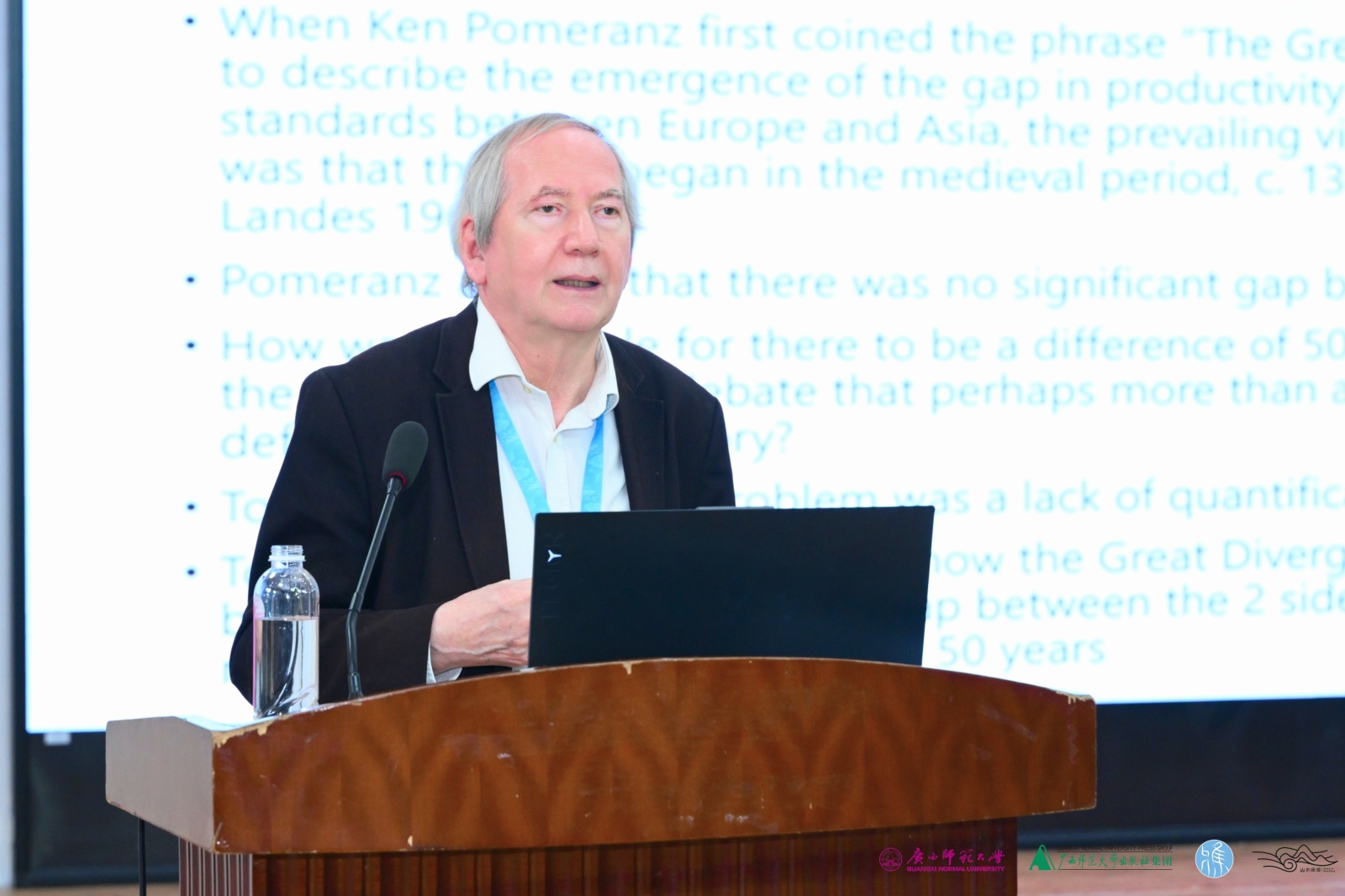
Economic Observer: You have shown through quantitative data that the key point of significant differentiation in per capita GDP between Europe and China occurred around 1700 (during the Kangxi period of the Qing Dynasty). In your opinion, what is the most core institutional factor causing this major diversion?
Stephen Braunschweig:In my opinion, the core driving factor of the 'big diversion' is innovation, not capital deepening. Economists generally believe that there is a law of diminishing marginal returns on capital, and simply accumulating material and human capital cannot achieve long-term output growth. What truly plays a decisive role is to improve the efficiency of the use of existing production factors, which is what we call innovation. This leads to a core question: why is the innovation capability of Northwest Europe far superior to that of China? To explain this gap, we need to analyze it from two dimensions: institutional and geographical.
At the institutional level, it is divided into two core components: government public systems and private order systems. Firstly, quantitative research on the large-scale diversion confirms that at the critical nodes of diversion, the per capita government fiscal revenue in Northwest Europe continued to rise rapidly, while the per capita fiscal revenue in Qing Dynasty China continued to decline. Adequate fiscal revenue allowed European governments to invest heavily in infrastructure and public goods construction, which was an advantage that China did not possess at that time.
Secondly, private order and civil society have played an irreplaceable role, as evidenced by Nobel laureate Joel McClane's research on the Industrial Revolution in Britain. The civil society in Western Europe has nurtured a systematic model of scientific and technological development, based on mature scientific methodology: scholars uphold critical thinking with skepticism, verify theories through repeated experiments, and focus on practical knowledge that can solve practical problems, rather than abstract theoretical deductions. Most importantly, European scientists maintain close two-way interaction with skilled factory workers trained through apprenticeship programs, achieving the integration of theoretical research and industrial practice. On the other hand, in China, although the technology of the Song Dynasty once led the world, this phenomenon is also known as the "Needham Problem" in academia, but China's technological development subsequently declined. The Confucian academic system emphasizes rote memorization and does not promote critical and experimental scientific thinking, which forms institutional barriers that hinder sustained technological innovation.
However, relying solely on institutions cannot fully explain the 'Great Divergence', and geographical factors are equally crucial. We need to distinguish between the first natural geography and the second natural geography. The first natural geography refers to the innate natural resource endowment, such as high-quality coal reserves and suitable climate conditions, which lay the foundation for the initial high productivity of the region. The second natural geography is a geographical result created by humans, and the most crucial one is the agglomeration effect: the production efficiency of densely populated cities is much higher than that of dispersed rural areas. Regions with superior natural resources will continue to attract labor and capital inflows, further promoting production efficiency; Regions with scarce resources will experience labor and capital outflows, and economic development will continue to lag behind. During the Industrial Revolution, the emergence of steamships significantly reduced transportation costs and further widened this development gap. When transportation costs are high, industrial production must be dispersed around the market; After the decrease in shipping costs, centralized and large-scale production became possible, and industrial industries subsequently gathered in core Western countries, while deindustrialization occurred in peripheral regions such as China and India.
This uneven development pattern can be traced back to the 15th century. Europeans opened up a new sea trade route connecting Europe and Asia, bypassing the southern end of Africa. They originally planned to cross the Atlantic to China, but unexpectedly discovered the American continent, thus building a transatlantic trade system dominated by European merchants.
Economic Observer: You believe that the closer we get to the Industrial Revolution, the more important factor determining the development of ancient economy is not to increase growth, but to "reduce decline". From a historical perspective, is it inevitable that China has not been able to "reduce decline", or is it a missed opportunity for change?
Stephen Braunschweig:This kind of decline is not inevitable in history. China actually has multiple opportunities to reverse its development trajectory, but they have all been missed due to policy mistakes and external shocks. I think one of the unfavorable factors was the Mongol invasion, which was not China's own problem but an uncontrollable external historical event. And the lack of willingness to support scientific development among nomadic peoples after coming to power is also part of the reason for the gradual decline of Chinese technology.
Another key opportunity emerged in the 1530s (during the Xuande period of the Ming Dynasty), when the court stopped sailing to the West and the country shifted towards inward development. This policy shift was a major mistake, as it directly transferred overseas development opportunities to the West, which was a major opportunity missed by China. In addition, starting from the early Qing Dynasty, China's national governance capacity continued to weaken, and the government was unable to collect taxes in full and invest in infrastructure. The degree of domestic market integration continued to decrease, leading to a long-term economic depression.
Economic Observer: What are the differences in observation perspectives between European and Chinese scholars regarding the "Great Divergence"?
Stephen Braunschweig:I think the research differences between the two sides are constantly narrowing. But when I first researched issues related to the Great Divergence, quantitative research on China's economic history was very scarce domestically, while European scholars generally relied on quantitative methods to measure fiscal revenue, output levels, and production efficiency. Nowadays, a large number of quantitative research results on Chinese economic history have emerged in the academic community, and the analytical methods of both sides are gradually converging. The integration of this research paradigm is a good thing for academic development.
Chen Zhiwu: Transcending blood ties is the key to the 'Great Divergence'
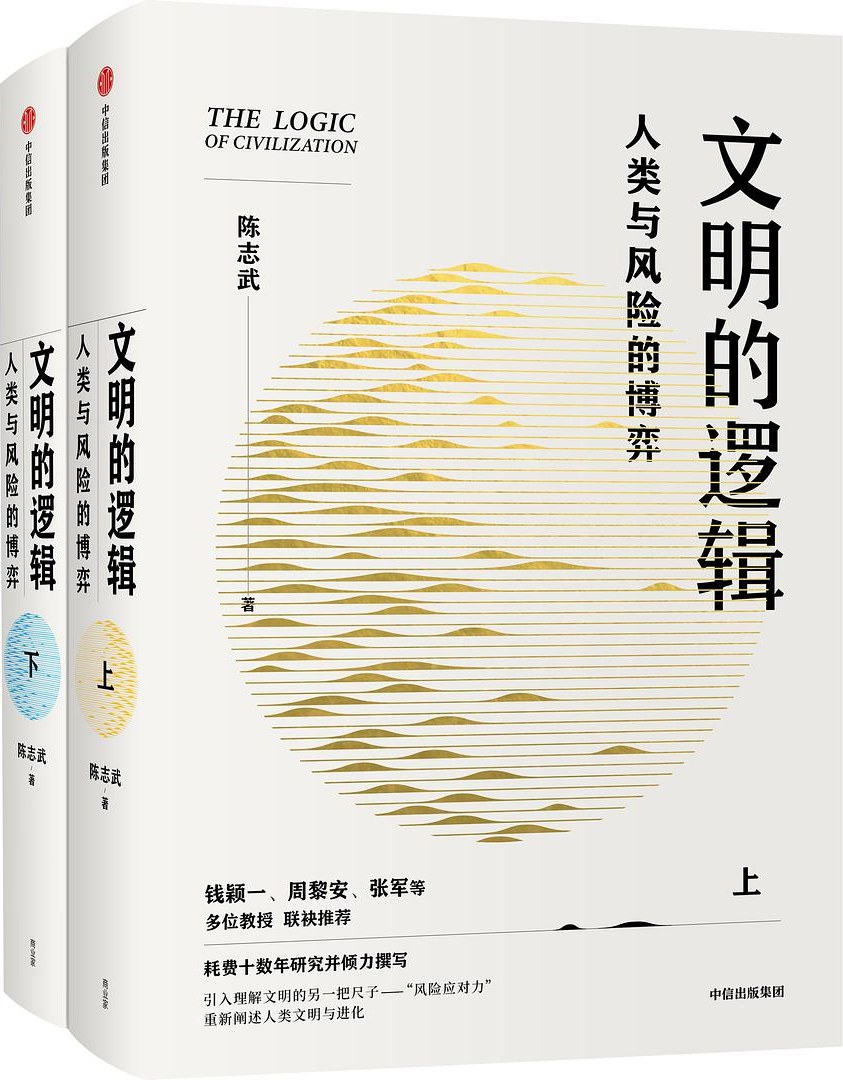
Unlike the analytical perspectives of European and American scholars, Professor Chen Zhiwu, Chair Professor of Finance at the University of Hong Kong and Director of the Hong Kong Institute of Humanities and Social Studies and Quantitative History Research Center, believes that the "Great Divergence" between the East and the West should have occurred during the Spring and Autumn Period and Warring States Period, at least since the Han Dynasty. Professor Chen's research areas cover financial theory, financial sociology, economic history, quantitative history, emerging markets, as well as the Chinese economy and capital markets. His Chinese works include "How Wealth is Created?", "Why Chinese People Work Hard but Not Wealthy", "The Logic of Finance", "The Logic of Civilization", and so on.

Economic Observer: You believe that the key to the "Great Divergence" lies in the Western development of financial markets and rule of law systems that transcend blood ties. What is the analytical method used to arrive at this conclusion?
Chen Zhiwu:As I mentioned earlier, the emergence and popularization of ironware technology during the Spring and Autumn Period and Warring States Period were the technological factors driving the Great Divergence. Iron technology, as the latest technology of humanity at that time, had a profound impact on human society and connected the civilizations of Eurasia from Europe to Greece and then to West Asia. From Türkiye to Persia, Israel, India, and finally China, the most important subversive technology that ran through the Eurasian axis period was iron technology.
The emergence of ironware has not only improved the level of economic and social development, but also led to an escalation of violence and a significant increase in the frequency of wars. The destructive power of iron weapons on humans far exceeds that of traditional stone, wooden, and bronze weapons. According to our archaeological statistical research, regions with more iron weapons have more frequent wars, stronger ability to defeat other countries, and are more likely to have thinkers. Because the intellectual elites of those kingdoms need to reflect on the causes of violence and war, and provide new ideas for governing the country, in order to achieve national peace and security under new technological conditions. Therefore, during this period, a large number of philosophers emerged on the Eurasian continent, laying the core foundation for various civilizations. In China, the "Hundred Schools of Thought" emerged, and the greatest wish of Confucius and other Confucian philosophers was to restore the Zhou ritual under new conditions, that is, to return to the relatively peaceful social life of the Western Zhou Dynasty.
During the Spring and Autumn Period and the Warring States Period, the challenges brought by violent wars reached their peak. This challenge also emerged in different regions of the Eurasian continent during the Axis period, and philosophers from each region began to reflect and propose suggestions. Confucianism chose to establish a trust network for interpersonal mutual assistance based on blood relationships, at least to ensure that the blood relationship network can safely and reliably help each other, share resources, and jointly share risks. At first, European society also considered blood ties as the main factor. After the establishment of the Roman Empire, Christianity emerged soon after, which made the West not only rely on blood ties, but also build a trust network for interpersonal assistance based on common beliefs, which is very different from China.
European philosophers, including Plato and Aristotle, especially after the emergence of Christianity, made a common choice for Western society: to establish a trust network for resource sharing and risk sharing across blood ties. Christian believers believe that Jesus is the only God, and their faith is only accepted after birth. The trust between different believers enables them to achieve cross temporal cooperation beyond blood ties, which is an important foundation for Western society to achieve interpersonal resource sharing and risk sharing.
Therefore, the Great Divergence began more than 2000 years ago, which brought different development directions from the East and the West, including institutions, culture, interpersonal relationships, and economic development potential. In China, during the Han Dynasty, due to the dominance of Confucianism, we developed systems, ethics, morals, and culture based on kinship networks, while in the West, we developed these in a direction beyond kinship. The major diversion started from then on.
Different forms of civilization provide different solutions for the institutional construction of human society. From Confucius to Mencius, to Dong Zhongshu in the Han Dynasty, and to Neo Confucianism in the Song and Ming Dynasties, their starting point is to emphasize the supremacy of blood relations, and to construct social relationships between people based on blood relations: risk sharing and resource sharing, and cross period mutual assistance and cooperation. From an economic perspective, choosing to establish a trust network based on blood ties is very natural. Not only in East Asian societies, but also in Africa, ancient India, ancient Egypt, and European societies before the emergence of ironware technology.You cannot choose who you were born into or who your parents are before your birth; In that case, developing a mutual assistance and cooperation system based on an unavoidable blood relationship, accompanied by corresponding culture and systems, will result in low trust and transaction costs.
I am particularly concerned about the development and evolution of human society. Since ancient times, humans have faced the same challenge, which is that individual survival is extremely difficult and requires cooperation with others to achieve resource sharing and risk allocation, otherwise it is difficult to survive. So, I believe that Confucianism is primarily an economic system, including a property rights system and an income distribution system. Although on the surface we may say that Confucianism is a cultural system, in reality, its ethical and moral values, as well as its cultural norms and preferences, serve its economic system based on the hierarchy of status, ensuring the functioning of its property rights and distribution system based on status. That is to say, through ethical and moral principles such as the Three Obediences and Five Constant Virtues, Three Obediences and Four Virtues, seniority, closeness, etc., it is determined who owns whom, who owns and controls what, who has more and who has less, as well as how people cooperate with each other, how to ensure cross period commitments, and so on. In the Confucian system of property rights and income distribution, the higher the seniority, the higher the distribution enjoyed, and the greater the control over property rights. The lower the seniority, the more one obediently waits for the elders' allocation. Under this cooperative system, individuals will live safer and can cope with many risks, which can solve the problem of "not suffering from poverty but suffering from insecurity" mentioned in the Analects. Of course, this system also extends to many concepts, such as the cultural concept of "more children, more blessings" that is formed around economic benefits and risk sharing.
We should also see that with technological progress and social development, generations of Confucian philosophers have been facing new challenges and problems, and under pressure, they have also made new responses. In the Song Dynasty, Confucian scholars implemented the abstract concept of clans at the practical level, such as introducing simplified versions of clan genealogies, which enabled even those who were proficient in writing to edit genealogies and transform clans from abstract to concrete interpersonal networks; Zhu Xi further refined the construction of ancestral halls and stipulated that ancestor worship should be held in mid month of each quarter, and all members of the tribe should wear five costumes to worship in front of the ancestral plaque. This concretizes the abstract clan organization and turns it into an objective existence in the minds of the clan members. Genealogy concretizes and reveals the names and deeds of ancestors, deepening the identity recognition of clan members, strengthening trust and cooperation among clan members, especially cross period cooperation, making risk sharing and resource sharing more solid.
Economic Observer: How do you view Professor Stephen's viewpoint that 'based on estimates of per capita GDP, the period around 1700 AD is identified as the Great Divergence period'?
Chen Zhiwu:I think this is just a phenomenon. Since the Spring and Autumn Period and the Warring States Period, China and the West have made different choices, but the economic consequences of these differences have not been shown before, and will only become apparent when technology and market size have developed to a certain extent. The economic differences under different cultural systems need a long process to be reflected at the per capita income level.
I conducted a detailed study in 'The Logic of Civilization'. For example, during the Age of Discovery, long-distance maritime trade put forward higher requirements for financing scale and risk scale. That scene highlighted the differences between the East and the West, such as the emergence of joint-stock limited liability companies in the late 16th century in the Netherlands, while China did not appear until the late 19th century. During the Industrial Revolution that began in 1780, technological research and development required a large amount of funding, and the risks were extremely high, which highlighted the consequences of the different choices made in the early stages of China and the West.
Since the emergence of Christianity, Western society has gone through nearly two thousand years of exploration, establishing a trust network and legal system that transcends blood ties, allowing people without blood ties to trust, cooperate across time, and sign contracts with them. In this intertemporal collaboration, Christianity played a significant role. Friends who frequently participated in church activities such as worship communicated at least once a week, which allowed for mutual trust to be maintained and continuously strengthened.
Therefore, for over two thousand years, China and the West have been developing in different directions. However, until the emergence of long-distance maritime trade, the potential of Europe's trust network that transcends blood ties was not fully realized. As time goes on, European countries are exploring the Americas, Africa, and Asia to explore new markets, which creates new requirements for fundraising and risk sharing. The organizers must rely on the larger society and cooperate with a wide range of social members, not just with their own clan or fellow villagers, to raise funds for maritime trade and share the risks of maritime exploration. At this point, the "Great Divergence" gradually emerged.
Economic Observer: What are the enlightening implications of studying the "Great Diversion" for China's current economic decision-making?
Chen Zhiwu:The research on the "Great Diversion" has a significant impact on China. For example, establishing a modern financial system across blood ties to cope with natural and man-made risks is an important inspiration left by the "Great Divergence" for modern society. It also enlightens us that the policy choices of decision-makers must regard "opening up to the outside world" as an unchangeable national policy, or a historical lesson. From the perspective of Chinese society, in the past 7000 years, the main driving forces behind major changes have been technological changes and opening up to the outside world. Therefore, any policy choice that leads to isolationism will not promote social progress and will cause Chinese society to reverse course.
Economic Observer: In recent years, you have been studying the game between humans and risk. From the current perspective, it seems that the rapidly changing world situation has led to an increasing number of risks that people have to deal with, and the risks are becoming increasingly unpredictable. How do you see this situation?
Chen Zhiwu:Before the 20th century, or until the Industrial Revolution, the risks and challenges faced by humanity mainly came from nature, such as droughts, floods, earthquakes, and epidemics. After more than two hundred years of industrial revolution, including the continuous advancement in the field of biomedicine, the threat of natural risks to human survival has been greatly weakened - although it has not completely disappeared. At present, climate change and environmental degradation will also bring new natural risk events.
Overall, traditional disasters no longer pose immediate survival challenges to human society. However, while addressing natural risks, humans have also brought about entirely new man-made risks. Since the late 18th century, with the outbreak of technological revolution, the scale of funds and risks has continuously increased, and today it has reached its peak. The most typical risk is financial crisis, without financial markets, there would be no financial crisis risk. We found in our research that the Tang Dynasty peony flower had experienced financial risks because Yang Guifei liked peonies, and Luoyang and Chang'an inflated the price of peonies very high. At that time, the foam risk caused limited damage to the society and economy, but the destructive power of the modern financial crisis was much greater.
Since the 19th century, the impact of economic and financial crises on humanity has been profound. These man-made risks may not immediately endanger lives, but risks such as stock market crashes, unemployment, and wealth loss can also lead to people being unable to live normally, which requires resolution and digestion. What I want to emphasize is that we can come up with more ways to better cope with risks, but the risks and challenges of human survival will never disappear and will always exist. Generally speaking, while addressing one risk, another risk may arise, although the latter may have a lower impact on human survival than the former.


The front air spring has hidden dangers, and Xiaopeng X9 has initiated a recall

Test drive Huawei Qiankun ADS 5.0: WEWA 2.0 architecture first test, will be gradually installed on Huawei's models

The car owner's self driving new energy vehicle's overseas car infotainment system has been remotely locked for over 30 hours, and the brand involved has responded by triggering the built-in security protection mechanism of the car infotainment system, which is a commonly used anti-theft and damage prevention measure in the industry


 WeChat registration or login


 Subscribe