Economic Observer Follow
2026-07-23 18:43


Economic Observer reporter Song Fuli
Mr. Xiong Yuezhi, a historian and researcher at the Shanghai Academy of Social Sciences, also has a proud identity as the discipline editor in chief of "Cihai". When looking back on her academic career, Xiong Yuezhi often feels that she has an inexplicable relationship with "Cihai".
In 2026, the compilation work of the eighth edition of "Cihai" is underway. As the editor in chief of the discipline of modern Chinese history, Xiong Yuezhi needs to first select a list of entries, that is, decide which entries to include. After the entries are reviewed and confirmed, he will then write explanations according to the prescribed format, while also reviewing explanations written by other authors.
Mr. Xiong's office is filled with a room full of various books, with half of them being dictionaries. Recently, he is writing new article explanations and reviewing and revising existing article explanations and images.
I am very lucky to have participated in the revision of "Cihai" with my mentor Mr. Chen Xulu when I was young, "said Xiong Yuezhi. The materials that the teacher examined were vast, but the strokes were as precious as gold.
Will the entries in the history discipline of 'Cihai' also be constantly revised with the changing times
There are many situations of addition, supplementation, and modification, and I can give many examples, "said Mr. Xiong Yuezhi.
The first scenario is that historical research is constantly exploring new fields. After the reform and opening up, new sub disciplines such as social history and urban history have emerged from scratch. These new academic achievements, as new knowledge, naturally need to be added as entries.
In the second scenario, some existing historical events and character entries need to be supplemented with the latest research results as new discoveries are made through archive organization and historical data mining, as well as the publication of some collections. Especially for character entries such as' Zeng Guofan 'and' Li Hongzhang ', new important publications are added every time they are revised.
The third scenario best reflects the meaning of changes in the times. Some historical events and figures have changed our views with the deepening of historical research, or based on new historical research, we have already clarified the previously unclear or inaccurate areas. Therefore, these terms should be corrected in a timely manner.
Xiong Yuezhi has long been engaged in historical research on the "spread of Western learning to the East" since modern times. Recently, he added a historical figure entry titled 'Shao Zuozhou' to 'Cihai'.
Shao Zuozhou (1851-1898) was a native of Jixi, Anhui during the late Qing Dynasty, with the courtesy name Banqing. In 1865 (the fourth year of the Tongzhi reign), it was donated as tribute to the Imperial Academy. Appointed as a disciple in 1867. Studied in Hangzhou from 1868 to 1870. After participating in the township examination multiple times, they all failed. In 1882 (the eighth year of the Guangxu reign), he joined the Tianjin Support Bureau and assisted in local fundraising. The following year, Zhou Fumu entered the Tianjin Customs Road. After 1885, there was a punishment for the Qing court's failure in the Sino French War, and they devoted themselves to studying the classics. In 1887, 28 articles of "Scarism" were published (after the death of Shao, titled "Shao Shi Scarism"), proposing reform ideas from various aspects such as education, administration, and financial management.In 1895, together with Wang Xiuzhi and Hu Yifen, the Guangxi inspector, they wrote a book titled 'Reform in Response to the Times, Striving for Self Strengthening, Clarifying Post Reform Matters', proposing various reform proposals. There is also a philosophical work called 'Axioms of the World'.
Xiong Yuezhi believes that Shao Zuozhou is a great thinker in the Westernization Movement. In that era, Shao Zuozhou, while extensively studying Western learning, noticed the progress of chemical research in the world and attempted to use the Book of Changes to explain chemical substances and molecular structures. His posthumous work 'Axiom of the Ordinary' has a broad perspective, attempting to integrate Western learning and traditional culture to construct a completely new philosophical system. He was an attempt by Chinese intellectuals to integrate Chinese and Western cultures, bridge disciplinary boundaries, and construct a philosophical system with Chinese characteristics during the surge of modern Western learning.
At the suggestion of Xiong Yuezhi, 'Shao Zuozhou' was updated as a new character entry in the online version of the seventh edition of 'Cihai', and will soon appear in the eighth edition of 'Cihai'.
The discipline of modern Chinese history in the eighth edition of "Cihai" is currently co edited by Xiong Yuezhi and Professor Dai Angang from the History Department of Fudan University. They each lead researchers and students to compile entries for this discipline. Dai Angang was a disciple of historian Mr. Chen Jiang and also took over the editing work of "Cihai" from his teacher Chen Jiang.
This phenomenon of teacher-student relay inheritance is very common in the compilation of "Cihai". Now, Mr. Chen Xulu's baton has been in the hands of Xiong Yue for more than 20 years.
In 1949, Xiong Yuezhi was born in an ordinary farming family in Huai'an, Jiangsu. After graduating from high school, she joined the army.
In the 1970s, when Xiong Yuezhi was stationed in the Shanghai Garrison Command, he kept a "Four Corner Number Dictionary" by his bedside all year round. It was given to him by his high school teacher and was a reference book published by the Commercial Press in the 1950s. In the years when there were no books to read, the explanations of the entries in this book were his reading materials. He copied all the idioms there. Because he enjoys reading, Xiong Yuezhi often takes on the paperwork assigned by the military, and that dictionary is his good helper.
In 1974, during the "Criticism of Lin, Criticism of Confucius" movement, there was a "Criticism of Legalism and Criticism of Confucianism". Shanghai People's Publishing House was tasked with organizing a group of scholars to annotate the classics of Legalism. At that time, each annotation working group consisted of 20 people, including 5 intellectuals, workers, farmers, and representatives of the People's Liberation Army (reflecting the political orientation of the occupation ideology of workers, peasants, and soldiers). Xiong Yuezhi was selected as one of the 5 representatives of the People's Liberation Army to participate in the annotation of the works of Chinese democratic revolutionary and thinker Zhang Taiyan.
Zhang Taiyan's writing was once recognized as ancient and difficult to understand. The annotation group that Xiong Yuezhi participated in consisted of five scholars, namely Cai Shangsi (who annotated at home but did not attend the group's activities), Chen Xulu, Tang Zhijun, Zhu Weizheng, and Jiang Yihua, all of whom were top historians and literary and historical masters at that time. In those years, Xiong Yuezhi assisted several professors in completing a solid training in ancient philology and exegesis, starting from the most basic word or sentence, by consulting massive reference books such as "Ciyuan" and "Peiwen Yunfu" for annotations.
What's even more rare is that Xiong Yuezhi and several scholars live and eat together, get along day and night, and consult and discuss at any time. This intimate academic environment, similar to ancient academies, laid a foundation of knowledge for him that far exceeded that of ordinary people. In order to complete the annotation work, they were able to access all the books and materials in Shanghai without any obstacles, which was an unimaginable "special treatment" at that time. Xiong Yuezhi thus opened the door to knowledge.
In 1977, the annotation work was completed and Xiong Yuezhi was discharged from the military and returned to his hometown. Soon, he waited for the opportunity to resume the college entrance examination. In the 1977 Chinese language exam paper for the college entrance examination in Jiangsu Province, there was a question about punctuation and annotation of an ancient text. This is too easy for Xiong Yuezhi. He explained it in detail and pointed out that the text came from the "Xunzi's Advice on Learning" chapter.
Xiong Yuezhi's exam paper caught attention, and he was successfully admitted to Jiangsu Normal University (now Suzhou University) in 1978. After the end of the first semester, with the encouragement of his teacher, historian Professor Dong Caishi, Xiong Yuezhi directly applied for the graduate program in history at East China Normal University. In order to prepare for the exam, Xiong Yuezhi borrowed an unfinished modern history volume of "Cihai" from the school library to memorize.
Thanks to those three years of annotation work, Xiong Yuezhi has become quite familiar with the modern historical background. After memorizing all the characters and events in the Chinese modern history chapter of "Cihai", he successfully passed the postgraduate entrance examination under the guidance of Chen Xulu.
As soon as the graduate student enrolled, Mr. Chen Xulu was participating in the compilation of the third edition of "Cihai", and Xiong Yuezhi immediately joined in. From then on, Xiong Yuezhi participated in the compilation work of "Cihai" from the third edition in 1979 to the current eighth edition. From auxiliary work to Mr. Chen's succession as the editor in chief of the discipline of modern Chinese history after his death, the compilation of "Cihai" ran through almost his entire academic career.
The compilation of 'Cihai' also incorporated Xiong Yuezhi's academic research. Because in the process of writing and revising, complex academic issues need to be condensed into concise and stable statements, which in turn continuously promotes his research and keeps an eye on the research trends and latest academic achievements of related topics.
In the email to Xiong Yuezhi, the editor of "Cihai" also wrote about the relevant requirements for the editing work:On the submitted paper manuscript, it is expected to be completed by the end of August and signed on the first page of the manuscript.
Century old 'Cihai'
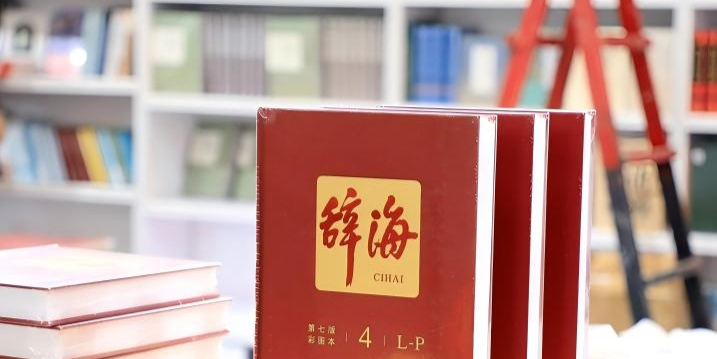
The compilation work of "Cihai" has been more than 110 years since 1915. The influence of this reference book on several generations of Chinese intellectuals is profound and multidimensional.
In March 1947, Kuomintang leader Hu Zongnan led a large army to attack Yan'an, and the Central Committee of the Communist Party of China shifted its focus to northern Shaanxi. In the extreme environment of marching and fighting, Mao Zedong's biggest concern was his several large book boxes. Later, due to inconvenience in carrying, he instructed the guards to hide the large wooden box filled with books in a small kiln in the nearby Dashangou, waiting to retrieve them after the war. However, the box he carried with him only left two books, one was "Ciyuan" and the other was "Cihai".
Both books are reference books. Ciyuan "was published by the Commercial Press in 1915 and is the first large-scale Chinese language reference book in modern Chinese history. It mainly collects and explains knowledge-based words related to common ancient Chinese words and ancient names, regulations, and systems.
At the end of the Qing Dynasty and the beginning of the Republic of China, the private publishing industry in China rapidly emerged. The Commercial Press and the Zhonghua Book Company competed fiercely in the market for every inch of land, fought hard in content selection, and devoted themselves to preserving cultural heritage, advocating a culture of Western learning and new knowledge. This kind of 'civilized competition' has led to mutual progress between the two in the game, forming a situation of 'dual competition' at one point.
At the time of publishing "Ciyuan" at the Commercial Press, Lu Feikui, the general manager of Zhonghua Book Company, and his colleagues - Xu Yuangao, who had previously served as the Shanghai Governor, and Fan Yuanlian, who had previously served as the Minister of Education of the Beiyang Government - discussed and compiled a comprehensive dictionary that surpassed "Ciyuan". They named this book "Cihai", which will be a large-scale comprehensive dictionary that integrates the main functions of a dictionary, a Chinese dictionary, and an encyclopedia dictionary.
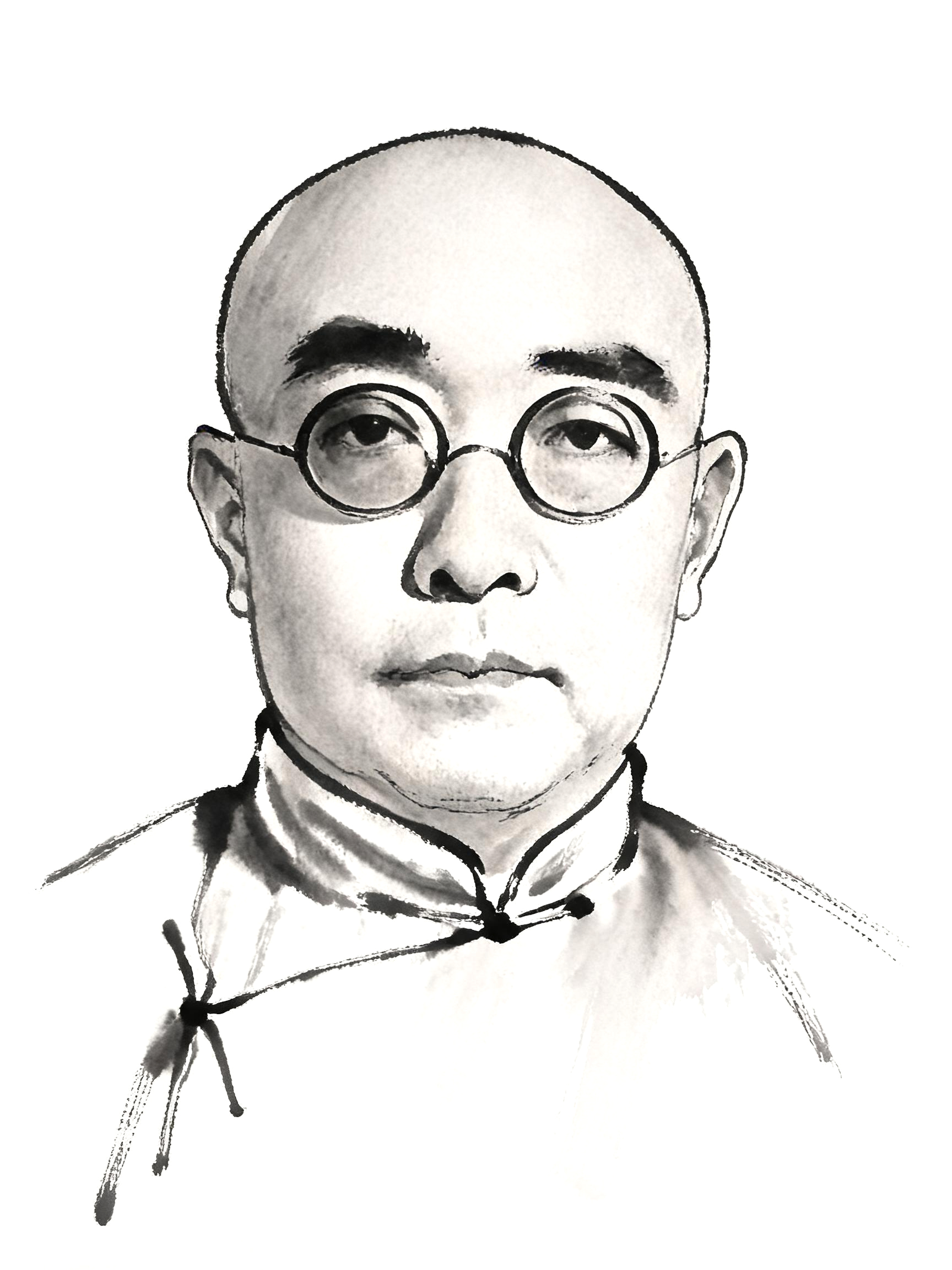
In order to compile "Cihai", Lu Feikui, who took it as his responsibility to "improve our country's dictionary", went to great lengths to find a host and ultimately settled on Shu Xincheng. In the early 1920s, Shu Xincheng was already a nationally renowned education reformer. He has authored and published specialized books such as "History of Modern Chinese Educational Thought" and "History of Modern Chinese Study Abroad", and co edited a "Dictionary of Chinese Education" with others, possessing experience in compiling large-scale dictionaries.
From 1923 to April 1928, Lu Feikui invited Shu Xincheng seven times over a period of five years, and ultimately moved him to agree to host the compilation of "Cihai".
In the "Editorial Outline" written by Shu Xincheng, the compilation policy of a comprehensive dictionary was proposed. "Lexicographical books are tools for the general application of human governance studies, and their responsibility is to reveal the meanings and usages of inherent word classes, in order to provide users with accurate and appropriate explanations, and to solve difficulties in a timely manner. Therefore, as lexicographers, they should observe the needs of users themselves and provide them as needed
This sentence succinctly provides the essence of the dictionary: firstly, it is a "tool for the application of general human governance studies," while also specifying the responsibilities: "To observe the needs of the users and provide them with what they need
The achievement of this goal is not easy. Shu Xincheng originally planned to complete the compilation within two to three years, but found it impossible to achieve it a few months later. To compile a grand dictionary with limited manpower in a private bookstore, we encountered five difficulties: the difficulty of selecting words, the difficulty of explaining, the difficulty of citing book titles, the difficulty of punctuation, and the difficulty of proofreading and printing. The editing work mainly relied on editors to collect materials, repeatedly check and identify them, and then submit them to the editor in chief for final draft... Afterwards, we went through the relocation of editors, personnel changes, and several twists and turns before entering the stage of classification revision, supplementation, and batch by batch review and finalization.
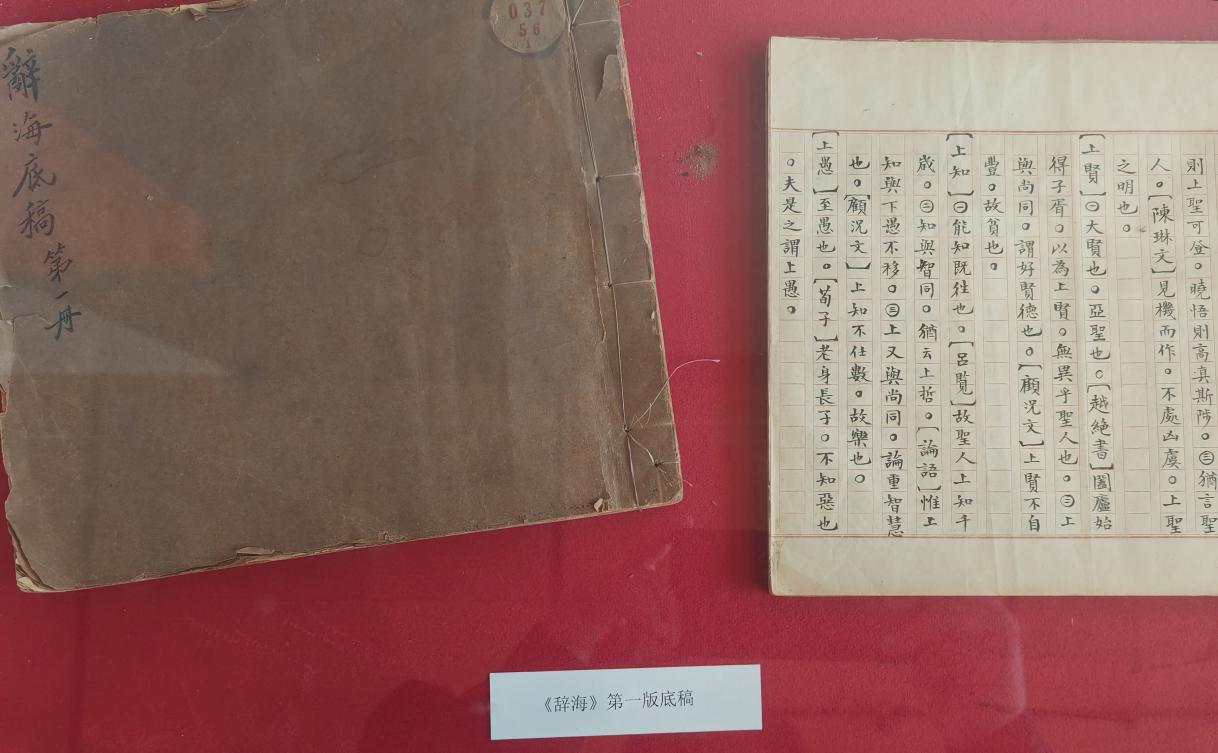
Compared to Ciyuan, Cihai's encyclopedic knowledge is its unique feature and selling point. Each editor of Cihai has to share the task of writing many disciplinary entries. For example, Chen Runquan covers entries in mathematics, physics, chemistry, as well as natural sciences such as astronomy and meteorology; Xu Sitong is responsible for covering social science topics such as politics, economics, and law; Hua Chunfu is responsible for religion, physiology, health and medicine, as well as some animal and plant items; Zhou Songdi shared entries in philosophy, literature, education, foreign history and geography... Each editor completed two or three entries per day, ranging from as few as two or three to as many as ten, accumulating over time.
In addition to existing entries, subject editors also need to read various newspapers and magazines daily, and extensively collect new words and phrases (including loanwords). The books that editors often refer to are displayed in the bookshelf in the editing room, and editors can use them for reference at any time when writing entries. The entries for the encyclopedia section were compiled by relying on the library of Zhonghua Book Company located upstairs from the editorial office. At that time, the collection of books reached 50-600000 volumes, including various ancient, modern, Chinese, and foreign books.
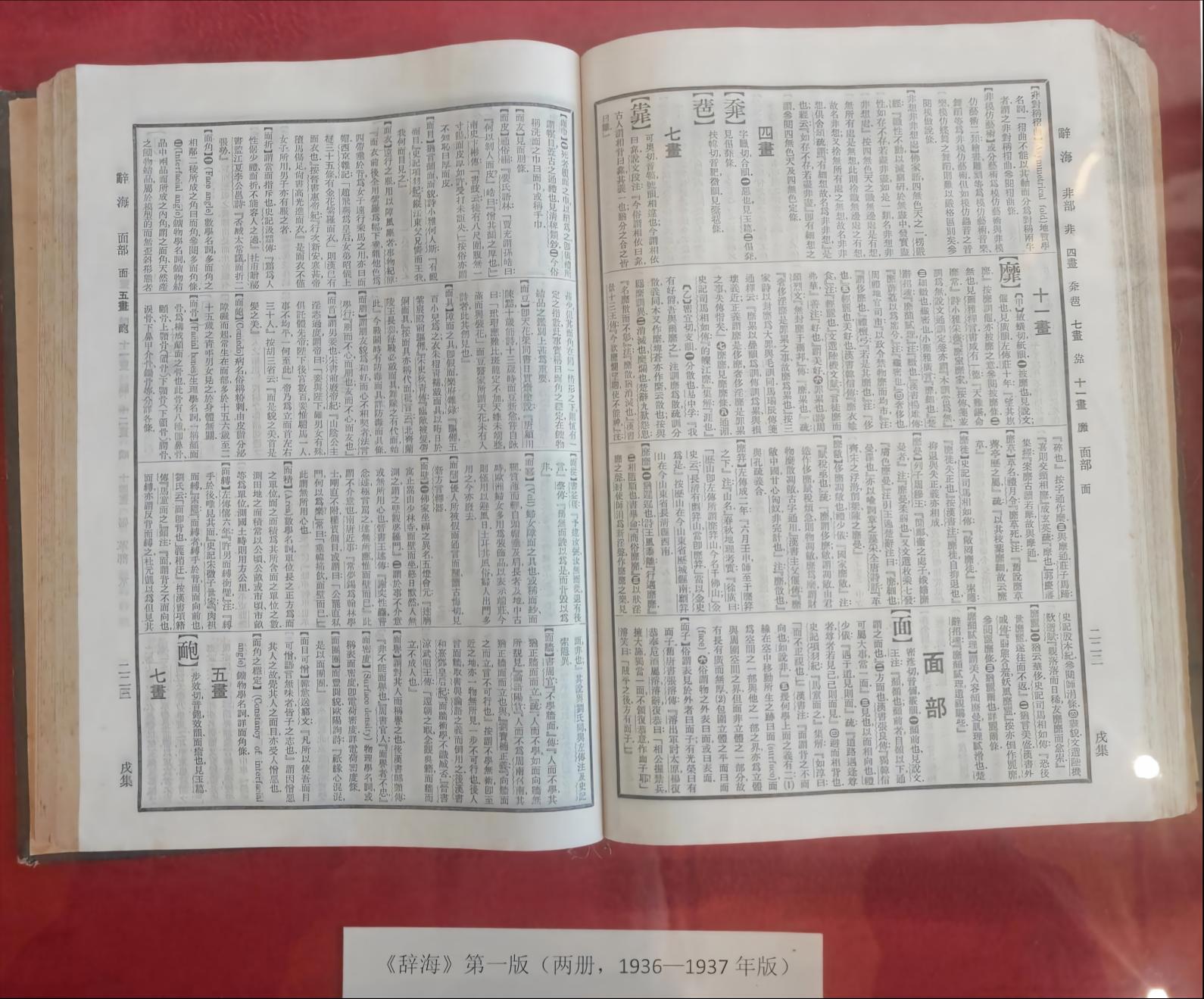
Day after day, after the organization, review, and finalization by Mr. Shu Xincheng, Mr. Liu Fanyou, and Mr. Shen Yi, as well as the silent writing of fourteen or fifteen editors for 21 years, "Cihai" was published in the first volume in 1936 and the second volume in 1937. The total number of articles included in the book is 85803, the total word count of the main text is 6.37 million, and the total word count of the layout is 6.76 million.
The format of "Cihai" refers to the "Webster's Dictionary", and the scope of vocabulary is not limited to old words in historical books. It also includes new words and major historical events that were widely circulated at that time, such as the "Tanggu Agreement", "Shanghai Agreement", "Sino Japanese War", "Shandong Issue", etc. At that time, the Japanese invasion of China was already approaching step by step, which posed great risks. But Shu Xincheng insists on listing and encourages his colleagues: "Even if China falls, there should still be historical terms
Due to the publication of "Cihai" being later than "Ciyuan", the collection and interpretation of words borrowed and absorbed the advantages of "Ciyuan", complementing each other's strengths and weaknesses, and later becoming more refined: the distinction between the sound and meaning of individual words is more detailed, the explanation of words is more accurate, the citations are complete (including the author, book title, and article title), and the format is relatively strict, making it easier for readers to check.
The publication of 'Cihai' caused a sensation. Becoming the highly sought after "Wanbao Quanshu" of that era, the four versions of "Cihai" sold over a million sets according to statistics, making it an essential desk reference book for that generation of scholars.
Writer Bing Xin later said, "For the past fifty or sixty years, the most beneficial reference book for me has been 'Cihai'. This teacher knows everything and does whatever you want to trouble her, never getting angry, making her my best companion
Scholars have commented that "Cihai" was published in an era of cultural transition between old and new, with a large influx of Western knowledge into China. The old "Erya" and "Kangxi Dictionary" are no longer sufficient to meet the demand, and "Cihai" provides new tools and new thinking for China's entry into modern society culturally. These abundant new words and phrases drawn from real life made "Cihai" a best-selling reference book of that era.
Therefore, when both China and the world undergo significant changes, "Cihai" needs to "innovate and adapt to the times", and revision has become a historical necessity.
On September 17, 1957, Mao Zedong met with retired Shu Xincheng during his inspection in Shanghai. Shu suggested to Mao Zedong that the "Cihai" should be revised.
At this time, it has been 20 years since the publication of 'Cihai'. From the perspective of the new era, the old "Cihai" is characterized by "ambiguous editorial positions and viewpoints", "serious political issues", and can no longer serve the needs of new political, economic, and social development. It is necessary to "collect, interpret, and compile words under the guidance of Marxism Leninism and the Party's line, basic principles, and policies".
As a loyal reader of 'Cihai', Mao Zedong readily agreed. Ke Qingshi, who was then the Secretary of the Shanghai Municipal Party Committee, was on the side, and Mao Zedong entrusted this task to Shanghai.
Handing over to Shanghai is not arbitrary. Shanghai is the birthplace of "Cihai" and has always been the center of China's publishing industry. Experts and scholars are concentrated here, with strong academic strength and a wide range of disciplines, making it suitable for revising large-scale reference books.
From then on, due to the concern of the top leaders of the Party and the country, the revision of "Cihai" has dual cultural and political significance.
On May 1, 1958, the editorial office of "Cihai" by Zhonghua Book Company was established, directly under the leadership of the Shanghai Publishing Bureau, specializing in the revision of "Cihai". At the time of proposing the revision of 'Cihai', it is precisely the time when socialist transformation has been basically completed and cultural construction has been vigorously carried out. The new 'Cihai' is no longer just a revision, in fact it is a re compilation and is seen as a completely new knowledge reconstruction.
According to Ke Qingshi's suggestion, the revision of "Cihai" should focus on grouping and contracting various forces, with Shanghai's higher education institutions and academic groups as the main focus, and be compiled according to the general classification of disciplines. After compilation, the dictionary will adjust the entries, process the text, unify the format, and conduct a preliminary review of the first draft. Then, the first draft will be submitted to the editorial board and relevant departments for review and modification; Finally, submit to the Science and Technology Planning Commission of the State Council for final review.
However, when the "Great Leap Forward" movement emerged in various fields such as science, education, and literature, the compilation of "Cihai" was inevitably influenced by the trend of the times and took some detours: the units that received the task of compiling "Cihai" decomposed and delegated the task layer by layer, and the "sea of people tactics" replaced the "expert oriented" approach, involving many people who did not have the qualifications to revise. In order to pursue speed unilaterally, some units organize teachers and students to "rush to complete the initial draft of a thousand words within a week".
The quality of writing for large soldier groups and mass movement style combat is obvious, and the explanations for some entries are simply critical articles, which nine out of ten cannot be adopted.
Due to the poor quality of the initial draft, the "Pujiang Concentration" was released in early spring 1961. The Shanghai Municipal Party Committee and the East China Bureau at that time invited about 150 top academic experts and scholars from Shanghai, Nanjing, Hangzhou, Hefei and other places to hold a meeting at the Pujiang Hotel. They were authorized by the Municipal Party Committee not to participate in any political studies and focused on reviewing manuscripts... During the three-year difficult period, grain and oil were supplied in fixed quantities, but scholars (many of whom were "rightists") enjoyed rare treatment: four dishes and one soup, as well as cigarettes and candy.
Three rounds of centralized review at Pujiang Hotel have turned it into a paradise for academic research. Later, the renowned Chinese medicine expert Qiu Peiran recalled, "We all worked very seriously from morning till night to write... There were discussions, debates, and even consultations with a group of like-minded people with expertise to reach a consensus. Often, we carefully revised every word and idiom before finalizing it
The Pujiang concentration also achieved a masterpiece in the history of compiling "Cihai", where each entry's interpretation requires careful consideration of every word and sentence. Therefore, after going through such twists and turns, "inviting top-notch experts and scholars to join, inviting them to personally write and serve as leaders" became the compilation guideline for "Cihai".
In 1960, Mr. Shu Xincheng passed away. The following year, Mr. Chen Wangdao, the translator of the Communist Manifesto and the president of Fudan University, succeeded as the editor in chief of Cihai. After years of hard work, a trial edition of 16 volumes of "Cihai" was published, and continuous revisions were made on this basis. The compilation of "Cihai" (undecided draft) was completed in 1965. This edition of 'Cihai' was first printed in 20000 sets and distributed internally, serving as the second edition of 'Cihai'.
However, when "Cihai" (unfinished draft) was completed, it coincided with an unprecedented movement, and the twists and turns of its publishing fate were inevitable. It is difficult to fully describe the process of it being frozen, abandoned, and even criticized one by one
From the perspective of the format of "Cihai" (draft yet to be finalized), some scholars studying "Cihai" have referred to it as a new milestone. The second edition of "Cihai" is concise in text and rigorous in style, using a Marxist perspective to record and summarize the changes in the world from the 1930s to the early 1960s, whether it is changes in human social activities or changes in natural activities.
The compilation team formed for this edition of "Cihai" is unprecedented. The author team has gathered top-notch experts and scholars from all over the country: Zhao Puchu, Zhang Youyu, Qian Weichang, Zhou Yutong, Qiu Peiran, Su Buqing... The other is a top-notch editing and publishing team: Xia Zhengnong, Shi Ximin, Zhao Chaogou, Chen Luo, Shu Qiqiu, Chao Feng... Since then, these two teams have each maintained a good inheritance. Although many of them have passed away, there are always new forces constantly enriching themselves.
However, the second edition of 'Cihai' also bears the distinct imprint of that era. In articles such as' Chinese People's Liberation Army 'and' Jinggangshan Meeting ',' Chairman Mao's close comrade in arms' Lin Biao ranks after Zhu De and before Chen Yi, making him the leader of the meeting. Even the national anthem 'March of the Volunteers' was not included due to criticism of Tian Han.
Therefore, it is imperative to revise "Cihai" again after 1976. Large dictionaries are often seen as a symbol of a country's cultural soft power, used by national leaders as gifts in diplomatic occasions. At that time, Chinese dictionary publishing was in a state of desolation. A foreign leader visited and gave us a complete set of encyclopedias from their own country, but we could only give back a small 'Xinhua Dictionary'.
In order to pay tribute to the 30th anniversary of the founding of the People's Republic of China, in early October 1978, the Central Propaganda Department required that "Cihai" must be officially published before the National Day of 1979. With a quick calculation, it has been less than a year since the task was completed and the official publication was completed. However, the revision of "Cihai" faces numerous difficulties.
In 1977, Mr. Chen Wangdao passed away. In 1978, the baton of "Cihai" was handed over to Xia Zhengnong, who was then the Secretary of the Shanghai Municipal Party Committee (with the First Secretary at the time) and the First Secretary of Fudan University. Luo Zhufeng, who had not yet been "liberated", was invited to serve as the deputy editor in chief and oversee the executive work.
At that time, Shanghai Lexicographical Publishing House, established on the basis of Cihai Editing Institute, urgently transferred dozens of editors and proofreaders from other publishers to complete the publishing task, and began the revision work day and night.
At the time, Chao Feng, the deputy editor in chief of Shanghai Lexicographical Publishing House, took the risk of "entering the cowshed again" and drafted "Several Specific Opinions on Handling Manuscripts in 'Cihai'", boldly denying the "leftist" tendency in compilation and breaking through the annotation of entries. Editor in chief Xia Zhengnong acknowledged the "opinions" word for word and said, "If there are any errors, I, as the editor in chief, will be responsible
In this self drafted 'opinion', many previously affirmed things, such as' breaking the four old ',' linking up ',' seizing power ',' correcting mistakes', 'bourgeois intellectuals',' May 7th Cadre School ', etc., will not be accepted. And some individuals who have not been thoroughly exonerated, such as "Qu Qiubai", "Luo Ruiqing", "Deng Tuo", "Tian Han", "Zhang Zhixin", etc., are listed and fully affirmed.
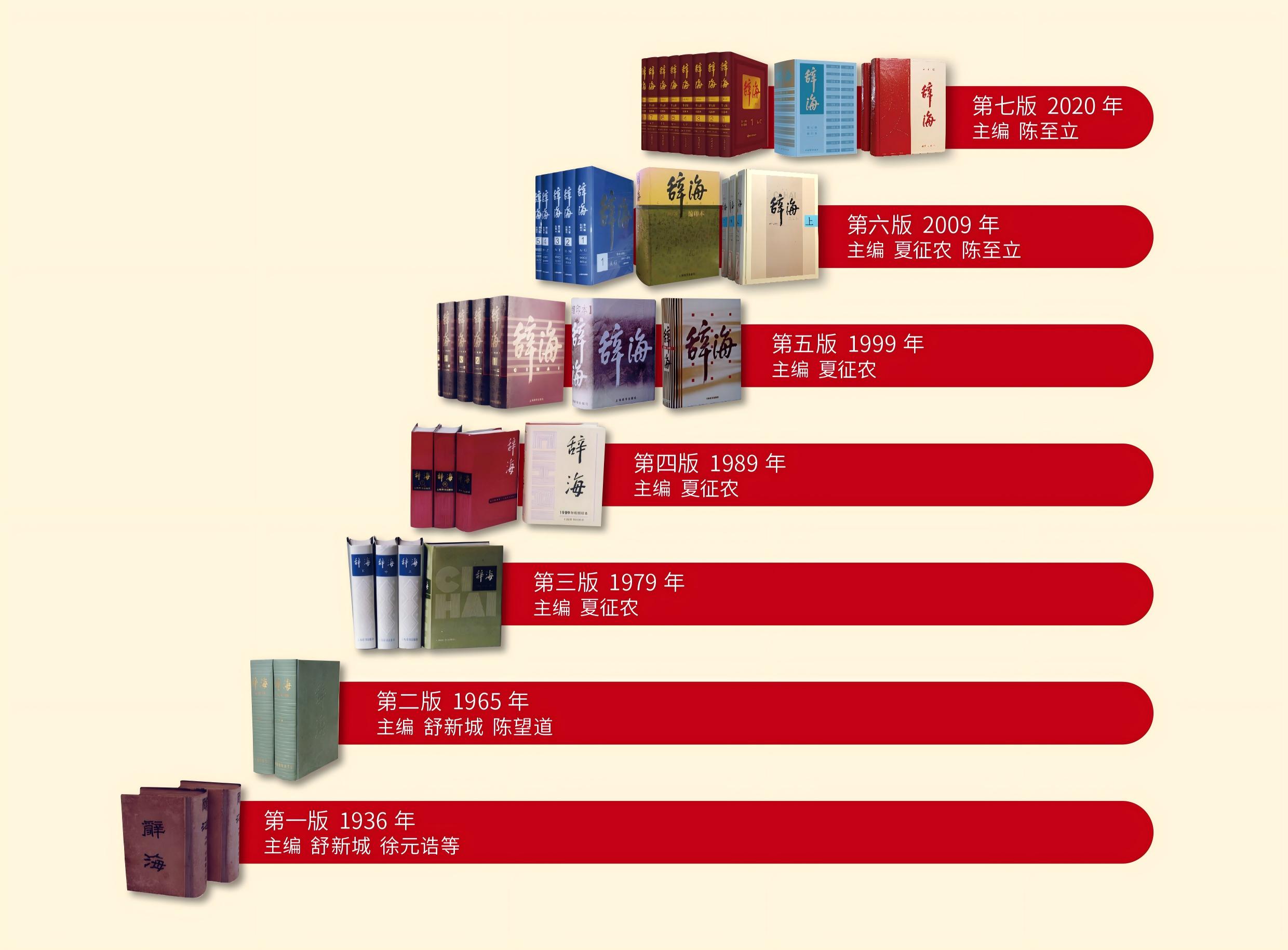
The third edition of 'Cihai' was finally published just before the National Day holiday in 1979. This version of "Cihai" is characterized by ideological liberation, innovative definitions, and the removal of "leftist" critical interpretations as much as possible, returning to the track of knowledge. It has received widespread attention from the whole society and triggered an unprecedented rush to buy. Due to the shortage of supply, book prices have been inflated to two to three times the original price on the black market. Some bookstores have even introduced regulations: newlyweds can purchase a copy of "Cihai" with their marriage certificate as a priority.
This three volume masterpiece, priced at 55 yuan (with a reduced edition costing 22.2 yuan, equivalent to half a month's salary for an ordinary person), has become a must-have for countless families and libraries to purchase, greatly satisfying the long suppressed knowledge needs of Chinese people. "Cihai" has also played an important role in social life, becoming a "silent teacher" for many people.
It was also from the third edition onwards that "Cihai" established a relatively stable team of authors and editors, forming a tradition of revision every 10 years, and was published every nine days as a gift to Daqing. At the same time, "Cihai" has been continuously improved and enhanced, with its vocabulary, disciplines covered, and total word count constantly increasing with the progress of the times.
The fourth edition of "Cihai" established a complete disciplinary system. Cleared the remnants of 'left'. No longer 'wearing hats' or' labeling 'in character summaries. In addition to the original stroke lookup table, phonetic index, foreign language index, and radical lookup method, a four corner number lookup index has been added.
The fifth edition of "Cihai" has changed from a black and white version to a color version, achieving a combination of graphics and text, and completing an important transformation from arranging entries according to the radical of Chinese characters to the phonetic order of word entries. At the same time, some words and explanations that are no longer active or have little meaning were deleted, reflecting the principle of "keeping up with the times".
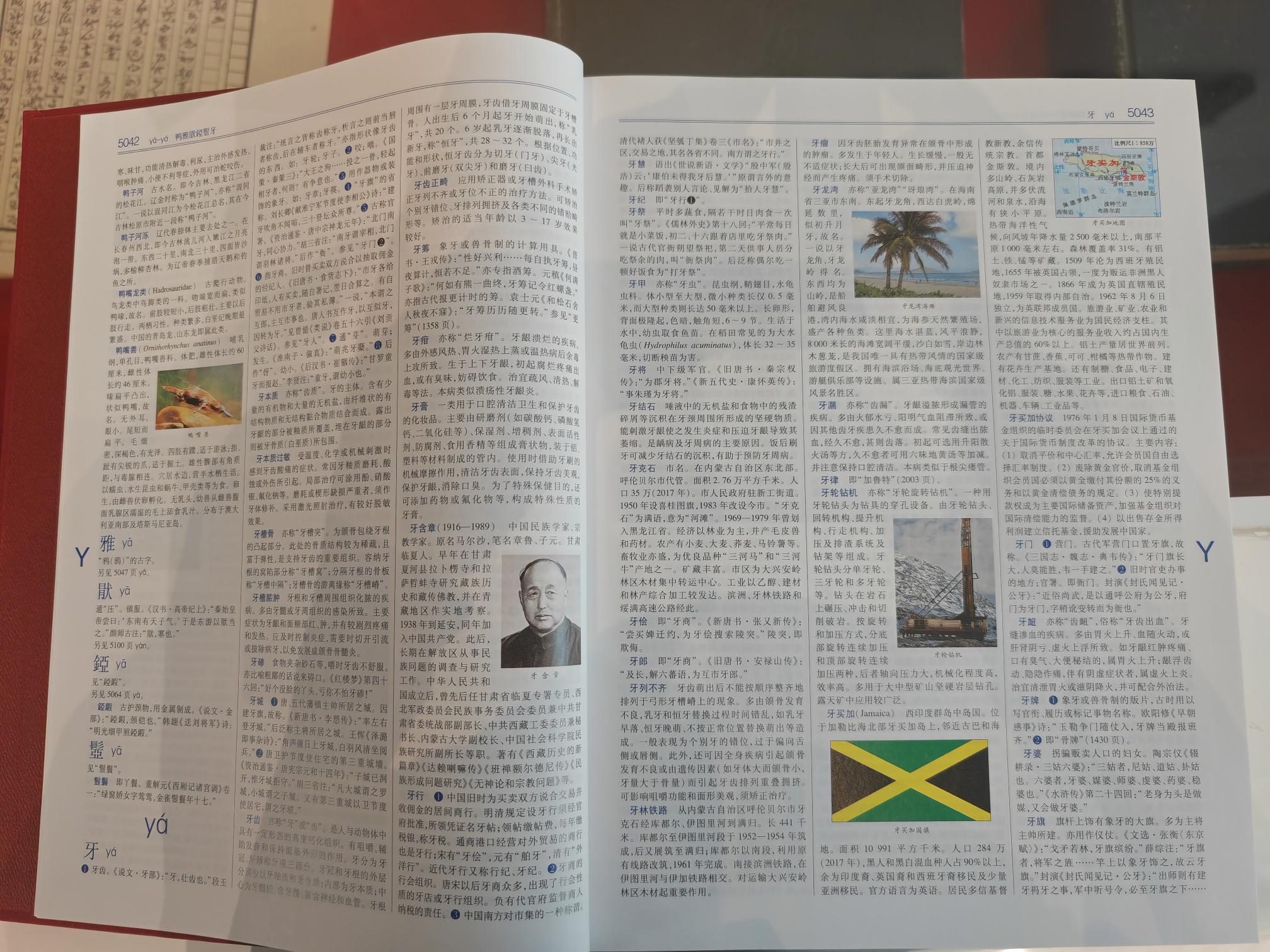
The sixth edition of "Cihai" has systematically improved the quality of cited documentary evidence, added a large number of modern Chinese language entries and new internet technology words, systematically added a series of entries on the theoretical system of socialism with Chinese characteristics, added literary works after the founding of the People's Republic of China, and launched a digital handheld reader for the first time.
Simultaneously launching an online version in terms of form, integrating multimedia resources such as audio and video, 3D models, etc.
Nowadays, "Cihai", known as the "archive, chronicle, and milestone of history and era", has embarked on its eighth journey.
Three parts writing, seven parts organizing
Mr. Chao Feng, who dares to break through the "leftist" trend, has long served as the president of Shanghai Lexicographical Publishing House. He has led the compilation and publication of four versions of "Cihai" on the front line and is widely recognized as a dictionary publisher in China.
Chao Feng has a famous statement that has been widely recognized in the field of dictionaries - the large-scale dictionary publishing project is "three parts writing, seven parts organizing". This is to say that for large-scale dictionaries, the establishment of the dictionary compilation system, the organization of editing and proofreading personnel, and the management of the compilation process play a crucial role in the quality of the book.
Mr. Tang Kemin, who served as an editorial board member of "Cihai", was the deputy editor in chief of Shanghai Lexicographical Publishing House from 1998 to 2015. He has retired for 11 years now. In an article reminiscing about Chao Feng, Tang Kemin deeply recalled: "I have followed Comrade Chao Feng for nearly thirty years, always taking him as my teacher. There are many things worth learning from him.
When the reporter visited Shanghai Lexicographical Publishing House in May, the publishing house specially invited Mr. Tang Kemin to return to the editorial department of "Cihai" and talk about his editing history.
What do you think is the main difficulty in compiling 'Cihai'
The compilation of 'Cihai' is much more difficult than writing a personal monograph. It tests the ability of massive organization and coordination, as well as the ultimate skill of textual refinement, "said Tang Kemin.
Cihai is an encyclopedia, to compile it well, the first step is to find the right people. These 'right people' are 'discipline editors' who possess both academic and organizational abilities. Discipline editors must be top renowned scholars in the discipline (mostly from major universities or research institutes), and have strong appeal and organizational skills. Because having good academic knowledge alone is not enough, one must also be able to rally and unify the team of authors in their field, forming an efficient autonomous organizational system.
At the same time, the compilation of each edition of "Cihai" needs to "set the tone" during top-level design, clarify the characteristics and innovative directions of the new edition, and implement these intentions into the minds of the subject editor, which is not an easy step.
To train and guide authors to achieve the transition from "writing monographs" to "writing entries", repeated adjustments are needed. Top scholars are often accustomed to writing lengthy papers and monographs, but the requirements of "Cihai" are highly condensed "dry goods". This requires the author to understand the format limitations of the entry - "what to write first, what to write later", write according to needs, and carefully consider every word.
The format of "Cihai" is a set of interpretive norms formed through the accumulation of various versions and the experience of several generations of editors. It includes the grading and word count of entries, the way and intersection of definitions, the combination and sorting of meanings, the principles of image matching, the expression principles of image names and annotations, the technical specifications of text (format, font and shape, pronunciation, chronology, current place name annotations, citations, foreign language and translated names, alternative names, references, punctuation marks, number usage, quantity and units), especially the standardization of the interpretation content and order of character entries, and the listing of unified language that needs attention.
Therefore, the format of "Cihai" is often described as the "law" of "Cihai", and its compilation must have a legal basis and strict enforcement. The 'format' is compiled and printed by the Cihai Office as a 'Cihai Compilation Manual', which is distributed to all editors and authors involved in the revision of Cihai for reference and implementation.
Famous mathematician and former president of Fudan University, Su Buqing, once served as the deputy editor in chief of "Cihai". Mr. Su once said that although he is good at scientific research, he may not be competent for writing entries for "Cihai". This certainly contains elements of Mr. Su's humble self mockery, but it also indicates that the difficulty of writing the entry is significant. The average word length of each entry is 140 words, and explaining an entry clearly with concise words is a great test of the author's academic skills.
Therefore, in the compilation of Cihai, "trial writing" has become an indispensable process. In order to avoid rework after large-scale development, "spline" (model entries) must be written first: after the author has written one or two items, the subject editor should check them first, and then submit them to the publishing house editor for review and improvement from the perspective of style. After several rounds of repeated revisions, it is confirmed that the author's writing meets the requirements before it can be fully implemented.
This "pilot first, then promote" model ensures the unified quality of the entire book. For most writers, it is also a unique academic training: in-depth understanding and minimalist expression.
So, if everything goes smoothly, the next core step is organization and coordination. In a loose structure without administrative affiliation, the orderly and efficient coordination and collaboration of a compilation team of thousands of people must rely on scientific and effective organizational management.
In the 1950s, administrative instructions could be relied upon to decompose and implement the compilation task layer by layer to specific scholars. But after the reform and opening up, the overall social environment underwent a change. The relationship between the editorial board and the authors of 'Cihai' has returned to an essential contractual partnership.
This brings about a collaborative challenge, as scholars from various disciplines are inevitably faced with heavy workloads and specific conflicts in the compilation of encyclopedia entries. Especially at present, top scholars are often burdened with affairs and face the heavy workload of their own units, including research projects, teaching work, academic conferences, as well as papers and monographs to be published. Allowing them to participate in the writing of entries becomes a rather distracting task. If it is a new author, the initial training, trial writing, and repeated adaptation objectively require a lot of energy and time.
Shanghai has also noticed such contradictions. In the 1980s, the Propaganda Department of the Shanghai Municipal Party Committee issued a special document advocating that academic units undertaking the task of compiling "Cihai" should include this work in their research plans, regard the revision results as scientific research achievements, and provide practical guarantees in terms of manpower and time, in order to promote the author to invest in the writing work with a high sense of responsibility.
This is still an advocacy "soft support", and maintaining the quality and progress of the compilation of "Cihai" still largely relies on the prestige and network of the discipline editor in chief. They need to rely on their academic status and personal charm to inspire and organize authors to invest in this vast project, and maintain consistency.
Therefore, the compilation work also takes the form of a tense 'battle'. Chao Feng once posted a progress chart at the venue, occupying a whole wall and placing small red flags to indicate the progress of each subject, coordinating hundreds of people to work simultaneously.
The seventh edition of "Cihai" has nearly 170 subject editors and 1800 listed authors, with an average writing team of 10 people per subject editor. As experts who have the best understanding of academic trends and knowledge systems in their field, subject editors have a significant say in the "word collection" stage, and it is basically up to them to decide which words should be included and which words should be deleted.
But this cannot ignore the importance of "editorial oversight". The discipline editor in chief will maintain close contact with the corresponding discipline editors of "Cihai", and they will jointly coordinate and promote the progress of the discipline's writing, and jointly solve problems encountered: determining the list of words, writing explanations, adding pictures, reviewing, editing and processing, merging meanings
The editors in each editorial office of Cihai also need to track the academic dynamics of the discipline, focusing on reviewing "newly added entries". If they find that a certain emerging field is not sufficiently included, they will provide prompts and suggestions to the discipline editor in chief. This kind of prompt often inspires and inspires each other, thus polishing the list of words more perfectly - which requires extremely high knowledge structure and comprehensive quality from editors.
In the specific editing of a large number of entries, conflicts are almost inevitable in the collision between the "strictness" of the responsible editor and the "specialization" of the author.
For authors, the writing of entries must strictly follow the "style" and cannot be mixed with personal traces and writing style, which is completely different from academic works emphasizing personal creativity. As a scholar in a certain field, the author often falls into a professional individualism, "unable to keep up with writing", believing that the explanation of a certain entry is difficult to explain in 140 words and needs to be extended in length; Or they may think that there are too few words included in this field, making it difficult to present the appearance of this discipline.
Obviously, including too many entries and excessively long explanations will cause the expansion of "Cihai" beyond control. In this way, many authors will be unhappy when editors repeatedly demand strict deletions.
Sometimes when our editor accidentally speaks too harshly, it can make the author unhappy and ignore the editor. At this time, the editorial director and social leaders often bring the editor to visit the author, communicate fully, patiently explain, and make the author's mind change, cooperating with us to complete the compilation, "Tang Kemin said with a smile.
Therefore, daily editing practice further tests the ability of the editors of Cihai to interact with people. The thousands of authors of 'Cihai' are truly 'thousands of people, thousands of faces'. It can be said that the relationship between each pair of editors and authors is a unique collaborative relationship. Some authors are too busy and have to rely on editors to complete most of the writing work, which is then reviewed and confirmed by the authors.
After the explanation of the entry is completed, the plagiarism check becomes the next major task. This is reflected in some interdisciplinary fields, such as medical psychology. Some entries are included in medical subjects and psychology, which requires editing and plagiarism checking to properly place them in a certain discipline. Of course, it is also possible that both subject editors consider a certain entry to be important, so they will write separate explanations and finally draft it, which will be processed by the editors into one entry.
Therefore, in this job, the role of editors is crucial, playing a coordinating and scheduling role.
The complexity of compiling "Cihai" may be reflected in the establishment of the "Cihai Office" specifically for this book, which is a comprehensive functional department integrating project management, content quality inspection, product development, and administrative coordination.
Liu Qiong, Deputy Director of the Cihai Office, participated in the later stages of the sixth edition of "Cihai". She still remembers clearly that before participating in the sixth edition special inspection sample work, the social leaders specifically talked to her, emphasizing the importance of the work on "Cihai". And she also felt that every participant was "selected" to do this job.
What is the most challenging aspect of compiling 'Cihai' in your position
The most challenging aspect is the 'variability' in the editing process, where both the editing team and the author team face changes from old to new, such as resignation, retirement, or withdrawal from the editing work for various reasons. How to smoothly complete the handover between old and new, and ensure the continuity and quality of the editing work, is the challenge I always have to deal with, "said Liu Qiong.
Therefore, before launching each version of 'Cihai', a rough timeline must be established to ensure overall progress. However, in the specific implementation, the plan cannot be set too rigidly, but flexible space should be reserved based on progress. Cihai is revised every 10 years, and the participation of different departments in the editing team varies at different stages, so there are often changes. However, Cihai Office needs to maintain a high degree of stability: responsible from beginning to end, ensuring seamless connection in all aspects, and assuming a "management" role.


The front air spring has hidden dangers, and Xiaopeng X9 has initiated a recall

Test drive Huawei Qiankun ADS 5.0: WEWA 2.0 architecture first test, will be gradually installed on Huawei's models
The car owner's self driving new energy vehicle's overseas car infotainment system has been remotely locked for over 30 hours, and the brand involved has responded by triggering the built-in security protection mechanism of the car infotainment system, which is a commonly used anti-theft and damage prevention measure in the industry


 WeChat registration or login


 Subscribe