Economic Observer Follow
2026-07-23 18:32


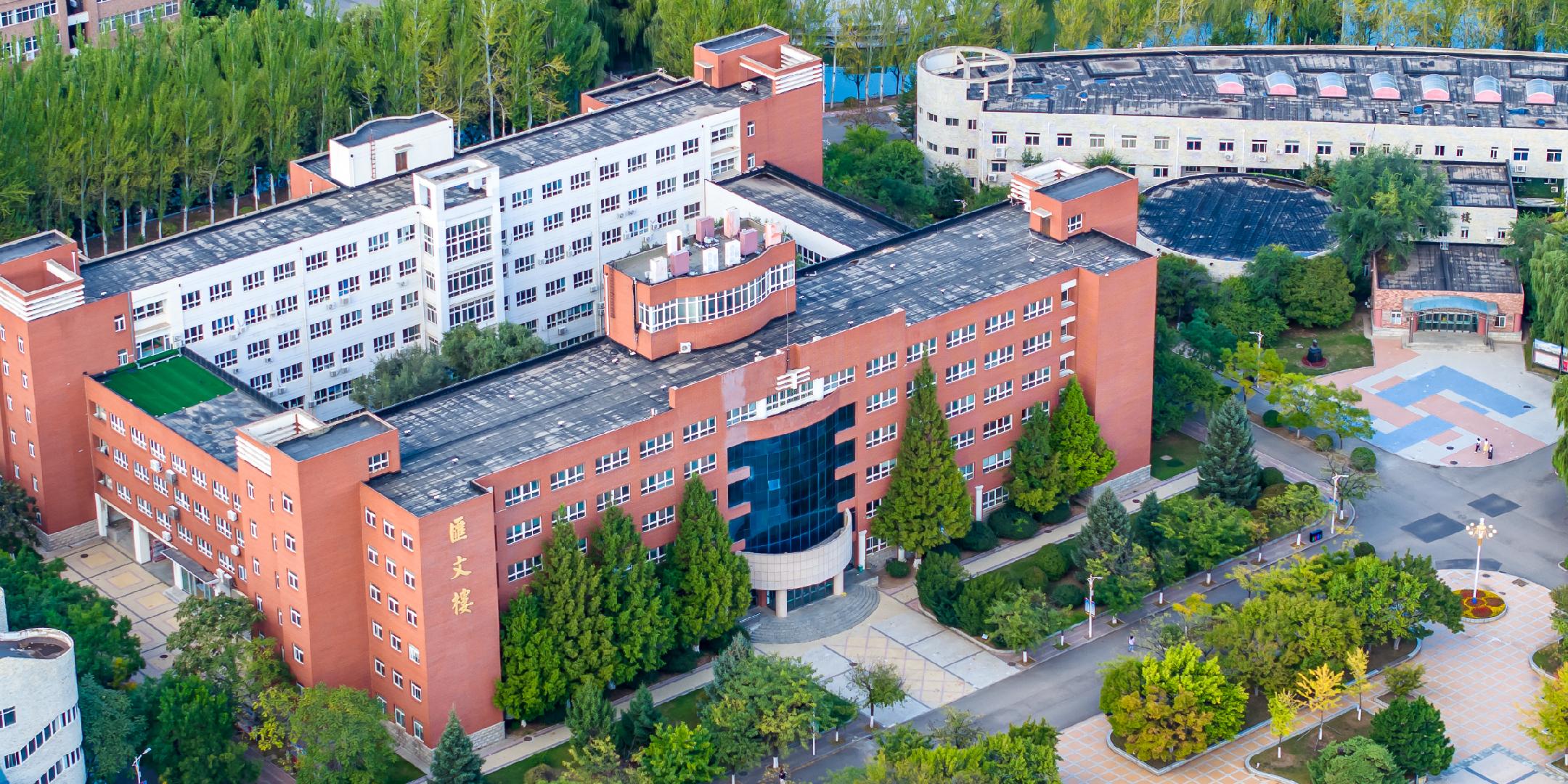
Some "Double First Class" universities are no longer exclusive to first and second tier cities.
In the past, there was an unspoken ranking for college entrance examination students when choosing schools, with first tier cities taking priority over provincial capitals and provincial capitals taking priority over prefecture level cities. As for the county town, few people would put it on their volunteer list.
But the wind direction is changing. Nowadays, more and more "Double First Class" branch campuses, ordinary undergraduate colleges, etc. are starting to settle in county towns and even small towns. Many candidates' destinations are no longer exclusive municipalities or provincial capitals, but have become some coastal counties.
Why does university 'go down'? In 2025, the Ministry of Education will include "expanding the scope of high-quality education" as one of the top ten hot topics in educational reform; The "15th Five Year Plan for Education Development" released in June 2026 further clarifies the support for the construction of new campuses for several "Double First Class" universities, and the increase of undergraduate enrollment for "Double First Class" universities by more than 100000 people. The old campus cannot accommodate it, so new campuses can only be built in broader counties.
Universities seem to be "moving" into county towns. So, will going to the county town to study at a university become a trend in the future?
Universities Enter Counties
The extension of "Double First Class" universities to county towns is not a new phenomenon that has only emerged in recent years. In the 1980s, Zhangjiagang City in Jiangsu Province established the first county-level ordinary university in China, "Shazhou Vocational and Technical College". According to the statistics in the article "Characteristics and Enlightenment of Colleges and Universities Running at County Level", as of 2023, there are colleges and universities running at county level in all provinces except Xizang Autonomous Region, of which the eastern coastal areas are the most concentrated and typical.
Why do counties need universities? Ding Changfa, associate professor of the Department of Economics at Xiamen University, believes that counties are key nodes connecting urban and rural areas. With population concentration and industrial agglomeration, the demand for talent is becoming increasingly urgent. In the past, the development of county towns relied on labor, land, and resources. Now, in order to upgrade industries and transform the economy, technology and talent are indispensable. Universities can not only cultivate practical talents needed locally, but also directly serve local industries through industry university research cooperation, and attract graduates from other places to find employment, forming a talent "reservoir".
Xiong Bingqi, the president of the 21st Century Education Research Institute, also has the same judgment. In his opinion, the logic of running universities in Chinese counties is very direct - when the economy reaches a certain level, it naturally requires a higher level of talent supply, and universities have become a necessity.
According to publicly available information, the Economic Observer reports that there are currently 17 "Double First Class" universities in China that have established campuses in counties, and 13 Sino foreign joint universities (with "Double First Class" universities as the cooperating Chinese universities) have also chosen to settle in counties.
From the perspective of educational logic, these universities have different paths and can be roughly divided into three categories.
The first type is running schools in the county, that is, the school has "taken root" in the county since its establishment. For example, Yanbian University is headquartered in Yanji City, Shihezi University is headquartered in Shihezi City, and Dujiangyan Irrigation Project Campus of Sichuan Agricultural University, formerly known as Sichuan Forestry School, became one of its campuses after joining Sichuan Agriculture University in 2001.
The second type is county-level branch campuses, which means that universities actively "overflow" and build branch campuses in the county according to the development needs of the school, while the main campus of the university is still in the central city. For example, Lanzhou University Yuzhong Campus, Nanjing University of Aeronautics and Astronautics Tianmu Lake Campus, etc., rely on new campuses or colleges to sink educational resources to the county town, which belongs to incremental expansion.
The third type is based on policy dividends, among which the most typical is the Hainan Lingshui Li'an International Education Innovation Pilot Zone, jointly built by the Ministry of Education and Hainan, which has attracted 11 Sino foreign joint colleges from "Double First Class" universities to settle in.
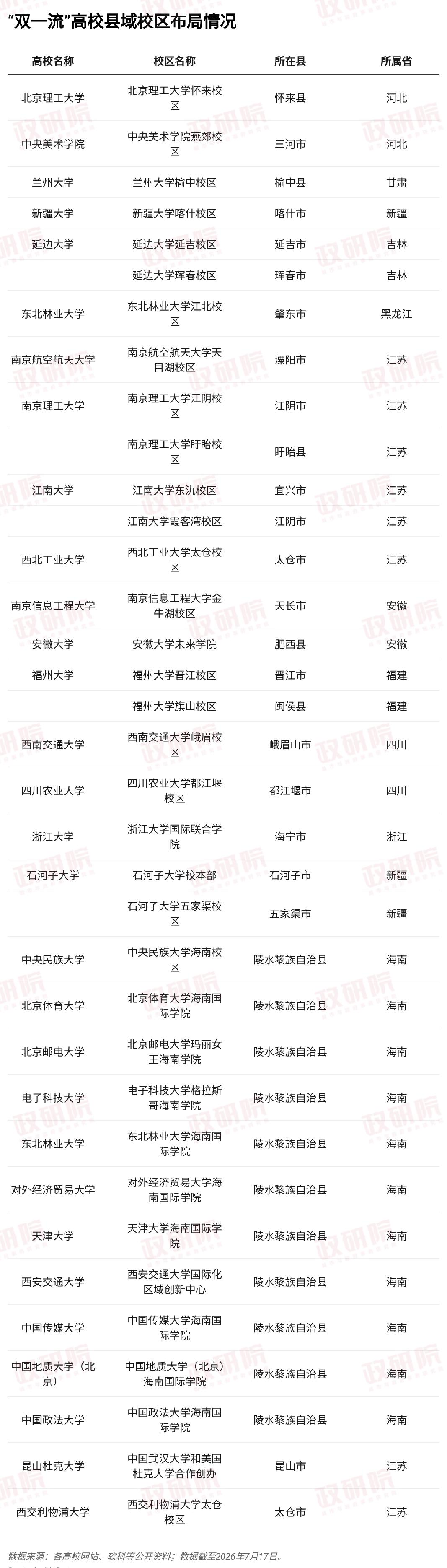
From the perspective of campus location, apart from the policy driven Lingshui in Hainan, it is mainly concentrated in several types of areas. One type is county-level cities in the eastern region with developed economies and concentrated populations. These counties have a good economic foundation and can provide policy support such as land and funding for universities. Local industrial demand and universities can also form a two-way interaction.
For example, Jiangyin City, Kunshan City, Yixing City, Taicang City, and Liyang City in Jiangsu Province, Jinjiang City and Minhou County in Fujian Province, Feixi County in Anhui Province, and Haining City in Zhejiang Province, all have regional gross domestic product (GDP) exceeding 100 billion yuan. Building a university requires a large amount of capital investment and high demands on local financial strength. Taking Nanjing University of Science and Technology Jiangyin Campus as an example, in 2023, the Jiangyin Municipal Government will invest 300 million yuan to implement the Jiangyin Campus Extension Project, including the construction of 20000 square meters of student dormitories, the renovation of 10000 square meters of talent apartments and other supporting construction projects.
The other type is the counties surrounding the central city. These areas are located within the radiation range of urban agglomerations or metropolitan areas, and maintain close connections with the central city. The Huailai Campus of Beijing Institute of Technology is an example. Huailai County is located in the Beijing Tianjin Hebei urban agglomeration, and it only takes about half an hour to travel from Huailai Station to Beijing Qinghe Station by high-speed rail. This makes it a hub for the transfer of non capital functions from universities in Beijing. The location of the Future College of Anhui University in Feixi County, Hefei City has a similar logic. Feixi County is adjacent to the urban area of Hefei, and the Hefei Metro Line 3 has been extended to Feixi. The transportation connection between the county and the central city is convenient enough to directly undertake the overflow of higher education resources from Hefei. These counties are located at key nodes of urban agglomerations or metropolitan areas, maintaining a moderate distance from the central city, which can relieve the pressure on the space for universities to operate, and not make commuting for teachers and internships for students too difficult.
In addition, some counties rely on characteristic pillar industries to form a development path of industry education integration with the professional settings of universities. For example, at the beginning of signing the cooperation agreement, the Tianmu Lake Campus of Nanjing University of Aeronautics and Astronautics relied on Tianmu Lake General Airport to build a talent training base mainly focused on aviation; The Jiangyin campus of Nanjing University of Science and Technology has established the College of New Energy and the College of Intelligent Manufacturing, which correspond to the layout of industries such as new energy and high-end equipment manufacturing in Jiangyin city; Jiangnan University's Dongtang Campus has placed environmental related disciplines in Yixing, focusing on the industrial accumulation of the local "China's Environmental Protection Hometown"; The Jinjiang Campus of Fuzhou University focuses on textile, footwear, clothing, and new materials, which is in line with the industrial characteristics of Jinjiang. It has also established multiple school enterprise joint research and development centers with local leading enterprises such as ANTA and Jinba; The Taicang Campus of Northwestern Polytechnical University focuses on disciplines such as civil aviation and intelligent manufacturing, which perfectly corresponds to Taicang's key layout in the aviation industry.
Ding Changfa believes that the establishment of universities in economically strong counties is more for the purpose of industrial transformation and upgrading, attracting high-end talents, and promoting technological innovation. It is a "icing on the cake" demand, focusing on future development momentum. Ordinary county run universities, on the other hand, rely more on introducing universities to drive local economic and social development, which is a need for "timely assistance", such as attracting vocational colleges to settle in to stimulate consumption and promote employment. But both have a common demand - both for economic and social development.
County Level Education
Whether a small county town can carry the dream of a university, perhaps the most intuitive answer lies in the students' real experiences.
Lingshui County is located in the southeastern part of Hainan Island, with a permanent population of 384100 and a GDP of 28.775 billion yuan in 2025. It belongs to the middle and upper reaches of Hainan's economic map. The Lingshui Li'an International Education Innovation Experimental Zone, which has multiple Sino foreign joint universities, is not located in the county town, but on the Li'an Peninsula in Lingshui County. Wang Xi and Zhang Meng, who are studying here, have slightly lower scores in the college entrance examination compared to the main campus. However, they value the diplomas of "Double First Class" universities and the faculty shared with the main campus, so they chose the Hainan campus jointly operated by China and foreign countries.
After arriving, I realized that geographical location was the biggest challenge. Every time I go home, I have to go through the twists and turns of changing buses, high-speed trains, and planes. Usually, it takes about half an hour to take a taxi to Lingshui County. The surrounding living facilities are not perfect, the cafeteria dishes are also monotonous, but the price level is not low.
However, the campus itself did not disappoint them. The hardware facilities such as dormitories and teaching buildings are very new, and some are even better than the main campus. Most of the teachers are sent by our department, and the teaching quality is similar to that of our department. Because it is a joint education park with several schools together, they occasionally encounter students from other schools, and the experience is quite unique. They also have one or two opportunities to participate in activities or competitions at their headquarters every semester, and they usually collaborate with their classmates on projects online.
Due to its location in Lingshui, internship opportunities are a clear weakness, and there are very few internship opportunities available locally, which cannot compare to the students in our department. For the future, their attitude is also very clear. Hainan is just a place for studying, and they will not stay here for internships, work, and further studies in the future.
The situation of a county-level campus of a "Double First Class" university in the western region is similar to that of Lingshui, Hainan. Lin Wen spent her first three years of university here, and when she applied, she was interested in obtaining a "Double First Class" diploma. During my studies, this campus has been under construction and there are new changes every holiday. The campus has complete facilities and beautiful scenery, but stepping out of the school gate is another world. Lin Wen remembers that when he took the school bus from the city to report, the whole way was a bare and flat mountain. This campus is also not located in the county town, but in a township. There is not even a commercial street around the school, only restaurants operated by local villagers.
Lin Wen has been here for three years, and the number of times he has gone to the city headquarters can be counted on one hand. It wasn't until my senior year when I moved to the main campus that I truly felt the crowded and resource rich urban campus life, but at the same time, it also lacked quietness and spaciousness.
For students studying in county-level campuses, their feelings tend to be somewhat consistent: the campus hardware and teaching staff are not inferior, and their learning and living needs can be basically met. But after leaving the school gate, there is a significant gap between the living facilities and internship resources in big cities.
County Run Universities
According to statistics from the higher education professional evaluation agency Soft Science, since 2025, about 18 counties and county-level cities have established or are preparing to establish their first local universities. It is a trend for universities to sink into counties, but it is not easy to actually establish a university in a county.
Xiong Bingqi believes that the introduction of teaching staff is the primary challenge. Without sufficient research platforms, educational facilities for children, and living conditions, it is difficult for excellent teachers to establish themselves in county towns. Even if they are attracted by high salaries in the short term, it is uncertain whether they can be retained in the long run. Secondly, there is the ability to provide financial and industrial support. The operation of a university requires continuous investment, and the financial resources of the county are already limited. If the professional settings are not strongly related to the local industry, graduates are unlikely to stay in the local employment, and the input-output ratio is not proportional in the long run, which can easily become a situation where the county spends money to cultivate talents for others. In addition, whether schools can establish diversified funding sources instead of relying solely on local government transfusions determines their ability to continue operating.
In fact, running a university in a county may not always be feasible. In 2012, Dushan County in Guizhou Province launched the construction of a university city with a total investment of about 13.5 billion yuan. The original plan was to accommodate 10 universities and 80000 to 100000 students, but the current development is far from expected. Henan, Guizhou and other regions have clearly announced that they will not lay out universities at the county level in principle, while Sichuan has proposed to tilt the focus of university settings towards regional central cities and important node cities.
Xiong Bingqi suggested that counties in developed areas with good industrial foundations and many enterprises can offer vocational colleges or undergraduate programs, connect with local industries to integrate industry and education, and students can directly enter enterprises after graduation, forming a virtuous cycle of "talent cultivation employment industrial upgrading". County towns in underdeveloped areas need to be cautious - in a situation where industries are weak and finances are tight, setting up a university through hard work may lead to a situation where "the building is done well, professors cannot be recruited, and graduates cannot be retained". It is better to first develop industries. With an industrial foundation, universities can have a fertile ground for survival.
Ding Changfa believes that whether it is attracting students through the listing of prestigious schools or connecting majors with characteristic industries, the key lies in whether the financial strength can sustain support. The essence of introducing campuses through the listing of prestigious schools is brand output, and the local area needs sufficient financial resources to support it - going out, subsidizing operations, and improving infrastructure. This model works quickly, but the risk lies in how long the "brand" can last and whether the investment can keep up. The advantage of relying on characteristic industries to connect majors lies in deep integration with the local economy. After graduation, students can directly serve local industries, forming a closed loop of "talent cultivation employment industrial upgrading" with stronger endogenous motivation, but the prerequisite is that the local industries themselves have sufficient financial and tax contribution capabilities. For most county towns, a more realistic path is to attract high-quality students with prestigious school brands, retain talents with characteristic industries, and ensure operations with financial strength. Only when the three factors form a virtuous cycle can county-level universities go far.
(At the request of the interviewee, Wang Xi, Zhang Meng, and Lin Wen are given pseudonyms in the article)

The front air spring has hidden dangers, and Xiaopeng X9 has initiated a recall

Test drive Huawei Qiankun ADS 5.0: WEWA 2.0 architecture first test, will be gradually installed on Huawei's models

The car owner's self driving new energy vehicle's overseas car infotainment system has been remotely locked for over 30 hours, and the brand involved has responded by triggering the built-in security protection mechanism of the car infotainment system, which is a commonly used anti-theft and damage prevention measure in the industry


 WeChat registration or login