Economic Observer Follow
2026-07-22 15:33


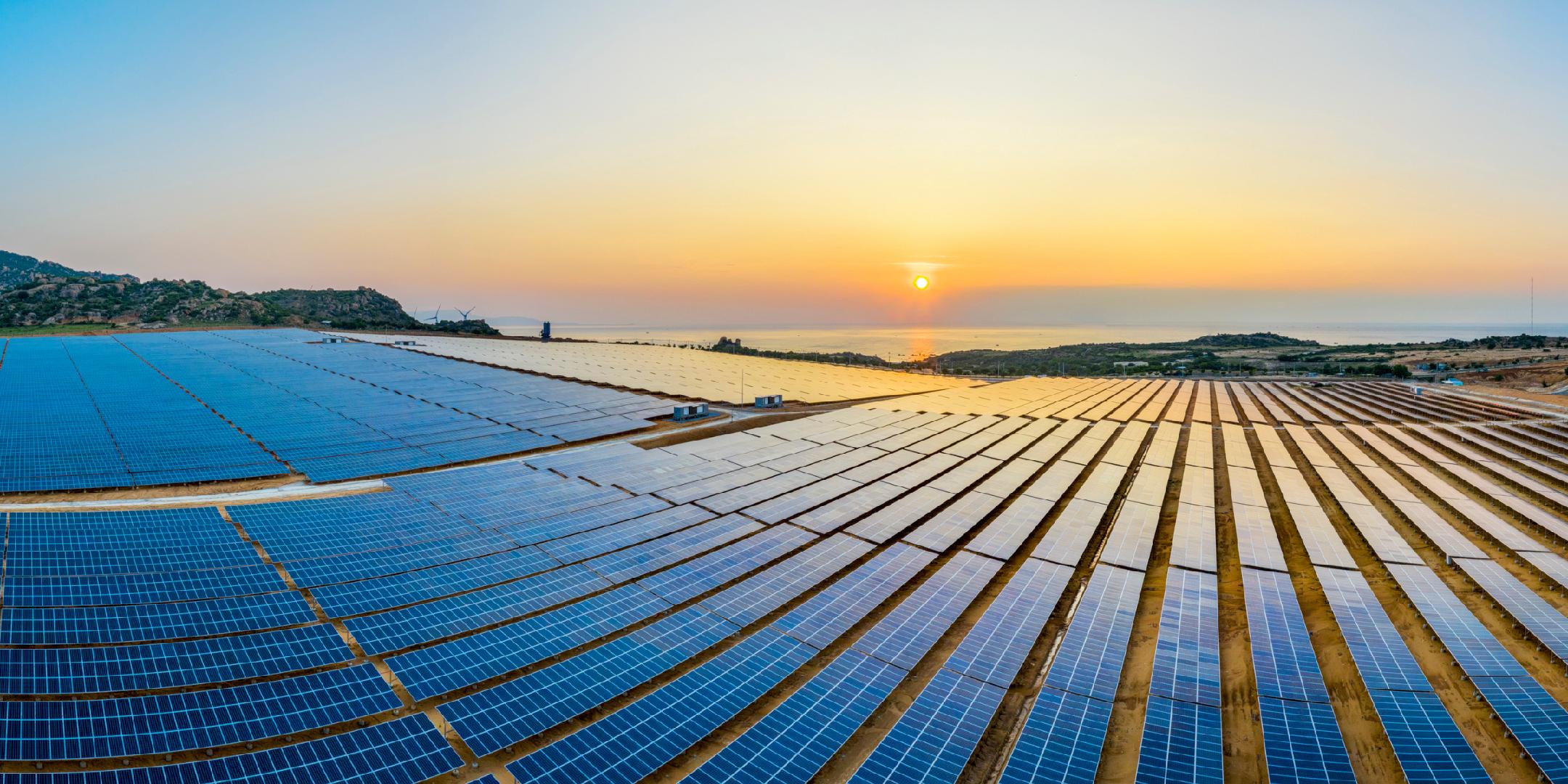
The new national standard for photovoltaic modules, which was previously expected by the capital market, has finally received its official draft.
On the morning of July 22nd, the National Standard Information Public Service Platform announced the "Energy Efficiency Limit Values and Energy Efficiency Grades for Crystalline Silicon Photovoltaic Modules and Inverters" (hereinafter referred to as the "Official Draft"). According to the National Standard Information Public Service Platform, the official draft was released on June 27th and will come into effect on January 1st, 2027.
The official draft has redefined the energy efficiency level of crystalline silicon photovoltaic modules. According to the document, the minimum photoelectric conversion efficiencies of TOPCon (Tunnel Oxide Passivation Contact Cell) components, HJT (Heterojunction Cell) components, and BC (Back Contact Cell) components are 23.2%, 23.2%, and 23.5%, respectively.
In September 2025, the State Administration for Market Regulation and the National Standardization Administration released a draft for soliciting opinions on this national standard. At that time, the minimum photoelectric conversion efficiency of each technical route was 22.4%, 22.5%, and 23.3%, respectively. In the official draft, the photoelectric conversion efficiency of various types of photovoltaic modules has been improved.
Based on the common dimensions of 1134mm * 2382mm components, the minimum component power corresponding to TOPCon components, HJT components, and BC components is 627W, 627W, and 635W, respectively. The power of components in the industry is usually rounded up to 5W, corresponding to this size. The minimum component power for each technical route component should be 630W, 630W, and 635W.
A person in charge of a leading photovoltaic company told reporters that TOPCon modules ranging from 625W to 630W are still the mainstream products in the industry.
For example, in June of this year, China Resources Power released a bidding announcement for the centralized procurement of photovoltaic modules for the year 2026, planning to purchase TOPCon modules with a total scale of 3000MW and dimensions of 1134 mm * 2382mm. The module power should be greater than or equal to 620W.
Yao Yao, Chief Analyst of New Energy and Power Equipment at Guojin Securities, stated that according to the relevant standards in the official draft, the proportion of production capacity in the industry that does not meet the standards is very high, even far exceeding the 20% -30% production capacity range that the policy wants to eliminate.
The new national standard clearly stipulates that photovoltaic modules with substandard photovoltaic conversion efficiency will face elimination, but the phenomenon of module false labeling has long existed in the photovoltaic industry.
Component virtual labeling refers to artificially raising or lowering the actual power level of a component, resulting in a discrepancy between the calibrated rated power and the actual power; Photovoltaic companies usually prefer to elevate the rated power above the actual power of the components.
The above-mentioned person in charge stated that the power of photovoltaic modules seen on the market refers to the nominal power on the nameplate of the photovoltaic module and cannot be directly equivalent to the actual power of the module, while the "official draft" assesses the actual power.
In May of this year, the State Administration for Market Regulation and the National Standardization Administration issued two standards, "Requirements for Identification of Photovoltaic Module Nameplates" and "Safety Requirements for Photovoltaic Modules", which require that the nominal power of photovoltaic modules can have power tolerances, but specific calculation conditions must be met.
Another person in charge of a leading photovoltaic company told reporters that 625W-630W modules are early products of top TOPCon manufacturers, and currently TOPCon manufacturers are improving product performance to meet the new national standards. He gave an example that many TOPCon manufacturers are currently exploring the practical application of multi shard technology in components, in order to improve the photoelectric conversion efficiency and power of the components.
According to the reporter's inquiry, the top TOPCon manufacturers all claim that the photoelectric conversion efficiency of the multi segment module products currently launched can reach about 24.8%.
Top TOPCon manufacturers all expect good shipment of high-power products this year. For example, JinkoSolar (688223. SH) expects high-power product shipments to account for over 60% by 2026; Tianhe Solar (68859. SH) expects a significant increase in TOPCon3.0 product production capacity by the end of 2026; JA Solar (002459. SZ) stated that the production capacity of its high-power component products is gradually being released and has been commercially promoted in multiple application scenarios.
Yao Yao stated that companies can increase component power through technological upgrades, expanding capital expenditures, or using better auxiliary materials such as pulp, film, and glass.
He expects that from the second half of this year, there will be a certain increase in the production capacity of components that can meet energy efficiency standards. But if the new standards can be strictly implemented next year, it is expected to achieve significant capacity elimination effects.
A researcher in the photovoltaic industry told reporters that currently, most top manufacturers can achieve mass production capacity of modules above 600W, and the main target of the new national standard impact is small and medium-sized module enterprises.
The BC technology route is only laid out by Longi Green Energy and Aixu Co., Ltd., so the impact of the new national standard on BC products is relatively limited. The relevant person in charge of Longi Green Energy (601012. SH) told reporters that the yield rate of Longi BC battery end production line has reached 98.5%, with mainstream module production power of 650W-670W, maximum power of 680W, and production conversion efficiency of 24.8%. Aixu Co., Ltd. (600732. SH) has increased the mass production efficiency of N-type ABC components from 24.6% to 25%.
Yao Yao stated that in the past period of time, leading component companies have successively carried out high-efficiency and silver reduction technological upgrades to their existing production capacity, driving the cost curve of the battery sector back to a steep slope; With the implementation of this round of energy efficiency standards, the health of the supply and demand pattern in the battery and component sectors is expected to be restored.


Volkswagen and Horizon officially announce L3 and L4 cooperation, L3 level self driving plan to be delivered in the second half of 2027, Robotaxi plan to be promoted synchronously
Is the 27 month tax-free window for solid-state batteries an expansion opportunity or a countdown to cost reduction?

Sinian Intelligent Driving has completed a 300 million yuan Series C financing, and the popularity of the autonomous driving heavy-duty truck track is rising. Unmanned truck collection in ports and mining areas has already made profits


 WeChat registration or login


 Subscribe