Securities Daily Follow
2026-07-10 11:26


On the morning of July 9th, the National Healthcare Security Administration (hereinafter referred to as the "National Healthcare Security Administration") held a regular press conference for the first half of 2026, fully disclosing core work data such as fund income and expenditure, centralized procurement control fees, and fund supervision.
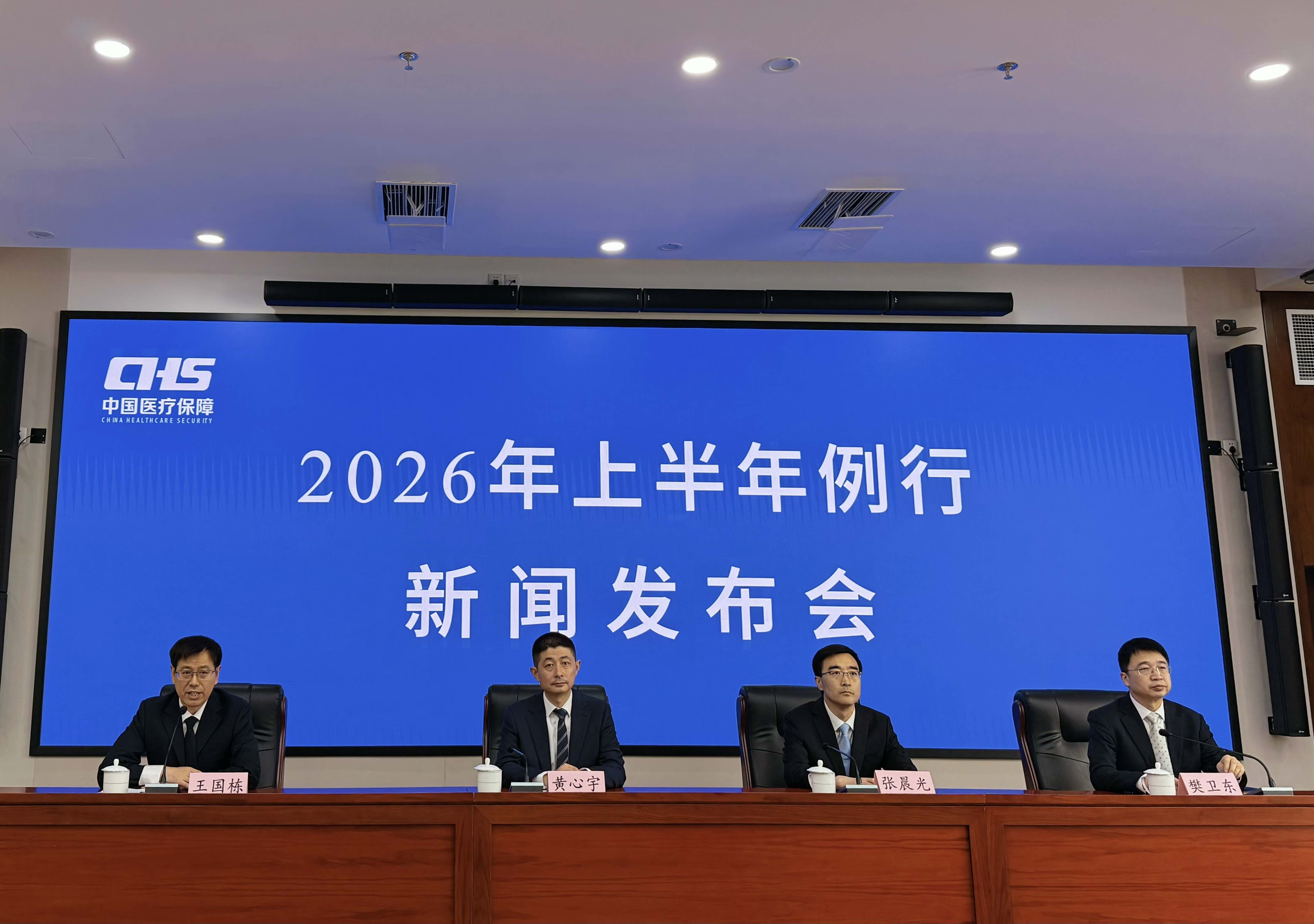
Zhang Xiaoyu/Photo taken at the press conference of the National Healthcare Security Administration
According to the press conference, as of the end of May, the number of people participating in basic medical insurance nationwide was 1.319 billion, an increase of 4.69 million compared to the same period last year. From January to May, the income of the basic medical insurance fund was 1.61 trillion yuan, a year-on-year increase of 8.49%. The basic medical insurance fund expenditure was 1.21 trillion yuan, a year-on-year increase of 2.12%.
Jin Chunlin, Director of the Shanghai Health and Health Development Research Center, told Securities Daily reporters that this press conference released three major signals: the standardization of the medical insurance system, the expansion of multi-level protection, and the long-term governance of medical prices. The value of medical insurance as a livelihood guarantee and industrial regulation tool continues to be highlighted.
The new version of the drug catalog has been implemented
Synchronized promotion of the commercial insurance innovative drug catalog
The governance of pharmaceutical prices and the reform of drug catalogs are the core highlights of this press conference. Wang Xiaoning, Director of the Medical Pricing and Tendering Procurement Department of the National Medical Insurance Administration, introduced that in recent years, the medical insurance department has adhered to the principle of "centralized procurement of non new drugs and non centralized procurement of new drugs", continuously optimized the centralized procurement rules, and organized the implementation of 11 batches of 490 drugs and 6 batches of 142 consumables in 9 categories at the national level, widely covering drugs for common and chronic diseases such as blood pressure reduction, blood sugar reduction, blood lipid reduction, antibacterial, anti-inflammatory, anti-cancer, etc.
Wang Xiaoning also stated that since the beginning of this year, the National Healthcare Security Administration has promoted reasonable price reductions for 33 types of medical consumables, including defibrillators, heart valves, thrombus protection devices, vascular staplers, and electrophysiological therapy catheters, which are of great concern to the public and have high quantities, high prices, and high circulation markups, effectively reducing the burden of medical treatment on the public. Taking vagus nerve stimulators as an example, three manufacturing companies have reduced the maximum cost from 268000 yuan/set to 152000 yuan/set, which can significantly reduce the burden on patients.
Huang Xinyu, Director of the Medical Service Management Department of the National Health Insurance Bureau, introduced the implementation of the 2025 version of the National Health Insurance Drug Catalog and the first version of the commercial insurance innovative drug catalog: the current medical insurance drug catalog was released in November 2025 and officially implemented from January 1, 2026, including 3253 kinds of western medicine and traditional Chinese patent medicines and simple preparations, as well as 892 kinds of Chinese herbal pieces with national standards. After the release of the new version of the directory, the National Healthcare Security Administration has taken measures such as interpreting a series of policies and holding deployment meetings to accelerate the implementation of the directory in various regions. Overall, the implementation of the directory is progressing smoothly.
In terms of the implementation of the basic medical insurance drug catalog, Huang Xinyu stated that most new drugs can achieve dual growth in sales quantity and cost after being included in medical insurance. The newly added negotiated drugs in 2025 have been equipped in 310000 designated pharmaceutical institutions nationwide. From January to May, the fund expenditure was 2.64 billion yuan, driving drug sales of 3.95 billion yuan. 12.25 million people nationwide have used the newly added varieties in the 2025 catalog. In particular, some products with a large number of patients and high social concern have been sold in large quantities. For example, Tilpodide injection for diabetes has been sold in more than 12000 designated medical institutions and retail pharmacies.
In terms of the commercial insurance innovative drug catalog, the first edition of the commercial insurance innovative drug catalog includes 19 drugs with high clinical value, high innovation level, and significant patient benefits that exceed the scope of basic medical insurance coverage. The National Healthcare Security Administration, National Health Commission and other relevant departments have provided active support policies, including direct online listing, "three exceptions not included in the scope of payment by disease", and inclusion in the "dual channel" management. All regions have orderly promoted these policies.
Huang Xinyu stated that based on feedback, the policy implementation meets expectations. As of the end of May, the list of innovative drugs in the commercial insurance has been equipped in 1486 designated pharmaceutical institutions, which is more than double the number at the beginning of the year. The guarantee responsibility of more than 100 welfare insurance products covers the drugs in the list. It should be pointed out that the list of innovative drugs in commercial insurance is a recommended directory aimed at clarifying the protection boundaries of basic medical insurance and leaving space for the development of commercial insurance. We will continue to strengthen communication with the commercial health insurance industry, guide insurance companies to optimize the design of insurance products, and play a greater role in the construction of a multi-level medical security system.
Huang Xinyu also revealed, "The adjustment of this year's medical insurance catalog and commercial insurance innovative drug catalog has been launched. We have received 818 materials in the application stage, and the overall number has further increased compared to 2025. The formal review has been completed and the results will be officially announced soon. Next, we will carry out expert review, calculation negotiation and other work according to the procedures. We expect to release the new version of the catalog in November this year
Hu Qimu, a professor at the Maritime Silk Road Research Institute of Huaqiao University, told Securities Daily reporters that the normalization of centralized procurement has squeezed out artificially high prices in circulation, and the commercial insurance innovation drug catalog has established a layered protection pattern of "basic medical insurance coverage and commercial insurance premium innovation drugs", changing the development logic of the innovative drug industry. Medical insurance is no longer just about controlling fees, but through supporting policies such as dual channels and not including payment by disease, it supports the accessibility of innovative drugs with high clinical value, leaves market space for pharmaceutical companies to innovate and research, and achieves a balance between reducing the burden on people's livelihoods and industrial innovation, "said Hu Qimu.
Normalization of high-pressure supervision of medical insurance funds
Digital reform solves the bottleneck of medical treatment
In terms of supervision of medical insurance funds, the crackdown on fraud and insurance fraud continued to intensify in the first half of the year. Gu Rong, Director of the Fund Supervision Department of the National Medical Insurance Administration, said in response to a reporter's question: "From January to June, the national medical insurance system has inspected 330000 designated medical institutions, dealt with 280000 illegal and irregular institutions, recovered 16.35 billion yuan of medical insurance funds, dealt with 130000 illegal and irregular personnel, and exposed 16000 typical cases. The national pilot inspection has basically covered all provinces in China, inspecting 2926 designated medical institutions in 227 cities and investigating suspected illegal and irregular amounts of 1.16 billion yuan
At the same time, the National Healthcare Security Administration continuously improves its institutional mechanisms, introduces the "Implementation Rules for the Supervision and Management of the Use of Medical Security Funds", issues the "Five Year Action Plan for Supervision and Inspection of Medical Insurance Funds", establishes a personal account whitelist system, and carries out pilot credit management for designated medical institutions and insured persons.
Breakthrough progress has been made in the digitalization of medical insurance. Cao Wenbo, Deputy Director of the Big Data Center of the National Healthcare Security Administration, stated that as of the end of June 2026, nearly 440 million index data have been uploaded to the National Healthcare Security Administration by 31 provinces and the Xinjiang Production and Construction Corps. In addition, the problem of medical imaging being difficult to store, locate, cross provincial, and slow to access is being systematically alleviated.
Jin Chunlin stated that overall, the medical insurance function is undergoing a transformation, shifting from a passive buyer of medical expense reimbursement to a strategic procurement entity in the medical and health field. The upgrading of the collaborative governance approach among the three medical institutions is no longer limited to simply controlling fees. A multidimensional collaborative governance system for payment regulation, price governance, and fund supervision will be established, forming a four in one reform goal of ensuring basic needs, promoting innovation, strengthening grassroots, and benefiting people's livelihoods. In the coming period, resource allocation to grassroots level, support for pharmaceutical innovation, and digital transformation will become the three core themes of medical insurance reform.
However, Jin Chunlin also pointed out that there are still multiple practical challenges in the medical insurance system, which need to be focused on: firstly, in terms of resident medical insurance participation, it is necessary to investigate whether there are problems such as the masses cutting off insurance and payment, and to safeguard the basic situation of universal insurance participation; Secondly, after innovative drugs are included in the medical insurance catalog, there is a "last mile" gap in the deployment of medical institutions, making it difficult for pharmaceutical companies to fully unleash their innovation benefits; Thirdly, the medical insurance payment policy is tilted towards the grassroots level, but there are shortcomings in the diagnosis and treatment capabilities and drug supply of grassroots medical institutions, making it difficult to fully absorb the policy dividends.
(Editor Cai Shandan)

The front air spring has hidden dangers, and Xiaopeng X9 has initiated a recall

Test drive Huawei Qiankun ADS 5.0: WEWA 2.0 architecture first test, will be gradually installed on Huawei's models

The car owner's self driving new energy vehicle's overseas car infotainment system has been remotely locked for over 30 hours, and the brand involved has responded by triggering the built-in security protection mechanism of the car infotainment system, which is a commonly used anti-theft and damage prevention measure in the industry


 WeChat registration or login