2026-07-10 08:28


Guangming Daily reporter Zhang Xiaohua and Cui Xingyi
On July 9, four series of brand achievements of the National Science and Technology Think Tank of the Chinese Academy of Sciences, including decision-making consultation, academic leadership, science and culture, and science popularization, were released in Beijing.
This press conference does not have major powers or chip codes, but its weight cannot be underestimated - it concerns where and how Chinese technology is going. Wu Chaohui, Vice President of the Chinese Academy of Sciences and Deputy Secretary of the Party Leadership Group, said at the press conference that accelerating the construction of a national science and technology think tank is of great strategic significance for building a strong country in science and technology in terms of piloting scientific and technological development, improving scientific and technological governance, enabling scientific and technological games, etc.
Think tank, why is it related to both you and me
In the past two years, "carbon neutrality" has become a hot topic, and the new energy vehicle and photovoltaic industries have experienced explosive growth. But many people may not know that before these industries take off, a group of academicians and experts have invested a lot of time in strategic research: is the technological route feasible? Where is the bottleneck? How should the industry be laid out? Later, many suggestions were incorporated into national planning and transformed into industrial policies. The new energy vehicles we drive and the clean electricity we use all have the shadow of a think tank behind them.
The series of decision-making consultation released this time will be renamed as the series of "CAS Member Academicians' Consultation Suggestions", which has lasted for many years, to more accurately reflect its decision-making reference positioning.
Rao Zihe, the director of the Advisory and Evaluation Committee of the Academic Department of the Chinese Academy of Sciences, said that it is worth pondering: conventional scientific research should "go deep" - study the essence of science, while think tank strategic research should "jump out" - think deeply about scientific development and its impact. This switch between micro and macro thinking is precisely the best catalyst for forging outstanding strategic scientists.
Technological competition requires grasping cutting-edge dynamics
Today's technological competition is no longer just about who can run fast, but also about who can choose the right direction and set the track early.
The Academic Leadership Series has released four heavyweight reports - the Science Development Report, the High Tech Development Report, the Sustainable Development Report, and the newly added Science and Technology Basic Capability Report. These four reports for the first time connect a complete innovation chain, from basic research to technological breakthroughs, green growth, and then to a clear understanding of the scientific and technological background, forming a strategic report matrix with clear positioning and complementary functions.
Bao Xinhe, the director of the Academic and Publishing Work Committee of the Academic Department of the Chinese Academy of Sciences, introduced that the Scientific Development Report, the High tech Development Report and the Sustainable Development Report started in the late 1990s and are important strategic brands of the Chinese Academy of Sciences. After being included in the National Science and Technology Think Tank brand in 2025, it will be under the responsibility of the standing committees of six professional departments, and will undergo a new revision according to the "development outlook, cutting-edge progress, and dynamic scanning", further strengthening the role of academicians in leading research and judgment, and highlighting academic heritage. The "Discipline Development Strategy Research Report" series, which is being promoted synchronously, conducts in-depth research around 18 disciplines and 20 cutting-edge fields. On the surface, it appears to be a series of reports, but behind it are a large number of forward-looking plans for project analysis, ideological collisions at forums and conferences, and repeated arguments over the years.
Bao Xinhe said that these achievements not only need to inform decision-makers of cutting-edge trends, but also help them determine which direction is worth investing in and which track needs to be laid out in advance. The academic leadership series is precisely through "disciplinary strategic research" to deeply cultivate the forefront, scanning the whole picture through the "four major reports", focusing on both directions and promoting each other, effectively playing the role of academic leadership.
A technological powerhouse, both soft and hard power are important
A technological powerhouse not only requires hard power, but also the support of scientific spirit and moral demeanor.
The first appearance of the Science and Culture series brings two sets of books. The "Biographies of Academicians" series is a long-term cultural project of the department, recording the life journey of academicians climbing the peak of science and technology and dedicating themselves to the motherland, fully interpreting the spirit of patriotic dedication and seeking truth from facts as scientists. The other set is a series of technology ethics books that directly address the issues of the times, exploring cutting-edge issues such as the boundaries of artificial intelligence, gene editing ethics, and ecological environment governance - these questions have no ready-made answers, but China cannot be absent from the discussion.
Academician Hu Haiyan, director of the Scientific Ethics Construction Committee of the Academic Department of the Chinese Academy of Sciences, said frankly that the scientific and cultural series is the soul and cultural root of the construction of think tanks. Next, we need to deeply explore the cultural connotations and contemporary significance of the spirit of scientists, and inherit and carry forward the scientific and cultural traditions of the department; At the same time, further accumulating the academic thoughts of academicians, laying a cultural foundation for the construction of the think tank, and laying a solid ideological foundation for technological innovation.
In addition to the book brand, the department also continues to carry out activities such as the "Science Life · Century" themed exhibition, the digital platform of the academician library, and the preaching of scientific ethics and academic style, transforming abstract scientific culture into tangible and tangible carriers.
Science popularization should not only impart superficial knowledge
Nowadays, science popularization is no longer just about telling you "a cold knowledge".
The science popularization series released this time includes the "Science and China" series and the "Science Academy" series specially designed for young people. The former is extended from the brand of "Science and China" science popularization activities, systematizing and making long-term effects on the essence of academician reports; The latter uses vivid language to break down profound principles and convey the beauty of science through vivid stories, allowing teenagers to approach and fall in love with science through easy reading.
Academician Yang Yuliang, director of the Science Popularization and Education Work Committee of the Academic Department of the Chinese Academy of Sciences, proposed that, after entering the AI era, the threshold of information access has been significantly reduced, but false information and information cocoon room coexist, and science popularization urgently needs to leap from superficial knowledge teaching to deep cognitive empowerment, critical thinking forging and innovative spirit cultivation - this is the original intention of science popularization work under the framework of the National Science and Technology Think Tank. In the future, the Science Popularization Committee will attempt to use AI data analysis and integrated media methods to systematically upgrade science popularization, building a ladder from scientific knowledge and methods to scientific thinking and spirit.
In the summary of the results release, Wu Chaohui clarified the next direction of efforts: to continuously produce new ideas, concepts, and insights, adhere to the principle of "ideological guidance, quality priority, and quality as the priority", and play an important role in accelerating the realization of high-level scientific and technological self-reliance and the construction of a strong scientific and technological country through ideological guidance.
Guangming Daily (08 edition, July 10, 2026)

The front air spring has hidden dangers, and Xiaopeng X9 has initiated a recall

Test drive Huawei Qiankun ADS 5.0: WEWA 2.0 architecture first test, will be gradually installed on Huawei's models
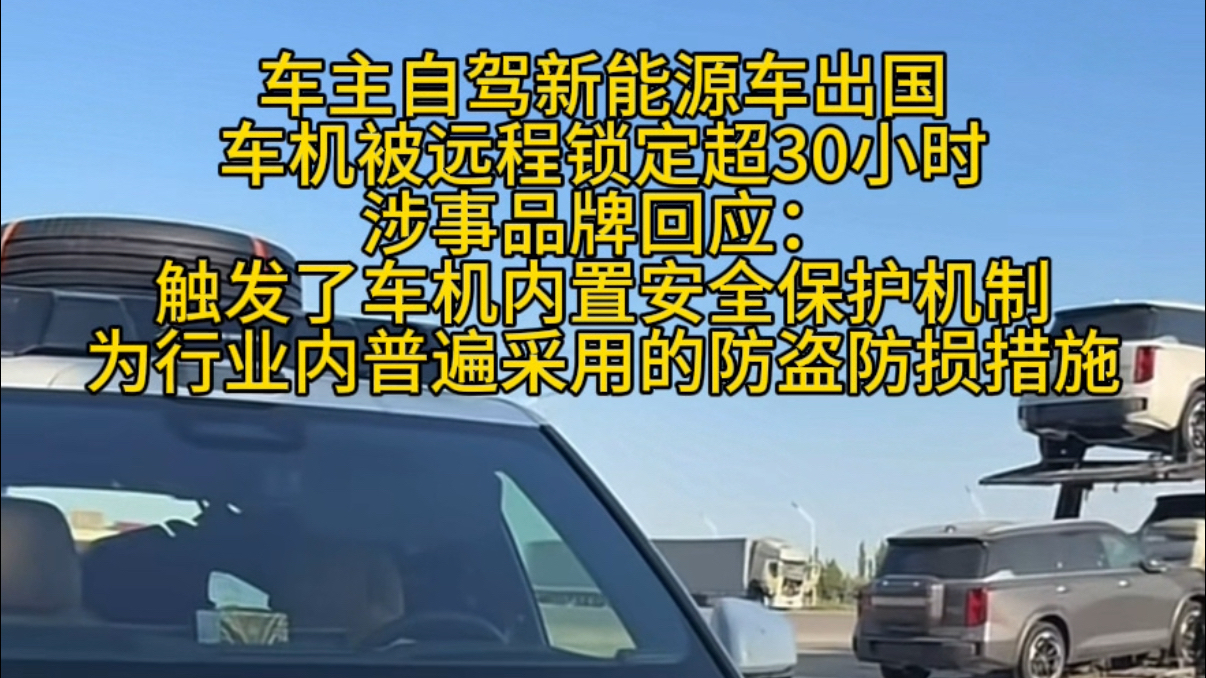
The car owner's self driving new energy vehicle's overseas car infotainment system has been remotely locked for over 30 hours, and the brand involved has responded by triggering the built-in security protection mechanism of the car infotainment system, which is a commonly used anti-theft and damage prevention measure in the industry


 WeChat registration or login