Zhongqing Net Follow
2026-07-10 07:13



Drawing: Wang Jingxuan (images generated with AI assistance)
In the past two years, artificial intelligence technology has entered the research scene of universities at an unprecedented speed, from assisting in literature retrieval, organizing research ideas, generating code, polishing papers, to completing complex calculations, text writing and other tasks.
On June 30th, American artificial intelligence company Anthropic released Claude Science, an AI platform designed for scientific research scenarios. According to the company's introduction, this platform is not only a chat style assistant, but also an AI workbench that can integrate commonly used scientific research tools, call computing resources, and generate auditable results. AI is moving from general question answering tools to more specialized scientific research processes.
Based on the national survey data of doctoral graduates organized and implemented by the China Doctoral Education Research Center of Peking University, Cai Fen, a teacher at the School of Law and Law of Beijing University of Science and Technology, conducted an analysis. Her research result "Disciplinary Differences in the Current Status and Impact of AI Assisted Doctoral Research - Analysis Based on the 2024 National Doctoral Graduate Survey" showed that after analyzing 14371 questionnaire data of national academic degree doctoral students, it was found that the utilization rate of AI assisted research was relatively high among doctoral students in science, engineering, agriculture, and medicine, especially those in computer related majors, while the utilization rate was relatively low among doctoral students in humanities and social sciences, especially those in humanities and social sciences; PhD students in humanities and social sciences are more likely to use AI for front-end research work, while PhD students in science, engineering, agriculture, and medicine are more likely to use AI for back-end research work.
During graduation season, reporters from China Youth Daily and China Youth Net found that topics such as "how to use AI to write literature reviews," "AI assisted paper weight reduction," and "how to reduce the AI rate of papers" frequently appeared on social media platforms.
In Cai Fen's view, AI has been deeply embedded in the scientific research training of college students, but students' demands for AI are not the same at different stages of training and in different disciplinary backgrounds.
As AI becomes a "standard" in the daily scientific research lives of more and more students, is it enhancing their research abilities or "skipping the process and going straight to the answer"?
AI is a means, not an end
Xie Li (pseudonym) from Sichuan University is about to pursue a direct PhD in Cyberspace Security at her university this year. She told reporters from China Youth Daily and China Youth Net that AI has been involved in multiple stages of her research process.
I will first read the literature myself, find the direction of the problem that can be further explored, and then ask AI if anyone has done similar research before, if my ideas are feasible, and if there is room for further advancement. ”Sherry said that if her research perspective is feasible, she will ask AI to provide a corresponding learning path before entering the specific research stage.
Sherry believes that by using AI to "get started," many research ideas can be quickly iterated. "In the past, it was not easy to quickly determine whether an idea was feasible. Literature research, route evaluation, and code writing would all consume a lot of time, but now these steps have been significantly compressed.
At the same time, for science and engineering students, code generation is one of the most common and directly efficient functions of AI. Sherry usually has AI generate code and check the running results through test cases. She believes that the value of AI lies not in directly enhancing a person's learning or programming abilities, but in making the pace of scientific research faster, enabling ideas to be quickly realized or rejected.
However, AI is ultimately an external tool, and I believe it is more important to seriously cultivate one's basic abilities rather than relying solely on AI, "said Sherry.
Cai Fen noticed in her research and daily observations that there are significant stage differences between master's and doctoral students when using AI to assist scientific research work. The main demands of master's students using AI for assistance are more inclined towards "introductory research, task reduction, and conceptual understanding", while doctoral students are more concerned with "improving research efficiency, publishing achievements, and expanding research boundaries".
Sun Yu (pseudonym), a first-year graduate student majoring in Civil and Commercial Law at the Law School of Zhejiang University of Finance and Economics, has different feelings about using AI to assist in scientific research compared to science and engineering students. The mentor suggested that he use AI reasonably in his research, believing that AI can help search for information, modify wording, and also serve as a self-examination tool. But Sun Yu admitted that he is not quite sure how to make AI more effective in helping him carry out scientific research work.
In fact, we cannot allow ourselves to rely on AI at a stage where we have no knowledge foundation, but we need to first construct our own knowledge system. ”Sun Yu said that it is necessary to discern the answers given by AI, especially in legal research, where the authenticity of data, logical relationships in writing, and argumentation cannot be completely entrusted to AI.
Sun Yu once used AI to save time, but after using it several times, he found that AI may have deviations in data search and language construction, and sometimes he needs to spend more time verifying it himself. For legal research, many issues themselves do not have absolute correctness, and the value of legal interpretation, legal analysis, and academic viewpoints often needs to be demonstrated in specific contexts. The content provided by AI may seem complete and fluent, but it may not be truly reliable. ”
The most important thing for graduate students is still their ability to learn independently, and AI is only a means rather than an end. ”Sun Yu believes that sufficient knowledge reserves are the most powerful bargaining chip to deal with problems at any time.
How to Crack the Rule Anxiety Caused by "AI Rate"
As AI becomes increasingly involved in students' research and paper writing, universities are also constantly patching up the rules.
As early as the end of 2024, Fudan University issued the "Fudan University Regulations on the Use of AI Tools in Undergraduate Thesis (Design) (Trial)", aiming to clarify and standardize the scope and principles of the use of AI tools in undergraduate theses.
In November 2025, Tsinghua University released the "Guiding Principles for the Application of Artificial Intelligence Education at Tsinghua University" (hereinafter referred to as the "Guiding Principles"), which put forward principles such as "subject responsibility, compliance and integrity, data security, prudent thinking, fairness and inclusiveness", requiring teachers and students to disclose statements on the use of artificial intelligence and the generated content in accordance with regulations, and strictly prohibiting the direct copying or simple paraphrasing of text, code and other content generated by artificial intelligence as academic achievements.
For the graduate student population, the Guiding Principles emphasize that it is prohibited to use artificial intelligence to replace academic training that should have been conducted by oneself, and the use of artificial intelligence to engage in ghostwriting, plagiarism, forgery, and other behaviors is strictly prohibited. Graduate supervisors are required to provide normative guidance and supervise the entire process to ensure the integrity of academic training and the originality of thesis and practical achievements.
In the past two years, in order to prevent students from using AI to write graduation theses, many universities across the country have issued relevant regulations, setting a red line of "AI rate" ranging from 20% to 40% for graduation theses according to different majors.
Han Fang (pseudonym), a graduate of the Social Work major at Beijing University of Science and Technology, attempted to "defeat magic with magic" by using AI to reduce AI rates. However, she found that AI polished and modified sentences sometimes became very "funny" and had semantic problems, which actually led to a strong "AI flavor".
Students use AI to assist in scientific research collaboration, universities use AI detection tools to identify AI generated content, and students continue to use AI to reduce AI rates... Cai Fen believes that repeatedly generating, rewriting, and avoiding AI detection results may seem like dealing with technical indicators, but in essence, it reflects students' anxiety in writing, publishing, and rule uncertainty. Some students are not completely unaware of the risks, but rather unclear about what the school allows and prohibits, so they use detection tools to strategically respond
In Cai Fen's view, schools should not simply hand over AI governance to a test score, but should focus on rule building and process management: clarifying which usage behaviors are allowed and need to be declared, and which behaviors are considered violations; Guide students to keep records of their writing process and AI usage; Conduct a comprehensive evaluation based on the supervisor's judgment, student explanations, reference verification, and follow-up questions during the defense.
What is the value of training when tools become more and more convenient to use
In terms of educational or academic training purposes, the value of graduate writing is not to form a text, but more importantly to train problem awareness, literature reading, logical reasoning, and academic expression skills during the writing process. Cai Fen pointed out that the use of AI by graduate students cannot be simply equated with academic misconduct. The key is to see whether AI is helping students reduce mechanical burden or completing core academic judgments for them.
Wang Nan (pseudonym), a sixth year direct PhD student at the School of Life Science and Technology, Tongji University, has a more intuitive understanding of the changes brought by AI entering the laboratory. He noticed that with the improvement of the ability of big language models, lower grade students can now use AI to complete many originally complex code tasks. In the past, when faced with a problem, graduate students often had to search for web pages, read literature, flip through books, and write their own code and debug, which could take several days to solve. Nowadays, these simple tasks can be directly generated by AI or even handed over to agents for execution. ”
But Wang Nan discovered a more hidden problem. Nowadays, AI generated code rarely fails to run. ”He told reporters from China Youth Daily and China Youth Net, "This has actually made many beginners relax their vigilance. After receiving AI generated code, younger students often think that the code can be used as long as it runs without errors. As for why the code is written in this way, they will not further investigate. ”
Wang Nan noticed that for some niche, specific tasks that require industry experience, AI generated code may appear reasonable and run smoothly, but there may be subtle issues in parameter settings, analysis processes, or method selection. Beginners who do not understand the logic behind the code find it difficult to identify these "pitfalls".
Wang Nan used bioinformatics data analysis as an example to illustrate that different types of datasets may correspond to different parameter settings. If students are accustomed to directly using AI generated code without knowing that the parameters need to match the data type, they may get incorrect results, and even these results may look "real", leading to a "miss" with the correct conclusion.
Setting aside the technical risks, Wang Nan said that without delving into every step of the code, it is impossible to truly understand how these biological problems are solved, and it is also impossible to transform the information provided by AI into one's own knowledge.
This also made Wang Nan realize that the learning mode of many graduate students is changing: from "learning how to do scientific research" to "learning how to use AI for scientific research". The research training in the AI era is no longer just about mastering tools, but about how to maintain comprehension and judgment abilities even after the intervention of tools.
Cai Fen believes that if AI can be used in a standardized manner, students can quickly improve their abilities in data collection and information integration, language expression and academic writing, interdisciplinary knowledge learning, and research plan design. However, AI is difficult to replace genuine original problem posing, theoretical sensitivity, method adaptation judgment, field experience, data interpretation ability, and academic value judgment. ”She pointed out that the core of scientific research ability is not just "finding information", but judging what problems are important, what evidence is reliable, and what explanations have more academic contributions. These abilities cannot be achieved overnight through AI tools, and need to be gradually formed through long-term reading, writing, peer discussions, and mentorship. ”
Reporter Wang Jingxuan from China Youth Daily and China Youth Net Source: China Youth Daily
Version 05, July 10, 2026

The front air spring has hidden dangers, and Xiaopeng X9 has initiated a recall

Test drive Huawei Qiankun ADS 5.0: WEWA 2.0 architecture first test, will be gradually installed on Huawei's models
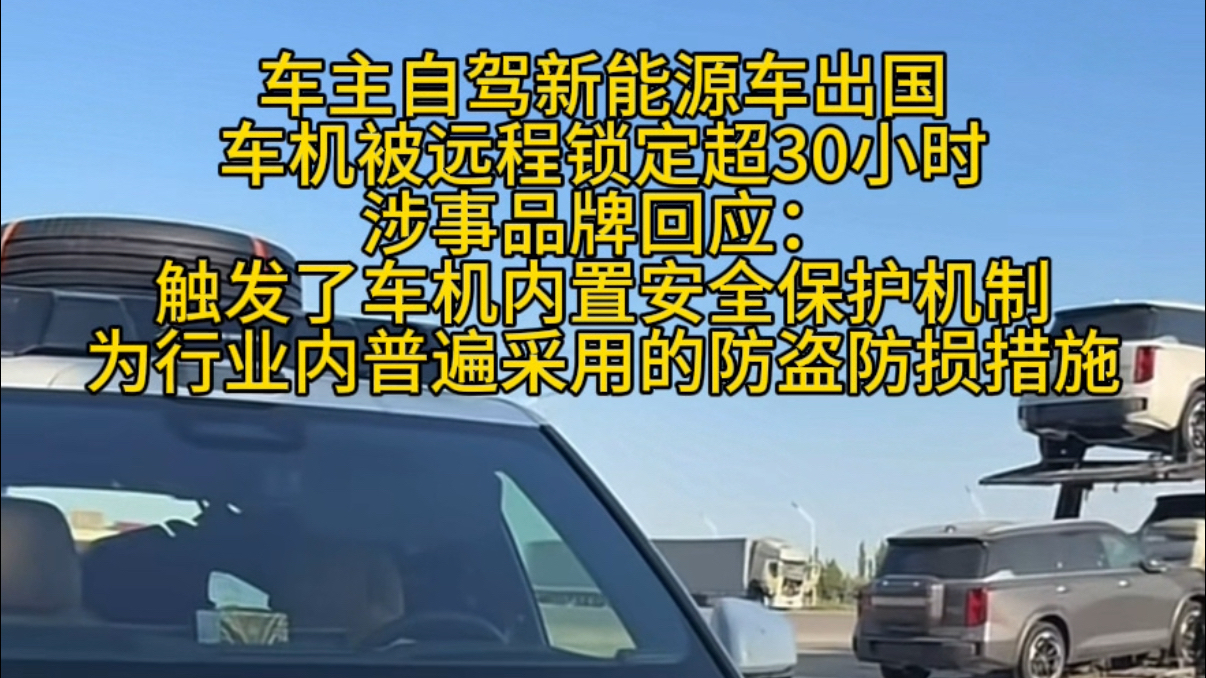
The car owner's self driving new energy vehicle's overseas car infotainment system has been remotely locked for over 30 hours, and the brand involved has responded by triggering the built-in security protection mechanism of the car infotainment system, which is a commonly used anti-theft and damage prevention measure in the industry


 WeChat registration or login