Economic Observer Follow
2026-07-08 18:35


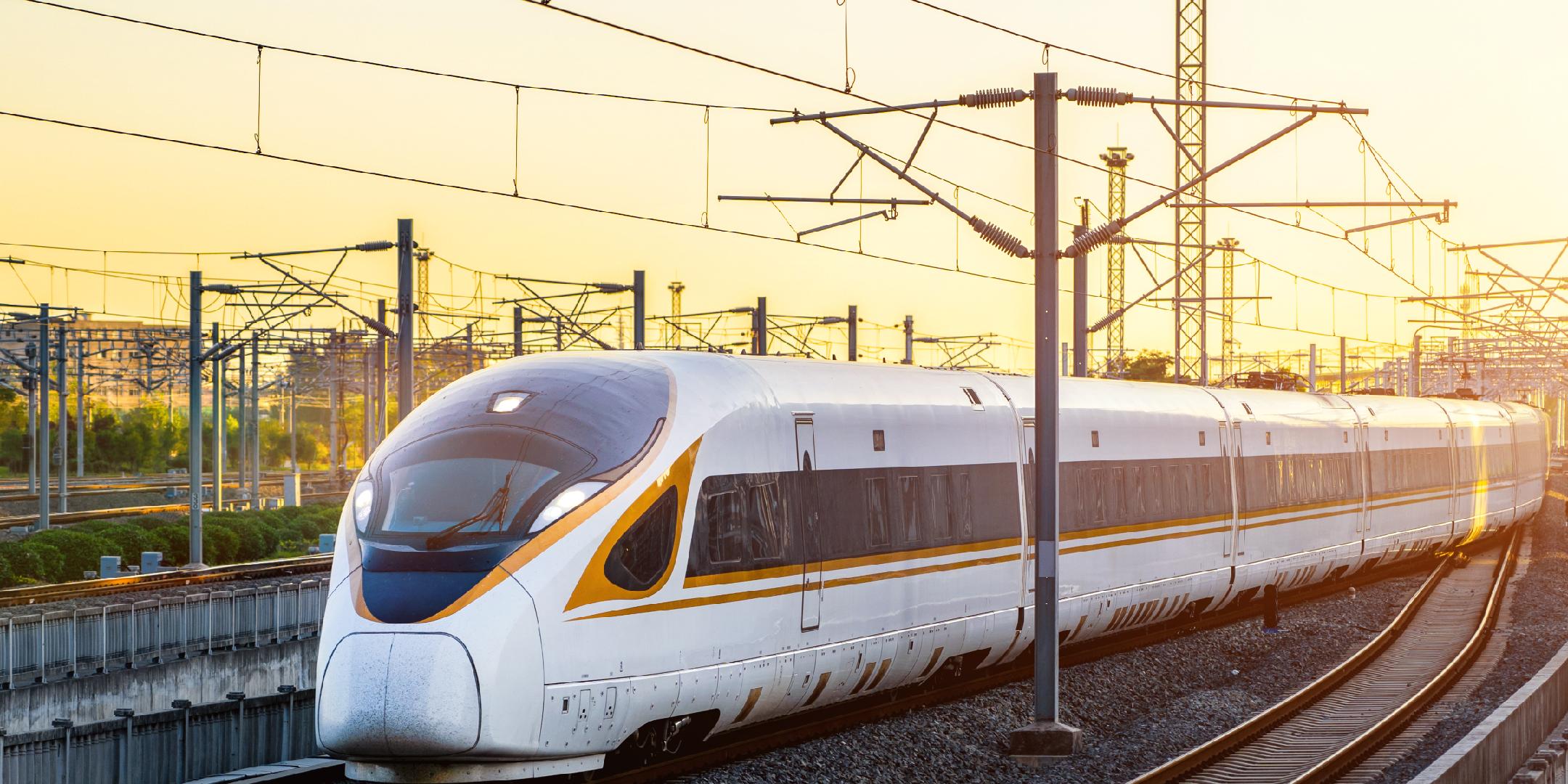
The opening of the West Tenth High speed Railway has brought Xi'an one step closer to the "rice shaped" high-speed railway hub.
Recently, the West Ten High Speed Railway from Xi'an to Shiyan has officially opened for operation, connecting with the Wuhan Shiyan High Speed Railway (Wuhan to Shiyan), ending the history of no direct high-speed railway between Xi'an and Shiyan. After opening, it takes about an hour to reach Xi'an to Shiyan. Xi'an to Wuhan no longer detours around Zhengzhou, and the fastest travel time between the two places is 2 hours and 41 minutes.
At the same time, the entire Xikang high-speed railway from Xi'an to Ankang has entered the stage of joint debugging and testing, entering the final sprint before opening for operation. By the end of this year, Xi'an will have built a "rice shaped" high-speed railway network by completing the final payment of the Xikang high-speed railway.
Yi Na
Before the opening of the West Ten High speed Railway, Xi'an had already opened high-speed railway lines in six directions: Zhengxi, Xilan, Xiyan, Daxi, Yinxi, and Xicheng. The opening of the West Tenth High speed Railway this time has added a "one stop" in the southeast direction to the "rice shaped" high-speed railway network in Xi'an. After the opening of the Xikang high-speed railway within this year and the completion of the north-south "vertical line", the Xi'an "rice shaped" high-speed railway hub will be officially established.
The West Ten High Speed Railway passes through Xi'an, Shangluo, Shaanxi, and Shiyan, Hubei. It has seven stations along the way, including Xi'an East, Lantian, Shangluo West, Shanyang, Manchuan Pass, Yunxi, and Shiyan East. It is the final section of the Wuxi High Speed Railway and a key component of the national "Eight Verticals and Eight Horizontals" Fuyin Corridor.
Previously, the Qinling Mountains spanned between Shaanxi and Hubei, and the two regions lacked a direct connecting passage for a long time. The high-speed railway from Xi'an to Wuhan needs to detour around Zhengzhou, which takes about four and a half hours.
After the opening of the West Tenth High speed Railway, the radiation radius of the two "rice shaped" hubs in Xi'an and Wuhan extends outward simultaneously. Xi'an has thus obtained a fast track leading directly to the economic belt of the middle reaches of the Yangtze River, and the high-speed railway network in the northwest direction of Wuhan has finally been completed. Xi'an and Wuhan, two cities with a GDP of over one trillion and a population of over ten million, have entered the "three hour living circle", which has also brought a new rhythm to the economic interaction between the western and central regions.
The changes brought by the West Ten High Speed Railway to the cities along the route are also worth paying attention to.
In the Shaanxi section of the West Ten High Speed Railway, Shangluo is the prefecture level city with the longest mileage and the most stations, and also the first high-speed railway line in Shangluo. After its opening, Shangluo West Station will provide fast direct access to cities within the province such as Xi'an, Yan'an, Hanzhong, and Tongchuan, as well as to many large and medium-sized cities across the country such as Beijing, Chongqing, and Wuhan, ending the history of Shangluo not being connected to high-speed rail.
Li Dong, the director of Xi'an Tongji Regional Planning and Research Institute, believes that the opening of the West Tenth High speed Railway will bring triple benefits to Shangluo. At the macro level, the "Western Commercial Integration Development" between Shangluo and Xi'an has been promoted for many years, but the natural barrier of Qinling has always constrained the efficiency of communication between the two places. The West Ten High Speed Railway has shortened the travel time from Xi'an to Shangluo to 24 minutes, accelerating the convergence of pedestrian, financial, and information flows, and moving the concept of "Western Business Integration" from proposal to substance.At the meso level, Shangluo will usher in dual opportunities for industrial absorption: firstly, to absorb the spillover of industries from Xi'an and absorb the transfer of key industrial chain supporting links; The second is to rely on the location advantage between Xi'an and Wuhan, the two major national central cities, to undertake the transfer of labor-intensive industries in Central China. At the micro level, residents' travel costs have been significantly reduced, and cross regional employment and tourism have been activated in both directions. At present, Shaanxi and Hubei provinces have launched the "high-speed rail ticket economy", where passengers can enjoy discounts at scenic spots and performance venues along the line with high-speed rail tickets, further stimulating tourism consumption. At the same time, young people in central cities can easily travel to start businesses along the route, and local labor can also flow outward, making cross regional employment possible.
Shiyan is the endpoint of the West Tenth High Speed Railway and also the starting point of the Wuhan Tenth High Speed Railway. Previously, although Shiyan was connected to Wuhan by the Wuhan Shiyan high-speed railway, it ended at Shiyan on the west side and has long been a "dead end road", mainly influenced by the radiation from Xiangyang and Wuhan directions. After the West Tenth High speed Railway opened up the westward passage, Shiyan transformed from the "end" of the high-speed railway network to a node along the line, and its urban status changed.
Professor Wang Lei from the School of Economics and Management at Wuhan University believes that Shiyan is about an hour's drive from Xi'an and about two hours' drive from Wuhan. This means that it will receive radiation and drive from both major national central cities, forming a unique advantage of "finding both sides". The inter provincial border areas often become development depressions due to administrative divisions, but if Shiyan can seize this opportunity and make good use of the location conditions of two-way radiation, not only can its own development accelerate, but it can also build a connecting bridge between the Guanzhong urban agglomeration and the middle reaches of the Yangtze River urban agglomeration, becoming an important link between the western and central regions.
New Possibilities
The value of high-speed rail in driving local economy is self-evident. This route connects the urban agglomeration in the middle reaches of the Yangtze River on one end and the Guanzhong urban agglomeration on the other, providing new possibilities for industrial cooperation, market interconnection, and factor sharing. The above-mentioned interviewed experts all believe that the industries that benefit first are cultural tourism and health care.
Xi'an and Wuhan are not only popular tourist destinations, but also the location of the Qin Chu ancient road along the West Ten High Speed Railway, leaving behind many cultural heritages. In Li Dong's view, after the high-speed rail is connected, cities along the line can develop around the same theme and design the same route, serving as tourist source and destination for each other, achieving two-way flow of tourists.
Another industry worth paying attention to is healthcare. The three cities in southern Shaanxi are located in the water conservation area of the middle route of the South to North Water Diversion Project, with strict ecological protection requirements and limited development of the manufacturing industry. Cultural tourism and health preservation have always been key cultivation directions. Shangluo has the ecological resources of Qinling Mountains and waters, with high levels of negative oxygen ions, and is known as the "Capital of Climate Health and Wellness in China". In recent years, it has established a "6+2" industrial system of "medicine, wellness, tourism, sports, medicine, and food" as well as climate and forest health and wellness. After the high-speed rail is opened, the fastest travel time from Shangluo to Xi'an is only 24 minutes, and the fastest travel time to Wuhan is two and a half hours. Middle aged and elderly people in central cities such as Xi'an and Wuhan are expected to consider Shangluo as a "migratory bird style" health and wellness destination - with affordable prices and convenient transportation.
Li Dong believes that the cultural and tourism industry focuses on short-term check-in experiences, while the health and wellness industry targets medium to long-term travel needs. These two industries are expected to take the lead in absorbing the traffic dividends brought by the opening of high-speed rail. Of course, whether the dividends can truly be implemented depends on the carrying capacity along the route. The tourist shuttle capacity of the stations along the route directly determines whether tourists will stay or transit and leave. Cities along the route need to accelerate the filling of gaps in infrastructure such as station city transportation and scenic area connections in order to convert transit traffic into consumption reserves.
Wang Lei pointed out that the response speed of different industries to the high-speed rail dividend varies greatly. The manufacturing industry belongs to the heavy asset industry, with a long investment cycle and slow output effectiveness. The changes brought about by the opening of high-speed rail will take three to five years or even longer to manifest. In contrast, light asset industries such as culture and tourism are driven by demand, and once high-speed rail is connected, the flow of people will quickly increase, resulting in a faster effect. After the flow of people and logistics, the flow of information will also increase, and both parties will have a deeper understanding of each other's industrial advantages and market opportunities. The opportunity for industrial cooperation may gradually emerge in three to five years.
In terms of manufacturing, Xi'an is a major hub for new energy vehicle manufacturing, with vehicle companies such as BYD, Geely, and Shaanxi Automobile. Its production capacity for commercial vehicles and new energy passenger vehicles ranks among the top in the country. Shiyan is the birthplace of Dongfeng Erqi. Although some automotive resources were later transferred to Xiangyang and Wuhan, the "Shiyan Xiangyang Wuhan" corridor in Hubei Province itself is a complete automotive industry chain.
Li Dong believes that although the West Tenth High speed Railway is positioned as a passenger dedicated line, the accelerated flow of personnel and technology will promote the diffusion of Xi'an's technological achievements in intelligent connected vehicles, hydrogen energy vehicles and other fields along the line. The technological accumulation of Xi'an Jiaotong University, Northwestern Polytechnical University, and others in the field of intelligent connected vehicles can form a linkage with the new energy vehicle industry in Xiangyang, Shiyan, and Wuhan.
In terms of science and technology innovation, Xi'an and Wuhan are important components of the national "3+3" regional science and technology innovation centers - the three international science and technology innovation centers are Beijing, Shanghai, and the Guangdong Hong Kong Macao Greater Bay Area, and the three regional science and technology innovation centers are Xi'an, Wuhan, and the Chengdu Chongqing region.
Specifically, Xi'an has strong capabilities in aerospace, new energy, new materials and other fields, while Wuhan has obvious advantages in optoelectronics, biomedicine and other fields. Taking the photonics industry as an example, Wuhan Donghu High tech Zone (China Optics Valley) has an early layout and a large scale, while Xi'an relies on the Xi'an Institute of Optics and Fine Mechanics of the Chinese Academy of Sciences and has also been making efforts in recent years. The prospect of cooperation between the two sides to jointly develop the optoelectronics industry is promising. Taking aerospace as an example, Xi'an has outstanding advantages in research and development, while Wuhan has strong capabilities in manufacturing. Both have their own focuses, making it easier to form cooperation and complementarity.
Li Dong believes that this bidirectional model of "Xi'an R&D, Wuhan transformation" and "Wuhan R&D, Xi'an transformation" will effectively promote the two regional science and technology innovation centers to achieve complementary advantages and move towards each other.
Wang Lei believes that the opening of high-speed rail will bring about a process of factor reconfiguration, which involves both adsorption and diffusion. Ultimately, their respective advantageous industries will further expand and strengthen in the flow of factors, which is positive for the long-term development of the region and the overall economic pattern of the country.
'Mi shaped'
In 2023, the Zhengzhou Jinan high-speed railway will be opened, making Zhengzhou the first "rice shaped" high-speed railway hub city in China. Centered around Zhengzhou, the high-speed rail network radiates in eight directions, connecting 18 cities in Henan Province. Within 2 hours, it can reach provincial capitals such as Xi'an and Wuhan, as well as the Beijing Tianjin Hebei region. It takes 3 hours to reach the Yangtze River Delta region, 4 hours to reach the Chengdu Chongqing region, and 5 hours to reach major economic zones in China such as the Guangdong Hong Kong Macao Greater Bay Area.
By the end of 2025, with the opening of the Hefei High Speed Railway, the "rice shaped" high-speed railway hub in Hefei will also take shape. Now, Xi'an is about to become the third one. Outside of Zhengzhou, Hefei, and Xi'an, more cities are joining this rice "competition".
According to the "Overall Plan for Land and Space of Wuhan City (2021-2035)", Wuhan will form a super "rice shaped" high-speed railway hub in 12 directions in the future. By the end of 2025, the Wuyi High speed Railway will be opened as part of the Shanghai Chongqing Chengdu Yangtze River High speed Railway, becoming the seventh direction of Wuhan's "super meter shaped" network.
Jinan is also making efforts. At present, the vertical Beijing Shanghai high-speed railway, the horizontal Zhengzhou Jinan high-speed railway and Jiqing high-speed railway, the upper left Shiji high-speed railway, and the lower right Jilai high-speed railway have been completed and opened to traffic. The remaining ones under planning and construction are the upper right Jibin high-speed railway and the lower left Jiji high-speed railway.
Chongqing, located in the west, has proposed to form a "rice shaped" high-speed railway corridor skeleton centered on the Chongqing hub by 2035, achieving a transportation circle of "1 hour Chengdu Chongqing, 3 hours surrounding, and 6 hours Beijing Shanghai Guangzhou".
The list of "rice shaped" high-speed railway hubs from Zhengzhou to Hefei, from Xi'an to Wuhan, Jinan, and Chongqing is still expanding. But not all cities are suitable for this layout. After sorting out these already built and planned cities, the interviewed experts all believe that city size and city function are the two hard indicators of a "rice shaped" hub city.
In terms of scale, these cities are first and foremost mega cities or even mega cities, with sufficient demand for passenger flow and logistics to sustain the "rice shaped" network pattern. The reason why the "rice shaped" channel is different from conventional channels is that it provides more path options - shorter paths mean higher efficiency, and the improvement in efficiency is ultimately reflected in the reduction of logistics costs and the overall improvement of socio-economic operation efficiency. If the city itself lacks sufficient demand volume, the "rice shaped" loses its foundation for existence.
From a functional perspective, these cities also carry specific national strategic functions. For example, Zhengzhou and Xi'an are important nodes of the the Belt and Road, while Wuhan is not only a node of the the Belt and Road, but also one of the core cities of the Yangtze River Economic Belt. These cities undertake the function of radiating and driving the surrounding hinterland, where people and logistics converge and then disperse to a wider area. Scale determines whether there is demand, while functionality determines whether it is worth building.
There are not many cities that meet these two hard indicators. But for places that do not have sufficient scale and strategic functions, blindly pursuing a "rice shaped" approach may actually result in resource waste.
In Li Dong's view, the "rice shaped" high-speed railway hub must be built in cities with obvious geographical advantages and strategic value for the overall connectivity of the country. If blindly constructed without this premise, it may lead to duplicate investment and resource waste.
Wang Lei also holds a similar view. The "rice shaped" high-speed rail hub is not suitable and cannot be deployed in all cities. The planning logic of the national "Eight Verticals and Eight Horizontals" high-speed rail network is to ensure that cities with a population of 200000 to 500000 can access high-speed rail, and even two or three cities sharing one station can meet demand. The core is to strike a balance between meeting travel needs and rational use of resources. The "rice shaped" is a product of specific location and functional conditions, rather than a standard configuration for all cities.
The front air spring has hidden dangers, and Xiaopeng X9 has initiated a recall

Test drive Huawei Qiankun ADS 5.0: WEWA 2.0 architecture first test, will be gradually installed on Huawei's models
The car owner's self driving new energy vehicle's overseas car infotainment system has been remotely locked for over 30 hours, and the brand involved has responded by triggering the built-in security protection mechanism of the car infotainment system, which is a commonly used anti-theft and damage prevention measure in the industry


 WeChat registration or login