Economic Observer Follow
2026-05-24 11:13


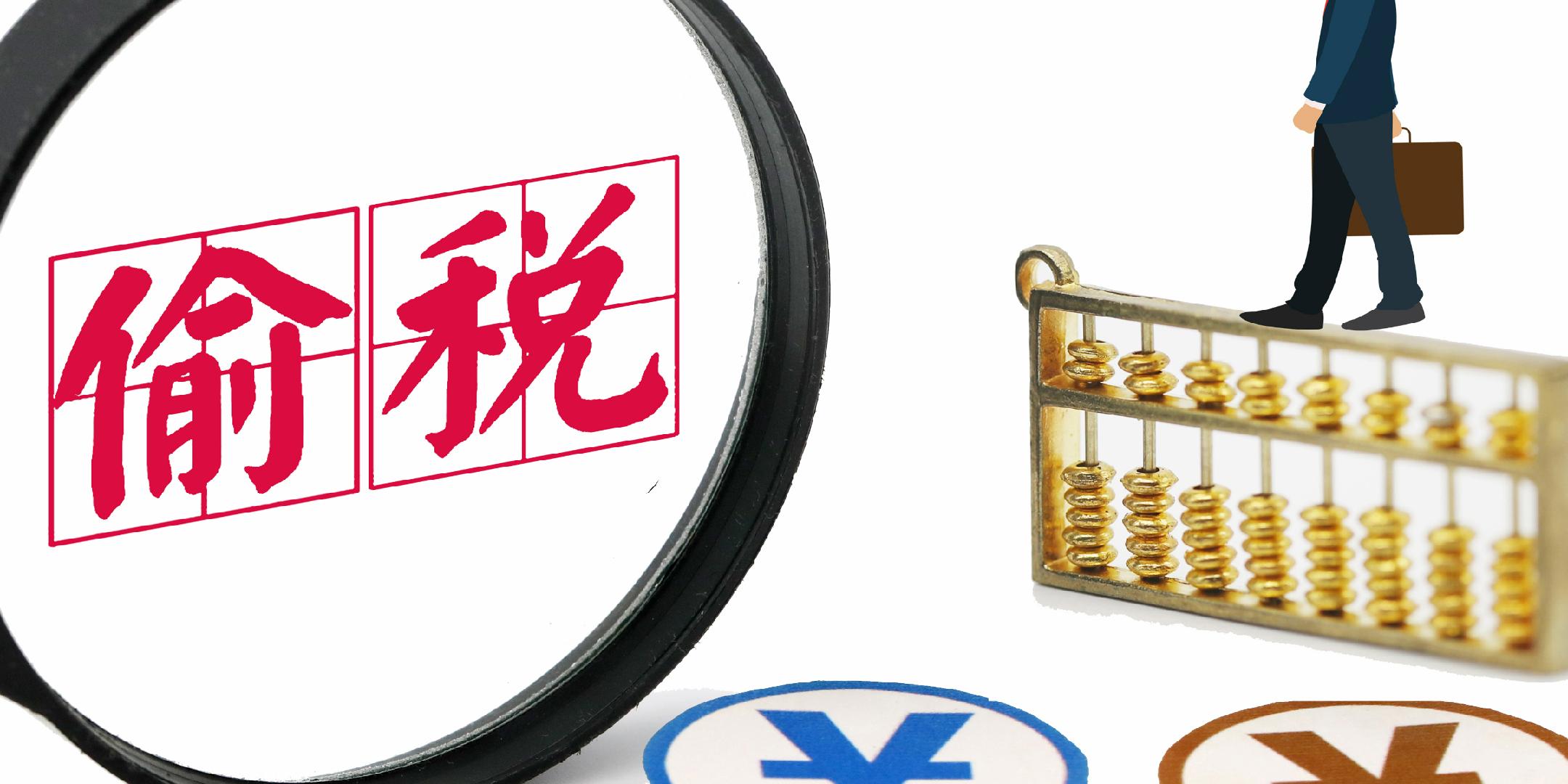
On May 22nd, tax departments in multiple places exposed 8 typical cases of concealing income and evading taxes by using personal accounts to receive payments, involving terminal consumer industries closely related to people's livelihoods such as medical clinics, home decoration, public services, gas stations, etc.
The highest concealed income among these 8 operating entities is Inner Mongolia Yidong Group Xiwusu Coal Co., Ltd. From 2019 to 2023, the company concealed income through personal accounts of employees and their relatives, underreported income in accounting books, and made false declarations, resulting in underpayment of value-added tax, corporate income tax, and other taxes totaling 217 million yuan. The tax department has made a decision to pursue the payment of taxes and fees, impose late fees, and impose fines totaling 369 million yuan.
The relevant person in charge of the tax department stated that the tax department will continue to deepen the cross departmental collaborative supervision mechanism, and investigate and punish illegal activities such as concealing income through private accounts and making false tax declarations in accordance with the law.
Jia Yanan, Dean of the School of Finance and Taxation at Xinjiang University of Finance and Economics, stated that from the perspective of international regulatory practice, a mature system has been formed for the governance of private account receipts by business entities. Countries generally pass legislation to grant tax and financial regulatory departments the authority to inspect accounts and access electronic data, breaking down information barriers. At the same time, tax evasion will be included in the upstream crimes of anti money laundering, and financial institutions will be required to strictly implement the reporting system for large and suspicious transactions, achieving linkage between taxation and anti money laundering supervision. We will establish a four-dimensional system of "heavy economic penalties+criminal accountability+information punishment+joint law enforcement" in terms of punishment, which will significantly increase the cost of illegal activities through high fines, criminal responsibility, asset freezing, credit blacklists, and cross departmental collaborative law enforcement. This will effectively curb the risks of private accounts receiving hidden income, tax evasion, and money laundering, and maintain tax fairness and financial order.
From the situation of the reported cases, it can be seen that the criminals are all using private accounts to construct a "extracorporeal circulation" chain of funds, concealing real sales income, and making false tax declarations to evade taxes. There are mainly three typical patterns presented:
One is the "private account direct collection" model. The legal representative, actual controller, shareholders, employees, and relatives of the enterprise shall serve as the "collection agent", and the sales proceeds shall be directly transferred to their personal bank account without invoicing or declaration of corresponding income.
Secondly, the "hidden payment code" mode. Bind third-party payment collection codes such as WeChat and Alipay with private accounts, and the transaction funds flow into personal accounts. With the convenience of online transactions as a cover, the purpose of hiding sales revenue is realized.
Thirdly, the "platform transfer" model. First, collect all sales revenue through a third-party business service platform, and then transfer it to the personal accounts of relevant personnel of the operating entity. At the same time, falsely credit accounts under the names of "loans" and "advance receipts", attempting to artificially create a "separation" between funds and operations.
Liu Chenglong, Dean of the School of Economics at Inner Mongolia University of Finance and Economics, stated that terminal consumption refers to the process where goods or services are ultimately sold to consumers, such as purchasing goods from supermarkets, dining at restaurants, accommodation, etc. In these consumption scenarios, some merchants do not proactively issue invoices, and many consumers also pay more attention to prices and services during the consumption process, generally not actively requesting invoices, objectively providing space for some business entities to conceal their income. Some business entities take advantage of this situation by receiving payments through private accounts without issuing invoices, not entering them into public accounts, and not declaring taxes, thus circulating the operating income that should be recorded outside the body, directly resulting in inaccurate declaration of taxable income and causing the loss of national tax revenue.
Liu Chenglong believes that illegal business entities form unfair competitive advantages through tax evasion, squeezing the living space of compliant business entities and disrupting the market ecology of fair competition. In addition, the mixing of public and private accounts and the unclear flow of funds can easily lead to transaction disputes and rights protection difficulties, which will harm the legitimate rights and interests of consumers and partners. Moreover, private account receipts may also involve major illegal and criminal activities such as money laundering, seriously disrupting the order of the market economy.
Article 17 of the Tax Collection and Administration Law of the People's Republic of China clearly stipulates that taxpayers engaged in production and operation shall open basic deposit accounts and other deposit accounts in banks or other financial institutions with tax registration certificates, and report all account numbers to the tax authorities. The Management Measures for RMB Bank Settlement Accounts stipulate that unit funds shall not be transferred to individual bank settlement accounts in violation of regulations. The "Regulations on the Supervision and Administration of Non bank Payment Institutions" and the "Notice of the People's Bank of China on Strengthening the Management of Payment Acceptance Terminals and Related Businesses" clarify that personal payment codes are only applicable to personal non operational transactions, and business entities must use merchant payment codes. These regulations delineate the legal boundaries of fund management.
Gu Cheng, Dean of the School of Finance and Taxation at Northeast University of Finance and Economics, believes that transferring operating funds through private bank accounts, personal payment codes, or third-party platforms, which involves behaviors such as not listing or underreporting income, false tax declarations, etc., resulting in non payment or underpayment of taxes, is suspected of tax evasion. The tax department will pursue the payment of taxes in accordance with the law, impose late fees, and impose fines; Those who are seriously suspected of committing crimes will be transferred to judicial authorities for criminal responsibility.
Each payment platform should also effectively fulfill their governance responsibilities. Professor Cao Yue from the School of Business Administration at Hunan University believes that all payment platforms should standardize the settlement and transfer paths of transaction funds, ensuring that transactions are traceable, funds are traceable, and the entire process is traceable; Proactively cooperate with regulatory authorities to conduct risk checks and compliance guidance, and prevent platforms from becoming a "gray channel" for hidden funds.



 WeChat registration or login


 Subscribe