Economic Observer Follow
2026-05-23 11:59


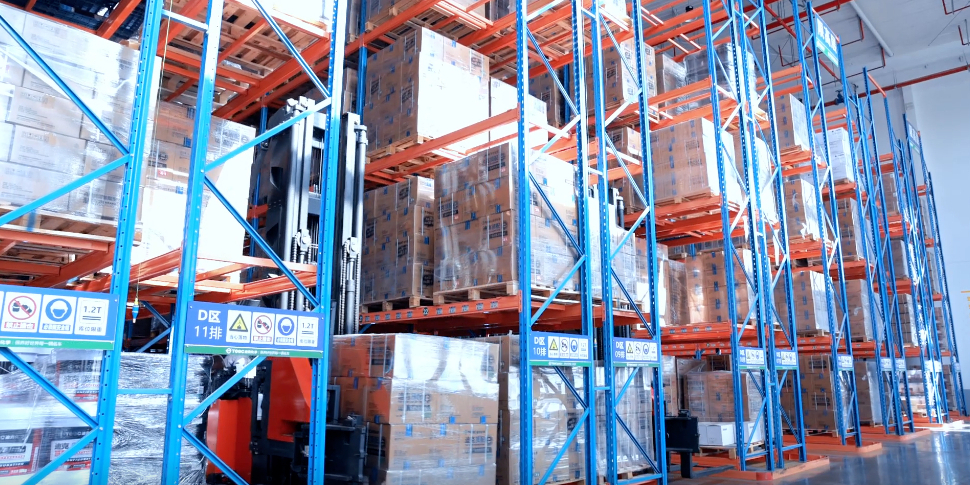
On May 20th, Dick Chemical unveiled three products at its 30th anniversary celebration, including a new generation of liquid cooling comprehensive solution for computing power centers, as well as low conductivity MC-500 coolant and silent high lubrication brake fluid "Zhiba Class7" for electric vehicles.
Dick Chemical is a subsidiary of Longpan Technology (603906. SH), which has long focused on the business of automotive brake fluid and other chemicals. With the deepening development of new energy vehicles, Dick Chemical needs to upgrade its traditional business, which is both an unprecedented challenge and an opportunity to rewrite the fate of the enterprise.
Upgrading and replacement of brake fluid market
Dick Chemical was jointly established in 1996 by China National Chemical Construction Corporation, Japan Ethylene Chemical Co., Ltd., Beijing University of Chemical Technology, and Japan Donggong KOSEN Co., Ltd. It is a Sino Japanese joint venture. In the process of development, Dick Chemical has formed mature production capacity for brake fluid, antifreeze coolant, window cleaning fluid and other products, which are matched with automotive companies such as SAIC GM Wuling and Great Wall Motors.
In June 2018, Longpan Technology invested to include Ruilifeng and its subsidiary Dike Chemical in the consolidated financial statements. Longpan Technology stated in the announcement that the acquisition aims to integrate industry business resources, create business synergies between the company and Dick Chemical, and enhance the company's comprehensive advantages in research and development, production, and sales of environmentally friendly fine chemicals for vehicles.
After merging with Longpan Technology, Dick Chemical began its business transformation, accelerating its expansion from traditional fuel vehicle brake fluid and coolant fields to the new energy chemical track, gradually building a product matrix covering cutting-edge fields such as electric vehicle thermal management, energy storage temperature control, AI liquid cooling, etc. The products are matched with mainstream domestic and foreign vehicle manufacturers and component giants.
Public information shows that new energy vehicles are generally 20% to 30% heavier than gasoline vehicles of the same level, with stronger acceleration performance. Each brake carries a greater load, and the friction parts are more prone to high temperatures. At the same time, the energy recovery braking system and electronic hydraulic braking system installed in new energy vehicles have put forward more stringent requirements for the response speed, high-temperature stability, and low-temperature fluidity of brake fluid.
In September 2024, Longpan Lubricants launched Class7 high-performance fully synthetic brake fluid specially developed for the braking system characteristics of new energy vehicles and high-end fuel vehicles. It adopts unobstructed conduction technology, polymerizes and recombines molecular structure chains, and undergoes boronic acid esterification reaction to increase boiling point and reduce low-temperature viscosity.
The "Dominator Class7" released by Dick Chemical claims to use a new lubrication system that can significantly reduce the friction noise and wear of the braking system, and maintain a stable foot feel under extreme working conditions.
Similar product layouts are also being intensively developed in the industry. In China, as a leader in automotive fine chemicals, Delian Group has launched products such as antifreeze and brake fluid specifically for new energy vehicles; Uni President Petrochemical has launched hybrid/electric/oil fully compatible brake fluids, which are compatible with hybrid and fuel vehicles according to the highest requirements for electric vehicles, in an attempt to solve the problem of multi model inventory in repair shops.
The upgrading and replacement of the brake fluid market has become an unavoidable trend in the entire industry. Official information shows that Longpan Class7 products have significantly improved key indicators such as dry and wet boiling points compared to mainstream DOT4 brake fluids, and their low-temperature kinematic viscosity has doubled in severity.
More importantly, the revision of industry standards is being synchronized with the technological iteration of products. Dick Chemical announced at its 30th anniversary celebration that it has officially launched the drafting of four group standards in collaboration with industry organizations and partners, covering areas such as low conductivity coolant, high lubrication brake fluid, wet coolant, and long-life data center coolant.
Automotive thermal management: a billion dollar blue ocean
Unlike brake fluid, thermal management systems are an incremental blue ocean brought by new energy vehicles. A research report by Zhejiang Securities pointed out that compared to fuel vehicles, the thermal management system of new energy vehicles has added battery thermal management and motor electronic control thermal management systems, and the cabin heating has changed from the original engine coolant heating to PTC heating or heat pump system. The single vehicle value of the entire system has tripled from around 2000 yuan for traditional fuel vehicles.
Among the many core media in thermal management systems, coolant plays an irreplaceable role. Unlike traditional fuel vehicles, which mainly ensure engine heat dissipation, the coolant for new energy vehicles needs to serve the thermal management of the power battery pack, motor, and electronic control system simultaneously, with stricter performance requirements.
Due to the introduction of a large number of high-voltage electrical components into new energy vehicles, the control of coolant conductivity has become the core of safety. Low conductivity coolant can effectively prevent internal short circuits and leakage risks of batteries caused by coolant leakage, providing safety guarantees for high-voltage systems. Low conductivity, high insulation, and excellent thermal management capabilities have become the touchstone for testing the technical strength of various enterprises.
Dick Chemical has released the low conductivity MC-500 coolant for electric vehicles. The official claims that it meets the insulation safety requirements of electric vehicles and achieves ultra-low conductivity through innovative formulas, effectively avoiding the risk of electric leakage.
In terms of thermal management, other competitors in the industry are also actively expanding their presence. As the exclusive authorized agent of BASF's coolant and brake fluid products in the domestic market, Delian Group has formed production capacity in the field of coolant for new energy vehicle thermal management systems and extended its products to energy storage, wind energy, nuclear power and other fields. Compton not only holds 5 national invention patents for coolant, but also participated in drafting the "Hydrogen Fuel Cell Coolant" standard, filling the gap in the field without standardized standards.
The China Academy of Commerce predicts that the size of China's automotive thermal management market will be approximately 180 billion to 200 billion yuan in 2023, accounting for over 35% of the global market; By 2030, this scale is expected to reach 400 billion to 450 billion yuan.



 WeChat registration or login


 Subscribe