Economic Observer Follow
2026-05-23 11:59


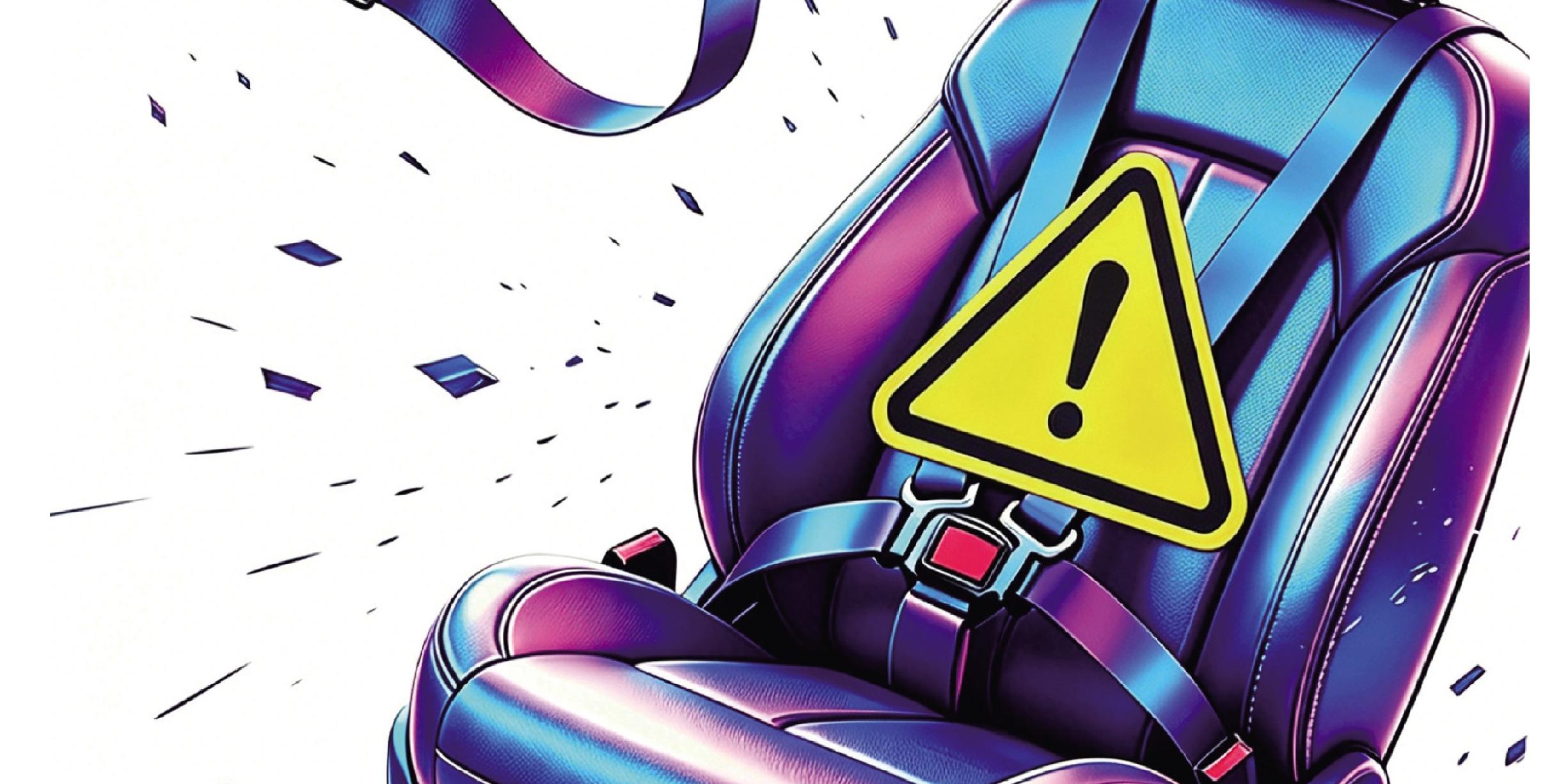
In early May 2026, a video circulating online brought the emerging configuration of zero gravity seats to the forefront of public opinion. In the video, a child is sitting in the passenger seat of a certain new energy brand car. After the passengers in the car activated the second row zero gravity mode through voice commands, the passenger seat began to fold automatically. The system did not recognize the child occupying the seat, nor did it trigger the anti pinch mechanism. The "stop" command repeatedly shouted by the parents did not take effect. In an emergency, the child was manually pulled out to avoid getting caught. The official response from the brand stated that due to the child being underweight and not wearing a seat belt, the system operates according to design logic and does not constitute a malfunction, but the scenario has been optimized.
This is not an isolated case, similar accidents have already occurred in the global automotive market. In March 2026, an international brand of car voluntarily recalled 68500 models in the US market due to the automatic folding of electric seats causing serious injuries to a 2-year-old girl, becoming the world's first recall case caused by the failure of intelligent seat lightweight recognition.
Zero gravity seats have become a comfort feature highly valued by many car manufacturers, but at the same time, they are also becoming a "comfort trap": they do bring a disruptive riding experience, but they bury multiple safety hazards. The child being caught in a pinch in the above case is just one of the risks, and the fatal collision risk during use, the lack of regulation under standard vacuum, legal disputes over corporate "contractual exemption", and hidden technical concerns under the trend of self research by car companies are all worthy of high attention.
Fatal risks during driving
The concept of zero gravity seats originated from NASA's "neutral body posture" research in the 1980s, which showed that an angle of approximately 128 ° between the torso and thighs could minimize spinal pressure. Nissan was the first to introduce this research result into automobiles in 2013, and it was widely used by Chinese car brands in 2021, with multiple new energy vehicle models featuring it as a core selling point. Data shows that in 2022, only 32 cars in China were equipped with zero gravity seats, which surged to 117 in 2024, nearly doubling in two years and dropping from models priced over 300000 yuan to models priced at 100000 yuan.
The car company's "seat innovation" was almost warned from the beginning that improper use could pose fatal risks. In April 2025, the China Academy of Automotive Engineering and the China Association of Automobile Manufacturers jointly released the world's first group standard for high angle seats, quantifying for the first time the risk of zero gravity posture in frontal collisions: at a speed of 56km/h, the risk of severe AIS3+level injuries to passengers is 4.4 times that of conventional sitting posture, and the risk of life-threatening AIS4+level injuries is as high as 5.2 times.
In order to cope with the safety risks of zero gravity seats during driving, multiple car companies have transferred the fixing points of seat belts from the traditional B-pillar to the seats, but this has not fundamentally eliminated the risks faced in high inclination postures. Once a zero gravity seat collides during vehicle operation, the existing passive safety system is highly likely to fail, "said Ye Zhengping, an analyst in the new energy industry, to the Economic Observer. The most fatal risk is the" diving effect "- passengers sliding out from under the seat belt, causing abdominal injuries and airbag support failure. When the seat tilts at a large angle, the shoulder straps can easily slide to the neck, causing strangulation, and the sternum and lumbar spine are also prone to fractures.
However, in the promotion and social media of some car companies, the use of zero gravity seats during vehicle driving is not uncommon. Many car owners share the comfortable riding experience brought by zero gravity seats, but know very little about the possible risks. Most car companies only label "parking only" in the user manual or remind through pop ups, but very few technically prohibit deployment. The safety of driving depends entirely on whether the user is willing to follow a small line of text in the manual.
Since the risk is so high, why don't car companies turn off the option to use zero gravity seats while driving through OTA? Zhou Xu, Director of Strategic Consulting at Victory Bird, believes that the core issue is the lack of product standards. As an emerging configuration that has rapidly become popular in recent years, zero gravity seats do not have a specific safety standard worldwide, and existing safety tests are all based on traditional sitting posture, making it impossible to evaluate passenger protection under high inclination conditions.
In order to capture consumers who pursue "long-distance high-speed lying down rest", car companies are leaving the choice and risk to users. However, in the eyes of lawyers, the effectiveness of this' contractual exemption 'is questionable. Wu Xindong, a partner at Beijing Deheng Law Firm, pointed out that ordinary text annotations in the user manual belong to the format clause of Article 496 of the Civil Code. Major risk warnings related to personal safety must be presented in a "prominent manner", otherwise they do not constitute reasonable warnings. According to the Administrative Supervision and Management Measures for Contracts, standard clauses that exempt consumers from liability for personal injury are invalid. Car companies that knowingly carry out fatal risks and possess technical capabilities but fail to do so, allowing foreseeable dangers, will be deemed as design defects.
Currently, some car companies have adopted more responsible practices. When the speed of the Mercedes Benz EQS/S-Class exceeds 5km/h, the rear seat will automatically retract to a normal sitting position with zero gravity; The BMW i7 can only fully extend the zero gravity seat when parked, and automatically reset when in D gear or exceeding 3km/h. Among the domestic new energy car companies, after OTA in 2024, the Tengshi will automatically pause adjusting the zero gravity seat and sound an alarm when the speed exceeds 10km/h; The Wenjie M9 will add a "disable while driving" switch in OTA by 2025, but it is not absolutely mandatory.
The hidden concerns of car companies' self research fever
A noteworthy phenomenon is that many car companies have abandoned traditional supplier supply solutions and instead pursued independent research and development in order to achieve the goal of "more comfort" around the emerging feature of zero gravity seats. At present, brands such as NIO, Ideal, Wei Pai, and Zero Run have clearly announced their plans for self-developed zero gravity seats, covering seat frames, electronic control systems, or core algorithms. This breaks the tradition of relying mainly on Tier 1 suppliers such as Andotuo and Yanfeng for seat supply in the past.
The self developed zero gravity seats by car companies are primarily due to insufficient flexibility in supplier production capacity. As of October 2025, there are only 17 companies focusing on the research and production of zero gravity seats, accounting for 0.51% of the industry's total; In addition, the traditional Tier 1 foreign investment typically takes 18 to 24 months to develop a new set of seats, while the new forces' vehicle development cycle has been compressed to 18 months or even shorter. Therefore, car companies can only keep up with the speed of product iteration through independent research.
The deeper driving force lies in the need for product differentiation. Currently, zero gravity seats have become the core experience point of intelligent cockpits. Only through self-developed technology can we create functional zones that match the brand tone and avoid homogenization with competitors. Zhu Jiangming, the founder of Zero Run Motors, once stated in a media interview that car manufacturers can have many innovative features in the production of seats, such as zero gravity seats, ventilation, heating functions, etc. More expensive cars also require seat massage, etc. These features are highly perceived by users and are the key to differentiation between car companies and brands. In addition, self-developed also means independent control of software algorithms, which can be continuously optimized through OTA upgrades in the future, without having to purchase from suppliers every iteration.
Cost saving is another driving force for car companies to independently develop zero gravity seats. Zhu Jiangming has repeatedly emphasized that self-developed and self-made (including seats) can achieve significant cost advantages compared to outsourcing. Internal evaluations have shown that some components, such as individual seats, can save two to three thousand yuan, and the overall cost of self-developed components is about 30% lower than outsourcing. Compared to externally sourced zero gravity seats, self-developed and self-made seats provide more cost saving space.
The trend of car companies developing their own seats has also sparked industry discussions on whether "outsiders doing expert work" will bring more safety hazards. Regarding this, Ye Zhengping stated that the self-developed teams of car companies are often talents recruited from Tier 1 universities with high salaries, but there is still a gap between car companies and century old traditional suppliers in terms of verification systems and accumulation of extreme working condition data. Traditional suppliers have massive user aging data, material pressure resistance, and long-term anti noise experience, which are difficult for car companies to supplement in a short period of time through software simulation. This is also the reason why some new forces' seats are prone to collapse or abnormal noise after one or two years of use.
Zhou Xu criticized the phenomenon of self-developed zero gravity seats by car companies from the perspective of commercial division of labor. He believes that car companies' self-developed zero gravity seats are mostly driven by marketing considerations, and professional supply chain enterprises have deep experience in product research and production management, which can achieve lower costs and higher reliability. Even innovation benchmarks like Apple and Tesla heavily rely on external suppliers. Under the business logic of professional division of labor, the approach of enterprises taking on all aspects is not feasible. Automobile companies should grasp their core advantages and transfer non core businesses to professional supply chain enterprises.
What is the future of zero gravity seats
The problems with zero gravity seats are actually a microcosm of the problems encountered in the transformation of automobiles towards electrification and intelligence. Previously, hidden door handles had sparked widespread controversy due to issues such as inability to escape after accidents and inability to open doors at low temperatures. Eventually, the Ministry of Industry and Information Technology issued a document stipulating that new cars must be equipped with mechanically operable inner and outer door handles starting from 2027, limiting the design of pure electronic/fully hidden door handles. In addition, more and more car companies have cancelled physical buttons for key functions and switched to voice control, leading to dangerous operations such as accidentally turning off the headlights during nighttime driving for some car brands.
So, where will the zero gravity seats that have already been widely installed go? Is it completely prohibited to use it while driving, or can it be safely used while driving through technological means?
At the regulatory level, the national mandatory standard GB15083 "Strength Requirements and Test Methods for Automotive Seats, Seat Anchors, and Headrests" has been revised since 2025 and is scheduled to be officially finalized in the fourth quarter of 2026. The revised content will clarify the maximum elevation angle of zero gravity seats when the vehicle is in motion, require the installation of integrated seat belts or specialized restraint systems, and standardize the way companies provide safety instructions. It can be foreseen that zero gravity seats will face stricter engineering specifications in the future, and forced reset or small angle limit during driving may become standard.
On the technical level, some companies are developing active safety systems - building three lines of defense: "early warning - active attitude adjustment - pre tensioning constraint". The main principle is that when the front camera and radar of the vehicle recognize emergency braking or collision risk, the seat frame will quickly adjust its posture, actively return the backrest angle to the correct position, and return from zero gravity state to a safer sitting posture; At the same time, the seat belt pre tensioning mechanism completes pre tightening within a few tens of milliseconds, firmly securing the passenger in the seat. The Zunjie S800 has released a seat system that can automatically reset the seat from a reclined position to a safe sitting position during a pre collision, and tighten the seat belt in conjunction. The reset process takes 0.4 to 0.7 seconds.
However, the cost of the aforementioned proactive security technology solutions is high. The integrated follow-up seat belt requires a double increase in the strength of the backrest frame, the installation of anti diving airbags in the seat cushion, and the redesign of the deployment range of the roof side air curtain. Ye Zhengping believes that paying such a high safety hardware cost for the 1% semi reclining demand during driving is not commercially economical, which may result in zero gravity seats equipped with active safety systems only remaining in high-end models.
Another possibility is that regulations completely prohibit the use of zero gravity seats during driving. In this situation, will consumers still pay for this feature that can only be used in a stationary state? Zhou Xu stated that the actual usage rate of zero gravity seats is relatively low, and it is more of an internal product rather than a user demand. Once relevant regulations require the prohibition of zero gravity seats while driving, the value of zero gravity seats will be minimal, and economy tram brands will be the first to abandon zero gravity seats.
But there are also opinions that pure electric vehicle users have a lot of fragmented parking time, such as 30-40 minutes during charging, lunch breaks for professionals, waiting time for picking up and dropping off children from school, weekend camping time, etc. In these static scenarios, the comfort experience brought by zero gravity seats is disruptive. Therefore, even if regulations mandate the prohibition of zero gravity seats during driving, the commercial value of zero gravity seats will not be completely eliminated, but will make consumers' expectations return to rationality.



 WeChat registration or login


 Subscribe