2026-11-23 10:19


At 2 o'clock in the morning, a foreign business person who had just arrived in Shenzhen suddenly felt unwell.
He doesn't know which hospital to go to, is not familiar with Chinese registration procedures, and is unsure if overseas insurance can cover medical expenses. There are many applications on the phone, but I don't know which one works. If medical consultation could be responded to within half a minute, communicated in familiar language, and assisted in arranging follow-up medical treatment, would his situation be different in a foreign land?
Seemingly a hypothetical scenario, it is a real problem that must be encountered in cross-border transactions. This year, a foreign customer named SIEGEL experienced Ping An's own accompanying consultation service. In the event of heart discomfort, the accompanying physician communicated in English throughout the entire process and achieved direct payment for consultation at a hospital in Shenzhen, quickly relieving symptoms. After returning to China, he handwritten a thank-you letter to Ping An.
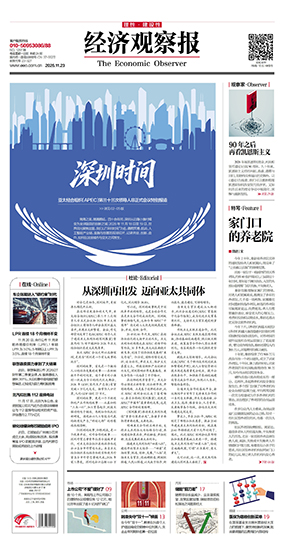
On November 18-19, the 33rd Asia Pacific Economic Cooperation (APEC) Leaders' Informal Meeting was held in Shenzhen. The theme of APEC's "China Year" in 2026 is "Building the Asia Pacific Community, Promoting Common Prosperity Now", focusing on openness, innovation, and cooperation.
As the official sponsor of this conference, Ping An China has customized exclusive insurance coverage for the conference, and also launched cross-border medical, travel rescue, and payment facilitation services. Among them, "Ping An Cross border Health" supports real-time translation in 19 languages, and online medical consultations can respond within 30 seconds at the fastest; The "Ping An Xing" domestic travel insurance only takes 15 minutes from receiving the alarm to the departure of the rescue team.
2026 also coincides with the 20th anniversary of the Free Trade Area of the Asia Pacific (FTAAP) initiative. Twenty years ago, APEC leaders decided in Hanoi to study this long-term prospect; Twenty years later, the Shenzhen Conference will continue to explore the path of regional economic integration through a new framework for digital trade cooperation.
30 seconds, 15 minutes, and 20 years. Seemingly distant time scales connect the same question: how can people, goods, and capital obtain more reliable services and guarantees after crossing boundaries?
Shenzhen Ping An Financial Center has a smaller story. This spring, this nearly 600 meter high financial building installed bird song monitoring equipment in the south tower; During the year, some glass curtain walls were equipped with white anti bird collision markers, making it easier for flying birds to identify the glass that was previously difficult to see clearly.
A skyscraper has changed a small part of its design for a bird. It is not the same as medical rescue for distant visitors, but both remind people that in order to build a stronger community with a shared future, some risks need to be seen in advance, and some difficulties need to be dealt with in a timely manner.
From a migratory bird to a distant guest, the value provided by financial institutions may be broader than the compensation liability on a single policy.
This is also a starting point for re reading Ping An China's third quarter report for 2026 and observing its "service year" and APEC Shenzhen practice: how can a comprehensive financial group organize insurance, banking, medical and elderly care, and technology resources into reliable and sustainable service capabilities?
From one policy to a global protection network
On November 15th, Shenzhen Ping An Financial Center welcomed a grand Asia Pacific cultural event.
The launching ceremony of the "Shanhai Tonghui Meimei Together" Asia Pacific Cultural Exchange Activity and the "China in Intangible Cultural Heritage" special exhibition, jointly organized by China Central Radio and Television Station and the Guangdong Provincial People's Government, is held here. More than 150 Chinese and foreign guests, including diplomats, entrepreneurs, and artists, gathered together in China. More than 200 works of art, including calligraphy, painting, porcelain, brocade, sculpture, etc., have given birth to another cultural heritage in this financial themed building.
On that day, Ping An of China announced the launch of the "Comprehensive Service Plan for Intangible Cultural Heritage Inheritance". Ma Mingzhe, founder and chairman of Ping An Group, said in his speech that the Asia Pacific region is connected by mountains and seas, and people are closely related. The construction of the Asia Pacific community requires not only economic and trade cooperation, but also cultural integration and people to people connectivity. Relying on a global service network, Ping An will empower traditional culture with finance and promote the dissemination of Chinese intangible cultural heritage to the Asia Pacific region and the world.
How can a cultural exchange event lead to a financial service plan?
Bringing a craft into the exhibition hall and establishing a workshop in the market are not the same thing. Behind an embroidery piece, there may be years of accumulation by a craftsman; When embroidery products are sent to the workshop, they may face potential fires, as well as issues such as capital turnover, intellectual property protection, orders, and sales channels. If you want to sell your products overseas, it also involves cross-border settlement, financing, and operational risks.
According to the plan released on November 15th, Ping An will provide comprehensive financial support around three aspects: workshop operation, skill inheritance, and intangible cultural heritage industry: preventing business risks through insurance, IoT perception, and AI warning, supporting production and sales with credit, settlement, and channel resources, and attempting to respond to intergenerational inheritance needs through tools such as wealth management and family trusts. To pass on the craft, the first step is to provide the skilled worker with the conditions to survive on the craft.
This also provides a specific perspective for Asia Pacific open cooperation: how can financial services keep up with goods, capital, and people crossing borders?
On November 15th, the "APEC Ambassador and CEO Roundtable" hosted by CCTV Finance landed at the Ping An Financial Center in Shenzhen, where ambassadors from multiple Asia Pacific economies and Chinese entrepreneurs engaged in dialogue on open opportunities. Ma Mingzhe stated that such exchanges have built valuable bridges for Chinese entrepreneurs to connect with global resources and step onto the international stage.
For enterprises going overseas, how financial services can keep up with their pace, infrastructure construction is an observation window. Guo Xiaotao, Co CEO of Ping An Group, discussed the financing and risk protection challenges faced by infrastructure projects in the Asia Pacific region. From Ping An's practice, it can leverage three aspects of financial and technological capabilities: risk reduction, capital bridge, and digital finance to safeguard Asia Pacific infrastructure.
In Indonesia, Ping An Property and Casualty Insurance serves as the lead underwriter, providing RMB 18 billion in risk protection for the Mandarang hydropower project. Faced with complex geological and hydrological conditions, Ping An utilizes satellite remote sensing to monitor geological deformation and hydrological changes, and conducts dynamic risk warning through the Eagle Eye system.
In Indonesia, Ping An Property and Casualty Insurance, as the chief reinsurer, provides $1.34 billion in risk protection for the Jakarta Bandung high-speed railway and uses satellite remote sensing and AI algorithms to assist in identifying natural disaster risks such as landslides and mudslides.
Funds cross boundaries in another way. In Thailand, a Chinese computing power company is building a data center and needs to address issues related to large-scale financing and cross-border fund arrangements. Ping An Bank designed a syndicated financing plan for it, led the fundraising of nearly $700 million in loans, and established account agency cooperation with the local banking system.
Digital financial services are also extending outward. Ping An's Financial One Account provides technology services such as digital banking and digital insurance to financial institutions in the Asia Pacific region, with related projects covering 7 APEC member economies.
A hydroelectric power station, a high-speed railway, and a data center connect energy, transportation, and the digital economy. Insurance institutions participate in risk management, banks organize financing, and fintech companies serve the digital construction of the local financial system. From an individual's cross-border travel to a company building infrastructure overseas, the problems that finance needs to solve are becoming increasingly complex.
The real test is whether professional resources can be organized in a timely manner when problems occur.
Four hours, six departments, AI empowered personnel
In March of this year, a family in Binzhou, Shandong, encountered such a moment.
Mr. Lin (surname Hua), a patient suffering from severe traumatic brain injury, is still in intensive care after undergoing his first craniotomy surgery, with recurrent high fever. Do you need another craniotomy? The risk of transferring to another hospital is too high, and continuing to wait is not reassuring. Family members hope to hear more expert opinions.
According to Southern Weekly, this request for help has been transferred to Yin Zhijiao, a consultation assistant of Ping An Good Doctor and renowned physician. Yin Zhijiao, who has experience working in the ICU, carefully reviewed her medical records before communicating with local doctors. Brain injury, postoperative high fever, respiratory support, infection risk, and nutritional issues are intertwined. Experience tells Yin Zhijiao that relying solely on a neurosurgeon may not be able to answer all questions.
With Ping An Group's rich "four in one" service network (in store, online, in hospital, and at home), Yin Zhijiao initiated a cross city coordination, and the team contacted six relevant specialist experts in Beijing, Wuhan, Shenzhen, and other places. About four hours later, a multidisciplinary remote consultation was conducted.
For the family members waiting by the hospital bed, what is important is not only what advice they receive, but also the professional resources scattered in different cities and departments, finally being able to work together around the person in front of them. Mr. Lin, the patient, was ultimately able to turn the tide.
AI also plays an important role in this: intelligent selection mechanisms can assist in matching experts, and digital platforms make information transmission and multi-party consultations more convenient. However, the severity of the condition, the risks and trade-offs of different treatment plans still require professional personnel to make the final decision.This may be an easily overlooked change in the AI era: the more advanced the technology, the less people are needed for professional services; On the contrary, it may allow people's experiences to reach farther places and broaden the service radius.
For a comprehensive financial group, similar organizational methods are also changing traditional service processes.
In the past, a customer may need to make different phone calls, repeat their needs, and then find a suitable institution. Nowadays, AI attempts to identify problems and handle simple transactions at a unified entrance, handing over complex requirements to corresponding professionals. In 2026, Ping An aims to create a service upgrade year, proposing the concepts of "one sentence can accomplish tasks" and "one button can respond to emergencies", allowing complex services to start from a simple entrance.
According to Ping An's third quarter report, as of the end of September, the group's AI inquiry office has covered 90% of business scenarios, with an end-to-end resolution rate of 91%; In the first three quarters, AI doctors were used more than 62 million times. The cost of technology is also changing. In September of this year, the token cost of Ping An units decreased by 81% compared to December 2025.
Behind these numbers is an account that financial services are recalculating: how much time does it take for customers to find services, can professionals reduce repetitive labor, and can a problem that originally required multiple transfers be handled more effectively? Can the quality of medical, elderly care, and financial services be improved through professional teams and advanced service processes?
This also provides another perspective for Ping An's "comprehensive finance+medical and elderly care" strategy. The connection between traditional insurance and customers often occurs during the process of insurance application, payment, and claims settlement. Family doctors, health management, and home-based elderly care services may extend this connection to daily life. For Ping An, which has nearly 256 million individual customers, what really matters is not just how many services customers use, but whether these services can enter the moments when they truly need help.
Having insurance, banking, healthcare, and technology resources is a scale advantage; Whether these resources can be properly organized is another capability. Returning to the family in Binzhou. Faced with a complex illness, what the family hopes for is only someone to understand the problem, invite suitable experts together, and save a dying life.
Technology can make information run faster. But getting things done still requires professional people.
What else can finance do before risks occur?
Why not go back to Shenzhen Ping An Financial Center.
A building nearly 600 meters high, with glass curtain walls reflecting the trees and sky of the city. For pedestrians, it is glass that is clearly visible from side to side; For birds in flight, the reflected scenery may make them mistakenly believe that they can still pass ahead. This year, Ping An installed bird song monitoring equipment in the south tower of the building and added white anti bird collision markers to some glass curtain walls. These ripples are not significant, but they attempt to change a subtle risk.
In 1962, Rachel Carson wrote in "Silent Spring": "Nothing in nature can exist in isolation." More than sixty years later, a skyscraper and the birds flying over it are also relearning how to coexist.
This small matter is worth considering in the financial industry: risk management does not always start after losses occur.
The traditional function of insurance is to assume agreed risks and compensate for corresponding losses. With the advancement of technology, risk identification and prevention have gradually entered the daily work of insurance institutions. A potential road hazard can be found in advance, a possible loss caused by a rainstorm can be warned in time, and a plant's equipment abnormality can be handled as soon as possible, all of which may change the future loss results.
The Eagle Eye Disaster Warning System of Ping An Property and Casualty Insurance is one of these explorations. Satellite remote sensing, meteorological models, and IoT perception provide new tools for disaster identification and risk warning. In the Asia Pacific region, this capability is also following Chinese companies overseas. The geological and climate risk monitoring of the Yawan high-speed railway, as well as engineering insurance for major energy projects, have extended risk management to the construction and operation processes.
This approach also appeared in the outcome document of the APEC Shenzhen meeting. The "Shenzhen Outlook" released on November 19th emphasizes reducing disaster risks through pre investment; The new version of the APEC Connectivity Blueprint includes infrastructure financing and disaster risk financing in regional financial cooperation.
The disaster warning along a railway line and the engineering insurance of a hydropower station have provided specific points for these policy statements. And the target of risk prevention can be as small as a traditional workshop.
The risk of a workshop can sometimes come suddenly. A fire may destroy equipment, materials, and works; An intellectual property dispute may make it difficult for years of hard work to receive the expected return. Some risks also come slowly. Orders are decreasing, funds are becoming tight, and young people are unwilling to take over. When an old craftsman puts down their tools, a craft may lose the conditions for continued inheritance.
Insurance can share specific losses, and risk warning can help identify hidden dangers; The connection between credit, orders, and sales channels is related to whether the workshop can continue to operate. For families with corresponding needs and conditions, wealth management and trust arrangements may also be used to address intergenerational property inheritance issues.
There are technological innovations and changes in the way financial services are provided. The "Mother's Needle and Thread Work" project previously launched by Ping An attempts to connect traditional embroidery techniques with the market through a "designer+embroiderer" model; The "Tao Zeng Intangible Cultural Heritage Copyright Insurance" launched by Ping An Property and Casualty Insurance Tianjin Branch provides a maximum risk protection of 1 million yuan per piece for intangible cultural heritage works.
One end is the work, and the other end is the livelihood. The key to guarding skills is to help guardians find ways to sustain their lives and businesses.
From one insurance to a combination of multiple services, new financial spaces are opening up. Sheng Ruisheng, Secretary of the Board of Directors and Brand Director of Ping An Group, previously summarized Ping An's practices in safety, ecology, and sustainable development as "Chang'an, Changlv, Changqing". What is worth pondering may be the word 'long'. A workshop hopes to pass on its craftsmanship from generation to generation, a family hopes that its elderly care arrangements can withstand the passage of time, and a major infrastructure investment may gradually recoup its costs after many years. These things cannot be measured solely by today's speed and current profits.
On November 18th, the 2026 APEC Business Leaders Summit was held in Shenzhen. According to Xinhua News Agency, Ma Mingzhe, Chairman of Ping An Group, who attended the keynote speech on site, stated that Ping An will "root in the Bay Area and connect with the Asia Pacific region", and participate in Asia Pacific cooperation with higher quality comprehensive financial, medical, and elderly care services.
This commitment to the Asia Pacific region is intrinsically linked to Ping An's comprehensive financial and healthcare elderly care strategies promoted in recent years. From Chinese companies building high-speed rail and hydropower stations in Indonesia to expanding digital infrastructure in Thailand; From medical treatment and payment for foreign tourists to traditional skills seeking new overseas markets, financial services have entered more and more specific aspects of cross-border activities. It cannot determine the success of a project alone, nor can it eliminate all risks, but it can help people face uncertainty more calmly through credit, financing, insurance, and professional services.
In 2026, the Asia Pacific Free Trade Area initiative was proposed for a full twenty years. During this period, regional economic cooperation continued to advance, and the global industrial structure, technological conditions, and financial environment also underwent profound changes. Openness still requires roads, ports, and markets; Innovation also requires the coordination between capital, technology, and institutions. Medical services, financial arrangements, and risk protection that are not always noticed are also related to the quality of cooperation.
An APEC meeting brought these things together briefly in Shenzhen. And true Asia Pacific cooperation will continue to occur in the daily lives of cities, factories, and families after the conference.
Conclusion: Time, what is ultimately measured?
After the beginning of winter, people still come and go in Shenzhen, where there is not much coldness.
Migratory birds migrate along their own paths, and distant guests arrive in this city. The craftsmen in the workshop still have to calculate tomorrow's orders and worry about whether the next generation is willing to take over the work in their hands.
From the early stages of reform and opening up in processing and manufacturing, to today's new energy vehicles, artificial intelligence, and global industrial chains, Shenzhen has always been a city racing against time. But beyond speed, there is also patience. A data center requires years to recoup its investment, a long-term policy may span decades, a mangrove forest needs continuous protection, and a regional cooperation vision also requires lengthy negotiations and construction.
For financial institutions, pursuing faster trading and service responses is certainly important, but maintaining operational capabilities, managing risks, and fulfilling commitments over a longer period of time is even more important.
30 seconds allows for quick access to medical consultation in critical situations.
15 minutes is enough to effectively obtain rescue in case of danger.
In 20 years, it reminds us that Asia Pacific economic cooperation requires patience and trust beyond just one meeting.
Technology has made many things faster. But what finance really needs to answer are still those simple questions: can risks be reduced? Is there anyone to take care of difficulties encountered? Can today's promise be fulfilled tomorrow?
From a migratory bird to a distant guest, 'safety' ultimately depends on these specific things.
Time measures not only speed, but also longevity and peace of mind.


The first batch of nuclear drugs with a price of 250000 US dollars, known as the "first stock of nuclear drugs," went public and broke through

Taking advantage of the hot topic of "Nvidia", Tianyang Technology was registered and fell 15.96%

Behind the popularity of Sam's down jackets: the competition track in supermarkets has changed


 Subscribe