Economic Observer Follow
2026-11-22 08:37

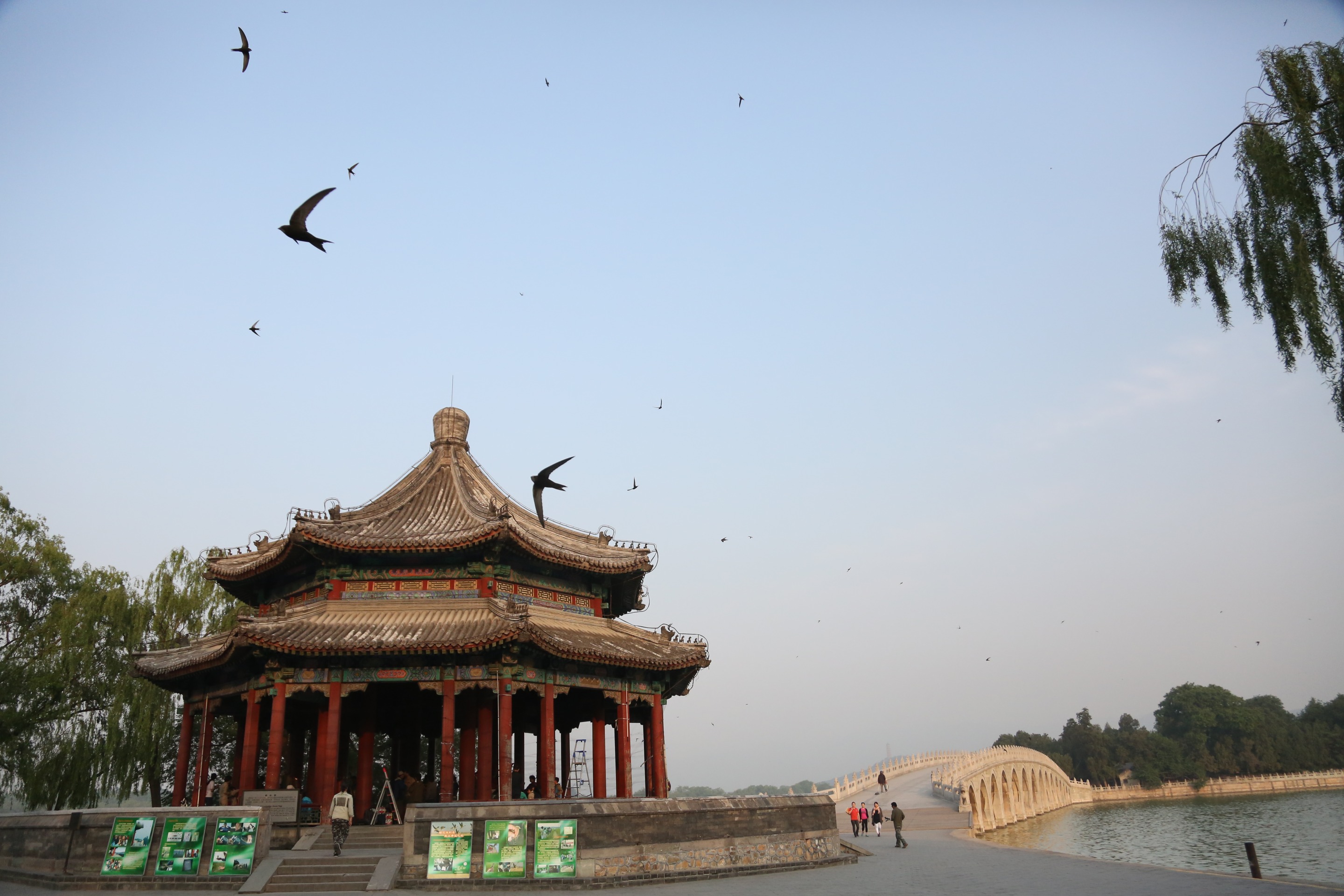
The Beijing Swift, a wild migratory bird named after "Beijing", has long surpassed the rescue of a single species in its protection. It successfully integrates ecological and cultural values with urban development, providing a highly valuable "Beijing Plan" for biodiversity conservation in the rapid development of this mega city.
The above text is an introduction to the Beijing Biodiversity Conservation Achievement Exhibition on October 19-20, 2026, with the theme of "Coexistence of All Things in the Jinghua Mountains and Rivers". This exhibition was unveiled in Yerevan, the capital of Armenia, where the 17th Conference of the Parties to the United Nations Convention on Biological Diversity (COP17) was held. The exhibition's sections such as "Nature, Entering the Urban Agenda" and "Seeing Ecological Improvement" showcase Beijing's achievements in ecological space protection and ecosystem enhancement over the past decade.
The eye-catching silhouette of the Beijing Swift in the exhibition attracted both domestic and foreign guests to stop and watch... Nowadays, when it comes to the harmonious coexistence between humans and nature in Beijing, the image of the "Beijing Swift" is indispensable. It is not only an indicative species that showcases Beijing's biodiversity, but also a unique cultural symbol of the ancient capital of Beijing, endowed with increasingly rich and timeless literary imagination.
At the beginning of 2026, the first original play by the National Centre for the Performing Arts focusing on the central axis of Beijing, "Swift," tells the story of a group of young architects secretly surveying and mapping ancient buildings in Beiping during the Anti Japanese War. The play also indirectly showcases the profound historical connection between Beijing Swift and the city of Beijing:
The Beijing Swift, which inhabits ancient buildings, has a life state of "never stopping and persistently returning to its nest" - traveling about 30000 kilometers back and forth every year, unable to land due to its physiological structure, and flying almost continuously throughout its life - which accurately reflects one of the habits of the Beijing Swift. It always builds nests on the high gate of ancient buildings, so the old Beijingers call it "Lou Yan'er".
The Beijing Swift seems to have been rediscovered. Although we know that the reproduction and growth of Beijing swiftlets may have predated the history of Beijing city. At the foot of Yanshan Mountain, in this land of abundant water and grass, this "black swallow" has been inhabiting for countless centuries.
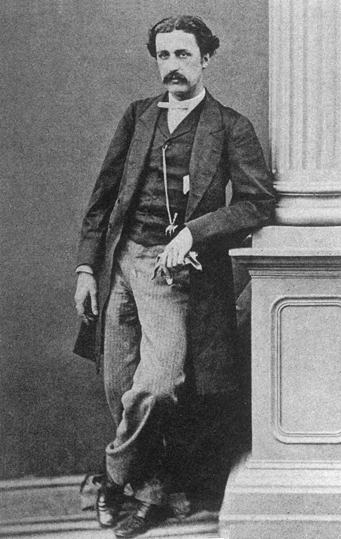
However, it was a British man named Robert Swinhoe who officially combined the words "Beijing" and "Swift" and named them for the first time.
Lord Sven served as the British Consul in China. From 1854 to 1873, for nearly 20 years, Sweeney served as the secretary and consul of several British consulates in China, entering "a major geographical area" on Earth to observe and record China's flora and fauna. Through Swenhou, China's rich and diverse animal population, especially birds, has been understood by the Western scientific community, filling the gap in the field of animal geography.
As the Beijing Swift increasingly enters people's sight, how did the term "Apus apus pekinensis" come about? Under what circumstances did its namer, Svenhou, discover the Swift and name it? Becoming a story that requires further explanation.
First arrived in China
On September 1, 1836, Lord Sven was born in Kolkata, India, under the jurisdiction of the East India Company. His paternal family originated from Northumberland, England. His grandfather worked as a lawyer in the East India Company and had four sons and three daughters; His father is one of four sons who also work as a lawyer.
In 1845, both of Swinhoe's parents died, and Swinhoe and his brothers and sisters became orphans. In 1852, Swinhoe entered King's College School in London and in 1853, he entered the University of London. We cannot know whether he received formal education in zoology.
The conclusive evidence of Swinhoe's interest in ornithology began in 1854. According to records, he gifted a batch of British bird specimens, nests, and eggs to the British Museum at that time. In the same year, the British Foreign Office held a competitive examination for university consular services, and 18-year-old Swinhoe was one of the four candidates who passed the examination.
Subsequently, Svenhou dropped out of university and began traveling to China. We cannot know whether the trip to China came from the active efforts of Lord Sven or through the established arrangement of exams. In short, the young Marquis Sven's first journey as a diplomat was locked in China.
But one thing is certain. In the 19th century, many early Europeans who set foot on Chinese soil were known as "pioneers of Sinology" in Europe. Their description of China - through publications or public speeches - greatly satisfies Europeans' exotic imagination of China and is often highly sought after. These publications have inspired more people to consider China as their first stop in exploring the world.
In the early days, some naturalists focused on which resources were available for development and trade in China, followed by animal and plant resources and cultural heritage. For China at that time, precise zoological data was scarce. Before the arrival of Lord Sven in China, there were no complete scientific records of zoology, and sporadic collection of zoological specimens was done hastily.
If we ask the officials of the Qing Dynasty at that time, how many species of birds were there in the fertile land of China? Chinese intellectual elites, such as doctors from the Imperial Academy, are likely to be amazed. In the knowledge building constructed by the Four Books and Five Classics in China, there is a lack of records about animals. They mostly appear in the poetry and paintings of literati, used to depict a beautiful artistic conception. As for the requirement of collecting animal specimens and recording field data in modern zoology, it is unheard of.
Some Europeans who have never been to China also learned from the works of early missionaries that although China has a vast territory, its population is very crowded. This has led some Europeans to believe that China's "massive population has successfully wiped out all native species". On the eve of their departure for China, they often harbor a sense of unease and fear towards the unknown China.
Young Robert Sweyn may have embarked on a journey to China under such complex emotions.
On April 13, 1854, Sweeney arrived in Hong Kong and began a one-year probationary period as a freelance translator - he served as a temporary clerk at the British Consulate in Hong Kong.
Obviously, Sven Hou's translation work is excellent. Because in the second year, he was stationed in Xiamen, China, and in the third year, 1856, he was appointed as the Second Secretary of the British Consulates in Xiamen and Shanghai.
Here, Marquis Sven displayed his outstanding language talent and learned the locally spoken Minnan language.
For Svenhou, who loves bird research, Xiamen is an ideal location. It is not only far from the guns of European hunters, but also located at the intersection of the migration routes of mainland and island birds. In the migration season, various birds will appear frequently from the 100 mile wide strait between Chinese Mainland and Taiwan Island.
At that time, Taiwan played a crucial role in Xiamen's economy because Xiamen did not have its own agricultural hinterland. As a port, Xiamen was also the busiest port between Hong Kong and Qingdao, crowded with ships traveling to and from Taiwan for trade.
In March 1856, Lord Sven embarked on an adventure crossing the sea to Taiwan Island aboard a Portuguese modified European sailing ship. The reason for using the word "adventure" is that at that time, Taiwan Island was not yet open, and the residents on the island mainly hunted, which was not friendly to outsiders. The frequent conflicts between different tribes also increased the risk of visiting.
This time, Lord Sven conducted animal collection and observation activities in Hsinchu, Xiangshan, and Keelung, staying for about two weeks and recording four species of birds.
Swinhoe did not record the specific purpose of this visit, but he mentioned in a later article that he discovered a red crowned bird flying with its wings spread near Hsinchu on the northwest coast of Taiwan Island. Ten years later, he confirmed that this was a novel bird species - the Taiwan reddish brown top thrush bird - and named it "Mountain Red Head".
This was the first ornithological discovery by Lord Sven, and in the following years, he named at least 92 species of birds and 17 species of mammals. This new discovery gave Marquis Sven great confidence, and his second trip to Taiwan was also coming soon.
In June 1857, Lord Sven entered Taiwan again as a translator aboard the British warship H.M.S. indomitable. Compared to his first informal visit to Taiwan, Lord Sweyn's second trip to Taiwan carried an official dispatch order to search for two missing British nationals - Smith and Neil.
In 1847, a shipwreck occurred in the northern waters of Taiwan Island, and rumors circulated in China's trading ports that two survivors might have drifted to Taiwan Island. The British authorities ordered Royal Navy warships to investigate, with Lord Sven accompanying as a translator and engaging in exploration activities. This time, Lord Sven stayed for a longer period of time and once circled around the entire island of Taiwan for two weeks.
In order to search for two British sailors, this round the island voyage included several land visits. While searching for the missing British man, Lord Sven also kept an eye on the island's flora and fauna, especially birds. Shortly thereafter, Marquis Sven submitted an official report on the search process to the Shanghai Consulate, titled "A Visit to Formosa", which was the "first report on Taiwan Island written in Western language" in the 19th century.
On July 20th, the Shanghai branch of the Rova Asia Association invited Svenho to share his exploration experience. Although the two missing British people were not found, Sweeney's two trips to Taiwan Island made him a "Taiwan expert" in the eyes of British people in China, which deeply influenced his career.
Not only that, a subsequent article written by Svenhou about birds on Taiwan Island caught his attention in the field of zoology.
In 1857, Marquis Sven and several foreign friends jointly established the Xiamen Literary and Scientific Association. At the founding ceremony on November 17th, he read out a non-technical article titled "Several Comments on Xiamen's Bird and Beast Swarm". His friend Stevenson submitted this article to the British journal Zoologist and it was soon published. This is the first time that Lord Sven has published an academic article. In the opening paragraph of the article, he mentioned his interest in nature and natural history:
Although there are not many scientific research achievements in zoology, we are willing to understand the uniqueness and economy of organisms that breathe the same air as us and rely on the same natural resources for survival.
Next, Slater, the editor of the "Zoologist" magazine, made a new request to Sven Hou: to provide a more detailed description of the birds on this little-known island.
The Marquis Sven followed suit, and his reply was once again published in the Sklet issue of The Zoologist, which included the following statement:
The vast camphor forest covering the snow capped mountains in mainland China undoubtedly harbors many species unknown to the scientific community, but it was impossible to explore such a vast forest before China established its right to travel. Even if Taiwan is open to foreigners, any attempt to climb these mountains would pose great danger due to the extreme barbarism of indigenous tribes.
Slater himself was also a zoologist, and he advocated for taking field exploration work seriously early on. He founded another magazine, the bimonthly Journal of Natural History, which brings together the work of natural history and field naturalists. Slater gave Svenhomo great encouragement and provided him with sufficient page support in the journal. At the same time, institutions in the UK that receive animal specimens also have to pay relatively expensive transportation fees, which allows Swinhoe to invest in bird observation and specimen collection.
From then on, as a diplomat, Lord Sweyn became a treasure trove author in the field of British zoology, thanks to his keen observation and description of animals.
In 1860, two years later, Lord Sven published another important article titled "Xiamen Ornithology". This is a detailed list of 174 species, 17 of which are new discoveries in the scientific community - the result of five years of wilderness exploration by Svenho.
Slater praised "Xiamen Ornithology" as "perfect in all aspects" and received authoritative confirmation from ornithologist Edward Bryce in India: "Without his valuable help, I would be almost powerless against non European forms of birds.
The Battle of North China "
In the early summer of 1860, the days of Marquis Sven in Xiamen were disrupted by a special appointment.
This year marks the fourth year of the Second Opium War launched by Britain and France. Due to the dispute over the renewal of the Tianjin Treaty, Britain and France organized a new expeditionary force to come to China.
Perhaps due to his outstanding language skills, which have become well-known in China's trading ports, Lord Sven was conscripted and joined the British and French coalition forces to march north for war. Most of the soldiers in the British Expeditionary Force come from India and are commanded by Major General Hope Grant. Swinhoe was first assigned to the Second Division as a translator for the British road survey team, and later served as a translator for the British Commander in Chief, Sir Hope Grant, after Harry Parkes, the translator for the First Division, was kidnapped.
Marquis Sven was ordered to accompany the coalition army to North China, temporarily interrupting his field investigation in Xiamen, but starting a new investigation schedule. At that time, British military operations were accompanied by naturalists conducting scientific investigations. During the preparation for this war, Edward Bryce was appointed as a naturalist for the expedition, but he declined the invitation - a war that was full of unknown dangers and led to a long journey to northern China.
As a result, the Duke of Sven, who had both the functions of a translator and a naturalist, obtained this opportunity to join the army. In 1860, the British and French joint fleet first attacked and occupied Dinghai as a forward base. In July, they successively occupied Yantai and Dalian Bay, completing the blockade of Bohai Bay. This marching route was reflected in the diary of Marquis Sven, which later became the material for his book 'The Battle of North China in 1860'. Grant also wrote "Empire Rise: Queen Victoria's War" after the war, recalling the process of this war.
While serving as a translator, Lord Sven's trip to North China yielded fruitful results, as he compiled two bird lists of northern China. These two bird lists include a total of 183 species of birds, including 4 new bird species such as the Great Sandpiper. The Great Sand Cone later became known as "Swinhoe's Snipe", named after Lord Sven, and it often appeared on the plains around Beijing.
Today, we can still find from the book "The Battle of North China in 1860", which mainly describes the course of the war, that Lord Sven's records of birds are often interspersed.
For example, Svenho recorded that on June 16th, the battleship "Sirius" he was aboard departed from Hong Kong and headed north towards Beijing and Tianjin, traveling at a speed of approximately 10 nautical miles. While driving, he noticed a small dove flying around the ship. It quickly caught up with the ship, flew over the bow, and disappeared into the distance. A few minutes later, it flew back. He flew around like this for twenty or thirty times until he completely disappeared.
When arriving at Dalian Bay, Svenhou climbed up a small hill and found a swiftlet halfway up the mountain. He wrote:
The sun has already set, and the swiftlets are hovering over me, emitting anxious screams as if to say: It's time to put away your offensive footsteps and leave us a peaceful place in the crevices of the rocks.
This should be the first time that Lord Sven discovered swiftlets. At that time, he probably hadn't carefully identified how they were different from European swiftlets. The English name for swiftlets is Swift, which also means "fast, swift, and agile". It is not difficult to identify swiftlets among birds.
Lord Sven also wrote later that the cracks and flanges of these rocks provided ideal habitats for many birds that frequently roamed the rocky mountains. A group of jackals have already settled down in this blessed place.
After the British and French fleets captured Dagukou (this was the third Battle of Dagukou), Lord Sven was ordered to count the cannons captured at the Dagukou Battery for distribution between the British and French armies. He left this record in the vicinity of Daguhai Temple:
Although the garden is not large, the birds that gather here in the evening are astonishingly numerous in both quantity and species: including three species of swallows, nightingales, yellow wrens, canaries, bunting, and sparrows.
The area between Tanggu and Beitang is mainly composed of flat mudflats and silt accumulated by occasional floods. The mudflats are interlaced with saline water gullies and trenches, providing a good place for a large number of wild birds. This season, birds are migrating southward from Manzhouli and other unsuitable areas in Northeast Asia.
There are so many eagles and kites hovering in the sky around this area
This record about war has little to do with the Beijing Swift we are going to talk about. But through the records of Lord Sven, we can clearly perceive that period of history. Moreover, from the excerpted text below, we can perceive that Lord Sven has an extremely keen observation ability towards the surrounding environment and creatures.
On October 5th (1860), Lord Sven wrote:
We walked about four miles and arrived near some overgrown brick kilns when we heard the horn of rest blowing. Standing on the top of the brick kiln, we saw the distant capital of the Heavenly Empire for the first time. The city is located on a plain, about six miles in radius, almost completely hidden within the long city walls, but on clear days, the tower at the city gate and the larger tower at the city corner can be clearly seen.
However, Lord Sven did not enter Beijing first, but arrived at the Yuanmingyuan. After capturing the Bali Bridge, the British and French coalition army advanced westward and once wanted to capture the Forbidden City after entering Beijing. However, due to various considerations, they finally decided to bypass the palace and head straight towards the royal gardens in the northwest. As a "serious warning" to the Qing court and Emperor Xianfeng, the looting and burning of the Yuanmingyuan were carried out.
Upon entering the Yuanmingyuan, Marquis Sven wrote the following account:
There is a large area on the wall of the emperor's bedroom, with a curtain drawn on it, and a silk mattress on the floor, which is the emperor's dragon bed. There is a small table in front of the bed, which is used as a footrest for the emperor when he goes to bed. Under the emperor's pillow, there was a small silk handkerchief filled with various annotations about "barbarian bandits" written in cinnabar. Pipes and other Chinese style luxury goods were placed on a nearby table. The treaty signed with Britain in 1858 was enclosed in an envelope and placed on the table... To our surprise, French officers began to pick up things they liked. The gold watch and small valuable items were seized by these gentlemen at an astonishing speed and quickly disappeared into their large pockets.
When Lord Sven entered the Yuanmingyuan for the second time, the scene he saw was no longer just theft, but crazy looting. He wrote:
Officers, soldiers, British, and French people rampaged in an extremely indecent manner, and everyone wanted to salvage some precious items. Most French people hold large sticks in their hands, crushing things they cannot take away. In a room, you will see a scene where the heads of several officers and soldiers of different levels are squeezed together, all hands reaching into the same box to retrieve the contents. In another room, everyone was competing to grab some exquisite dragon robes. Some people roll dice to compete for a big mirror, while others entertain themselves by playing with loops of tree shaped decorative lights. There is no respect for status at all, it's just a pile of loose sand.
We cannot know whether Lord Sven also participated in the looting in such chaos. From his account, we can still feel the vicissitudes and humiliation of that history.
Before the sun set on the 19th, every place in Yuanmingyuan was burned down, and the soldiers returned to the camp. We were in the last group to leave, with raging fires and piles of debris blocking our way. The fire had already affected many nearby farmers' houses. We walked out of the main palace gate of Yuanmingyuan, excited with a hint of sadness. Looking back, we saw flames dancing and jumping like strange flower garlands, igniting and devouring one gate after another.
In the account of Marquis Sven, one can feel his contempt for the Chinese people between the lines. In his eyes, the Qing court and its people were ignorant and arrogant. He had no idea that the Anglo French coalition was carrying out an unprecedented plunder of human cultural heritage. And the account of Lord Sven also provides us with a unique perspective on the history we have learned about.
For example, as the translator of Lord Elgin, the British plenipotentiary envoy to China, Lord Sweyn witnessed the post-war negotiations between China and Britain. Erjin participated in military aggression against China from 1857 to 1860.
Lord Sven described Prince Gong Yi in the Sino British negotiations as follows:
(Yi ) is a young man who is only 23 years old and has a pale complexion. He has a long face and no beard. Throughout the signing process, he looked timid and gloomy, and when answering the translator's questions, he was very impatient. He was wearing a purple satin robe with a round neck embroidered with dragon patterns on the shoulders, chest, and back of the round neck. He wore a winter official hat on his head, but the beads on the hat were made of red ribbons, unlike the various mineral beads on other officials' heads. He wore a carved pearl necklace around his neck, the lower part of his robe was yellow, and he wore a pair of embroidered official boots on his feet.
The only thing worth affirming in these descriptions is that the Marquis de Sven represents a 'real voice of imperialism'. He recorded the plundering behavior of the Anglo French coalition as a victorious posture, seeing it as a helpless way for the British Empire to spread "progress" to underdeveloped areas.
In November 1860, the Qing court signed the Treaty of Beijing with Britain and France, marking the end of the Second Opium War. After being relieved of his military duties in November, Marquis Sven returned to Xiamen.
In June 1861, Marquis Sven completed the writing of the "Minutes of the 1860 North China Campaign" in Xiamen. Today, we read this war diary with complex emotions, perhaps thanks to his diligent habit of keeping a diary and good observation skills. Later, this book was translated by Zou Wenhua, a master of English language and literature at Shanghai University, and became a precious historical material for studying the history of Yuanmingyuan.
During his two-year military career, Lord Sven also realized that he was not interested in politics and war. He once poured out his heart in the book like this:
Studying the ever-changing faces of nature in a brand new place is truly an endless pleasure. However, as a military translator, I don't have much time to study nature.
Consul who enjoys exploring
The war is over. The consular career after Duke Sven was also directly related to this war. According to the Treaty of Tianjin between China and Britain, the Qing court planned to open nine more trading ports, with "Taiwan" being one of them.
On July 2, 1861, Lord Sweyn, along with his British assistant George Braun and accompanying Chinese servants (including a filler and a hunter), officially arrived in Taiwan Prefecture (now Tainan) and began his consular career.
After becoming a consul, Sven married his wife Christina, the daughter of missionary Alexander Stronach (stationed in Fuzhou). After staying in Tainan for a short period of time, Marquis Sven moved his vice consulate to Tamsui in the northern part of Taiwan Island. At that time, there were only four foreigners in Danshui, along with Lord Sven.
As a consul, Lord Sven wrote his first trade report in Tamsui. In his report, he mentioned that green tea from Taiwan is low-priced and usually shipped to mainland China by local distributors, only used as bulk for more expensive blended tea, thus highlighting the great trade value of Taiwanese green tea. At the same time, he also sent samples of Taiwanese tea to tea critics in the UK to promote Taiwanese tea.
In 1865, four years after the writing of this report, a Scottish man named John Dodd established the first tea processing plant on the island of Taiwan and quickly discovered the market for oolong tea in the United States. In 1869, selected Taiwanese oolong tea was sold to New York, USA and received high praise.
Since then, Taiwan tea has occupied a place in the world tea trade. By the end of the 19th century, tea had replaced camphor and sugar as the main export commodity of Taiwan Island. Due to his role in the development of trade, Sven Hou is also known as the discoverer of Taiwan's tea industry.
At that time, Taiwan Island was still an unknown place in the field of natural history. Outside of the duties of the vice consul, Marquis Sven had plenty of time to explore unknown creatures. On March 21, 1862, 26 year old Marquis Sven traveled about 10 kilometers along the Danshui River to reach the vicinity of present-day Sanchong and Dalongdong.
However, after this wilderness expedition, Lord Sven experienced physical discomfort. So, Lord Sven left China in May and began his first vacation back home in 8 years. In September, shortly after his 26th birthday, he arrived in London and stated in a letter published in the bimonthly magazine that he had returned to his home country "for a change of air".
During his vacation in the UK, Sweeney did not rest. As soon as he got off the ship, he set up a "Taiwan booth" at the British exhibition because Sven Hou brought back a selected batch of wild animal specimens. For this, he received one medal and a cash reward of 250 pounds.
During his time in London, Sweeney visited many naturalists and naturalists to discuss the "Chinese collections" he brought back, and conducted extensive touring speeches throughout 1863, including the London Society of Ethnology, the British Association Conference held in Birmingham, and a speech at the Royal Geographical Society on December 14th.
As a result, Lord Sweyn became famous in the British zoological community for a while. The British zoological community is very interested in the discovery of Swinhoe and his presence on Taiwan Island. Swinhoe was recommended as an honorary member of the Zoological Society of London, and in the same year was elected as an honorary member of his alma mater, King's College, a member of the Royal Geological Society, and a member of the London Anthropological Society.
At that time, London had a strong academic atmosphere towards natural history. You should know that Darwin's publication of "On the Origin of Species" in 1859, just three years ago, sparked people's interest in exploring unknown species in depth. At that time, the renowned British zoologist Alfred Wallace had just returned from his 8-year research on the Malay Archipelago. Wallace was famous for establishing the theory of "natural selection," which prompted Darwin to publish his own theory of evolution.
Alfred Wallace was a scientific explorer who chose a path completely different from Darwin's. Wallace regarded the entire Earth as his research object, which led him to a seemingly opposite conclusion to Darwin in his subsequent studies.
If Darwin depicted for us a world of law of the jungle and competition, Wallace pointed out that this competitive mechanism leads to most species cooperating with each other. The Earth is a harmonious unity, where air, water, soil, and flora and fauna are all part of the entire ecosystem. They are not in competition with each other, but rather interdependent.
In short, London at that time was at the forefront of biology and natural history worldwide. The birth of Swain Hou and his bird specimens from Taiwan, China Island, China, undoubtedly brought abundant physical evidence to these discussions.
In 1862, Lord Sweyn also handed over a batch of precious specimens collected on Taiwan Island to the famous British bird painter John Gould. Gould drew 'The Birds of Asia' based on these specimens. Among the 16 new species, there is a magnificent blue pheasant, which Gould directly named "Lophura swinhoii" (Swinhoe's Rooster).
At that time, for the vast majority of Europeans, the obvious meaning conveyed by the name "Taiwan" was nothing more than a reminder of the most successful forgery of modern times - George Passalamala Nazar's forgery of "Taiwanese language". This Frenchman described a completely fictional island society in his book published in 1704, which is one of the most thorough scams in history.
But Swinhoe's' Taiwan Notes', along with his own sketch of Taiwan Island, completely cleared the fog for Taiwan, and these contents were published together in the Proceedings of the Royal Geological Society. The President of the Royal Geographical Society, Stratford, praised Sweeney, saying that his success was impressive.
During his stay in London, Lord Sven published over a dozen articles. The most important of these is the "Catalogue of Chinese Birds" in the "Proceedings of the Zoological Society", which lists nearly 500 species of Chinese birds known to Svenho.
Another article by Swinhoe describes 201 species of birds on Taiwan Island and introduces readers to the rich and colorful history of Taiwan Island. In addition, "About Mammals in Taiwan" and "Explanation of Taiwan's Ethnology" were published in the "Proceedings of the Zoological Society" and "Proceedings of the Ethnological Society", respectively. Before the formation of the Taiwan Strait, humans and animals from the mainland could enter Taiwan Island at any time.
Sven Hou's speculation is based on his detailed field investigations. Later, this conclusion was also confirmed by modern archaeological dating methods, although in relevant literature, the name of Marquis Sven did not appear simultaneously with established theories.(To be continued)
(British writer Cui Ying is also helpful for this article)


 Subscribe