2026-11-23 12:01

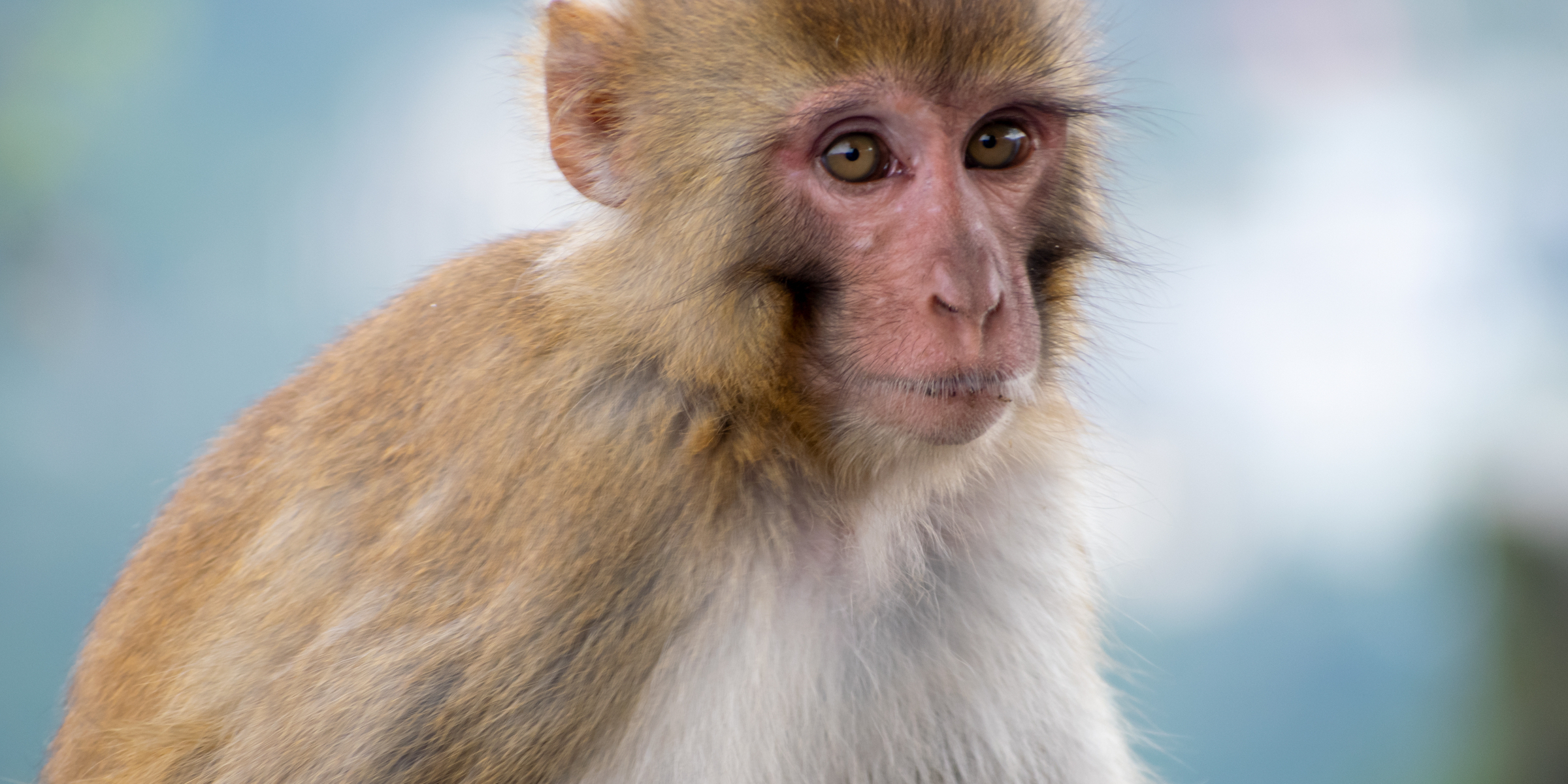
Recently, the price of experimental monkeys has once again become a hot topic in the pharmaceutical industry.
From the bidding price in public procurement to the quotation in monkey farms, the unit price of crab eating monkeys has doubled in just over a year. The market reference quotation has been raised to 250000 to 300000 yuan per monkey, and the price of rhesus monkeys has also risen to around 150000 yuan.
The Chinese pharmaceutical industry is experiencing a 'monkey drought'.
Why is shortage difficult to solve quickly
Many people's first reaction may be: Isn't it just raising monkeys? Isn't it enough to breed more? In reality, it's far from that simple.
From the demand side, the direct driving force behind the price increase of experimental monkeys is the resurgence of innovative drug research and development momentum. According to data released by the National Development and Reform Commission on November 3, the amount of technology authorization for China's innovative drugs to foreign countries in the first three quarters of 2026 is about 130 billion US dollars, which is close to the full year level of 2025. The proportion of biologics approved annually by the US Food and Drug Administration (FDA) has increased from less than 4% in 2013 to nearly half in 2023.
From the supply side, the bottleneck first lies in the limited variety. There are only two types of monkeys that are truly competent in drug safety evaluation: crab eating monkeys and rhesus monkeys. Among them, crab eating macaques have become the first choice for safety evaluation of large molecule drugs due to their smaller size, lower dosage of test drugs, and thicker accumulation of toxicological background data, and are also the main cause of this round of price increases.
Not only are there only two varieties, but other animals cannot replace them. A study calculated the cross reactivity rates of 39 monoclonal antibody drugs in different animals, with crab eating monkeys at 82%, rabbits at only 17%, dogs at 11%, mice at 7%, and rats at 0%. The rhesus monkey is also a commonly used species for macromolecular safety evaluation, with high target matching. Domestic top CROs such as Zhaoyan New Drug, WuXi AppTec, Kanglong Huacheng, Dingtai, etc. have acquired a large number of inventory resources through the acquisition of monkey farms. According to arterial network statistics, several top CROs hold about 90000 experimental monkeys.
The core of the supply bottleneck lies in a link that no one can fast forward: the growth cycle of monkeys. The average age of crab eating macaques is about 4 years before they reach sexual maturity, and the pregnancy and lactation periods are about six months each. After birth, the young macaques need to be raised until they are 2 to 3 years old before they can be used for experiments. It takes 6 to 7 years from the retention of weaned macaques to the production of the next generation of commercial macaques that can be used for experiments, and the supply naturally lags behind the demand.
Import is an important supply channel, but 'can import' does not mean 'free import'. On the one hand, crab eating macaques are a CITES Appendix II (Convention on International Trade in Endangered Species of Wild Fauna and Flora) species, subject to international trade quota restrictions, and there is a scarcity of compliant farms overseas that meet experimental standards. On the other hand, the number of quarantine facilities that meet the new construction standards in China is limited, and monkeys have to queue up for quarantine as soon as they enter the country, causing hardware restrictions on customs clearance. In addition, the world is competing for monkeys. The unit price of experimental monkeys in the United States has reached $50000 to $60000, with an annual shortage of over 20000. Charles River Laboratories, a global CRO leader, offers a price of 5The acquisition of non-human primate suppliers in Cambodia for $100 million directly locks in upstream production capacity, further squeezing the bargaining space on the channel end.
From 'grabbing monkeys' to' grabbing data '
The rigidity of supply is difficult to solve in the short term, but the focus of competition in the industry is already changing. The focus of competition among experimental monkeys is quietly shifting from "who has monkeys in their hands" to "who has precise data on monkeys" and "who first finds a validation path that does not rely on monkeys".
At the regulatory level, in December 2025, the FDA released a draft guideline for non clinical safety studies of monoclonal antibodies, which explicitly stated that under the premise of a 3-month toxicity test supplemented by evidence weight evaluation, a 6-month long-term toxicity test for primates may no longer be required. In September 2026, the FDA issued a "direct final rule" to uniformly replace "animal testing" and other related terms in the regulations with "non clinical trials/studies". The rule is scheduled to take effect in February 2027.
In China, the National Medical Products Administration (NMPA) released a draft for comments on the "Pilot Program for Promoting the Research and Application of New Methods (NAMs)" in July 2026, which listed eight application scenarios including "exempting long-term repeated administration toxicity tests of antibody drugs", and set up an entrance for joint verification between method developers and NMPA.
On a technical level, alternative methods are moving from concepts to verifiable tools. Organoids and organ-on-a-chip are currently the rapidly developing directions of industrialization. Organoids are formed by stem cells self-organizing in vitro to form three-dimensional miniature organ models, which can directly evaluate drug responses using human cells and fundamentally avoid species differences. The liver chip from Simulate Biotechnology in Boston, USA has an accuracy rate of 87% in identifying known liver damaging compounds. CROs of companies such as Medici in China have constructed PDXO organ models covering colon cancer, gastric cancer, pancreatic cancer, lung cancer, liver cancer and other types from the PDX biological database for drug screening and efficacy evaluation.
AI simulation and computational toxicology also provide another pathway, using existing large-scale toxicology data to train models and predict the toxicity endpoints of new molecules, thereby eliminating high-risk candidate compounds in the early stages of drug discovery. In December 2025, the FDA and the European Medicines Agency jointly certified AIM-NASH, the world's first AI drug development tool, for histological evaluation of non-alcoholic fatty liver disease. The advantages of AI lie in throughput and cost, but it highly relies on high-quality, standardized historical data, and the reliability of predictions for new mechanisms or complex biological products still needs to be verified.
The most profound lesson that this' monkey drought 'has taught the industry may be that for long-term biological resources, the most expensive thing is never the price, but the time. Whoever can lay out seed sources earlier and validate alternative methods faster will be able to take the initiative in the next cycle.
(The author of this article is a researcher at the Jingguan Research Institute)